.svg)


TL;DR: Key Takeaways
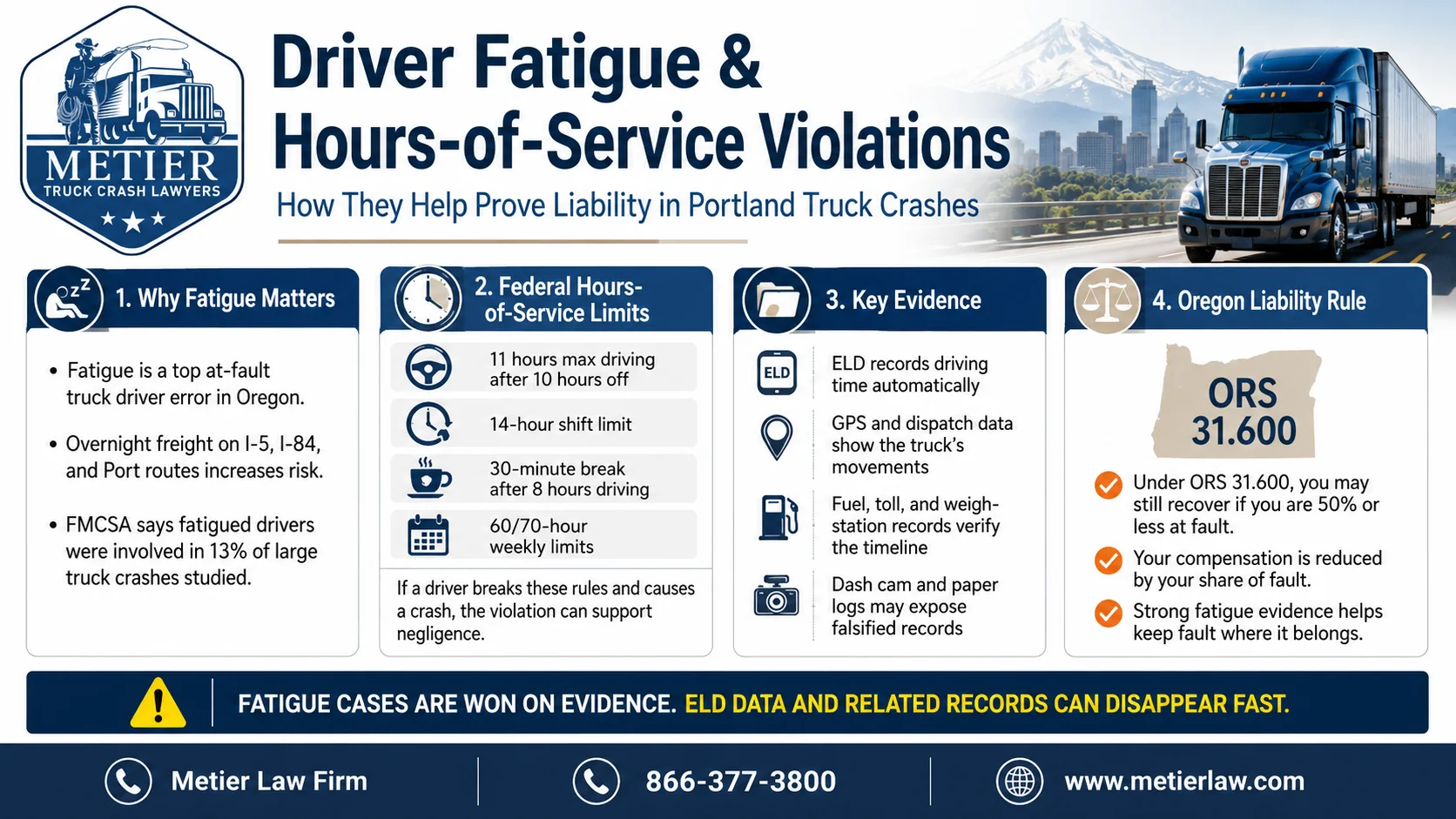
- Truck driver fatigue is one of the top-ten at-fault errors Oregon's DOT lists for truck drivers, and it turns routine Portland freight runs deadly.
- Federal hours-of-service rules cap time behind the wheel. Break them and cause a crash, and the violation is direct evidence the duty of care was breached.
- The electronic logging device (ELD) is usually the key evidence: it timestamps every mile driven and every break skipped.
- We expose falsified logs by matching the ELD against fuel receipts, toll and weigh-station records, GPS, and dispatch messages, all of which overwrite fast.
- Oregon's ORS 31.600 lets you recover if your share of fault is 50% or less, with your award reduced by your percentage.
A fully loaded semi runs up to 80,000 pounds. The driver hauling it through Portland on I-5 at two in the morning is fighting the one thing no logbook can fake, his own body shutting down. Truck driver fatigue leaves no skid marks, yet it kills people. In 2024, ODOT recorded 1,696 motor carrier crashes on Oregon roads, 73 of them fatal, with tractor and semi-trailers in 982 of those wrecks. Sleep and fatigue sit on the state's top-ten list of at-fault errors for truck drivers.
I'm Mike Chaloupka, managing partner at Metier Law Firm. I hold a Class A Commercial Driver's License, I'm licensed in Oregon, and I've spent years representing people hurt by trucks across the Pacific Northwest. I understand that federal clock from the driver's seat as well as the regulations, so I know what the rules ask and where carriers push drivers past them.
Why Truck Driver Fatigue Causes So Many Portland Crashes
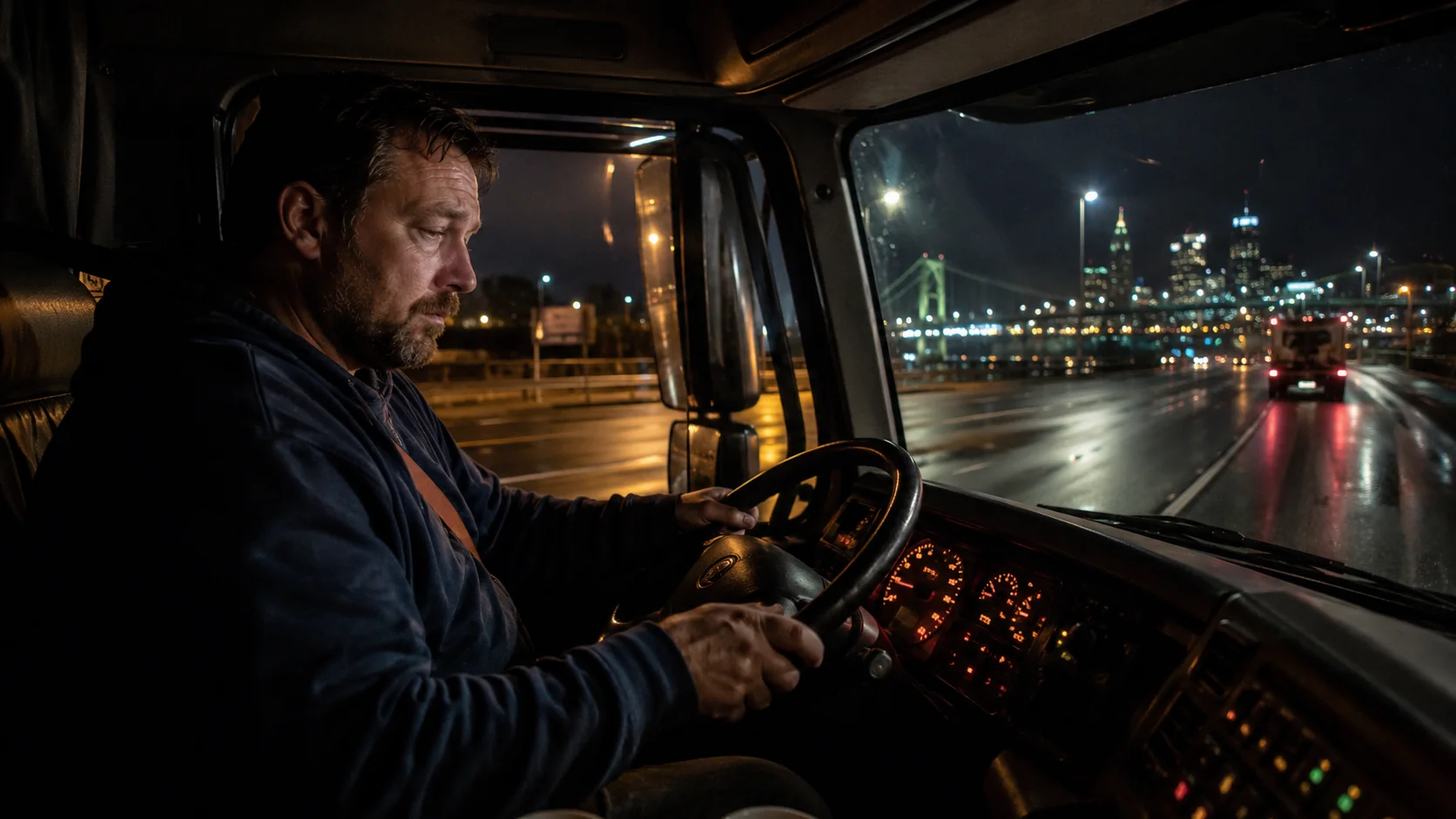
Portland moves a lot of freight. I-5 and I-84 funnel long-haul traffic through the metro, and drayage runs to the Port of Portland and Rivergate keep trucks rolling overnight, when the body is wired to sleep. Tight delivery windows and pay-by-the-mile schedules push drivers to keep going when they should be parked. A drowsy truck driver crash in Oregon usually traces back to a schedule with no room for rest. FMCSA reports that the federal Large Truck Crash Causation Study found 13% of truck drivers were considered fatigued at the time of their crash.
The Federal Clock: Hours-of-Service Rules Exist to Stop This
Trucking runs on federal law, which is where a truck case parts ways with an ordinary car wreck. The FMCSA hours-of-service rules under 49 CFR 395.3 put hard limits on driving time. A property-carrying driver can drive at most 11 hours after 10 straight hours off duty, cannot drive past the 14th hour of a shift, has to take a 30-minute break after 8 hours of driving, and cannot drive after 60 hours in 7 days or 70 in 8.
Those numbers are the line, and hours of service violations mean a driver crossed it. When that driver causes a crash, the violation can stand as evidence the duty of care was breached, one of the four elements a negligence claim has to prove. We lay out that framework in our guide on how negligence is established in a Portland truck accident. Because a federal rule already drew the line, we don't have to argue the driving was unreasonable.
The ELD: Where Fatigue Leaves a Trail
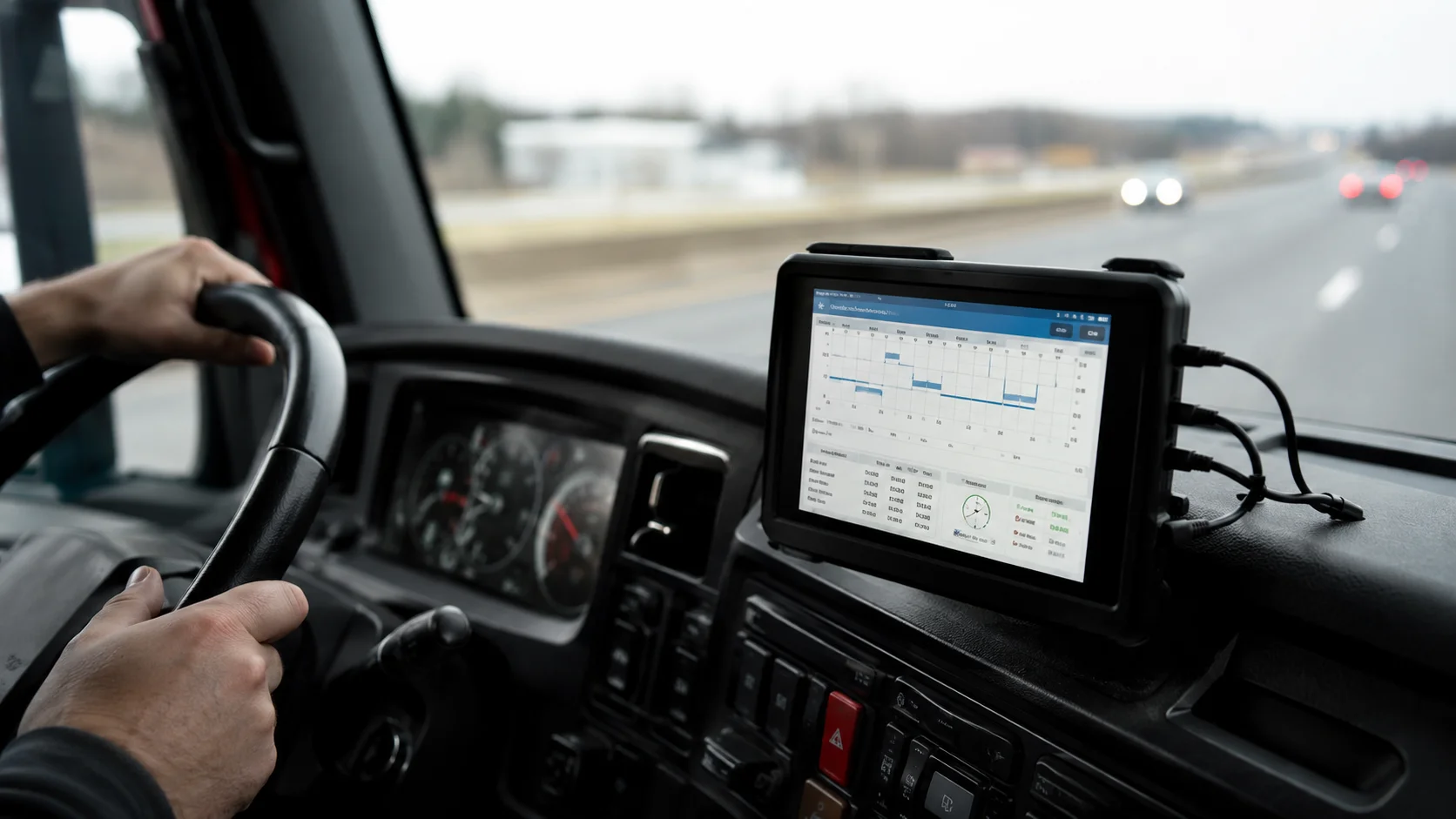
Since December 2017, most interstate truckers have had to run an electronic logging device under the FMCSA ELD rule. It ties into the engine and records driving time automatically, harder to fudge than a paper log. It logs the truck's movement and every duty change, and the driver certifies daily that the record is true and correct. For a Portland semi crash liability case, that data is gold: pull it and you can see whether the driver was legal or blew past his 11-hour limit before the crash.
How Logs Get Falsified, and How We Catch It
The ELD mandate cut down on cheating but didn't end it. ELD logbook falsification still happens, and proving it is part of our job. The common tricks:
- Running the truck under a second, unused login so the hours pile up on a "ghost" driver.
- Flagging paid driving as "personal conveyance," which doesn't count against the clock.
- Leaving stretches of driving "unassigned" so no logbook takes the hit.
- Keeping a paper log that contradicts the engine data.
Here's the part carriers hope you never reach: the ELD isn't the only record of where that truck was. Fuel receipts carry a time and a place, and so do toll hits, weigh-station scans, GPS pings, dispatch messages, and the bill of lading. When the logbook says the driver was resting but a fuel receipt puts him 200 miles down I-84 an hour later, that gap is the case. That's how we go from suspecting truck driver fatigue to proving it. Our piece on preserving evidence with a spoliation letter covers how we stop a carrier from "losing" these records, and our semi truck dash cam laws breakdown explains how in-cab footage of a nodding driver ties it together.
If you or a loved one was injured in a crash with a commercial truck, call us at 866-377-3800 or schedule a free consultation at www.metierlaw.com.
How an Hours-of-Service Violation Proves Liability in Oregon
A violation on its own isn't the whole case. We still have to tie that broken rule to your injuries and show real harm. But it settles the hardest question, which is if the driver acted carelessly, and Oregon fault law handles the rest. Under ORS 31.600, the state follows modified comparative negligence: you can recover as long as your share of fault is not greater than the combined fault of everyone else, which works out to 50% or less, and your award is trimmed by your percentage. Insurers fight to pin as much blame on you as they can, and solid ELD evidence of a fatigued, over-hours driver will help push that number back down.
Frequently Asked Questions
What evidence is needed to prove negligence in a truck accident case?
The core proof is the truck's electronic data: the ELD hours-of-service records, the engine "black box," and the GPS log, plus the driver's qualification file, maintenance records, and police report. In a fatigue case the ELD is central; fuel, toll, and weigh-station records confirm or contradict it.
Can I still recover if I was partly at fault for the crash?
Yes, within limits. Oregon's comparative negligence rule under ORS 31.600 lets you recover as long as your fault is 50% or less, with compensation reduced by your share. Strong evidence of the trucker's fatigue keeps the fault assigned to you low.
How fast does evidence disappear, and do I need a truck accident lawyer near me in Portland?
Fast. ELD data cycles out, dash-cam footage overwrites, and paper records go missing. A local Portland truck accident attorney can send a preservation demand right away to lock everything down. The sooner that happens, the better chance of your case surviving with strong evidence.
Get the Proof Before It's Gone
Fatigue cases are won on evidence, not on anger. The trucking company had its team working the crash within hours, and you deserve one doing the same. We know what that driver was supposed to do before he left the yard, what the ELD should show, and how to catch a carrier that tried to bury it. As a Portland truck accident lawyer team that takes on the region's biggest carriers, we build the strongest case the facts allow.
Call Metier Law Firm at 866-377-3800 or schedule your free consultation today at www.metierlaw.com.
Disclaimer: Past results discussed should not be considered a guarantee of your results as the factors of every case are individually unique. This content is for informational purposes only and does not constitute legal advice. Consult a qualified attorney from Metier Law Firm regarding your individual situation for legal advice.
Tell Us About Your Case – Free Case Review with a Personal Injury Lawyer
(866) 377-3800Our Locations
.webp)
Do I have a Case?
How Much Should I Be Offered?
Do I Need an Attorney?
If these questions have crossed your mind, let us help. You may need a little direction or may not need an attorney at all, but you deserve to be confident knowing your options. We can provide you with information about our Attorneys of the West® accident investigations and legal services. Your confidential consultation with us is totally free.
Keep up with us!
