.svg)


A new federal lawsuit raises serious questions about freight broker responsibility, carrier vetting, hours-of-service violations, insurance coverage, and the safety of trucks traveling America's highways.
TL;DR: Key Takeaways
- Six trucking companies sued C.H. Robinson and TQL in federal court in the Eastern District of Texas on September 23, 2026. They raise claims under RICO and the Lanham Act.
- The complaint alleges the brokers sent freight to "chameleon" and noncompliant carriers while telling shippers their loads would move with safe, compliant carriers.
- The alleged conduct includes manipulated electronic logs, drivers running 20 or more hours in a day, shuffled DOT numbers and trucks, and carriers with inadequate insurance.
- C.H. Robinson named Super Ego its 2025 Carrier of the Year in the 1,000+ truck category. The plaintiffs describe Super Ego as a network operating through more than 70 related carriers.
- None of the allegations have been proven, and C.H. Robinson and TQL will have the chance to contest them.
- In May 2026, the Supreme Court held in Montgomery v. Caribe Transport II that federal law does not preempt state negligent-hiring claims against brokers. Broker liability still depends on the facts and the state law that applies.
- For crash victims, the case shows why carrier-selection records, ELD data, dispatch messages and every applicable insurance policy matter.
Six trucking companies have filed a federal lawsuit accusing two of the nation's largest freight brokers—C.H. Robinson and Total Quality Logistics (TQL)—of knowingly directing freight to allegedly unsafe and illegally operated trucking companies.
The lawsuit, Stevens Trucking Co., et al. v. C.H. Robinson Company, Inc., et al., Case No. 2:26-cv-00869, was filed September 23, 2026, in the U.S. District Court for the Eastern District of Texas. The plaintiffs are Stevens Trucking, Western Flyer Express, D & M Carriers/Freymiller Trucking, IWX Motor Freight, Christenson Transportation and E.O.S. Inc.
The complaint asserts claims under the federal Racketeer Influenced and Corrupt Organizations Act (RICO), as well as a false-advertising claim under the Lanham Act.
The allegations are significant for more than the trucking companies fighting over freight. If proven, they could raise broader questions about who is responsible for making sure the trucking companies hauling freight on America's highways are safe, properly insured and complying with federal safety regulations.
Important: The allegations discussed below come from the plaintiffs' complaint. They have not been proven in court, and C.H. Robinson and TQL will have the opportunity to contest them.
What Does the Lawsuit Allege?
At the center of the 66-page complaint is an alleged system involving freight brokers and what the plaintiffs call "Illegal Carriers" and "chameleon carriers."
According to the complaint, C.H. Robinson and TQL allegedly obtained shipping contracts while representing themselves as providers of safe and compliant transportation, then brokered freight to carriers that the plaintiffs claim did not comply with federal safety, labor and insurance requirements.
The plaintiffs contend that this arrangement allowed the brokers to obtain inexpensive trucking capacity while the allegedly noncompliant carriers obtained access to freight they might otherwise have been unable to secure.
The lawsuit alleges conduct that, if proven, would present serious highway-safety concerns, including:
- Manipulation of electronic logging devices and driver logs;
- Drivers allegedly operating far beyond federal hours-of-service limits;
- Use of multiple DOT numbers and carrier identities;
- Trucks allegedly being moved among related carrier entities;
- Carriers allegedly operating with inadequate insurance;
- Use of drivers who allegedly did not satisfy applicable safety or qualification requirements; and
- Brokers allegedly representing to shippers that freight would be transported by safe and compliant carriers while using carriers that did not satisfy those requirements.
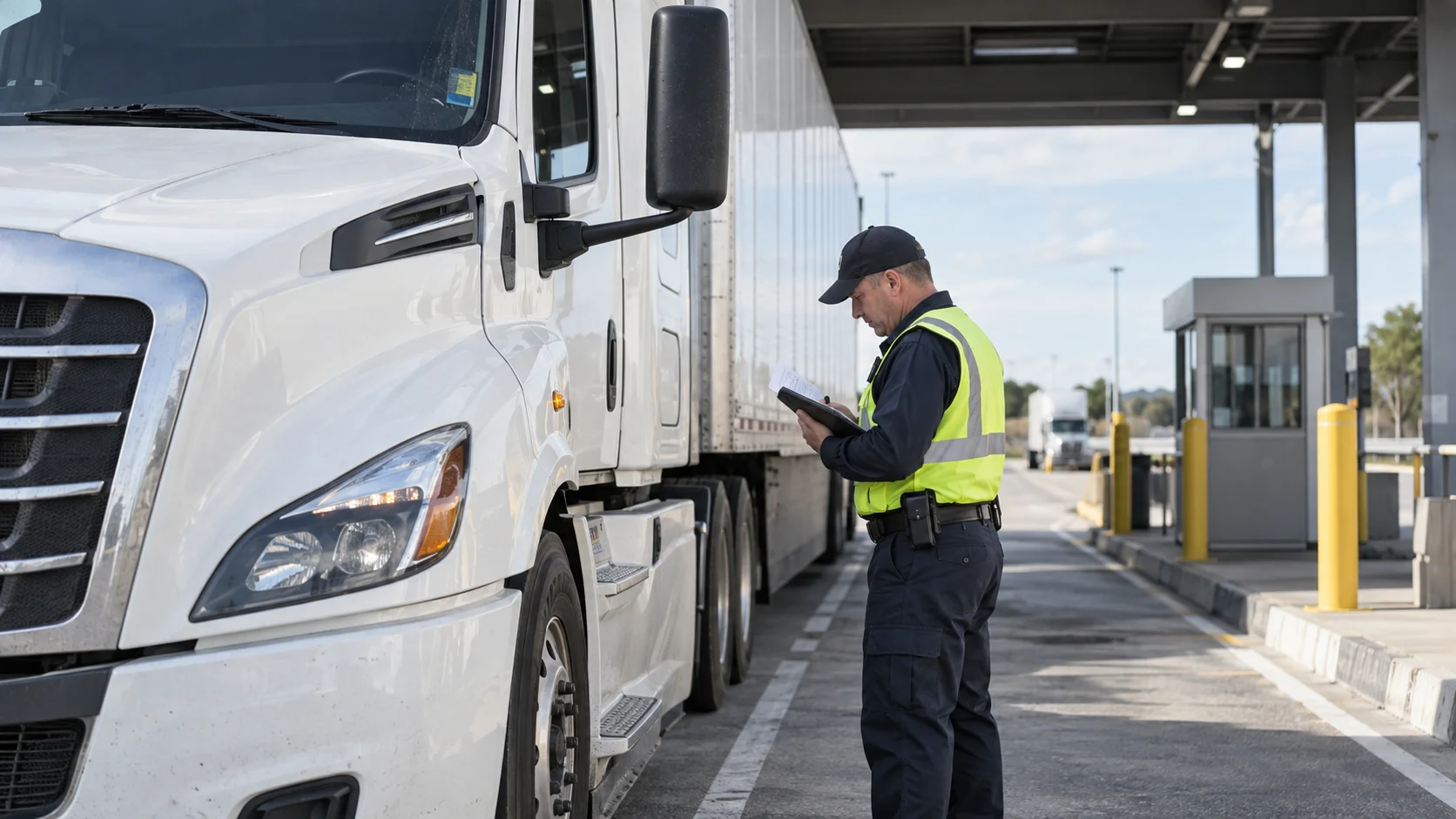
The complaint alleges that some drivers were required to operate 20 or more hours in a day and that electronic logs were manipulated to make those drivers appear compliant with federal hours-of-service requirements.
Those allegations have not yet been established in court.
What Is a "Chameleon Carrier"?
A particularly important allegation involves so-called chameleon carriers.
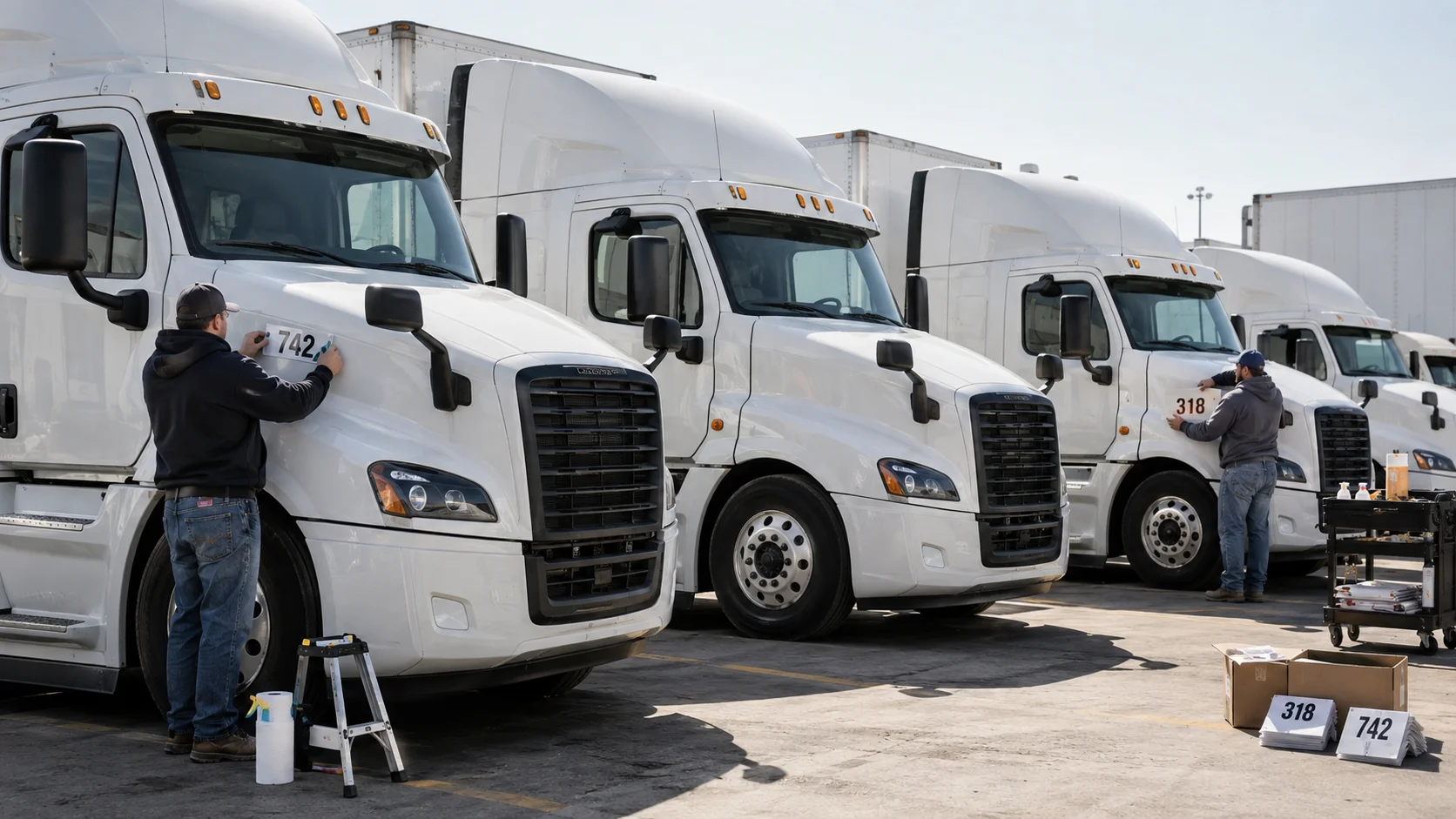
The complaint describes a chameleon carrier as a trucking operation that shuts down an entity with a poor safety history and then reopens substantially the same operation under another company name and DOT number.
Federal regulations prohibit motor carriers from using changes in identity or registration to evade safety compliance or conceal a history of violations. The complaint specifically cites 49 C.F.R. § 386.73.
Why does this matter?
A carrier's DOT number is an important part of the federal safety-monitoring system. FMCSA uses carrier information to track crashes, inspections, violations and other safety information. If the same underlying trucking operation can move trucks among multiple entities and DOT numbers, regulators, shippers and freight brokers may have a more difficult time evaluating the operation's complete safety history.
That also makes carrier vetting especially important.
The Super Ego Allegations
A substantial portion of the lawsuit concerns a network identified as Super Ego.
The plaintiffs allege that Super Ego operates through more than 70 related or "chameleon" carriers and has publicly claimed to operate more than 10,000 trucks in the United States. The complaint alleges that trucks and VINs were transferred among affiliated entities and that drivers could be instructed to operate under different carrier identities depending on the load.
The complaint further alleges that Super Ego-affiliated carriers collectively accumulated more than 3,000 recorded safety violations and 266 crashes. Again, those figures are allegations presented by the plaintiffs and should not be treated as judicial findings.
One aspect of the allegations is particularly notable.
According to the complaint, C.H. Robinson named Super Ego its 2025 "Carrier of the Year" in the 1,000+ truck category, while Super Ego entities Sam Express and Tutash Express allegedly received TQL "Elite Carrier" recognition.
That allegation puts broker carrier-selection procedures directly in the spotlight.
Allegations of Falsified Electronic Logs and Extreme Driver Hours
The lawsuit contains detailed allegations from confidential witnesses who say they drove for carriers involved in the alleged system.
According to the complaint, the witnesses described carriers switching DOT numbers, manipulating electronic logging devices and requiring drivers to operate beyond federal hours-of-service limits.
One witness allegedly described a system in which drivers who ran out of legal driving hours could call a number and have their electronic logs reset. Another claimed his electronic logbook was reset without his consent to provide additional driving hours.
The complaint also alleges that a driver recorded a January 2026 incident in which dispatch reset his logbook so he could haul a C.H. Robinson load from Illinois to Pennsylvania without stopping.
If allegations like these are established in an individual truck crash case, electronic logging records, dispatch communications and other digital evidence could become critically important.
The Insurance Allegations Could Matter to Truck Accident Victims
Another allegation deserves particular attention from anyone injured in a serious truck crash.
The plaintiffs claim that some of the carriers involved maintained minimal insurance and that trucks sometimes were not scheduled on applicable insurance policies. According to the complaint, coverage may then be denied following a crash, potentially leaving seriously injured victims facing inadequate insurance coverage.
The complaint also alleges that brokers sometimes contractually promise shippers insurance protection substantially above federal minimums.
For example, the plaintiffs allege that TQL entered agreements requiring certain carriers to maintain substantial liability coverage but nevertheless dispatched carriers carrying only $1 million in insurance. The plaintiffs further allege that following a crash, TQL may assert that it acted only as a broker and that the carrier's lower policy represents the available coverage.
These allegations illustrate why determining every potentially responsible company and every potentially applicable insurance policy can be important after a catastrophic commercial-truck crash.
When Is a Freight Broker Really Acting as a Motor Carrier?
The lawsuit also raises an issue that frequently appears in modern trucking litigation: the distinction between a freight broker and a motor carrier.
A traditional freight broker generally arranges transportation between a shipper and a motor carrier. A motor carrier actually undertakes responsibility for transporting the freight.
But the label a company gives itself may not necessarily resolve the issue in every case.
The complaint alleges that C.H. Robinson and TQL sometimes exercised functions the plaintiffs contend are characteristic of a motor carrier—including using branded or controlled trailers, tracking loads, communicating with drivers, assuming care, custody and control of cargo, and in some instances appearing as the "carrier" on bills of lading.
The plaintiffs contend that the defendants nevertheless rely on their broker status after crashes to argue that they are not responsible for the conduct of the motor carrier or driver.
Those allegations remain disputed and will have to be litigated.
The Supreme Court Has Already Addressed Broker Liability in 2026
The new lawsuit arrives during an important period for freight-broker liability.
Earlier this year, the U.S. Supreme Court decided Montgomery v. Caribe Transport II, LLC, a case involving C.H. Robinson and the selection of an allegedly unsafe motor carrier.
The Stevens complaint itself cites Montgomery and notes that the Supreme Court allowed a state-law claim involving a broker's selection of an unsafe carrier to proceed.
C.H. Robinson has publicly emphasized that the Supreme Court's decision does not mean brokers will automatically be liable whenever a truck crash occurs. The company has also stated that it selects carriers licensed by FMCSA and uses safety and compliance processes in its carrier-selection practices.
That distinction is important. Broker liability is not automatic. Whether a broker can be held responsible following a crash depends on the facts, applicable state law, federal law and the broker's actual conduct.
Why This Case Could Matter After a Serious Truck Accident
Although Stevens is primarily a lawsuit brought by trucking companies alleging economic harm, the evidence developed in the case could have implications beyond commercial competition.
The complaint puts a spotlight on information that may be important when investigating catastrophic truck crashes, including:
Carrier-selection records. What information did the broker review before allowing the motor carrier to haul the load?
FMCSA history. What crashes, inspections, out-of-service violations and other safety information were available when the carrier was selected?
Related carrier entities. Was the trucking company connected to another carrier with a problematic safety history?
VIN and equipment history. Had the tractor or trailer previously operated under another DOT number?
Electronic logging data. Do the driver's ELD records accurately reflect the hours actually driven?
Dispatch communications. Did dispatchers pressure or instruct the driver to continue operating despite fatigue or hours-of-service limits?
Bills of lading and shipping contracts. Who represented itself as the carrier, and what responsibilities did each company undertake?
Insurance policies and shipper agreements. Was additional insurance promised or potentially available beyond the motor carrier's policy?
These questions can matter because the trucking company whose name appears on the side of the tractor may not necessarily be the only company whose decisions contributed to a crash.
What Happens Next?
At this stage, Stevens Trucking Co. v. C.H. Robinson is a newly filed lawsuit.
The plaintiffs are seeking damages for lost contracts, lost profits, reduced market share and other alleged economic injuries. Their RICO claims contend that C.H. Robinson and TQL participated in enterprises involving alleged forced labor, wire fraud and other unlawful activity.
The defendants have not yet had the opportunity to litigate those allegations to a judgment. The docket identifies the matter as a RICO case filed September 23, 2026.
The case therefore should be watched not because the allegations have already been proven, but because discovery and future court rulings could provide additional information about how major freight brokers select, monitor and work with the motor carriers transporting freight on American highways.
Truck Safety Depends on More Than the Driver Behind the Wheel
A catastrophic truck crash rarely begins in the few seconds before impact.
Safe trucking depends on decisions made long before a tractor-trailer enters the highway: who is hired to haul the freight, whether the driver is qualified, whether the carrier has a history of unsafe operations, whether hours-of-service rules are followed, whether equipment is properly maintained and whether adequate insurance is in place.
The allegations in Stevens Trucking raise a fundamental question for the modern freight industry:
When a company profits from selecting and directing the transportation of freight, what responsibility does it have to make sure the carrier actually moving that freight is safe?
As the litigation develops, the answer could have important consequences for freight brokers, motor carriers, shippers—and everyone who shares the road with commercial trucks.
Disclaimer: This content is for informational purposes only and does not constitute legal advice. Consult a qualified attorney from Metier Law Firm regarding your individual situation for legal advice.
Tell Us About Your Case – Free Case Review with a Personal Injury Lawyer
(866) 377-3800Our Locations
.webp)
Do I have a Case?
How Much Should I Be Offered?
Do I Need an Attorney?
If these questions have crossed your mind, let us help. You may need a little direction or may not need an attorney at all, but you deserve to be confident knowing your options. We can provide you with information about our Attorneys of the West® accident investigations and legal services. Your confidential consultation with us is totally free.
Keep up with us!
