.svg)


TL;DR: Key Takeaways
- I-5 between Olympia and Seattle is one of the most dangerous corridors in Washington for large commercial truck crashes, with thousands of semi-truck collisions occurring statewide each year
- The first steps you take after a truck crash on I-5 can directly affect your ability to recover full compensation
- Truck accident cases involve federal regulations, multiple liable parties, and carrier insurance tactics that make them very different from standard car accident claims
- A spoliation letter must be sent immediately to preserve electronic logging device data, black box data, and driver logs before they are destroyed
- Driver fatigue, hours of service violations, and wet road conditions are among the most common contributing factors on this corridor
- Washington's three-year statute of limitations sounds like a long time, but critical evidence disappears fast
- Metier Law Firm's Mike Chaloupka holds a Class A CDL and has spent over 18 years handling truck crash and personal injury cases.
I've handled truck accident cases across Washington and various other states for over 18 years, and in Washington, the I-5 corridor between Olympia and Seattle often comes up as one of the more dangerous roads out there. Port of Tacoma freight, long-haul carriers coming up from Portland, regional distribution runs, refrigerated loads out of the South Sound agricultural corridor, the commercial traffic on this highway never stops. And when something goes wrong at freeway speed involving 80,000 pounds of truck and cargo, the results are devastating.
Nationally, large truck crashes killed 5,472 people in 2023 alone, according to NHTSA. Washington contributed to that number, and I-5 through Pierce and King counties is where a significant share of those Washington crashes happen. If you or someone you love was just in one of them, this is what you need to know.
The Moments Right After the Crash Matter More Than You Think
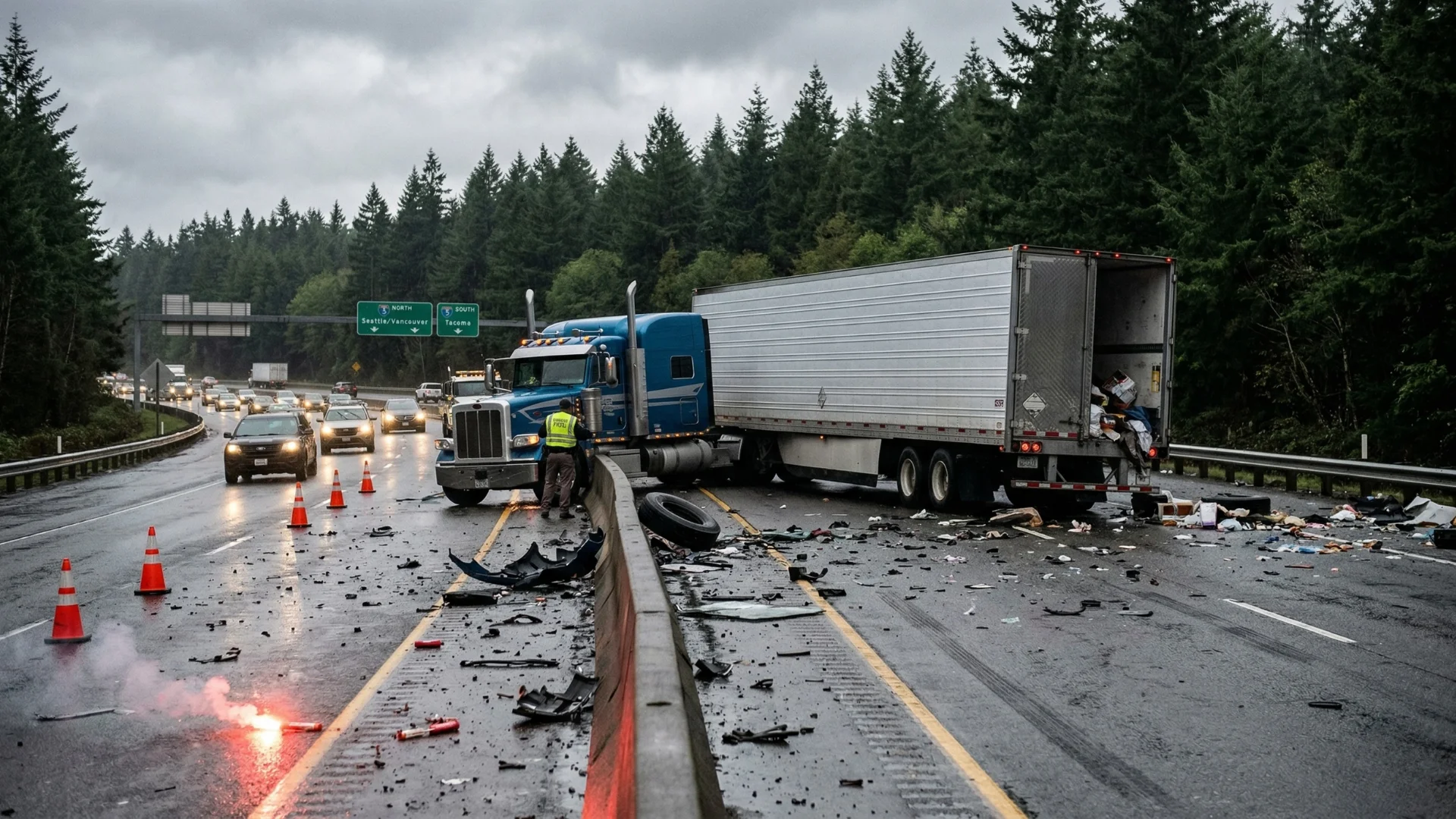
The instinct after any serious crash is to focus on survival. That's right. Get to safety. Call 911. Get medical attention. But once you're stable, the clock starts running on evidence that can make or break your case.
Here's what to do as soon as you're physically able:
Get medical care, even if you feel okay
Adrenaline masks pain. Injuries like traumatic brain injuries, internal bleeding, and spinal damage often don't fully present for hours or days. Going to the ER or urgent care creates a documented medical record tied to the crash date. Do not skip this step.
Call law enforcement and wait for their report
Washington State Patrol handles crashes on I-5, and their collision report will be a foundational piece of your case. Make sure it gets filed.
Document everything you can at the scene
Photos of the truck, the truck's DOT number and carrier name, the trailer markings, license plates, weather and road conditions, any skid marks or debris, and your own visible injuries. If bystanders witnessed the crash, get their contact information.
Do not give recorded statements to the trucking company's insurer
This is one of the most common mistakes we see. Carriers deploy claims adjusters quickly, sometimes before victims have even left the hospital. Their job is to minimize what they pay you. You have no obligation to speak with them before you have legal representation.
Why a Truck Accident on I-5 Is Not Like a Car Accident
This matters a lot, and most people don't understand it until they're already in the middle of a claim.
Commercial truck carriers operate under federal regulations set by the Federal Motor Carrier Safety Administration. Their drivers are subject to hours of service rules under 49 CFR Part 395 that limit how many hours they can drive before taking mandatory rest. A driver is allowed a maximum of 11 hours behind the wheel after 10 consecutive hours off duty. When those limits are pushed or falsified, fatigued drivers end up on I-5 at 4 a.m. in the rain, and that's when catastrophic crashes happen.
Beyond the driver, liability in a truck crash can extend to the motor carrier who owns the truck, the company that loaded the cargo, the maintenance contractor who last serviced the brakes, and sometimes the broker who arranged the haul. You need someone who knows how to investigate all of it.
I hold a Class A CDL. I've spent many years handling these cases. When I look at driver logs, electronic logging device data, and inspection records, I know what I'm looking at, and I know what the carrier is hoping you won't ask for.
The I-5 Corridor Between Olympia and Seattle: What Makes It So Dangerous
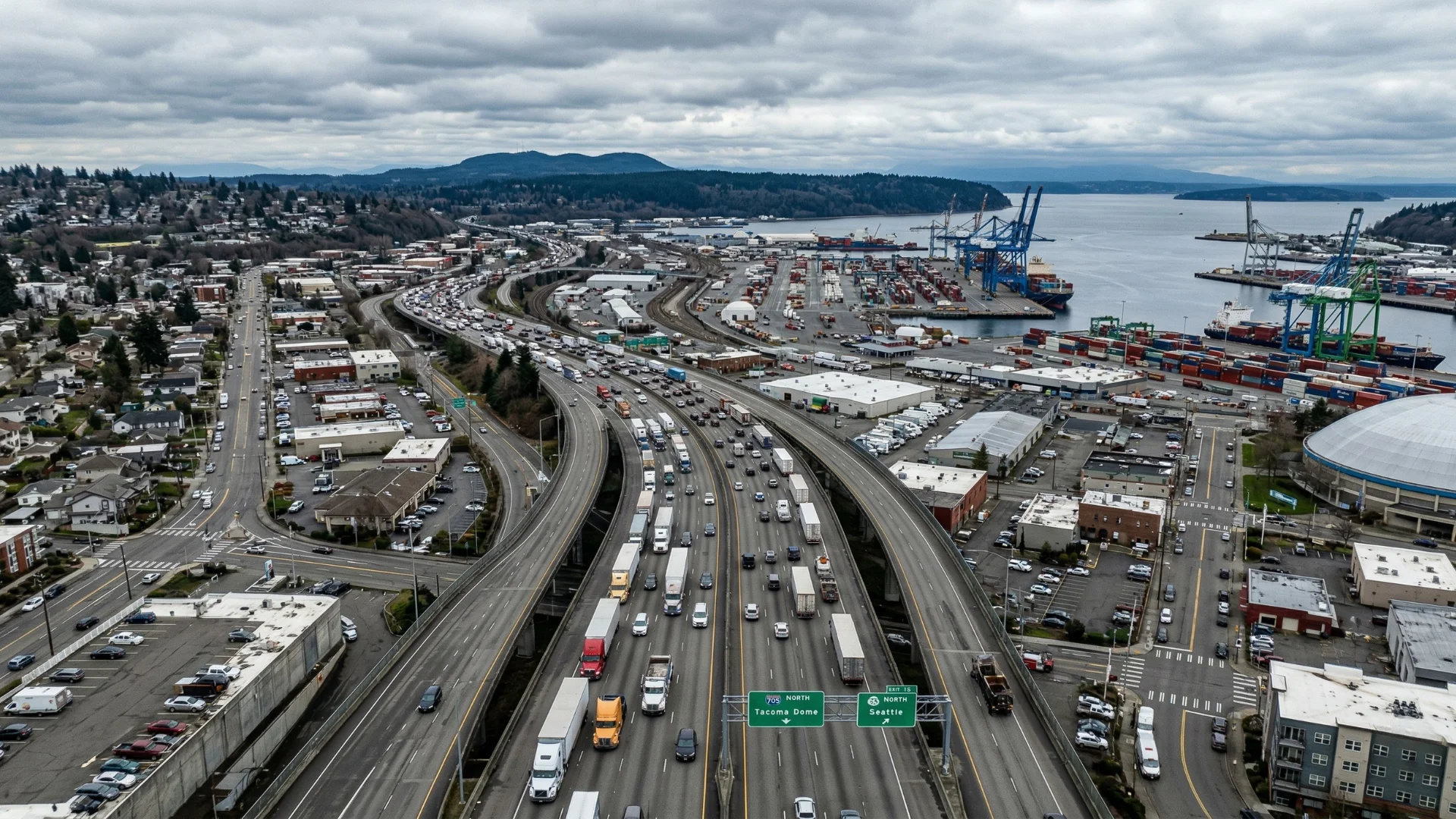
The stretch of I-5 running through the South Sound and into Seattle has some of the most persistent crash risk factors in Washington.
Heavy traffic and abrupt slowdowns
The segment through Tacoma, particularly near the Tacoma Dome interchange and the SR-512 split, sees some of the densest freight traffic in the state. When cars slow suddenly and a loaded semi behind them is doing 65 mph, the stopping distance math doesn't work. Rear-end crashes on this corridor are common and often catastrophic.
Washington's rain
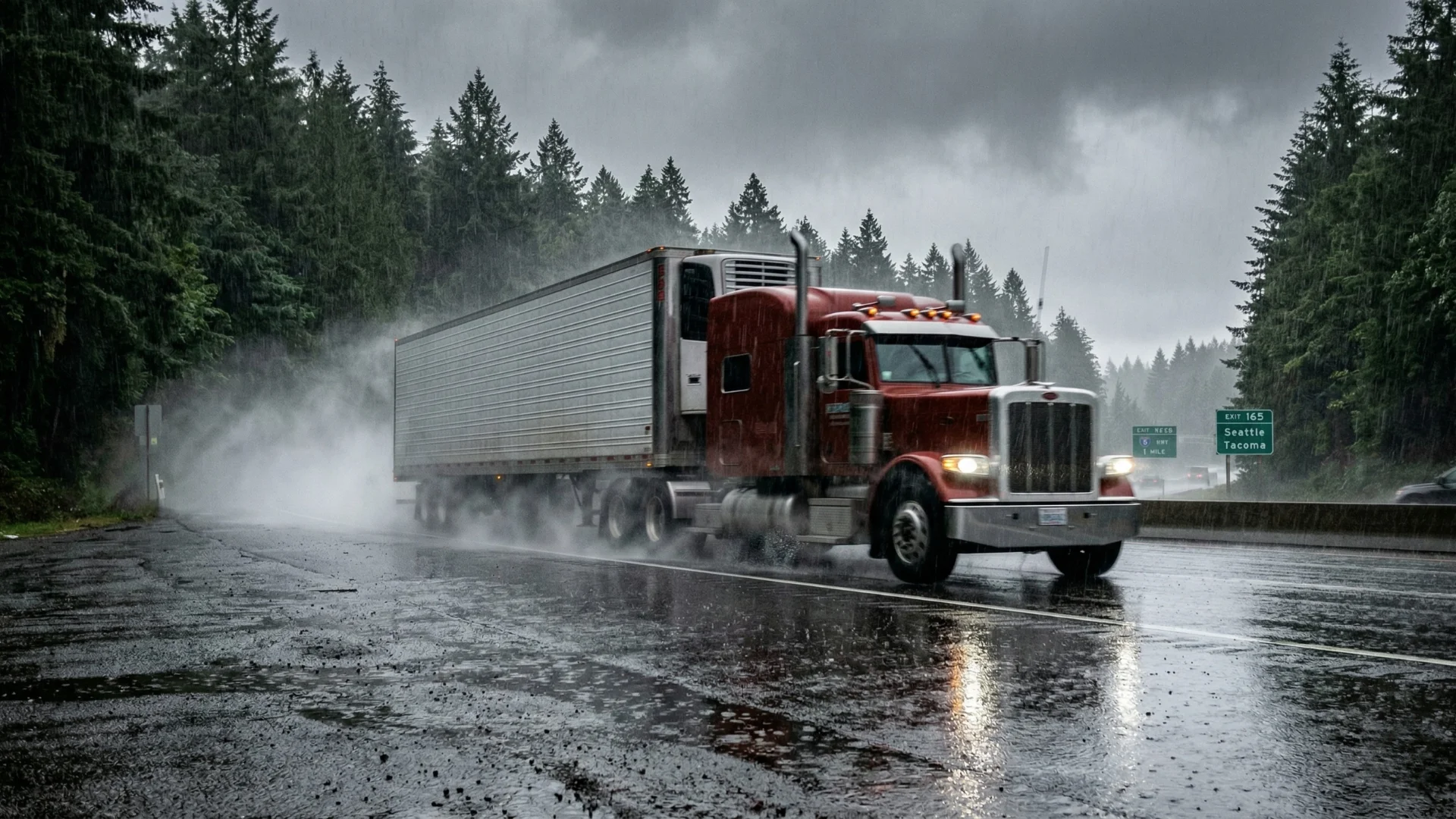
The Puget Sound region averages over 37 inches of rain annually, and wet pavement fundamentally changes how trucks handle. A fully loaded tractor-trailer traveling at highway speed on wet I-5 through Federal Way or the JBLM corridor needs significantly more distance to stop than most drivers realize. Hydroplaning, reduced visibility, and slick lane markings are constant factors from October through April. WSDOT reported 810 total traffic fatalities on Washington public roads in 2023, a 9% increase over the prior year, and wet conditions played a role in a significant share of them.
Driver fatigue on long-haul runs
I-5 is a major artery for carriers running freight between Los Angeles, Portland, Seattle, and beyond. By the time a driver hits the Nisqually corridor heading north, they may be close to their legal driving limit, or already past it. The FMCSA consistently identifies fatigue as a contributing factor in large truck crashes, and this corridor is a prime example of where those risks play out.
The Evidence You Can't Afford to Lose
Trucks generate more recoverable evidence than passenger vehicles. The problem is that evidence disappears fast unless someone acts to preserve it.
Electronic logging devices record hours of service data. Black boxes capture speed, braking, and steering inputs in the moments before impact. Dashcam footage, if the truck had one, may show exactly what the driver was doing. Driver qualification files, drug and alcohol test records, and prior safety inspection reports can reveal a pattern of negligence by the carrier.
Federal regulations only require carriers to retain some of this data for limited periods. We send a spoliation letter immediately after being retained, demanding the carrier preserve all of it. If you wait, it may be gone.
If you or a loved one was injured in a crash with a commercial truck, call us at 866-377-3800 or schedule a free consultation at www.metierlaw.com.
Frequently Asked Questions
How long do I have to file a truck accident lawsuit in Washington state?
Washington's statute of limitations for personal injury claims is three years from the date of the crash. That sounds like plenty of time, but the reality is that evidence gets destroyed, witnesses' memories fade, and building a strong case takes time. The sooner you start, the better positioned you are.
Can I still recover compensation if I was partially at fault for the I-5 truck crash?
Yes. Washington follows a pure comparative fault rule, which means you can still recover damages even if you were partially responsible for the crash. Your compensation is reduced by your percentage of fault, but you are not barred from recovery.
What if the truck driver who hit me was from out of state?
Out-of-state carriers are still subject to federal FMCSA regulations and can be sued in Washington courts. We handle multi-state trucking cases regularly. The carrier's home state does not shield them from liability for crashes that happen in Washington.
What should I do if the trucking company's insurance adjuster calls me?
Do not give a recorded statement. Be polite, take their name and contact information, and tell them your attorney will be in touch. Then call us. Anything you say to their adjuster can and will be used to reduce what they pay you.
How is a truck accident claim different from a regular car accident claim in Washington?
Truck accident claims involve federal regulations, multiple potential defendants, commercial insurance policies with much higher limits, and far more complex evidence. They require attorneys who understand the trucking industry and know how to investigate carrier negligence, not just driver error.
You Need Someone Who Knows This Industry From the Inside
Truck accident claims on I-5 are not cases you want to hand to a general personal injury attorney who handles a few trucking cases a year. These carriers have experienced defense teams and aggressive adjusters working to limit their exposure from day one.
We built our practice around this exact type of case. I hold a Class A CDL, which means I understand how these trucks are supposed to operate, what the regulations require, and where carriers cut corners. Our firm partner Tom Metier is Board Certified in Truck Accident Law by the National Board of Trial Advocacy, one of very few attorneys in the country to hold that credential.
Whether your crash happened near the JBLM interchange in Lakewood, on the stretch through Federal Way, near the Tacoma Dome, or anywhere along the corridor into Seattle, we know this road and we know these cases.
Call Metier Law Firm at 866-377-3800 or schedule your free consultation today at www.metierlaw.com.
Disclaimer: Past results discussed should not be considered a guarantee of your results as the factors of every case are individually unique. This content is for informational purposes only and does not constitute legal advice. Consult a qualified attorney from Metier Law Firm regarding your individual situation for legal advice.
Tell Us About Your Case – Free Case Review with a Personal Injury Lawyer
(866) 377-3800Our Locations
.webp)
Do I have a Case?
How Much Should I Be Offered?
Do I Need an Attorney?
If these questions have crossed your mind, let us help. You may need a little direction or may not need an attorney at all, but you deserve to be confident knowing your options. We can provide you with information about our Attorneys of the West® accident investigations and legal services. Your confidential consultation with us is totally free.
Keep up with us!
