.svg)


TL;DR: Key Takeaways
- Seattle's port and freight corridors, including SR-99, SR-509, Alaskan Way, and SoDo, concentrate some of the heaviest commercial truck traffic in Washington onto streets that were never designed to handle it.
- The Port of Seattle is one of the busiest cargo ports in North America, meaning a constant flow of large container trucks moves through Seattle's surface streets every day, often under intense time pressure.
- Truck drivers working port routes frequently rush to meet strict gate and delivery schedules. That pressure contributes to driver fatigue, skipped pre-trip inspections, and hours-of-service violations.
- As a Class A CDL holder, I understand exactly what it takes to safely operate an 80,000-pound vehicle in dense urban freight zones, and what happens when those standards aren't met.
- Crashes in these corridors often involve multiple liable parties: the driver, the trucking company, freight brokers, and sometimes port operators.
- Evidence disappears fast. Electronic logging device (ELD) data, port gate records, and dispatch logs must be preserved immediately after a crash.
- If you were hurt in a semi-truck crash near Seattle's freight corridors, you need a Seattle truck accident lawyer who understands both federal trucking regulations and the dynamics of port freight operations.
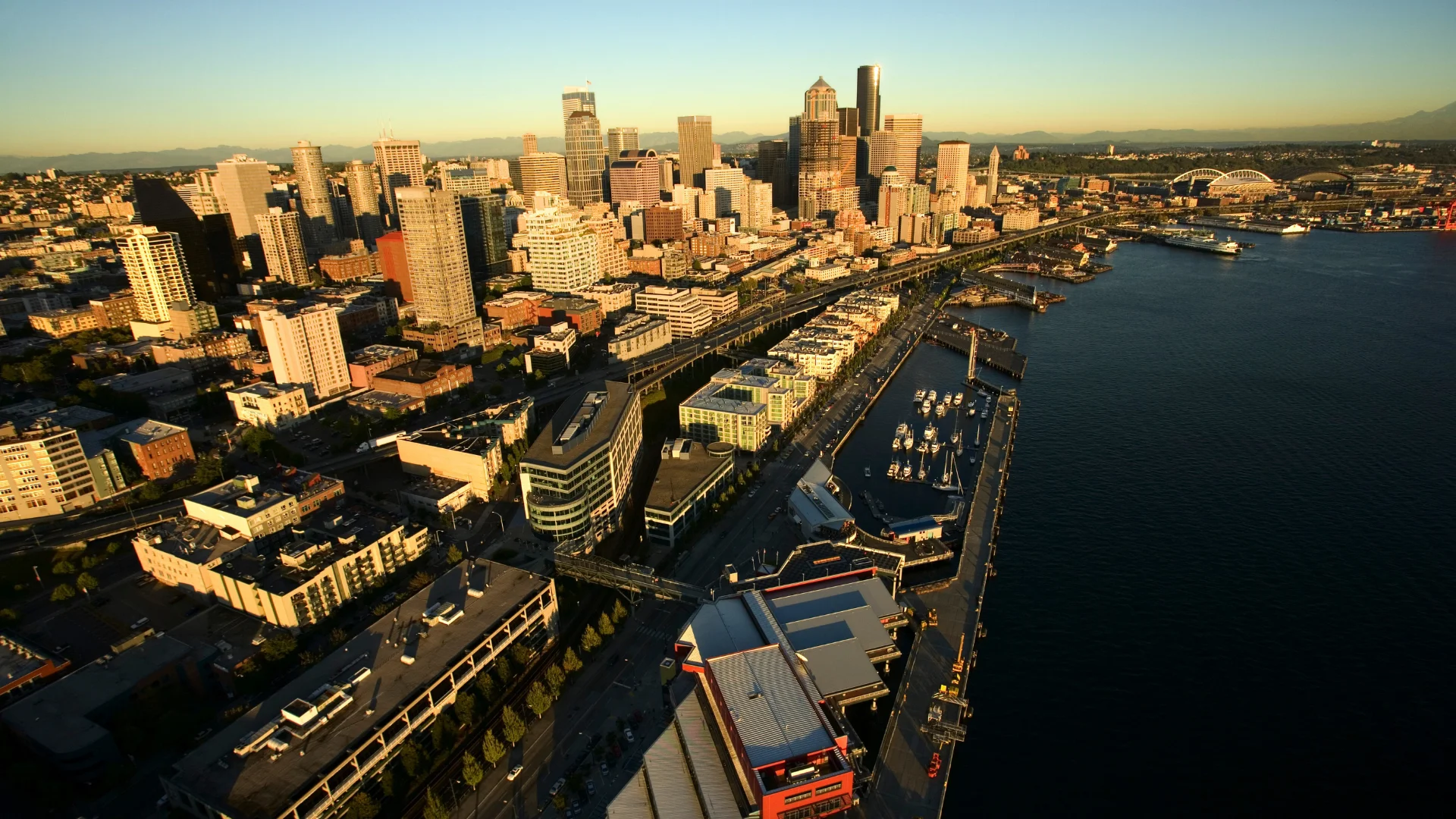
There's a particular kind of danger that builds up in a city when commercial trucking, port operations, and dense urban infrastructure all collide in the same few square miles. That's exactly what happens in Seattle every single day. The stretch from the waterfront down through SoDo, along SR-509 and SR-99, and out toward the industrial tideflats is one of the most concentrated freight zones in the Pacific Northwest, and one of the most unforgiving places to be in a smaller vehicle when something goes wrong.
I hold a Class A CDL. I went through commercial driver training specifically so I could understand the trucking industry from the inside when I take on these cases. When I look at the road conditions along Alaskan Way or through the SoDo rail crossings, I'm thinking about sight lines, stopping distances, swing radius on left turns, and what a fully loaded container truck behaves like when a driver has to react in a fraction of a second. The physics don't lie, and neither does the evidence.
What Makes Seattle's Freight Corridors So Hazardous
The Port Pushes Massive Truck Volume Through Streets Not Built for It
The Port of Seattle is part of one of the top container gateways in North America. According to the Port of Seattle, the gateway handled 3.3 million shipping containers in 2024, up more than 12% from the prior year. Every one of those containers eventually gets loaded onto a truck and hauled through Seattle's streets. That traffic funnels through:
- SR-509 south of downtown, where industrial connector roads feed into surface streets at conflict-heavy intersections
- Alaskan Way along the waterfront, where grade changes and limited sight lines make turns in long-wheelbase trucks genuinely dangerous
- SR-99 through the tunnel area, where lane width restrictions force certain oversized trucks onto surface detour routes
- SoDo's industrial grid, where rail crossings, pedestrians, cyclists, and light rail infrastructure all compete for the same space
These roads were not designed for the volume they're carrying, and the gaps in their design show up in crash data.
Time Pressure Is a Safety Problem
Terminals use appointment systems that gate trucks in and out at specific times. Drivers who miss their window can lose their slot and their pay. That pressure doesn't excuse negligent driving, but it explains why we consistently see:
- Fatigue from long gate wait times that eat into legally required rest periods
- Skipped or incomplete pre-trip inspections
- Aggressive maneuvering in tight urban corridors to make up lost time
Hours-of-Service Regulations Get Stretched Near the Port
A significant portion of truck drivers working the port are classified as independent owner-operators, which affects how carefully their hours are tracked. Under FMCSA hours-of-service regulations, property-carrying drivers are limited to 11 hours of driving within a 14-hour on-duty window after 10 consecutive hours off.
The problem is that time spent waiting at terminal gates counts as "on-duty, not driving" time. By the time a driver is actually moving on SR-509 or through SoDo, they may have far less usable time and mental sharpness than their logs show. It's one of the first things we look at when a serious crash happens near Seattle's freight corridors. Our truck accidents on Washington highways guide covers the broader claim process if you want more context on that.
SoDo: Where Every Risk Factor Stacks Up at Once
From a CDL standpoint, SoDo tests a driver's spatial awareness, mirror discipline, and low-speed maneuvering constantly. The hazards are layered:
- Active rail crossings that force trucks to stop and accelerate in areas with no shoulder
- Loading dock aprons extending into active travel lanes
- Heavy pedestrian and cyclist traffic on 1st Avenue South and 4th Avenue South
- Sudden congestion surges from T-Mobile Park and Lumen Field events
A fully loaded 53-foot trailer can swing its rear eight to ten feet beyond what most drivers of smaller vehicles expect on a right turn. When someone is in that arc on a bike or in a small car, the results are catastrophic. These are the crashes our Seattle truck accident lawyers investigate regularly.

Who's Actually Liable When a Crash Happens in a Port Freight Corridor
Liability in port freight crashes rarely stops with the driver. When we investigate a crash in SoDo or along SR-509, we look at the entire chain of custody for that load. Potentially liable parties include:
- The motor carrier, responsible for ensuring the driver was qualified, rested, and operating a properly maintained vehicle
- Freight brokers, whose role in directing dispatch timing and load assignment can become relevant
- Maintenance contractors or leasing companies, if a mechanical failure contributed to the crash
- Port terminal operators, if unsafe conditions within the terminal played a role in what happened on adjacent roads
FMCSA crash data consistently shows that urban large truck crashes produce more severe injuries to occupants of other vehicles than rural crashes do, driven by more intersection conflicts, higher pedestrian exposure, and less room for error correction.
If you or a loved one was injured in a crash with a commercial truck, call us at 866-377-3800 or schedule a free consultation at www.metierlaw.com.
Evidence Disappears Faster Than Most People Realize
Port freight crashes generate multiple categories of time-sensitive evidence, each with its own clock:
- Port gate records showing truck entry and exit timestamps, which can confirm whether a driver's electronic log matches their actual day
- Terminal dispatch logs recording appointment times, hold times, and gate transactions
- ELD data, which carriers are required to retain for a minimum of six months under 49 CFR 395.8(k), but are rarely motivated to hold longer than legally required
- Dash cam footage from semi-truck onboard cameras, which operates under separate carrier retention practices and can vanish quickly without a legal preservation demand in place
Preservation letters have to go out immediately. We know who to contact, what to demand, and how to keep that evidence from disappearing before it can help your case.
Frequently Asked Questions: Seattle Truck Accident Questions We Hear Most
What should I do immediately after a truck crash on SR-509 or in SoDo?
Call 911 and get medical attention right away. Injuries from truck crashes often don't show full symptoms immediately. If it's safe, document the scene and get the truck's DOT number and license plate. Don't speak with the trucking company's insurance representatives without an attorney present, and contact a Seattle truck accident lawyer as soon as possible so evidence preservation can begin.
Can I sue both the driver and the trucking company after a Seattle port truck crash?
Yes. Under federal motor carrier regulations and Washington state law, motor carriers are vicariously liable for their drivers' negligent acts when those drivers are working within the scope of their employment. In many port-related cases, multiple parties share liability, and we identify all of them before any settlement discussions begin.
How does a CDL help my truck accident attorney handle my case?
A lawyer who holds a Class A CDL understands what commercial drivers are required to do and what they're prohibited from doing. That knowledge applies directly to deposing drivers, identifying pre-trip inspection failures, and challenging falsified logbooks. It changes how effectively we apply the law, not just what the law says. Here's a deeper look at why having a CDL-holding attorney matters in truck crash cases.
How long do I have to file a truck accident claim in Washington?
Washington's statute of limitations for personal injury claims is generally three years from the date of the crash. The evidence clock starts running immediately though. Waiting months to contact a lawyer can mean critical data is gone. Reach out as early as possible.
What if the truck driver was an independent contractor working for the port?
The contractor label doesn't automatically protect the motor carrier or freight broker from liability. Courts look at how much control the carrier exercised over the driver's work. If they set the route, controlled dispatch timing, or owned the equipment, that classification may not hold up as a legal shield. It's a complex area we analyze carefully in every port-related case.

What to Do When the Trucking Company Already Has Lawyers Working Against You
The carriers operating in and out of the Port of Seattle are not small operations. They work with insurance companies that assign claims adjusters and defense attorneys to serious crashes within hours, experienced at gathering information and minimizing what they pay out.
You deserve the same preparation on your side. Holding a CDL means I've studied the exact regulations those drivers are held to. I know what a proper pre-trip inspection looks like, what a legitimate logbook entry should contain, and what federal motor carrier safety regulations require carriers to keep. When something in those records doesn't add up, we find it.
We've spent years handling serious truck crash cases across Washington. The geography, the regulations, the operational pressures, and the liability structures specific to Seattle's port freight corridors are all part of how we build cases for our clients.
Call Metier Law Firm at 866-377-3800 or schedule your free consultation today at www.metierlaw.com.
Disclaimer: Past results discussed should not be considered a guarantee of your results as the factors of every case are individually unique. This content is for informational purposes only and does not constitute legal advice. Consult a qualified attorney from Metier Law Firm regarding your individual situation for legal advice.
Tell Us About Your Case – Free Case Review with a Personal Injury Lawyer
(866) 377-3800Our Locations
.webp)
Do I have a Case?
How Much Should I Be Offered?
Do I Need an Attorney?
If these questions have crossed your mind, let us help. You may need a little direction or may not need an attorney at all, but you deserve to be confident knowing your options. We can provide you with information about our Attorneys of the West® accident investigations and legal services. Your confidential consultation with us is totally free.
Keep up with us!
