.svg)


TL;DR: Key Takeaways
- Wyoming closes highways to certain trucks by weight during dangerous wind, and since 2023 the signs can post an actual gross vehicle weight instead of the older “light, high-profile vehicle” wording.
- The posted weight is a warning tool, not a safety guarantee. Wind shifts quickly, the sensors do not always sit where the strongest gust hits, and a truck over the number can still be blown over.
- Enclosed trailers, box trucks, campers, RVs, and cattle haulers carry the most blowover risk. An empty or lightly loaded enclosed trailer can be the most vulnerable, presenting a large flat surface with little weight to keep it grounded.
- Wyoming law authorizes WYDOT to close or restrict a highway, defines how notice is posted, and makes willfully driving past a closure sign a misdemeanor.
- After a blowover, the case turns on what was posted and what the truck weighed when it entered the segment, not on a screenshot taken hours later.
- Wind is usually one factor among several. Speed, tires, load securement, and a skipped route check can each appear in the record.
- These cases are winnable, but only when the weight, closure, and weather records are preserved before they are overwritten.
High winds along Wyoming’s I-25 corridor are a documented, recurring hazard for commercial trucks. Near Bordeaux, on the stretch of I-25 between Cheyenne and Casper, a University of Wyoming study recorded winds above 40 mph for roughly seven percent of the deep-winter hours it measured. I’m Emily Benight, a partner at Metier Law Firm. I was raised in Wyoming, practice law here, and have represented people who were seriously injured in crashes across the state. I’ve seen enough wind-related truck accidents to know that when there’s high winds in Wyoming, the choice a carrier makes when it sends a semi truck pulling a vulnerable trailer into those conditions can be catastrophic.
How Wyoming’s Weight-Based Wind Closures Work
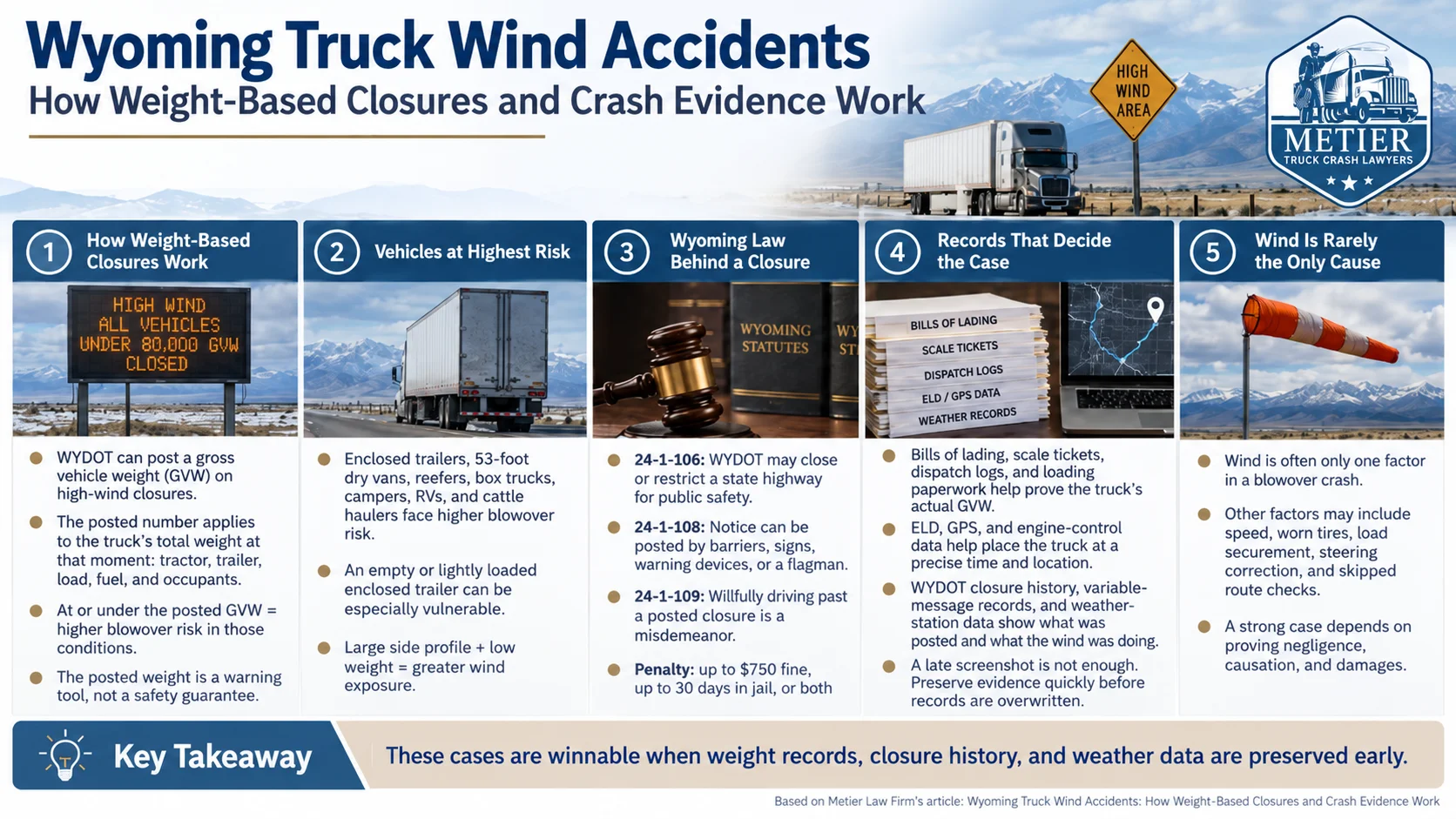
Wyoming has closed roads to “light, high-profile vehicles” during extreme crosswinds since 2011. The trouble was the phrase: a driver hauling freight from out of state couldn’t tell whether the warning applied to his truck. In 2023, after University of Wyoming research it funded, WYDOT began posting an actual weight on many closures. WYDOT explains the system on its Wyoming Wind page.
The number on the sign is a gross vehicle weight, or GVW: the total weight of the tractor, trailer, load, fuel, and everyone inside at that moment, not the empty weight stamped on the equipment. A truck at or under that number falls in the higher-risk group for those conditions.
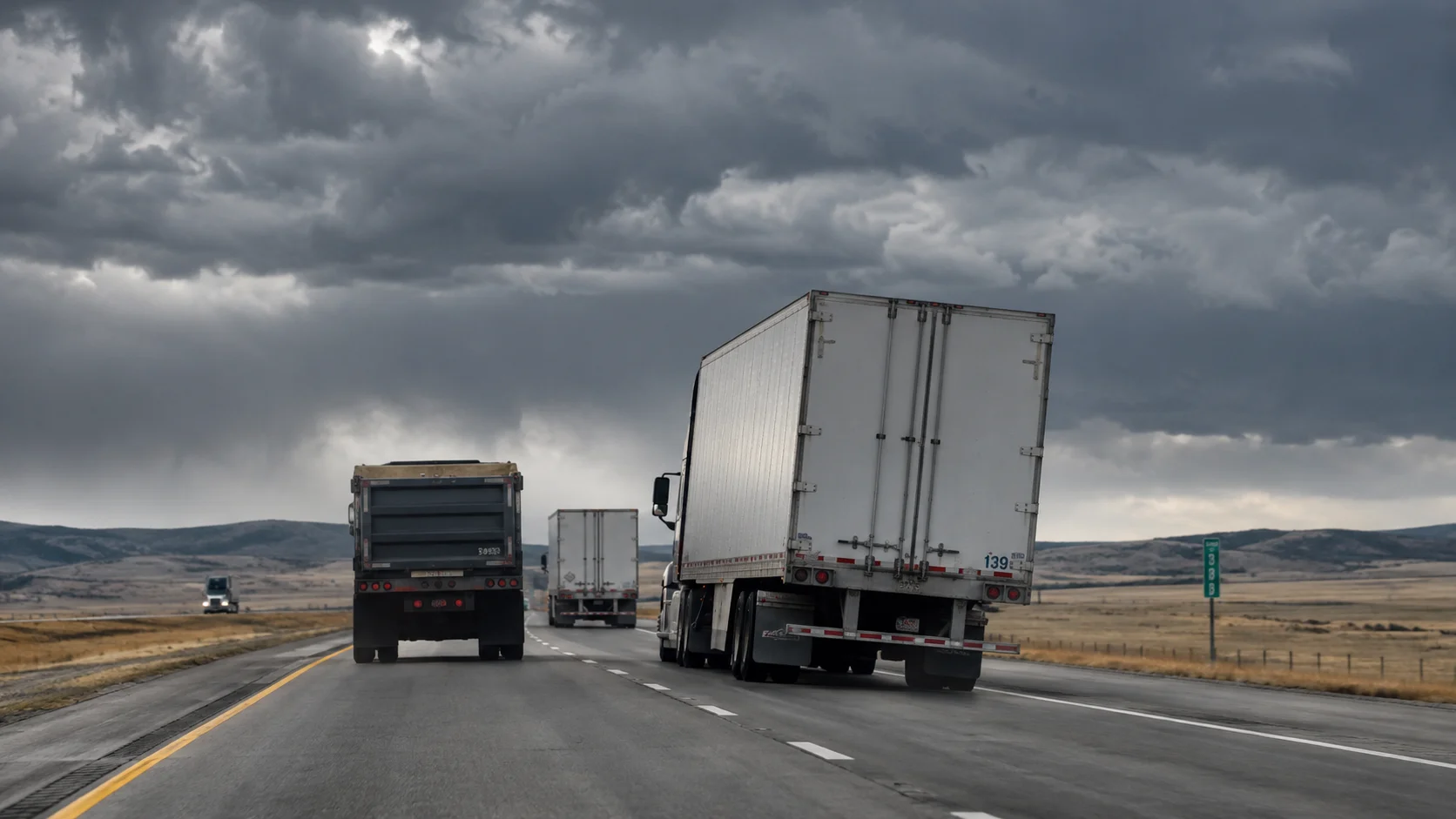
Certain vehicles appear on WYDOT’s list repeatedly. Enclosed trailers like 53-foot dry vans and reefers, plus box trucks, campers, RVs, and cattle haulers, all present a large flat surface for the wind to push against. A tanker or flatbed running empty usually isn’t included.
The part drivers miss: a weight above the posted number does not guarantee safe passage. WYDOT states plainly that winds are unpredictable, that its sensors may not sit where the strongest gust hits, and that a driver who can’t hold the vehicle should pull off at a rest area, pullout, or the next town. The posted weight sharpens the warning, but it doesn’t remove the danger.
The Law Behind a Wind Closure
Three Wyoming statutes govern wind closures, and carriers sometimes blur them together.
Wyoming Statute 24-1-106 gives WYDOT the authority to close or restrict any state highway when it decides that step is necessary to protect the public. That is the power behind every wind closure on I-25 and I-80, two of the most dangerous truck corridors in the state.
The notice itself is governed by 24-1-108: barriers, posted warnings and signs, warning devices, or a flagman. That notice is what makes a closure legally real at a specific place and time.
Penalties for ignoring that notice fall under 24-1-109. Willfully failing to observe a sign posted under 24-1-108 is a misdemeanor, punishable by a fine of up to $750, up to 30 days in jail, or both. The same statute lets WYDOT or the Highway Patrol allow a driver past a sign in limited cases. Adding weights changed none of those penalties; it gave drivers better information.
A closure violation can be powerful evidence in an injury case, but it doesn’t settle one on its own. Wyoming still weighs conduct, causation, and harm, and assigns each responsible party its own share of fault.
Why Records Decide Wyoming Truck Wind Accidents
A blowover claim depends on reconstructing two things: what warning was posted when the truck entered the affected stretch, and what the truck weighed at that moment. Both answers exist only in records that don’t survive on their own.
We start with the weight. Bills of lading, scale tickets, dispatch logs, and loading paperwork show what rode on the trailer and how much it weighed. Set against the tractor and trailer specifications, those documents establish the real GVW for the trip, not an estimate.
We then reconstruct the timeline. A carrier’s electronic logging device, GPS, and engine-control data can place the truck on a stretch of road at a precise minute. WYDOT’s variable-message records, closure history, and weather-station readings show what was posted and what the wind was doing when the truck entered. Together, those records establish what the driver actually faced, which a screenshot taken hours later cannot.
Federal law adds its own requirements. Under the Federal Motor Carrier Safety Regulations, carriers hold duties around driver conduct and recordkeeping, and those records tie a driver’s choices to what the company knew and told him. These records must be secured quickly. We send a spoliation letter immediately to preserve the electronic data before it is overwritten, the same step we take in a load-shift or unsecured cargo case. Delay too long, and the most important minute of the trip is lost.
Wind Is Rarely the Only Cause
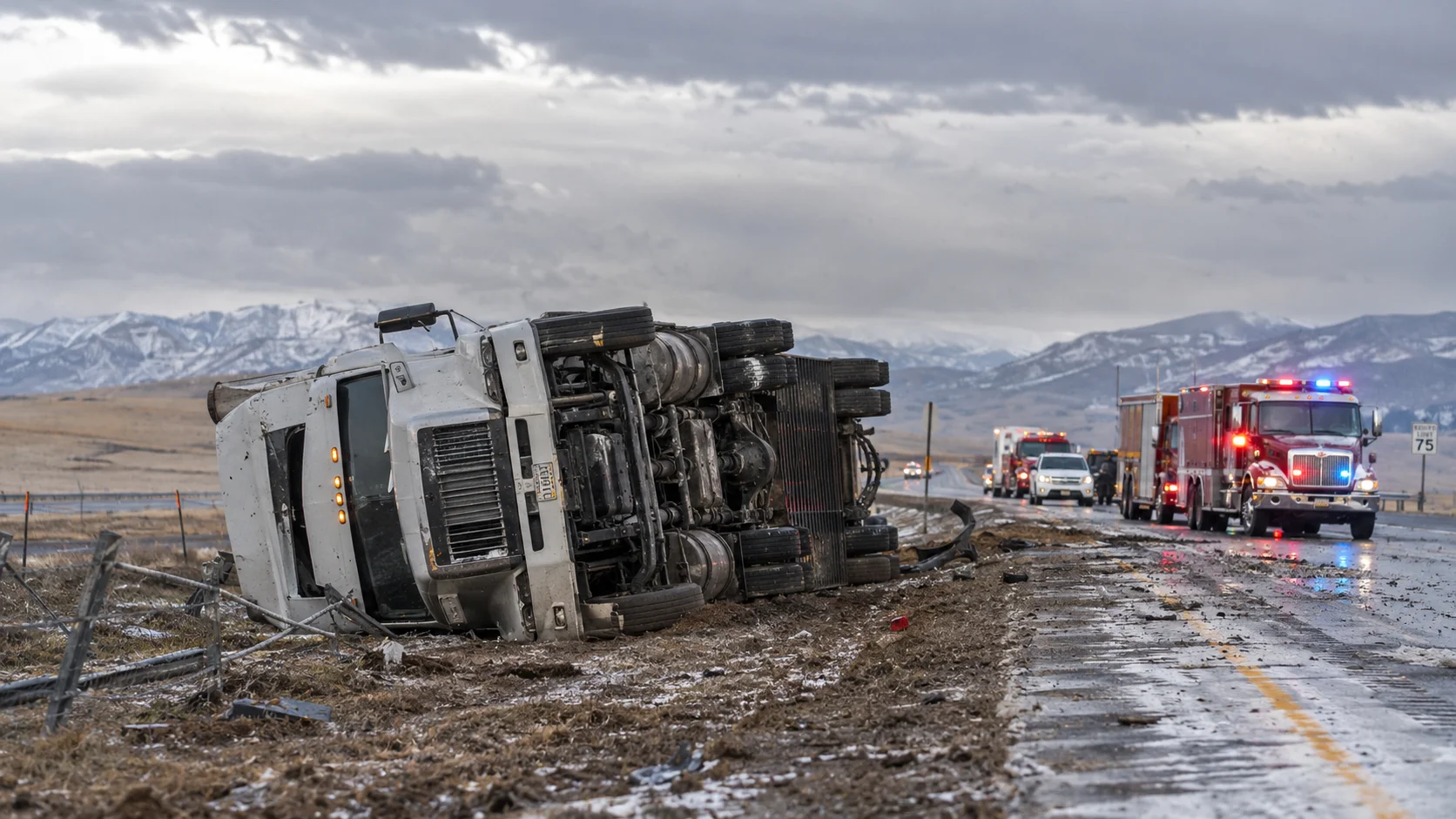
Carriers and their insurers often characterize a blowover as unavoidable bad weather. That characterization rarely holds up. Speed, worn tires, a late steering correction, or a load that shifts on the deck can turn a survivable gust into a rollover or a jackknife. A thorough investigation separates what the weather caused from what a driver or carrier decided.
Frequently Asked Questions
Are all trucks covered by the same Wyoming wind restriction?
No. A weight-based closure applies to vehicles at or below the posted gross vehicle weight, and the affected classes depend on the closure. In severe conditions, WYDOT can impose broader restrictions.
Is an empty trailer really more dangerous in high wind?
Often, yes. Blowover risk comes from side profile and weight together. An empty or lightly loaded enclosed trailer presents a large flat surface with little weight to hold it down, so it can be more exposed than a fully loaded one.
Does driving past a closure automatically make the trucker liable for my injuries?
No. A closure violation is strong evidence, but a Wyoming injury claim still requires proof of negligence, causation, and damages. Wyoming also assigns each at-fault party its own share, so naming everyone responsible early matters.
What records prove what was posted when my crash happened?
Time-stamped WYDOT closure and variable-message records, roadside weather-station data, and the truck’s own telematics. Together they show the warning and the wind at the minute the truck entered, which memory and a late screenshot cannot.
You Want Someone Who Knows These Roads
A blowover crash on a Wyoming interstate is seldom just bad luck, and the driver is rarely the only one at fault. Carrier dispatch decisions, rushed loading, and an enclosed trailer sent into dangerous crosswinds are often the real causes. In Wyoming truck wind accidents, the difference between a denied claim and a real recovery usually comes down to the evidence, and that evidence does not last long. Our Casper truck accident lawyers move quickly to secure the weight records, closure history, and weather data before they are lost, and we use them to hold the responsible companies accountable.
Call Metier Law Firm at 866-377-3800 or schedule your free consultation today at www.metierlaw.com.
Disclaimer: Past results discussed should not be considered a guarantee of your results as the factors of every case are individually unique. This content is for informational purposes only and does not constitute legal advice. Consult a qualified attorney from Metier Law Firm regarding your individual situation for legal advice.
Tell Us About Your Case – Free Case Review with a Personal Injury Lawyer
(866) 377-3800Our Locations
.webp)
Do I have a Case?
How Much Should I Be Offered?
Do I Need an Attorney?
If these questions have crossed your mind, let us help. You may need a little direction or may not need an attorney at all, but you deserve to be confident knowing your options. We can provide you with information about our Attorneys of the West® accident investigations and legal services. Your confidential consultation with us is totally free.
Keep up with us!
