.svg)

.png)
TL;DR: Key Takeaways
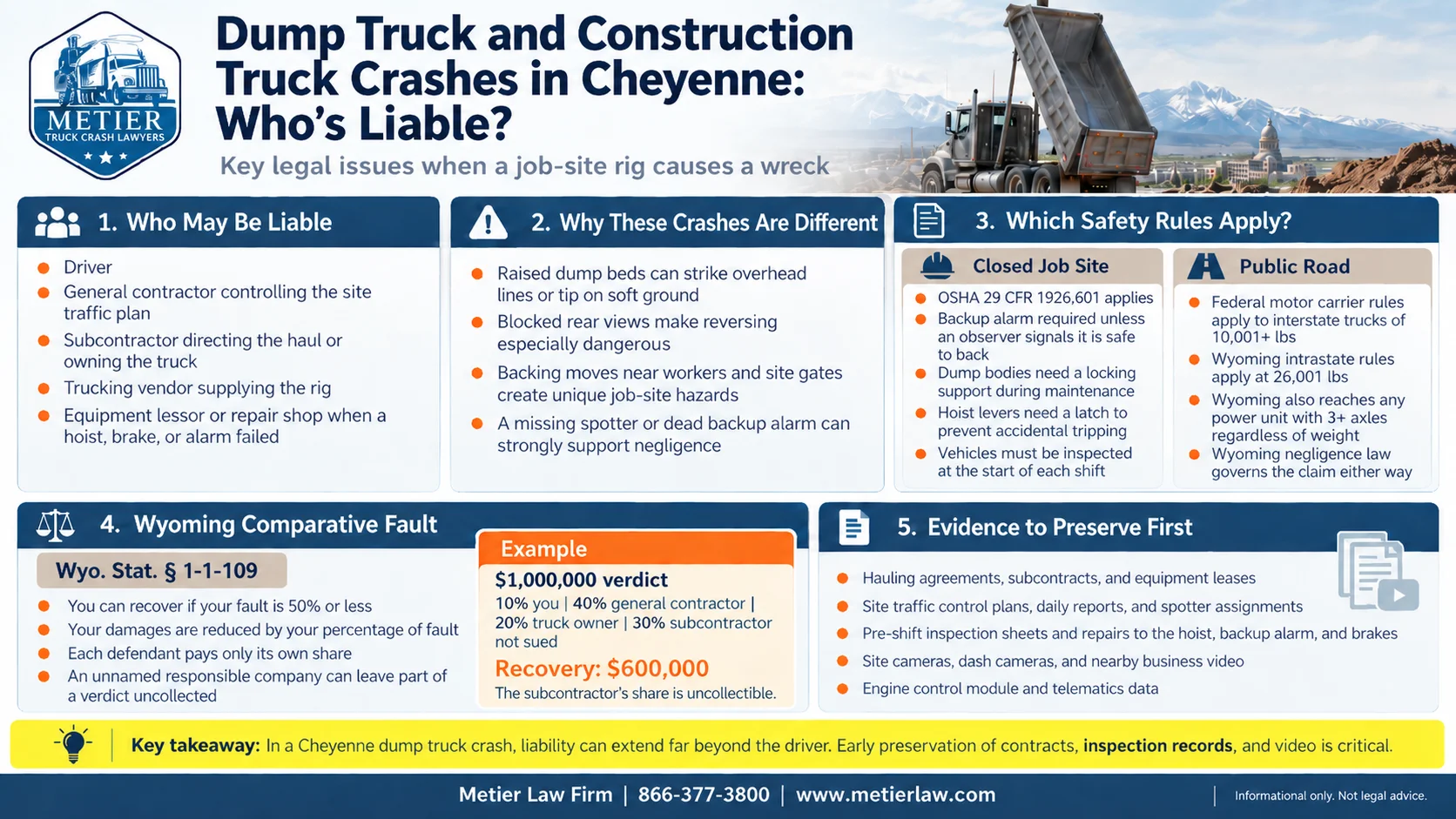
- A dump truck crash on or near a Cheyenne job site can involve the driver, the general contractor, a subcontractor, a trucking vendor, and an equipment lessor or repair shop.
- Raised dump beds, blocked rear views, and reversing moves around workers and site gates create hazards ordinary car crashes don't.
- OSHA's construction standard, 29 CFR 1926.601, sets backup-alarm, dump-body, and pre-shift inspection rules for trucks on job sites closed to public traffic.
- On public roads, federal motor carrier rules cover interstate trucks of 10,001 pounds or more. Wyoming's intrastate rules reach any power unit with three or more axles.
- Under Wyo. Stat. § 1-1-109, you can recover if your fault is 50% or less, and each defendant pays only its own share.
- Contracts, site logs, camera footage, and inspection records disappear fast, so we send preservation demands at the start of every case.
Construction traffic moves through Cheyenne every working day. Dump trucks haul aggregate and spoil between pits, staging yards, and projects along Dell Range Boulevard, College Drive, and the approaches to theI-25 and I-80 interchange. When one of those trucks backs into a worker, sideswipes a car at a site gate, or pulls into traffic without a flagger, the driver is only the first name on a long list of companies that can share fault.
I'mTodd Ingram, a partner at Metier Law Firm, and represent people hurt in vehicle crashes and industrial accidents statewide. After an accident, a crash report lists the driver and the truck's owner. What it won't tell you is which contractor set the haul route or which subcontractor skipped the pre-shift check. Wyoming lets a jury assign fault to a company nobody sued, and no one else covers that share. So we find every company that touched the truck and the route before the paperwork disappears.
Why Job-Site Dump Truck Crashes Work Differently
A long-haul freight case tends to center on one motor carrier and one driver. Construction hauling is layered, because the general contractor controls the schedule and the traffic plan while a grading or paving subcontractor may own the dump truck, or hire it from a vendor under a short hauling contract. Spotters get assigned to some moves, not others. OurCheyenne truck accident lawyers start by mapping who controlled the truck, the route, and the move that caused the harm.
Which Safety Rules Apply Depends on Where the Truck Was
OSHA's motor vehicle standard,29 CFR 1926.601, covers vehicles operating within an off-highway jobsite not open to public traffic. Once the truck rolls onto a public street, motor carrier rules take over. Under49 CFR 390.5, a truck used on a highway in interstate commerce is a commercial motor vehicle at 10,001 pounds or more. A haul that stays inside the state falls under Wyoming's intrastate rules, which theWyoming Highway Patrol applies at 26,001 pounds and to any power unit with three or more axles regardless of weight. That covers a standard tandem-axle dump truck. Wyoming negligence law governs the claim either way.
Who Can Be Liable: Driver, Contractor, Vendor, or Someone Else
Liability starts with the driver, since reversing without a clear path, raising a bed under overhead lines, or ignoring a flagger each supports a negligence claim. The contract chain then brings in the general contractor that wrote the site traffic rules, the subcontractor that owned the truck or directed loading, the vendor that supplied the rig, and a lessor or repair shop when a hoist, brake, or alarm failed.
OSHA'sMulti-Employer Citation Policy, CPL 02-00-124, recognizes four roles on a shared worksite: creating, exposing, correcting, and controlling employers. That policy governs OSHA citations, not Wyoming civil liability. It explains why contracts and site safety plans matter here. A Cheyenne dump truck accident lawyer has to ask who held authority over the truck and the move, then prove it with documents.
Lift Beds, Backup Alarms, and Blind-Side Moves
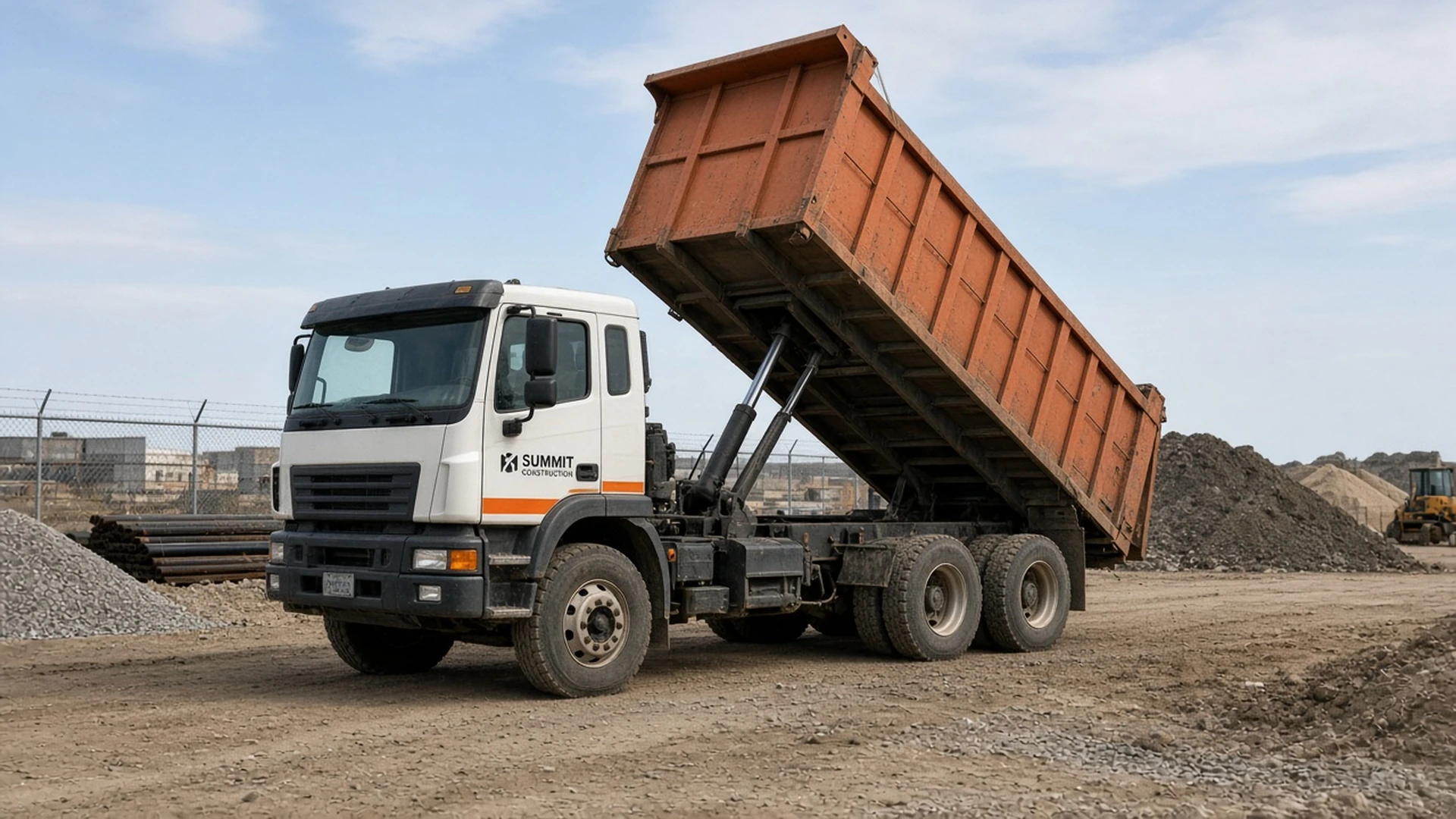
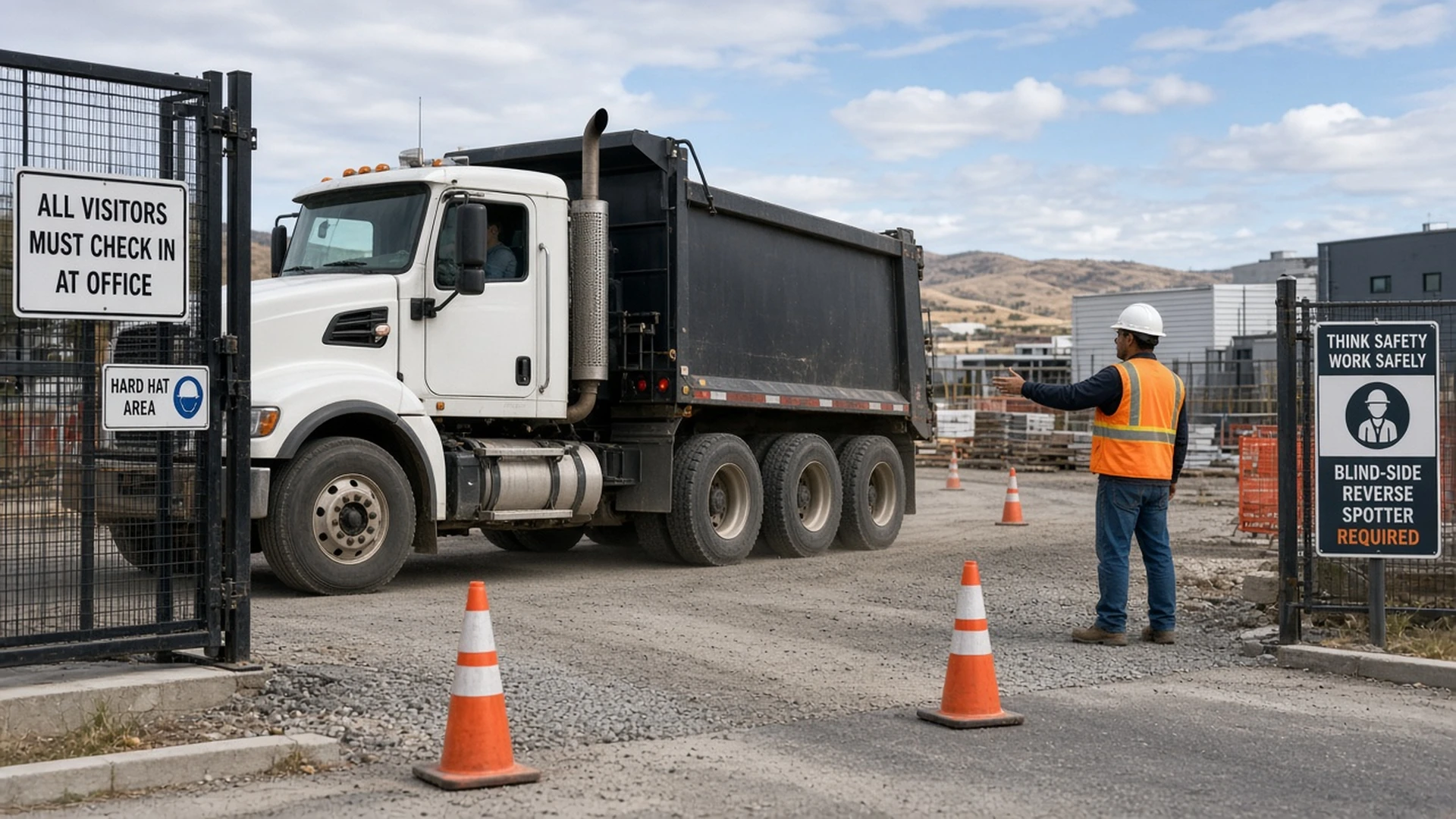
Dump and construction trucks carry risks passenger cars don't. A raised bed can strike overhead lines or tip on soft ground, and a blocked rear view turns every reverse move into a hazard for workers and anyone waiting at the gate.
Section 1926.601 addresses those hazards directly. An employer can't use a vehicle with an obstructed rear view unless it has a reverse signal alarm audible above the surrounding noise, or it backs up only when an observer signals that it's safe. Dump bodies need a permanently attached support that locks in place so the bed can't drop during maintenance, and hoist levers need a latch preventing accidental tripping. Every vehicle gets checked at the start of each shift, and defects must be corrected before it returns to service.
A dead alarm or a missing spotter tells a jury a great deal about how a company ran its equipment. Our guide onwhy maintenance records matter shows how repair files support a negligence case.
If you or a loved one was injured in a crash with a commercial truck, call us at 866-377-3800 or schedule a free consultation atwww.metierlaw.com.
How Wyoming Comparative Fault Affects a Job-Site Claim
Wyoming follows modified comparative fault underWyo. Stat. § 1-1-109. Your own fault doesn't bar recovery as long as it isn't more than 50% of the total fault of all actors, and your damages drop by your percentage. At exactly 50% you still recover half, and above 50% recovery is barred entirely.
Subsection (e) matters just as much on a crowded site: each defendant is liable only for its own proportion of the total fault, so you can't collect a missing share from the deepest pocket. The statute defines an "actor" to include anyone whose fault caused the harm, party to the lawsuit or not.
Consider a $1,000,000 verdict where the jury assigns 10% to you, 40% to the general contractor, 20% to the truck owner, and 30% to a subcontractor nobody sued. You recover $600,000, and the subcontractor's $300,000 share is uncollectible. We covered the same rule for shippers and loading crews in our piece onload-shift crashes in Casper.
The Evidence We Lock Down First
We send preservation demands to the carrier, every contractor on site, and any vendor that supplied the truck. Our overview ofwhat a spoliation letter is explains how they work, and ourWyoming truck accident lawyers page covers these cases statewide. What we target:
- Hauling agreements, subcontracts, and equipment leases
- Site traffic control plans, daily reports, and spotter assignments
- Pre-shift inspection sheets and repairs to the hoist, backup alarm, and brakes
- Video from site cameras, dash cameras, and nearby businesses
- Engine control module and telematics data
Frequently Asked Questions
Who can be liable when a dump truck causes a crash on a Cheyenne job site?
The driver, the driver's employer, the general contractor controlling site traffic, the subcontractor directing the haul, a trucking vendor, and a lessor or repair shop when equipment failure contributed.
Can I recover in Wyoming if I was partly at fault?
Yes, if your share of fault is 50% or less under Wyo. Stat. § 1-1-109. Your damages are reduced by your percentage, and each defendant pays only its own share.
What should a Cheyenne dump truck accident lawyer preserve first?
Contracts, site logs, camera video, pre-shift inspection sheets, backup alarm and dump-body repair records, spotter assignments, and electronic vehicle data.
Do federal trucking rules apply to a construction truck accident in Cheyenne?
It depends on where the truck was. OSHA rules apply on closed job sites. On public roads, federal rules reach interstate trucks of 10,001 pounds or more, and Wyoming's intrastate rules cover hauls that stay in state. Wyoming negligence law applies in every case.
Getting Every Responsible Company on the Record
A job site truck accident in Wyoming turns on whether every company controlling the truck, the lift bed, the reverse path, and the traffic plan gets named before its share of fault goes uncollected. We build that record from the contracts and inspection files. If a dump truck crash in Wyoming changed your life, a truck accident attorney in Cheyenne from our team can review it and tell you who we'd hold responsible.
Call Metier Law Firm at 866-377-3800 or schedule your free consultation today atwww.metierlaw.com.
Disclaimer: Past results discussed should not be considered a guarantee of your results as the factors of every case are individually unique. This content is for informational purposes only and does not constitute legal advice. Consult a qualified attorney from Metier Law Firm regarding your individual situation for legal advice.
Tell Us About Your Case – Free Case Review with a Personal Injury Lawyer
(866) 377-3800Our Locations
.webp)
Do I have a Case?
How Much Should I Be Offered?
Do I Need an Attorney?
If these questions have crossed your mind, let us help. You may need a little direction or may not need an attorney at all, but you deserve to be confident knowing your options. We can provide you with information about our Attorneys of the West® accident investigations and legal services. Your confidential consultation with us is totally free.
Keep up with us!
