.svg)


TL;DR: Key Takeaways
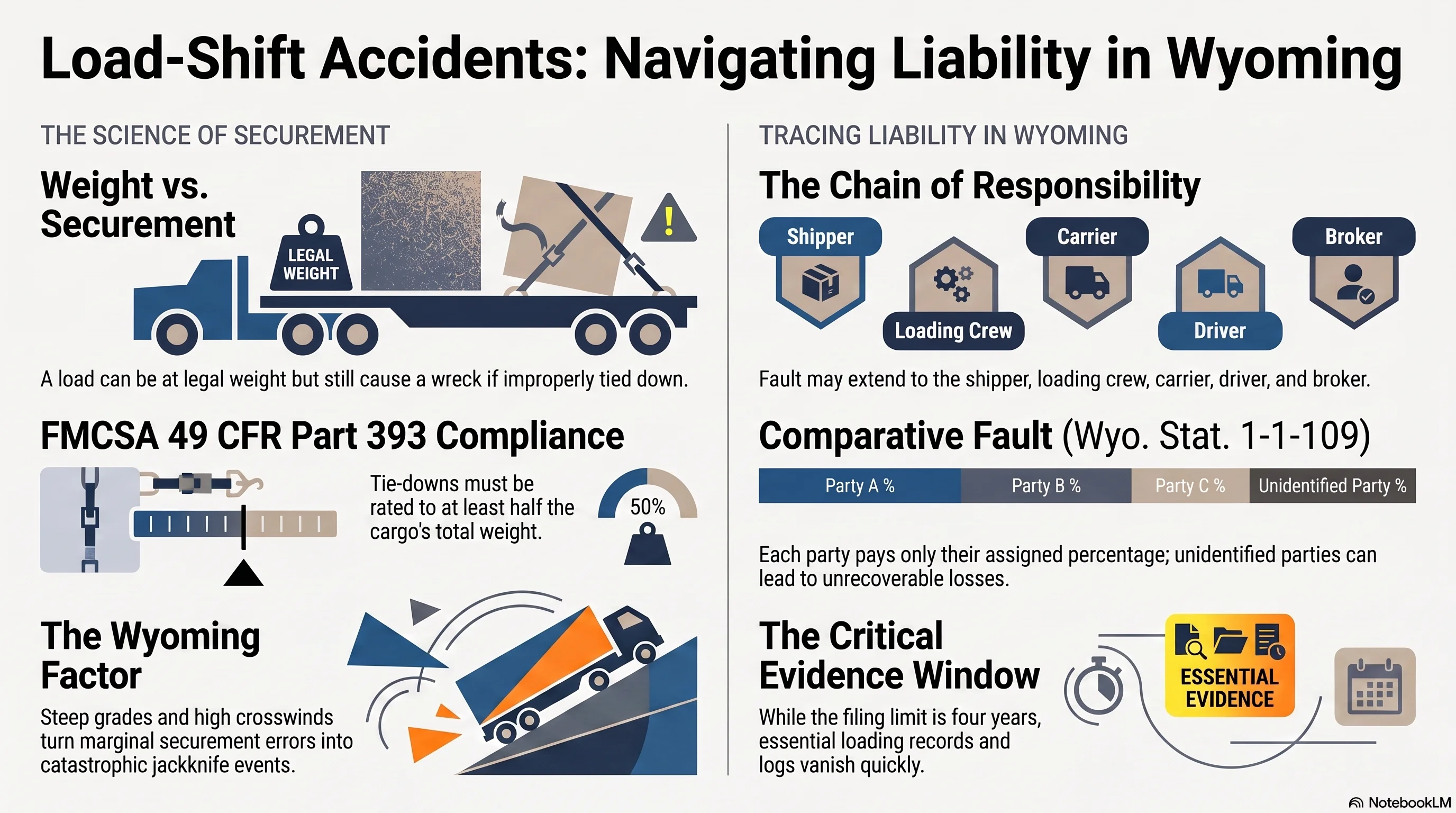
- A load can sit at legal weight and still cause a wreck if it was never tied down to spec. That is a securement failure, not an overweight load.
- Federal rules in 49 CFR Part 393 require cargo held so it can't shift, spill, or fall, with tiedowns rated to at least half the load's weight and re-checks on the road.
- Casper's oilfield and farm freight rides on flatbeds, where bad blocking, weak straps, or a skipped re-check turns into a shifting load.
- Wyoming grades and crosswinds make a loose load more likely to migrate, jackknife the rig, or spill into traffic.
- Fault can reach the shipper, the loading crew, the carrier, the driver, and sometimes a broker.
- Wyoming pays out differently than many states. Each at-fault party covers only its share, so missing one can cost you.
- You have four years to file in Wyoming, but the records you need disappear long before that.
A truck can roll across a Wyoming port of entry completely legal and still be a danger the moment it hits the first grade out of town. How the freight was blocked, braced, and tied down matters just as much as its weight, and when it's done wrong, the cargo can slide, tip the trailer, or come off entirely. I'm Phil Chupik, a partner at Metier Law Firm, and I've spent more than 20 years representing people hurt in commercial truck wrecks. Our Casper truck accident lawyers work these cases with a team that knows trucks from the inside, including managing partner Mike Chaloupka, who holds a Class A CDL, and founding partner Tom Metier, who is board certified in truck accident law. Here is what we look at when a shifting or falling load caused the crash, and how Wyoming truck cargo accident liability gets sorted out.
A Load-Shift Crash Is Not the Same as an Overweight Crash
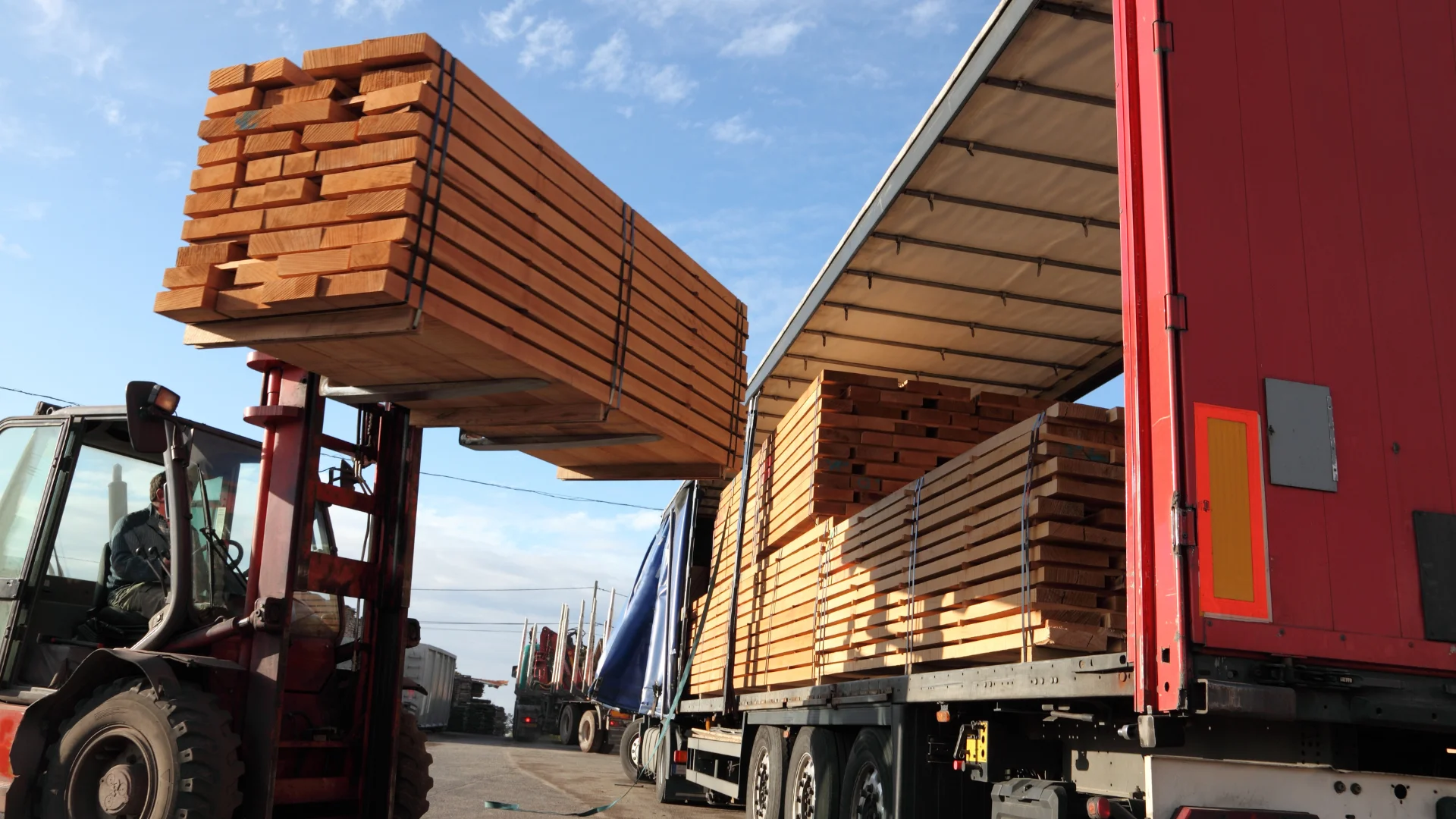
The difference matters for your case. An overweight truck carries more total weight than the law allows, a separate hazard we cover in why overloaded trucks are dangerous on our roads. A securement failure is different. The weight can be legal, but the freight wasn't held in place. It shifts under braking or in a turn, the trailer's balance changes, and the driver loses control. A cargo shift truck crash often ends as a rollover or a jackknife, where the trailer swings out of line with the cab. We cover that in our guide to jackknife accidents, and load migration is one of the triggers.
What the FMCSA Cargo Securement Rules Require
Freight on a flatbed is governed by federal law, specifically 49 CFR Part 393, Subpart I, titled Protection Against Shifting and Falling Cargo. Cargo has to be secured so it cannot shift, spill, blow off, or fall under hard braking and sharp turns. The tie downs have to be strong enough as a group, with a combined working load limit of at least half the cargo's weight. The number of tie downs depends on each item's length and weight, and heavy equipment over 5,000 pounds needs at least four. The driver has to re-check the load too. Under 49 CFR 392.9, that means a check within the first 50 miles, then at any duty change, after three hours, or after 150 miles.
Specialized freight has its own rules. Pipe, metal coils, and heavy machinery each carry specific requirements, which matters here because so much that moves through Casper is oilfield and energy equipment. When a crew straps casing or drilling equipment like ordinary freight, that shortcut is often where a load securement violation truck accident begins.
Why Loads Come Loose on Wyoming Runs
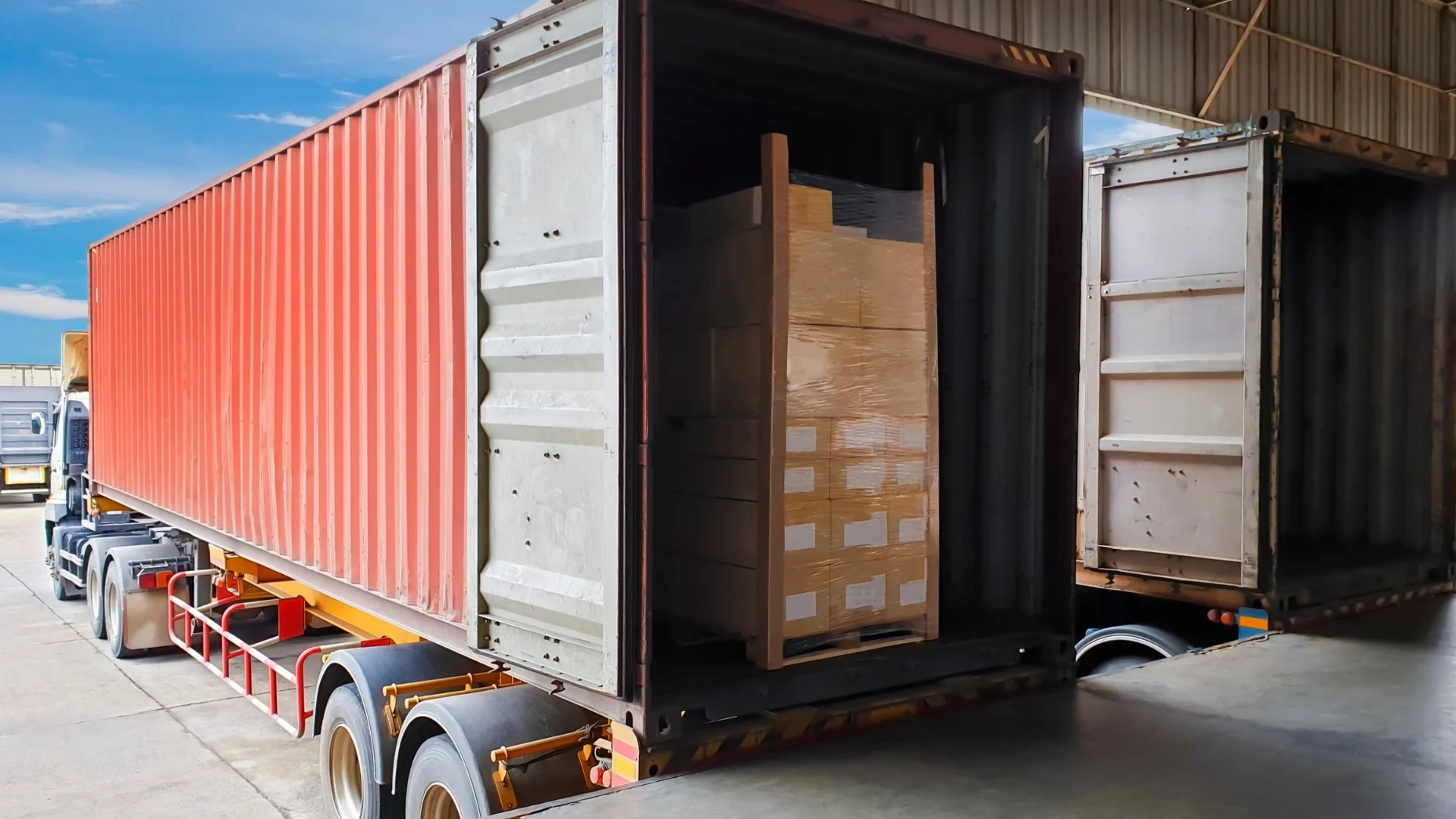
Wyoming puts extra stress on a marginal securement job. Long hauls give a settling load plenty of miles to loosen, and a driver who skips the required re-checks never catches it. Grades add to it: a load that holds on flat ground can surge forward on a steep descent and snap a weak tiedown. So does wind, which pushes tall or unbalanced freight sideways on the deck. None of this excuses a bad securement job. It exposes it. The same patterns show up statewide, part of why 2026 has been one of Wyoming's deadliest years on the road.
If you or a loved one was injured in a crash with a commercial truck, call us at 866-377-3800 or schedule a free consultation at www.metierlaw.com.
Who Is Liable When Freight Isn't Secured Right
More than one company usually touches a load before it moves: the shipper who packed it, a crew that loaded and strapped it, the carrier, the driver who was supposed to inspect it, and sometimes even a broker. Each can carry a share of the blame, so working out who is liable for a falling cargo accident means tracing that chain through the paperwork, like the bill of lading and the loading records.
Wyoming law adds a wrinkle that quietly costs people money. When more than one company is responsible for a load coming loose, the jury assigns each a percentage, and each pays only its own share. No rule lets you collect a missing share from whoever is left standing. So if the company most to blame never gets named, or turns out to be broke, that share can disappear. Wyoming law under Wyo. Stat. 1-1-109 even lets a jury put fault on a company that was never sued. That is why we move fast to find every party that touched the freight, before logs and loading records vanish.
Frequently Asked Questions
Who is liable for a falling cargo accident in Wyoming?
Any party that contributed to the load coming loose: the shipper, the loading company, the carrier, the driver, or a broker. Wyoming assigns each a share of fault and each pays only its share, so naming every responsible party early is critical.
What is the difference between an overweight truck and an unsecured load truck accident in Wyoming?
An overweight truck exceeds legal weight limits. An unsecured load is about how the freight was tied down, not how much it weighs. A legal-weight load can still wreck a truck if it wasn't strapped to spec.
How long do I have to file a Wyoming truck cargo accident claim?
Generally four years from the date of injury, though evidence disappears much faster. A Wyoming truck accident lawyer can move to preserve it.
Why the Right Team Matters After a Securement Crash
A shifting or falling load leaves a trail, but only if someone preserves it fast, and trucking companies move quickly to control that story after a crash. When Wyoming truck cargo accident liability is on the line, the percentage of fault on each party decides what you recover, so we dig into the records, bring in the experts, and pin down what each one did. If you were hurt by a load that wasn't tied down right anywhere in Wyoming, from Casper to Cheyenne, we can help.
Call Metier Law Firm at 866-377-3800 or schedule your free consultation today at www.metierlaw.com.
Disclaimer: Past results discussed should not be considered a guarantee of your results as the factors of every case are individually unique. This content is for informational purposes only and does not constitute legal advice. Consult a qualified attorney from Metier Law Firm regarding your individual situation for legal advice.
Tell Us About Your Case – Free Case Review with a Personal Injury Lawyer
(866) 377-3800Our Locations
.webp)
Do I have a Case?
How Much Should I Be Offered?
Do I Need an Attorney?
If these questions have crossed your mind, let us help. You may need a little direction or may not need an attorney at all, but you deserve to be confident knowing your options. We can provide you with information about our Attorneys of the West® accident investigations and legal services. Your confidential consultation with us is totally free.
Keep up with us!
