.svg)


TL;DR - Key Takeaways
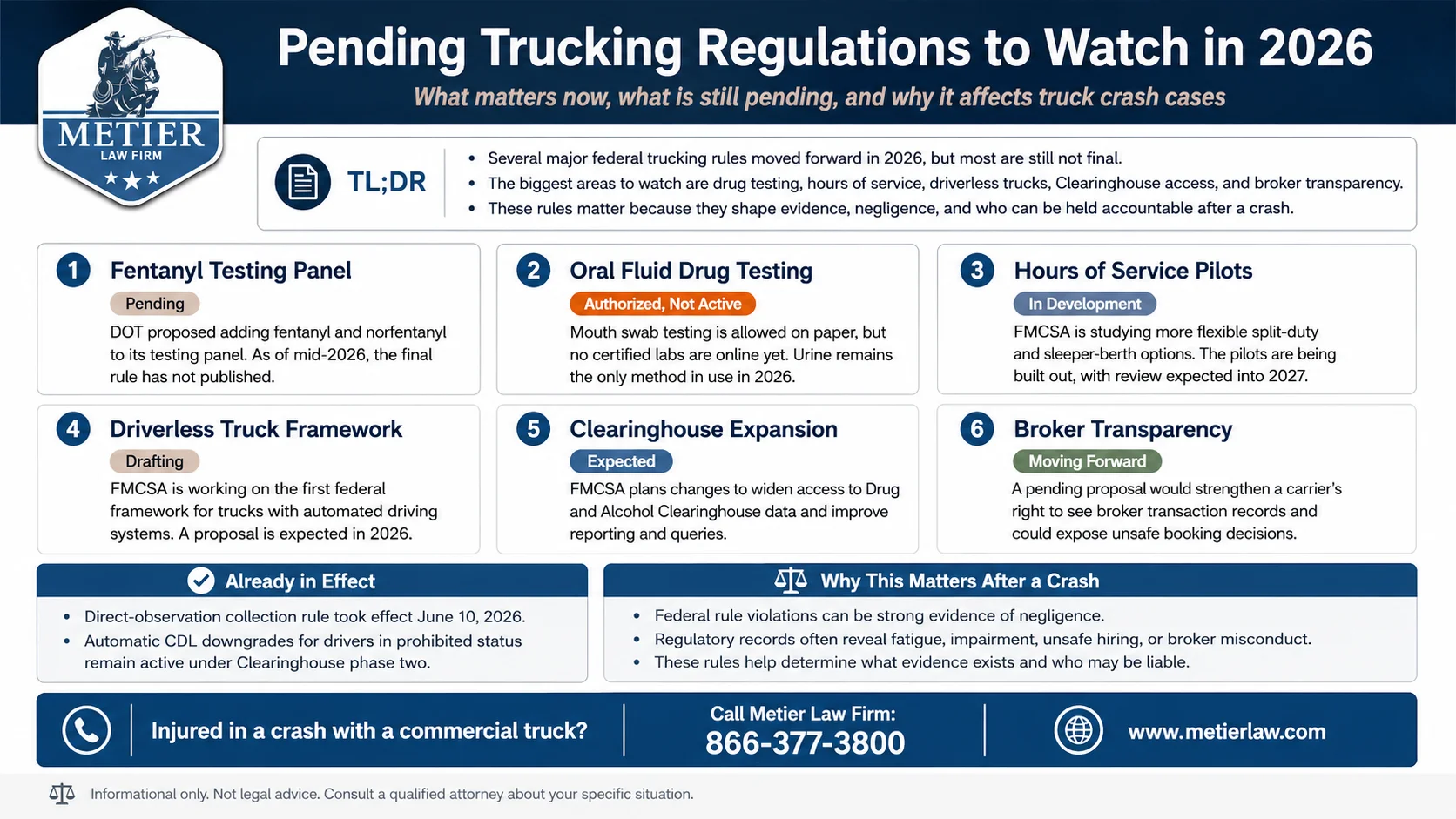
- Several proposed federal trucking rules moved forward in 2026, and none of the major ones are final yet.
- The DOT wants to add fentanyl to its drug testing panel, but the final rule has not published.
- Oral fluid drug testing is authorized on paper and still waiting on certified labs before anyone can use it.
- Two hours of service pilots could loosen the 14-hour clock and sleeper berth splits if the safety data holds up.
- FMCSA is drafting the first federal framework for driverless trucks, and a broker transparency proposal is still moving.
- For crash victims, these rules decide what evidence exists and who can be held accountable after a crash.
I hold a Class A commercial driver's license, so when regulators propose new rules for trucks, I read them the way a driver would. Right now several pending trucking regulations are moving through Washington, and the ones that matter most are still not final. Each one started with a real failure on the road, the kind that puts the people we represent in the hospital.
As a truck accident lawyer, I follow these pending trucking regulations because they shape real cases. Proving a violation of a federal rule is one of the strongest ways to show negligence in a truck accident claim. The details in these rules often become the evidence. For the deeper version of how that works, we broke down how trucking regulations affect your case. Here is where the big ones stand in 2026, and what each could mean if you have already been hurt by a commercial truck.

Fentanyl on the DOT drug testing panel
The federal Department of Transportation proposed adding fentanyl to its drug testing panel, along with the metabolite norfentanyl. The notice published on September 2, 2025. The comment period closed on October 17, 2025. As of the middle of 2026, the final rule still has not published and carriers are still testing under the same five-panel screen they have used for years. A positive drug test is often the clearest evidence of impairment we can put in front of a jury, and an updated, broader panel would catch drivers the current screen misses.
Oral fluid drug testing
Oral fluid, the mouth swab method, is authorized as an alternative to urine under the DOT's 49 CFR Part 40 testing procedures. It is not usable yet, though. No laboratory has been certified to process oral fluid samples for federal testing, so urine remains the only method in service in 2026. Once certified labs come online, oral fluid could strengthen post-accident testing. A swab is harder to cheat and easier to collect at a crash scene before a driver has an opportunity to leave.
Hours of service flexibility pilots
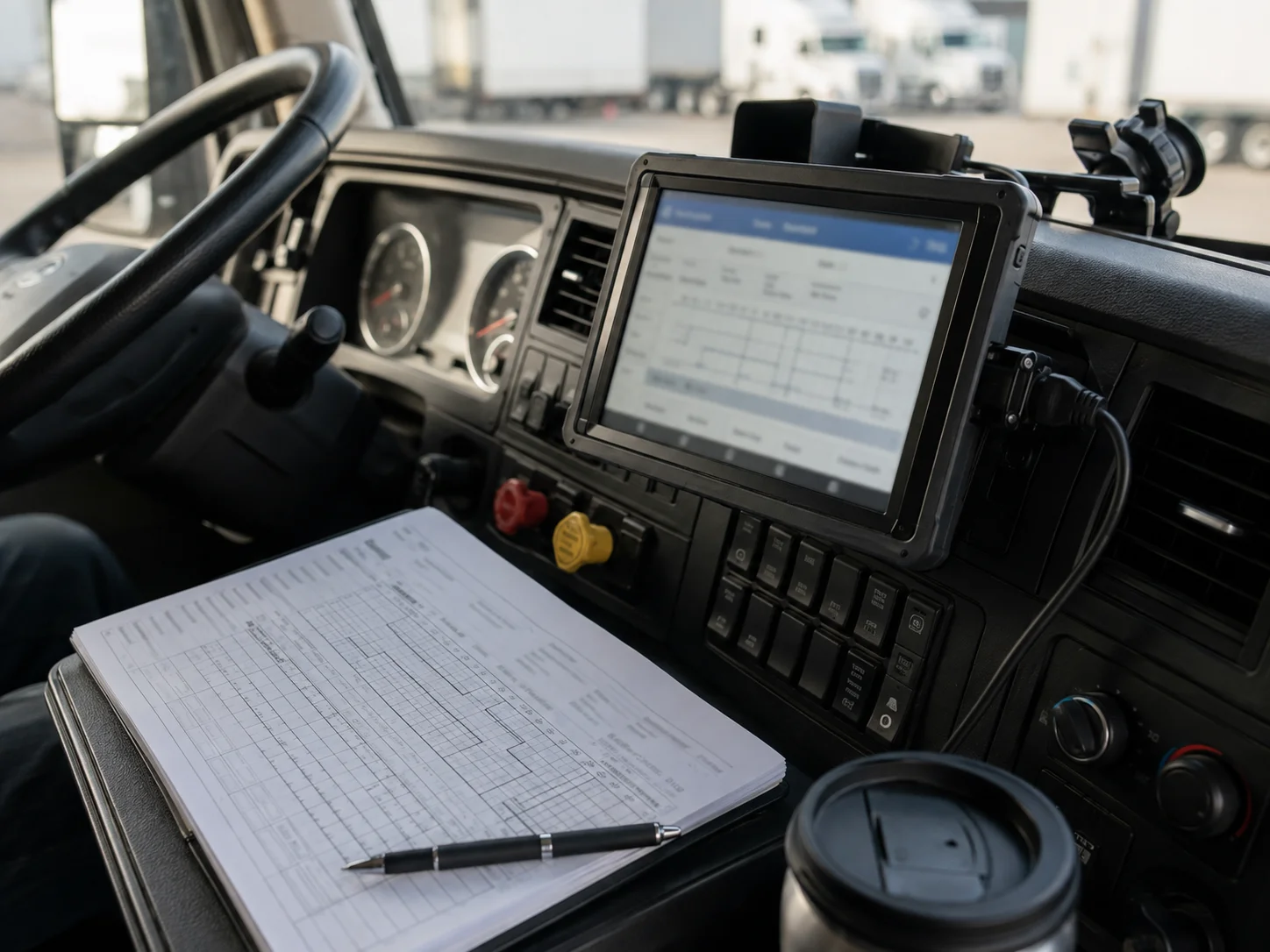
The hours of service rules exist to keep tired drivers from staying behind the wheel too long. In September 2025, FMCSA proposed two pilot programs under the Department of Transportation's Pro-Trucker Package. The Split Duty Period pilot would let a driver pause the 14-hour driving window once, for a break of 30 minutes to three hours. The Flexible Sleeper Berth pilot would test 6/4 and 5/5 ways of splitting the required 10 hours off duty, beyond the 8/2 and 7/3 splits allowed now.
These pilots are not running at full scale yet, despite some early coverage suggesting otherwise. FMCSA spent 2026 building the study protocols. More than 500 drivers are expected to take part once the programs are underway. The agency plans to review the results into 2027 before changing any rule. If the added flexibility keeps safety steady, it could become permanent. If not, the current splits stay. Either way, a carrier that pushes a fatigued driver past a legal limit is still one we can hold accountable.
A federal rulebook for driverless trucks
Automated trucks are already hauling freight in parts of the country, and the federal rulebook has not caught up. FMCSA is drafting a proposed rule for commercial vehicles equipped with automated driving systems. Most current safety regulations assume a human driver, and this rule would update them. The agency now projects the proposal for August 2026, though that target has already slipped more than once, and has not been published as of this writing. When a driverless truck causes harm, liability can reach the carrier, the technology developer, and the company responsible for maintenance. Those rules will help decide how such claims get proven.
If you or a loved one was injured in a crash with a commercial truck, call us at 866-377-3800 or schedule a free consultation at www.metierlaw.com.
Expanded Drug and Alcohol Clearinghouse access
The Drug and Alcohol Clearinghouse is the federal database that flags CDL holders who fail or refuse a drug or alcohol test. FMCSA plans to propose changes that would widen access to that violation information and make querying and reporting more efficient. The goal is to keep unsafe drivers from moving between carriers undetected. That proposed rule is projected for November 2026. The Clearinghouse already carries weight in our cases. It documents exactly when a driver should have been off the road, and it works with the emergency federal rules targeting unqualified drivers from late 2025.
Broker transparency
Freight brokers sit between shippers and carriers, and their records can reveal who cut corners on price and safety. FMCSA published a proposed rule in November 2024 that would strengthen a carrier's right to see the broker's record of a transaction and limit contract clauses that waive that right. The docket drew roughly 7,000 comments, and a supplemental proposal is expected in 2026. Say a crash traces back to an unsafe, underpriced carrier a broker never should have booked. That paper trail can extend accountability past the driver to the broker itself.
Rules that already changed in 2026
Not every recent change is still just a proposal. A DOT rule revising the direct-observation collection procedures under 49 CFR Part 40 took effect on June 10, 2026. The Clearinghouse's second phase, in force since November 2024, now triggers automatic CDL downgrades for drivers in prohibited status. These are live requirements today, and they already shape the records we request after a crash.
Frequently Asked Questions
Which 2026 trucking regulations should you watch most closely?
The widest-reaching are the fentanyl testing panel, the two hours of service pilots, the automated driving systems framework, the expanded Clearinghouse access, and the broker transparency proposal. None were final as of mid-2026, and timelines have moved, so the FMCSA regulatory agenda is the place to confirm current status.
Are any of these federal trucking rules actually in effect yet?
Most headline items are still proposals. The changes already in force include the June 10, 2026 direct-observation collection rule and the automatic CDL downgrades under the second phase of the Drug and Alcohol Clearinghouse.
Why does a truck accident lawyer track proposed federal rules?
Because a violation of a federal safety rule is powerful evidence of negligence. Knowing which rules apply, and when they changed, helps us pinpoint where a carrier or driver fell short of the standard the law sets.
Where Metier Law Firm Fits Into All of This
You do not need to memorize the federal register to know when a trucking company failed you. That is our job. Staying current on these pending trucking regulations is how we build cases that hold carriers accountable. My CDL background means I know what these rules ask of a driver in the real world, not just on paper. With offices across the West in Denver, Fort Collins, Colorado Springs, Seattle, Portland, Casper, and Cheyenne, Metier Law Firm's truck accident lawyers are ready to help. We are here after you have been hurt in a crash with a semi or other large commercial vehicle.
Call Metier Law Firm at 866-377-3800 or schedule your free consultation today at www.metierlaw.com.
Disclaimer: Past results discussed should not be considered a guarantee of your results as the factors of every case are individually unique. This content is for informational purposes only and does not constitute legal advice. Consult a qualified attorney from Metier Law Firm regarding your individual situation for legal advice.

Tell Us About Your Case – Free Case Review with a Personal Injury Lawyer
(866) 377-3800Our Locations
.webp)
Do I have a Case?
How Much Should I Be Offered?
Do I Need an Attorney?
If these questions have crossed your mind, let us help. You may need a little direction or may not need an attorney at all, but you deserve to be confident knowing your options. We can provide you with information about our Attorneys of the West® accident investigations and legal services. Your confidential consultation with us is totally free.
Keep up with us!
