.svg)


TL;DR:
- Commercial truck drivers must undergo mandatory drug testing under federal FMCSA regulations, including pre-employment, random, and post-accident testing
- The five-panel urinalysis screens for marijuana, cocaine, opiates, amphetamines, and PCP
- As of November 2024, CDL drivers with drug violations face automatic license suspension through the Drug and Alcohol Clearinghouse
- Positive drug tests can establish liability in truck accident cases and strengthen compensation claims
- Federal testing requirements supersede state laws in Colorado, Wyoming, Nebraska, Oregon, and Washington
Yes, truck drivers are required to get drug tested through a program mandated by the Federal Motor Carrier Safety Administration (FMCSA). Testing is triggered by several events, including pre-employment, random selection, after an accident, and when there is a reasonable suspicion of impairment. The required tests are typically urinalysis, checking for five controlled substances: amphetamines, cocaine, opiates, marijuana, and PCP.
Call Metier Law Firm at 866-377-3800 or schedule your free consultation today at www.metierlaw.com
Why Drug Testing Matters in the Trucking Industry
Operating an 80,000-pound commercial vehicle requires absolute clarity and quick reflexes. When a truck driver is impaired, reaction times slow, judgment becomes clouded, and vehicle control diminishes. According to recent data, more than 235,000 drug and alcohol violations have been reported to the federal Drug and Alcohol Clearinghouse, with marijuana violations accounting for over 130,000 cases. For crash victims, these testing records often become crucial evidence when working with a truck accident lawyer to prove negligence and secure compensation.
Federal Drug and Alcohol Testing Requirements for Truck Drivers
The DOT drug testing program operates under strict federal guidelines outlined in 49 CFR Part 382 that apply to all commercial drivers holding a CDL. These mandatory regulations govern every carrier operating in interstate commerce.
FMCSA Pre-Employment Testing
Before a driver can operate a commercial vehicle, they must pass a pre-employment drug test. Employers must receive negative results before allowing the driver behind the wheel. The screening tests for marijuana, cocaine, opiates, amphetamines, and phencyclidine (PCP). Even if a driver held a CDL at a previous job, new employers must conduct fresh testing. We've handled cases where carriers violated this rule, putting untested drivers on the road and creating dangerous situations.
Random Testing Throughout the Year
The FMCSA maintains a 50% random drug testing rate for commercial drivers in 2025, meaning trucking companies must randomly test half their workforce annually. The alcohol testing rate stands at 10%. These aren't suggestions, they're federally mandated minimums enforced under FMCSA drug testing requirements. Drivers can be selected at any time without warning, and refusing a test counts as a failed test.
Call Metier Law Firm at 866-377-3800 or schedule your free consultation today at www.metierlaw.com
Post-Accident Testing After Certain Crashes
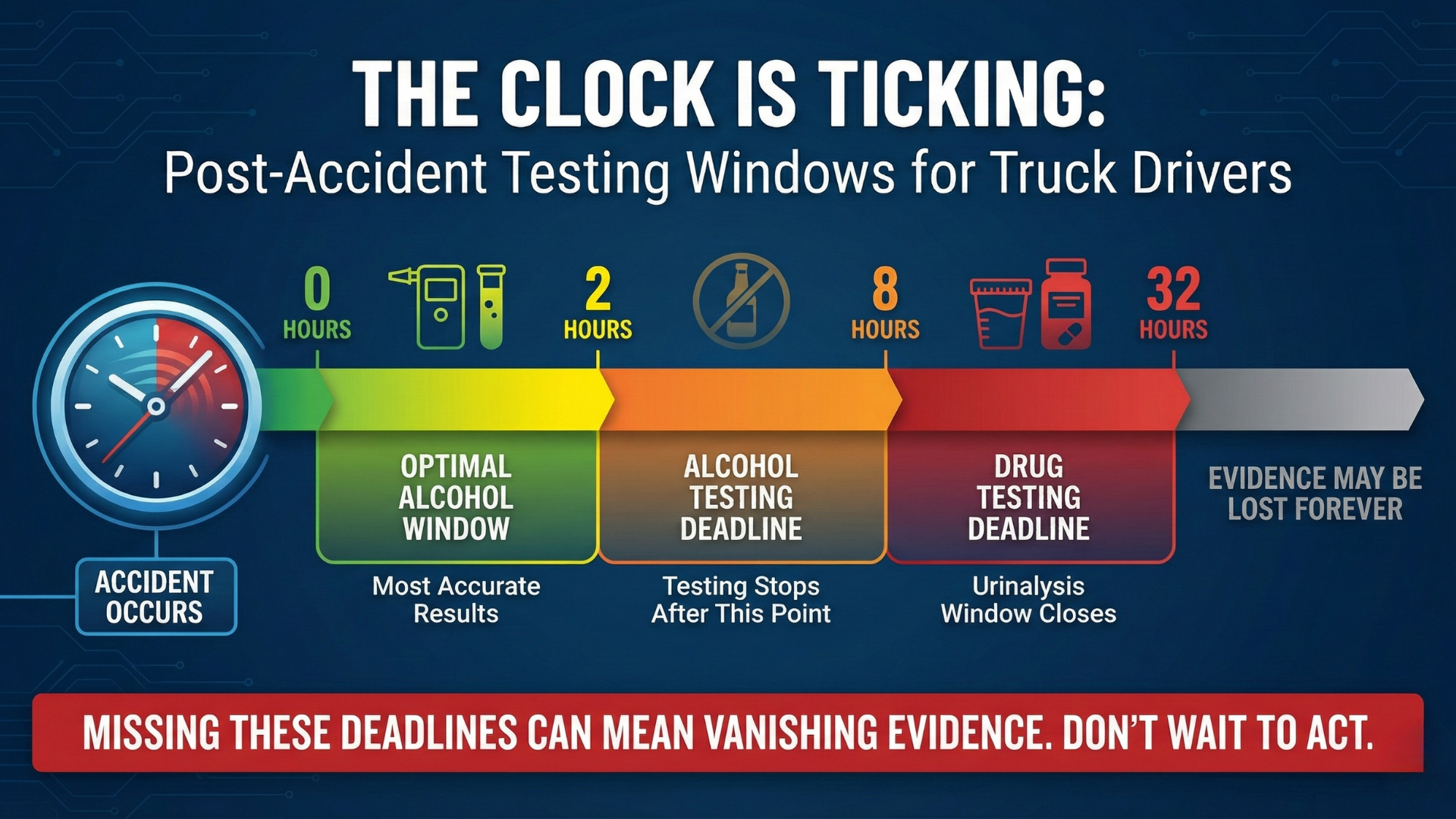
Post-accident drug testing becomes mandatory under specific circumstances. According to FMCSA regulations, testing must occur after fatal accidents regardless of citations. Testing is also required when crashes involve injuries requiring immediate medical treatment and the driver receives a citation, or when vehicle damage requires towing and the driver receives a citation. Alcohol testing should occur within two hours, no later than eight hours. Drug testing should happen within 32 hours.
If you or a loved one was injured in a crash with a commercial truck, call us at 866-377-3800 or schedule a free consultation at www.metierlaw.com.
What Substances Truck Drivers Are Tested For
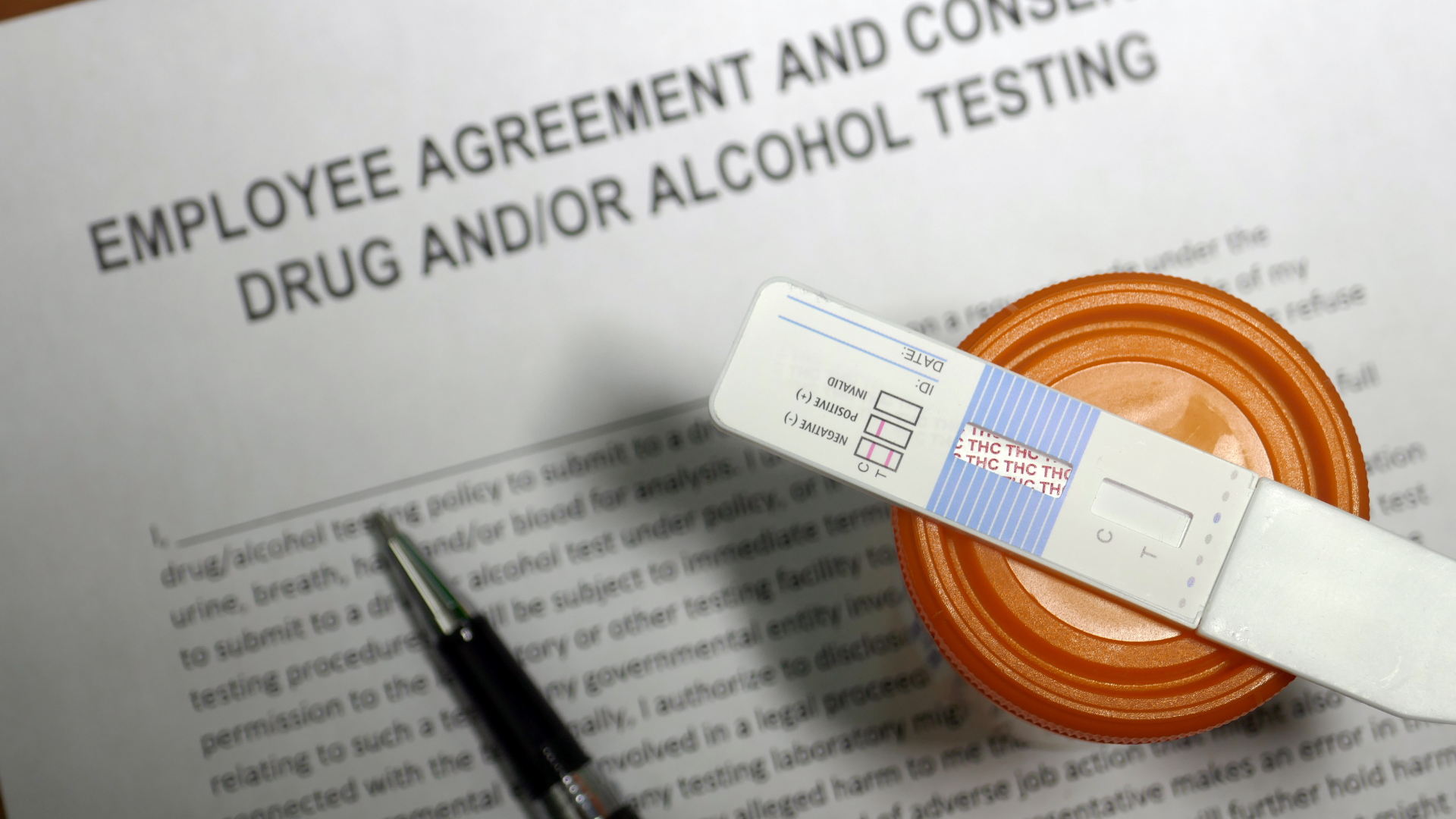
The standard DOT drug testing program uses a five-panel urinalysis screening for marijuana (THC), cocaine, opiates (including heroin, morphine, and codeine), amphetamines (including methamphetamine and MDMA), and phencyclidine (PCP). In January 2025, the DOT authorized oral fluid testing as an alternative, though widespread implementation awaits lab certification. When a test comes back positive, a Medical Review Officer reviews results to rule out legitimate medical explanations before reporting a violation.
How Drug Testing Violations Affect Liability After a Truck Accident
Drug testing violations create powerful evidence in truck accident cases. Positive test results or testing failures significantly strengthen negligence claims against a negligent trucking company. These violations demonstrate the driver should not have been on the road and the company failed its duty to maintain a safe fleet.
The Drug and Alcohol Clearinghouse now plays a central role in these cases. As of November 18, 2024, CDL drivers with violations in the Clearinghouse automatically lose commercial driving privileges. They cannot return to work until completing a rigorous return-to-duty process supervised by a qualified substance abuse professional. This rule makes it harder for problem drivers to hide violations when moving between carriers.
For victims working with a truck accident lawyer, the Clearinghouse provides documented proof of violations that contributed to crashes. When carriers hired or retained drivers with known violations, it demonstrates conscious disregard for public safety.
Truck Driver Drug Testing Rules in States With Metier Law Firm Offices
Federal FMCSA drug testing requirements apply uniformly across all states where commercial trucks operate. Some states have additional workplace drug testing laws, but federal regulations govern commercial driver drug testing.
Call Metier Law Firm at 866-377-3800 or schedule your free consultation today at www.metierlaw.com
Colorado
Colorado follows federal DOT drug testing program standards for commercial drivers. While the state legalized recreational marijuana, it remains prohibited for CDL holders under federal law. Truck drivers operating in Colorado must comply with FMCSA regulations regardless of state marijuana laws.
Wyoming
Wyoming operates a voluntary drug-free workplace program offering workers' compensation discounts, but commercial drivers remain subject to mandatory federal testing. The state's voluntary program doesn't override FMCSA rules.
Nebraska
Nebraska has mandatory drug testing laws for private employers with six or more employees, but commercial truck drivers must meet FMCSA drug testing requirements as their primary obligation.
Oregon
Oregon requires laboratories performing drug tests to meet specific certification standards and mandates that positive screening results used for employment decisions must be confirmed by clinical laboratories. These quality controls align with federal DOT testing protocols.
Washington
Washington State employers must provide advance notice before drug testing and can only test applicants who received conditional job offers. However, these requirements don't alter federal testing mandates for commercial drivers under FMCSA jurisdiction.
Federal regulations govern truck driver drug testing regardless of state law variations. This uniformity benefits victims because it creates consistent standards a truck accident lawyer can apply across state lines.
FAQ: Truck Driver Drug Testing
How often do truck drivers get randomly drug tested?
Commercial drivers face a 50% annual random drug testing rate under FMCSA regulations, meaning carriers must test half their workforce each year. Individual drivers can be selected multiple times or not at all due to random selection.
Can a truck driver refuse a drug test?
No. Refusing a drug test counts as a failed test under federal regulations. Drivers who refuse face the same consequences as positive tests, including immediate removal from duty and mandatory return-to-duty process completion.
What happens if a truck driver tests positive for drugs after an accident?
A positive post-accident drug testing result triggers immediate CDL privilege loss, Drug and Alcohol Clearinghouse reporting, and the positive test becomes evidence of impairment in legal claims. Carriers may also face liability for negligent retention.
How long does a drug testing violation stay on a truck driver's record?
Violations remain in the Drug and Alcohol Clearinghouse for five years from the violation date or until completing the return-to-duty process. Even after completion, violations stay visible to employers checking the Clearinghouse during the five-year period.
Call Metier Law Firm at 866-377-3800 or schedule your free consultation today at www.metierlaw.com
Get Help from an Experienced Truck Accident Attorney
Drug testing violations often reveal deeper problems with carrier safety practices. Having a truck accident lawyer who understands federal trucking regulations and drug testing requirements makes a significant difference in these cases. My background includes holding a Commercial Driver's License, giving me insight into trucking operations most attorneys don't have. I know how testing programs work, what violations mean, and how to use testing records to prove negligence.
We dig into Clearinghouse data, review carrier testing compliance, and expose regulatory failures that contributed to our clients' injuries. If you were hurt by an impaired truck driver or one whose employer failed to properly test and screen them, you deserve compensation for medical bills, lost wages, pain and suffering, and other damages.
Call Metier Law Firm at 866-377-3800 or schedule your free consultation today at www.metierlaw.com. We'll review your case, explain your legal options, and fight to hold negligent drivers and trucking companies accountable. Speak with an experienced Denver truck accident lawyer serving Colorado Springs, Fort Collins, Seattle, Portland, and Cheyenne.
Disclaimer: Past results discussed should not be considered a guarantee of your results as the factors of every case are individually unique. This content is for informational purposes only and does not constitute legal advice. Consult a qualified attorney from Metier Law Firm regarding your individual situation for legal advice.
Tell Us About Your Case – Free Case Review with a Truck Accident Lawyer
Tell Us About Your Case – Free Case Review with a Personal Injury Lawyer
(866) 377-3800Our Locations
.webp)
Do I have a Case?
How Much Should I Be Offered?
Do I Need an Attorney?
If these questions have crossed your mind, let us help. You may need a little direction or may not need an attorney at all, but you deserve to be confident knowing your options. We can provide you with information about our Attorneys of the West® accident investigations and legal services. Your confidential consultation with us is totally free.
Keep up with us!
