

TL;DR - Key Takeaways
- Colorado doesn't require riders 18 or older to wear a helmet. The helmet requirement in C.R.S. § 42-4-1502(4.5) applies to drivers and passengers under 18.
- In Dare v. Sobule, 674 P.2d 960 (Colo. 1984), the Colorado Supreme Court held that evidence an injured rider wasn't wearing a helmet is inadmissible to show the rider's negligence or to mitigate damages.
- The Colorado Court of Appeals applied that rule in Lawrence v. Taylor, 8 P.3d 607 (Colo. App. 2000) and upheld an order excluding helmet evidence.
- When helmet evidence is received at trial, the plaintiff is entitled to an instruction that failing to wear a helmet isn't contributory negligence.
- Dare doesn't exclude evidence of how you operated the motorcycle. Under C.R.S. § 13-21-111, your damages are reduced by your percentage of negligence, and 50% or more bars recovery.

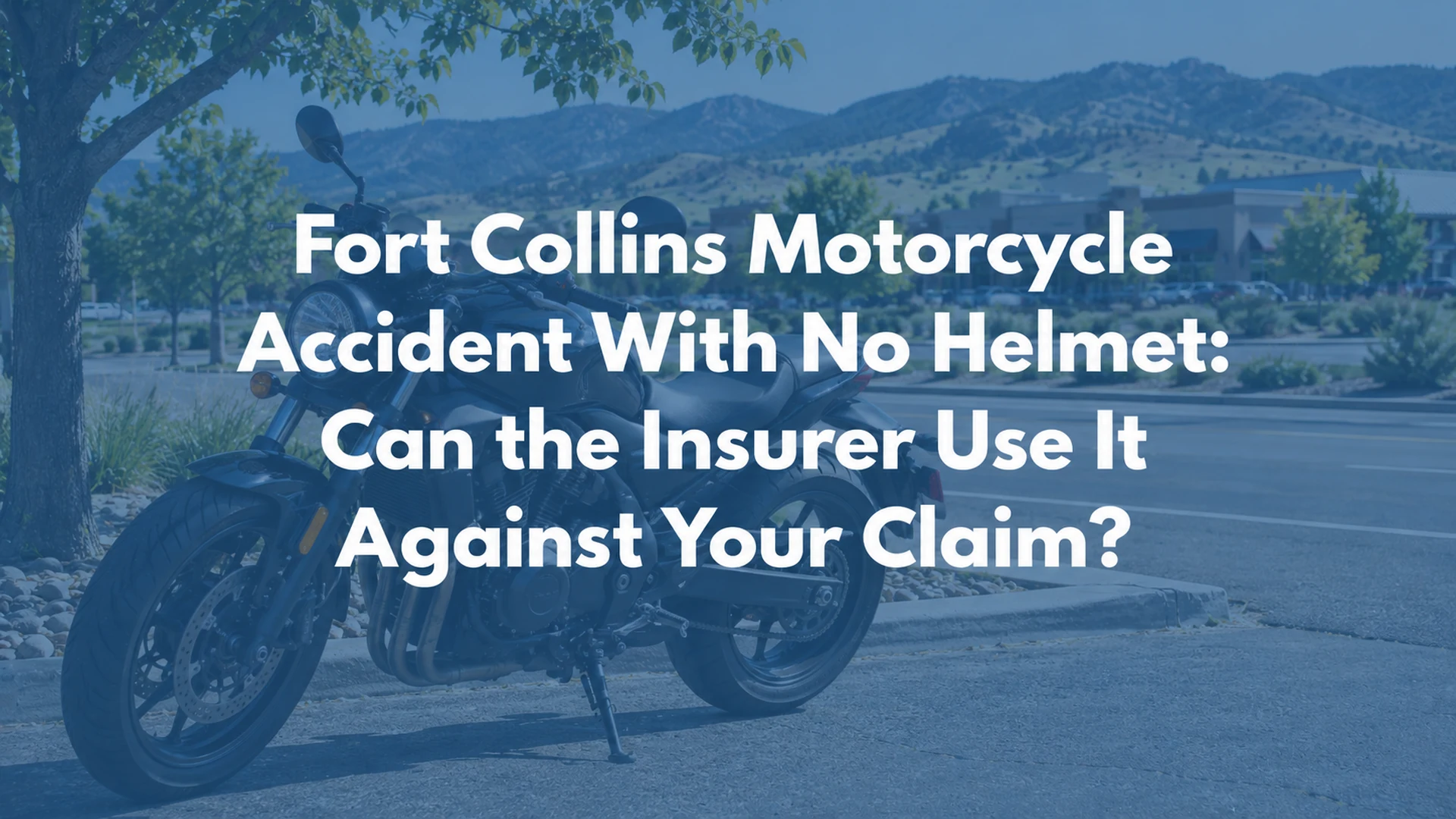
A driver turns left across your lane on South College Avenue, and you wake up in the hospital with a head injury. A week later, the driver's insurance adjuster calls. The adjuster points out that you weren't wearing a helmet and says the insurer owes less because of it.
Under Dare v. Sobule, a Colorado court won't admit that evidence to show your negligence or to reduce your damages. "Colorado law doesn't require an adult rider to wear a helmet. Since 1984, the Colorado Supreme Court has barred helmet evidence as proof of a rider's fault or as a reason to reduce damages," says Patrick DiBenedetto, Partner at Metier Law Firm and a rider himself. "When an adjuster cites a rider's helmet non-use, we cite Dare and present the evidence of the driver's negligence." In a Fort Collins motorcycle accident no-helmet claim, Dare keeps helmet non-use out of a jury's fault and damages decisions.
What the Colorado Helmet Law Requires
C.R.S. § 42-4-1502(4.5) sets the helmet rule. No one may drive or ride as a passenger on a motorcycle, autocycle, or low-power scooter on a roadway unless each person under 18 is wearing a helmet. The helmet must meet or exceed federal motor vehicle safety standard no. 218. It must be secured with a chin strap while the vehicle is in motion. Paragraph (c) exempts an autocycle that has three wheels, a top design speed of 25 mph or less, a windshield, and seat belts.
The statute doesn't require a driver or passenger who is 18 or older to wear a helmet. CDOT's motorcycle safety page states that Colorado law requires riders younger than 18 to wear one.
Dare v. Sobule: Helmet Non-Use Is Inadmissible to Show Negligence or Mitigate Damages
Dare v. Sobule, 674 P.2d 960, 963–64 (Colo. 1984) was a wrongful death case. Tracy Dare died in a 1977 motorcycle collision. He wasn't wearing a helmet. His parents sued the driver. The trial judge refused their request to instruct the jury that failing to wear a helmet isn't contributory negligence. The jury then assigned 80% of the negligence to Dare and 20% to the driver.
The Colorado Supreme Court reversed and remanded for a new trial. It held that, under the Colorado Comparative Negligence Act, evidence that a rider wasn't wearing a protective helmet is "inadmissible to show negligence on the part of the injured party" or to mitigate damages.

The Court's Reasoning
The court noted that the legislature had repealed Colorado's helmet requirement in 1977. It gave three more reasons:
- A negligent driver shouldn't be able to reduce the consequences of that negligence because the injured rider failed to anticipate it.
- A helmet defense would be a windfall for the at-fault driver, who would pay for only part of the harm the driver caused.
- Allowing the defense would turn trials into a contest between experts over which injuries a helmet would have prevented.
The Court of Appeals Applied Dare in Lawrence v. Taylor
In Lawrence v. Taylor, 8 P.3d 607, 609 (Colo. App. 2000), a motorcyclist died after a driver's vehicle struck his motorcycle. The trial court excluded evidence that he wasn't wearing a helmet. The Court of Appeals upheld that ruling under Dare.
With the helmet evidence excluded, the jury found the motorcyclist 40% responsible for the collision. That finding reduced the $400,000 award to $240,000. Dare kept helmet non-use out of the trial. It didn't prevent the jury from assigning him part of the fault.
When Helmet Evidence Is Received at Trial
A medical record or a witness's answer can disclose helmet non-use at trial even when the defense doesn't offer it. Note 5 to Colorado Civil Jury Instruction 5:2 states the rule from Dare. The plaintiff is entitled to a cautionary instruction that failing to wear a helmet isn't contributory negligence. That is true even if the plaintiff didn't object and the defendant didn't rely on the evidence as a defense.
Seat belts follow a different rule. C.R.S. § 42-4-237(7) lets a jury hear that a person wasn't wearing a required seat belt. The jury can use that evidence only to reduce pain and suffering damages. That statute doesn't address motorcycle helmets.
The Adjuster's Helmet Argument in a Fort Collins Motorcycle Accident No-Helmet Claim
Dare governs the evidence a court admits at trial. An adjuster remains free to cite helmet non-use in settlement talks. An offer discounted for helmet non-use relies on evidence a Colorado jury isn't allowed to weigh on fault or damages.
In the claims we handle from Metier Motorcycle Lawyers' Fort Collins office, adjusters often raise helmet non-use before the rider has a lawyer. Before you have one, take three steps:
- Don't discuss helmet use with the at-fault driver's adjuster. Decline that insurer's request for a recorded statement until you've talked with a lawyer, and review what not to say to an insurance adjuster after a motorcycle accident in Fort Collins.
- Have your treating providers document every injury, including any head injury symptoms.
- Preserve the evidence of the crash, including photos, witness names, and the police report.

Dare doesn't limit an adjuster's argument that your riding contributed to the crash. Our post on Colorado's 50% rule explains how fault percentages are argued under C.R.S. § 13-21-111. Dare excludes helmet non-use on both negligence and damages. The value of a no-helmet motorcycle settlement in Colorado rests on the same evidence as any other injury claim. Our guide to motorcycle accident settlement value in Colorado covers that evidence.
If you've been hurt in a motorcycle crash and need answers, call us at 833-4-MOTO-LAW (833-466-8652) or schedule a free consultation at www.metierlaw.com.
Frequently Asked Questions
The adjuster keeps bringing up my helmet. Can they reduce my claim for it?
An adjuster can make that argument in negotiation. At trial, Dare v. Sobule makes helmet non-use inadmissible to show your negligence or to mitigate your damages. If a claim over a Fort Collins motorcycle accident is tried, the jury assigns fault based on how each person drove or rode. C.R.S. § 13-21-111 then reduces your damages by your percentage and bars recovery at 50% or more.
Does Colorado require adult motorcycle riders to wear helmets?
No. The Colorado helmet law, C.R.S. § 42-4-1502(4.5), requires helmets only for drivers and passengers under 18. Our guide to motorcycle helmet laws lists helmet requirements state by state.
What about riders and passengers under 18?
On a roadway, C.R.S. § 42-4-1502(4.5) requires them to wear a helmet that meets or exceeds federal motor vehicle safety standard no. 218. A violation is a class A traffic infraction under subsection (5). If a rider under 18 was hurt in a crash, talk with an attorney about that claim.
What if the jury hears about the helmet anyway?
Under Dare, you're entitled to a cautionary instruction. The judge tells the jury that failing to wear a helmet isn't contributory negligence.
Does the helmet rule work the same way as Colorado's seat-belt rule?
The two rules differ. C.R.S. § 42-4-237(7) makes failure to wear a required seat belt admissible to mitigate pain and suffering damages. Dare remains the rule for helmet evidence.
Talk With Us Before You Answer the Helmet Argument
Colorado doesn't require adult riders to wear helmets. Under Dare v. Sobule, a court won't admit helmet non-use to show negligence or to reduce damages. Before you respond to an adjuster's helmet argument or accept an offer that relies on it, talk with the Fort Collins motorcycle accident lawyers at Metier Law Firm.
Call Metier Motorcycle Lawyers at 833-4-MOTO-LAW (833-466-8652) or schedule your free consultation today at www.metierlaw.com.
Disclaimer: Past results discussed should not be considered a guarantee of your results as the factors of every case are individually unique. This content is for informational purposes only and does not constitute legal advice. Consult a qualified attorney from Metier Law Firm regarding your individual situation for legal advice.
Related Blog Posts
Tell Us About Your Case – Free Case Review with a Personal Injury Lawyer
(866) 377-3800Our Locations

Do I have a Case?
How Much Should I Be Offered?
Do I Need an Attorney?
If these questions have crossed your mind, let us help. You may need a little direction or may not need an attorney at all, but you deserve to be confident knowing your options. We can provide you with information about our Attorneys of the West® accident investigations and legal services. Your confidential consultation with us is totally free.
Keep up with us!
