


TL;DR - Key Takeaways
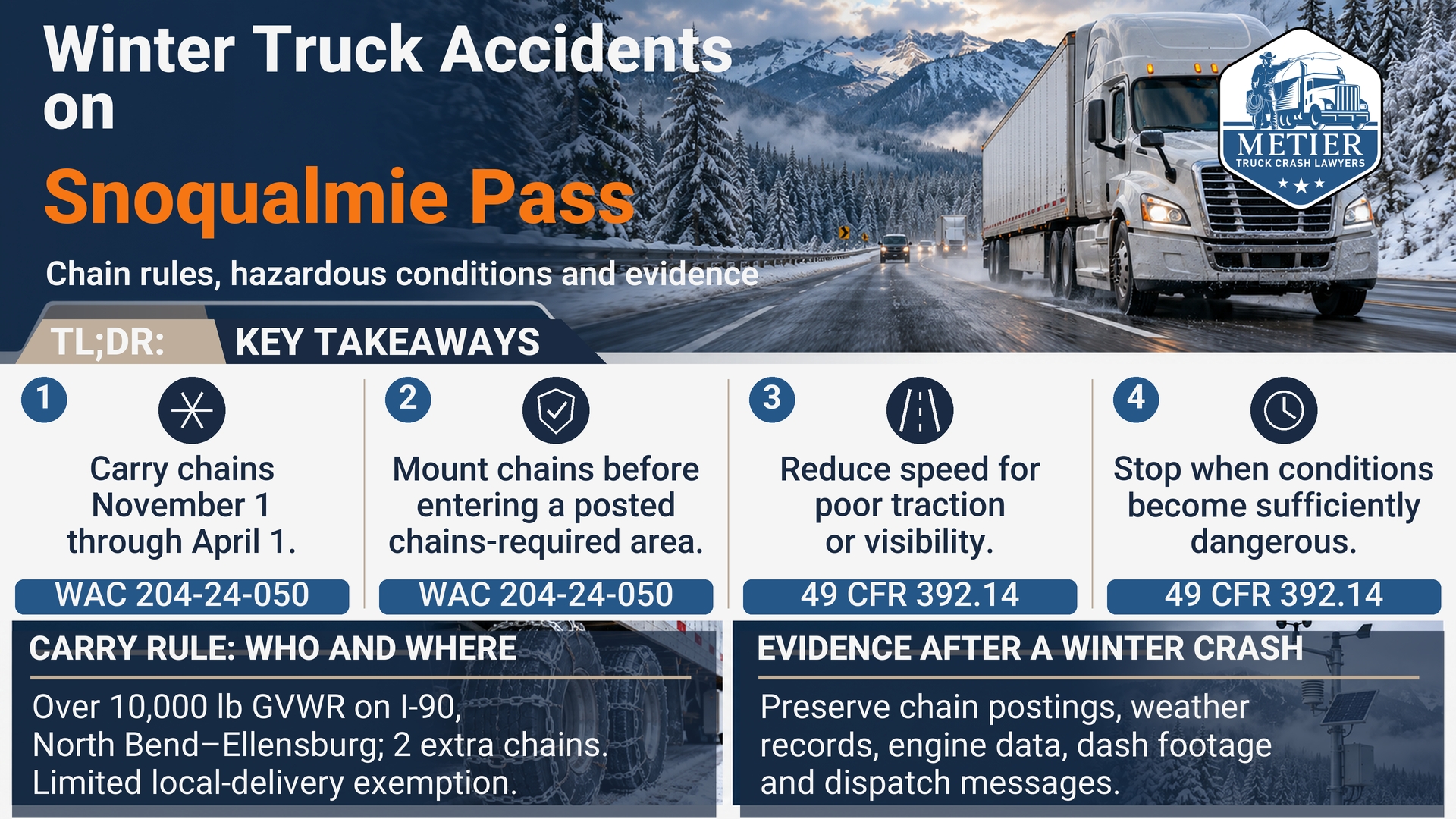
- From November 1 to April 1, WAC 204-24-050 requires every vehicle over 10,000 pounds GVWR on I-90 between North Bend and Ellensburg to carry chains, plus at least two extra, regardless of road conditions.
- Vehicles over 10,000 pounds GVWR can't lawfully pass a posted "chains required" sign without chains mounted. The penalty is $500 (RCW 47.36.250).
- Federal rule 49 CFR 392.14 requires truck drivers to reduce speed when snow, ice or fog affects traction or visibility, and to stop once conditions become sufficiently dangerous.
- WSDOT's maintenance superintendent for Snoqualmie Pass said in January 2025 that most closures come from drivers who don't follow traction requirements and speed limits.
- A driver whose negligence caused the crash is liable. So is the trucking company when the driver was acting within the scope of employment.
- You have three years from the date of the crash to file a personal injury lawsuit under RCW 4.16.080(2).
- Your share of fault reduces your recovery under RCW 4.22.005 without barring it, unless you were under the influence, that condition helped cause your injuries and you were more than 50% at fault (RCW 5.40.060), or you were committing a felony that caused the injury (RCW 4.24.420).
Washington State Patrol troopers started a two-day chain emphasis patrol on Snoqualmie Pass on November 3, 2026. They were checking whether trucks over 10,000 pounds GVWR carried chains, which WAC 204-24-050 requires on I-90 between North Bend and Ellensburg from November 1 to April 1, even when no chain requirement is posted.
"Washington's chain rule and the federal rule on hazardous conditions set out what a truck driver on Snoqualmie Pass has to do in winter," says Phil Chupik, Partner at Metier Law Firm, who has practiced law for more than 20 years. "In a winter crash case, we start by comparing what the driver did with what those rules required."
What WSDOT Says Causes Snoqualmie Pass Closures
I-90 crosses the Cascades at Snoqualmie Pass. WSDOT lists the pass at 3,022 feet, with typical traffic of about 28,000 vehicles a day, including 5,600 freight vehicles.
One spinout can close an entire pass for hours, according to a January 30, 2025 WSDOT blog post. In that post, Jason Pratt, the maintenance superintendent whose area includes Snoqualmie Pass, said drivers who fail to follow traction requirements and speed limits cause most of the closures. WSDOT spokesperson Tina Werner made a similar point in an October 29, 2026 MyNorthwest report: "Excess speed and ill-prepared drivers are one of the top contributors to why we see mountain pass closures."

Washington's Chain Law for Commercial Vehicles
WAC 204-24-050 sets Washington's chain rules for every vehicle over 10,000 pounds GVWR, commercial or not. WSDOT publishes a route-by-route summary that includes the Snoqualmie Pass chain requirements.
Carrying Chains From November 1 to April 1
Every vehicle or combination over 10,000 pounds GVWR on I-90 from North Bend (milepost 32) to Ellensburg (milepost 101) must carry chains from November 1 to April 1, even on dry pavement. It needs enough chains to meet the placement rule for its axles, plus at least two extras. Vehicles making local deliveries, as shown on bills of lading, are exempt while they stay outside chain-required areas and don't cross the pass.
Mounting Chains When WSDOT Posts a Requirement
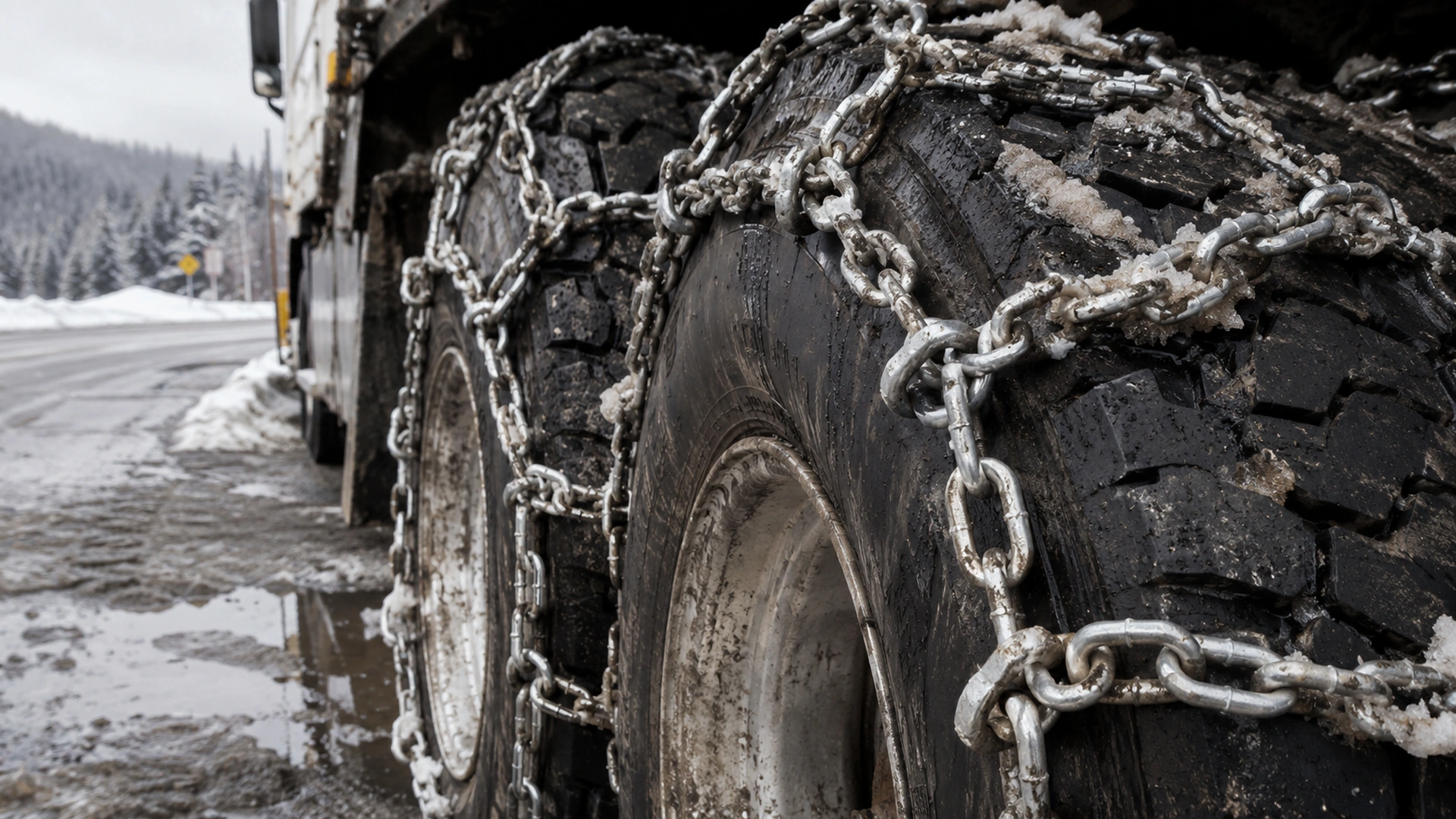
Once WSDOT posts "chains required" for vehicles over 10,000 pounds GVWR, WAC 204-24-050 makes it unlawful for those vehicles to enter the posted area without chains mounted. A five-axle truck-tractor with dual drive axles pulling a tandem semitrailer needs chains on at least four drive-axle tires and on one tire of either of the trailer's last two axles. Disobeying a posted chain requirement is a traffic infraction with a $500 penalty under RCW 47.36.250.
Federal Speed and Stopping Rules for Truck Drivers in Snow and Ice
The federal rule at 49 CFR 392.14 applies on every highway. When snow, ice, sleet, fog or similar hazards adversely affect visibility or traction, a commercial driver must use extreme caution and reduce speed. The driver has to stop once conditions become sufficiently dangerous and stay stopped until the truck can be operated safely.
Freezing fog contributed to a December 7, 2022 pileup involving 12 semis on eastbound I-90 at milepost 115, near Kittitas, FOX Weather reported. Troopers cited a semi driver in the pileup for driving too fast for conditions.
If you or a loved one was injured in a crash with a commercial truck, call us at 866-377-3800 or schedule a free consultation at www.metierlaw.com.
How Winter Truck Crashes Happen on Snoqualmie Pass
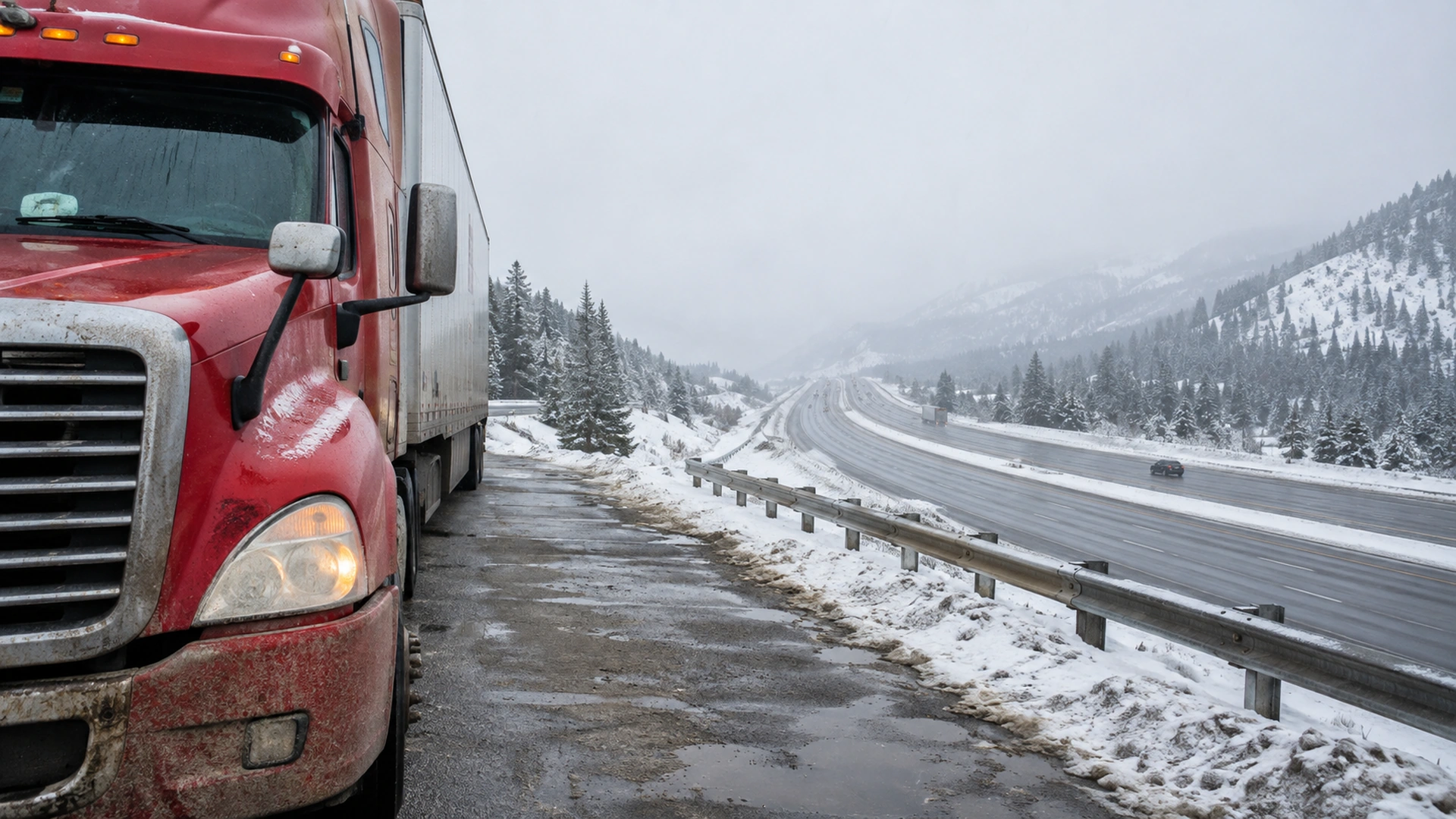
A semi crash on Snoqualmie Pass can start when a truck without chains mounted loses traction on packed snow and its trailer jackknifes across the lanes. WSDOT's January 2025 post also describes a December 2020 closure of more than an hour. It began when multiple semis that hadn't mounted chains became stuck. Stopped traffic behind stuck trucks is then a rear-end hazard for any truck approaching faster than 49 CFR 392.14 allows. Our post on stopped and disabled semis near Seattle covers a driver's warning duties under 49 CFR 392.22.
Who Is Liable for a Truck Accident in Snow
After a Snoqualmie Pass truck accident, we determine whether the driver broke the carry or mounting rules in WAC 204-24-050 or the speed and stopping duty in 49 CFR 392.14.
The trucking company can also be liable. Washington holds an employer liable for an employee driver's negligence within the scope of employment (Rahman v. State, 170 Wn.2d 810 (2011)). The company also has duties of its own: 49 CFR 390.11 requires it to make its drivers follow federal driving rules, and 49 CFR 390.6 bars it from coercing a driver to break them. We review dispatch messages for signs of that coercion and check whether the truck carried the chains WAC 204-24-050 requires.
A jury can treat the breach of a duty set by statute or administrative rule, such as WAC 204-24-050, as evidence of negligence under RCW 5.40.050 and decide how much weight it carries.
Evidence We Gather After a Snoqualmie Pass Truck Accident
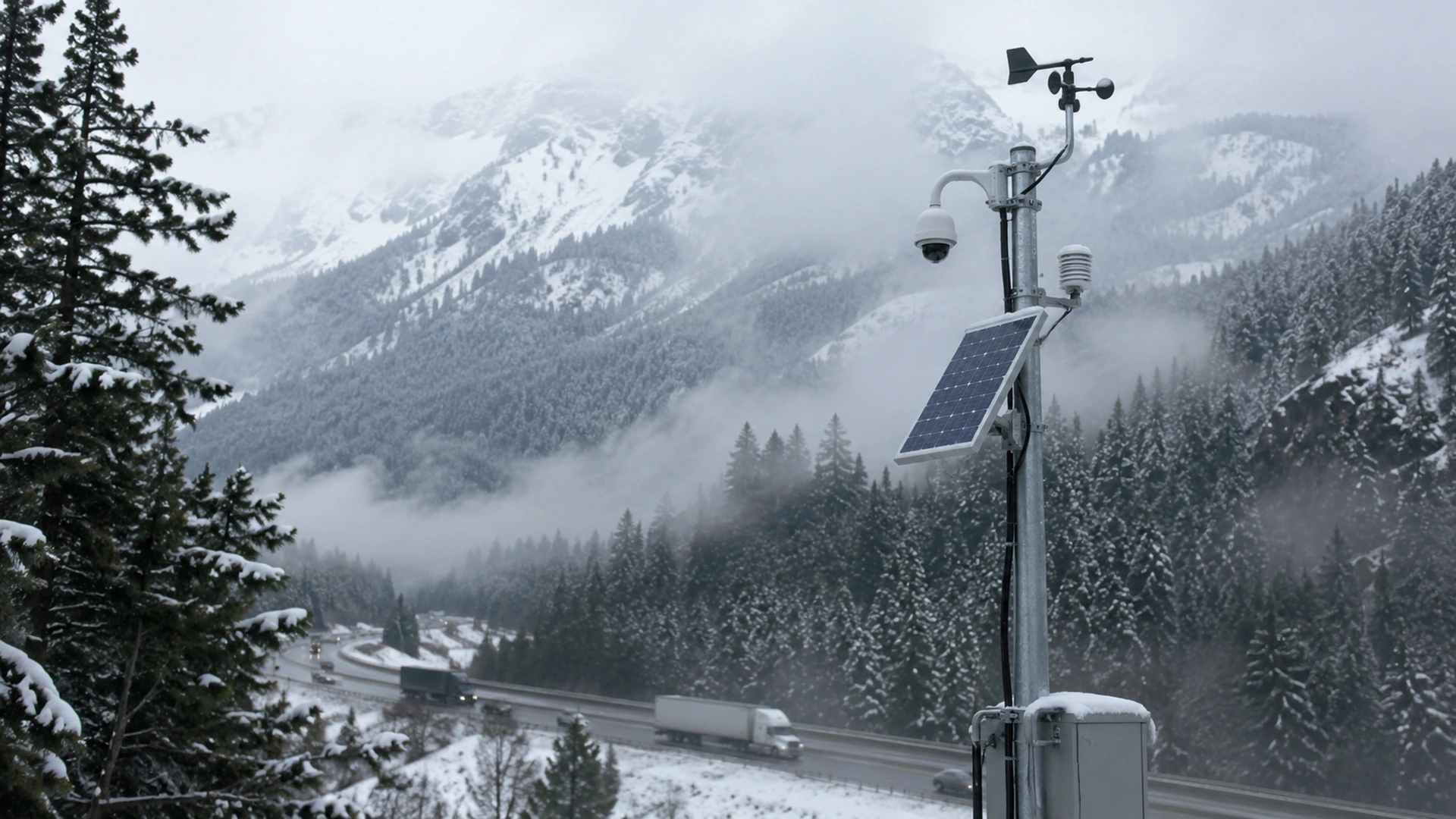
WSDOT's records for the crash location show which traction or chain requirements and closures were posted, and when. Road weather stations and the National Weather Service document conditions near the crash site at the time. The truck's electronic logging device records duty status and approximate location, and its engine control module can show speed and braking before the crash. We request the State Patrol collision report and any citation. Dash cameras that record on a loop overwrite old footage, and engine data can be overwritten once the truck is back in service, so we send the carrier a written preservation demand as soon as we're retained.
Washington Law in Brief
Washington's deadline to file a personal injury lawsuit is three years from the date of the crash (RCW 4.16.080(2)), and RCW 4.22.005 reduces your recovery by your share of fault. Our posts on Washington's pure comparative fault rule and damages after a Seattle truck accident cover fault and recovery.
Frequently Asked Questions
Can a truck driver blame the weather for an I-90 truck accident near Snoqualmie Pass?
A driver can raise it, but the rules already account for winter on the pass. WAC 204-24-050 requires vehicles over 10,000 pounds GVWR to carry chains on I-90 between North Bend and Ellensburg from November 1 to April 1, even on dry pavement. The driver also has to reduce speed whenever snow or ice affects traction (49 CFR 392.14). RCW 5.40.050 lets a jury weigh a violation of either rule as evidence of negligence.
What happens to my claim if I was partly at fault?
Washington's pure comparative fault rule lowers your award by your percentage of fault, but fault alone doesn't bar recovery (RCW 4.22.005). Recovery is barred if you were under the influence of alcohol or drugs, that condition was a proximate cause of your injuries, and you were more than 50% at fault (RCW 5.40.060). It's also barred if you were committing a felony that caused the injury (RCW 4.24.420).
Where can I file a lawsuit over a Snoqualmie Pass truck accident?
The King-Kittitas county line runs through the summit, so a crash west of it occurred in King County and a crash east of it occurred in Kittitas County. Washington's venue statute, RCW 4.12.020(3), lets you file where the crash happened or where a defendant resides. For a trucking company organized as a corporation, that includes any county where it transacts business or has an office (RCW 4.12.025).
Talk With a Lawyer Who Knows Washington's Chain Rules
In a winter truck accident on Snoqualmie Pass, WSDOT's postings, the truck's data and the carrier's records show what the rules required of the driver and what the driver did. A Seattle truck accident lawyer on our team can review those records in your case, and our Washington truck accident lawyers serve clients from our Seattle office.
Call Metier Law Firm at 866-377-3800 or schedule your free consultation today at www.metierlaw.com.
Disclaimer: Past results discussed should not be considered a guarantee of your results as the factors of every case are individually unique. This content is for informational purposes only and does not constitute legal advice. Consult a qualified attorney from Metier Law Firm regarding your individual situation for legal advice.
Tell Us About Your Case – Free Case Review with a Personal Injury Lawyer
(866) 377-3800Our Locations

Do I have a Case?
How Much Should I Be Offered?
Do I Need an Attorney?
If these questions have crossed your mind, let us help. You may need a little direction or may not need an attorney at all, but you deserve to be confident knowing your options. We can provide you with information about our Attorneys of the West® accident investigations and legal services. Your confidential consultation with us is totally free.
Keep up with us!
