.svg)



TL;DR - Key Takeaways
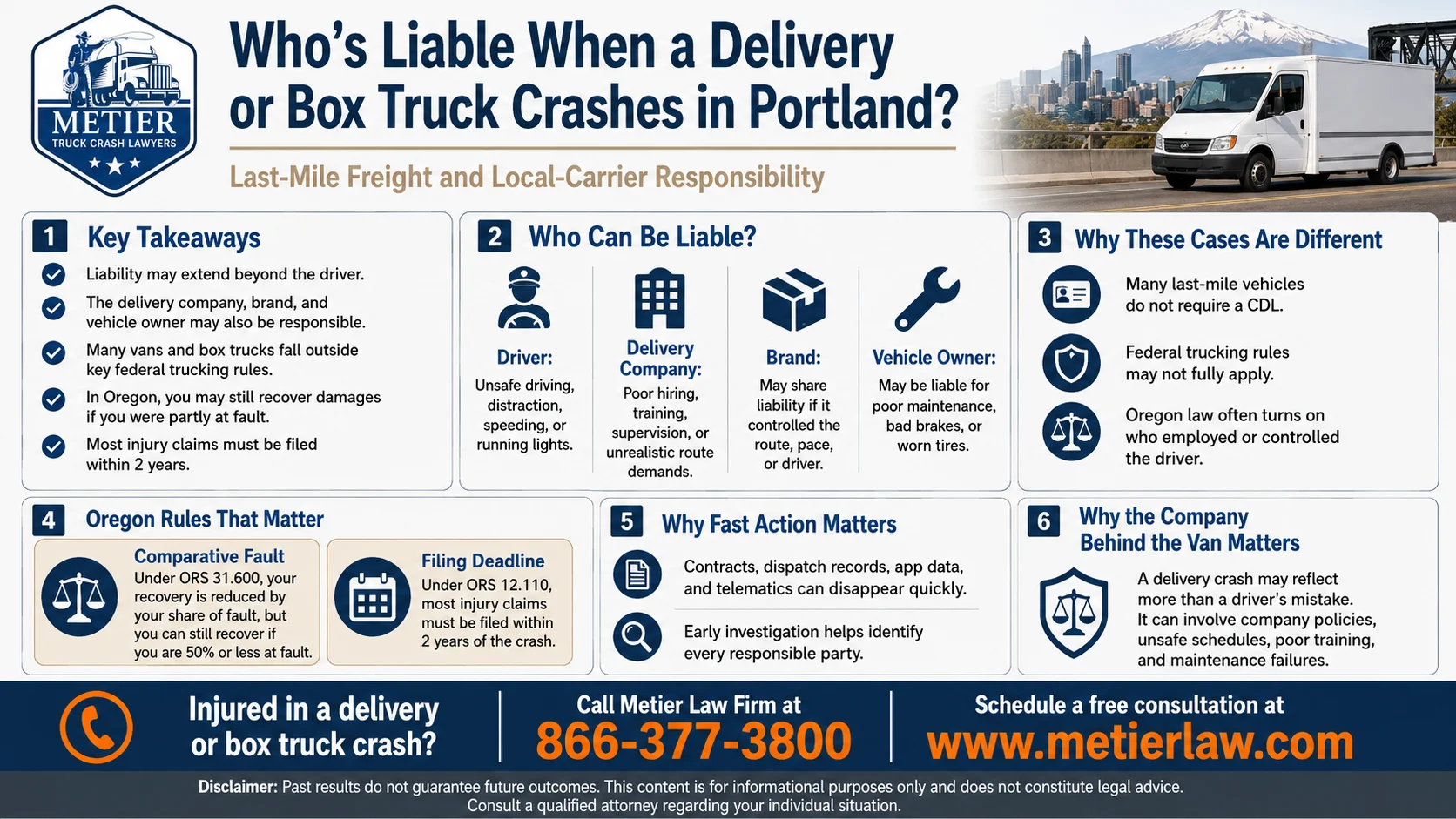
- Liability can reach past the driver to the delivery company, the brand whose packages were aboard, and the vehicle's owner.
- Many parcel vans and box trucks fall below the federal weight limits for a commercial license and the main trucking safety rules.
- National parcel brands, such as Amazon, use separate contractor companies, so the brand's blame turns on how much control it held.
- Oregon's comparative negligence rule cuts your recovery for partial fault but does not erase it unless you are more than half at fault.
- You have two years to file an injury claim in Oregon, and the evidence that proves fault disappears fast.
Package volume keeps climbing, changing what a truck crash looks like here. In New York City, daily deliveries grew from 1.8 million before the pandemic to 2.5 million by 2024, and after last-mile delivery facilities opened, 78% of nearby areas saw more injury-causing crashes, according to a 2025 report from the New York City Comptroller. Portland is not New York, but the pattern holds everywhere across the country: more delivery vans, more box trucks, more crashes where those routes run.
I'm Emily N. Benight, a partner at Metier Law Firm and a truck crash lawyer who handles these cases across Oregon. A delivery crash looks simple from the outside. It rarely is. Who is liable after a delivery driver crash usually comes down to a chain of companies built to keep the biggest names out of the courtroom.
A Delivery Van Crash Is Not a Semi Crash
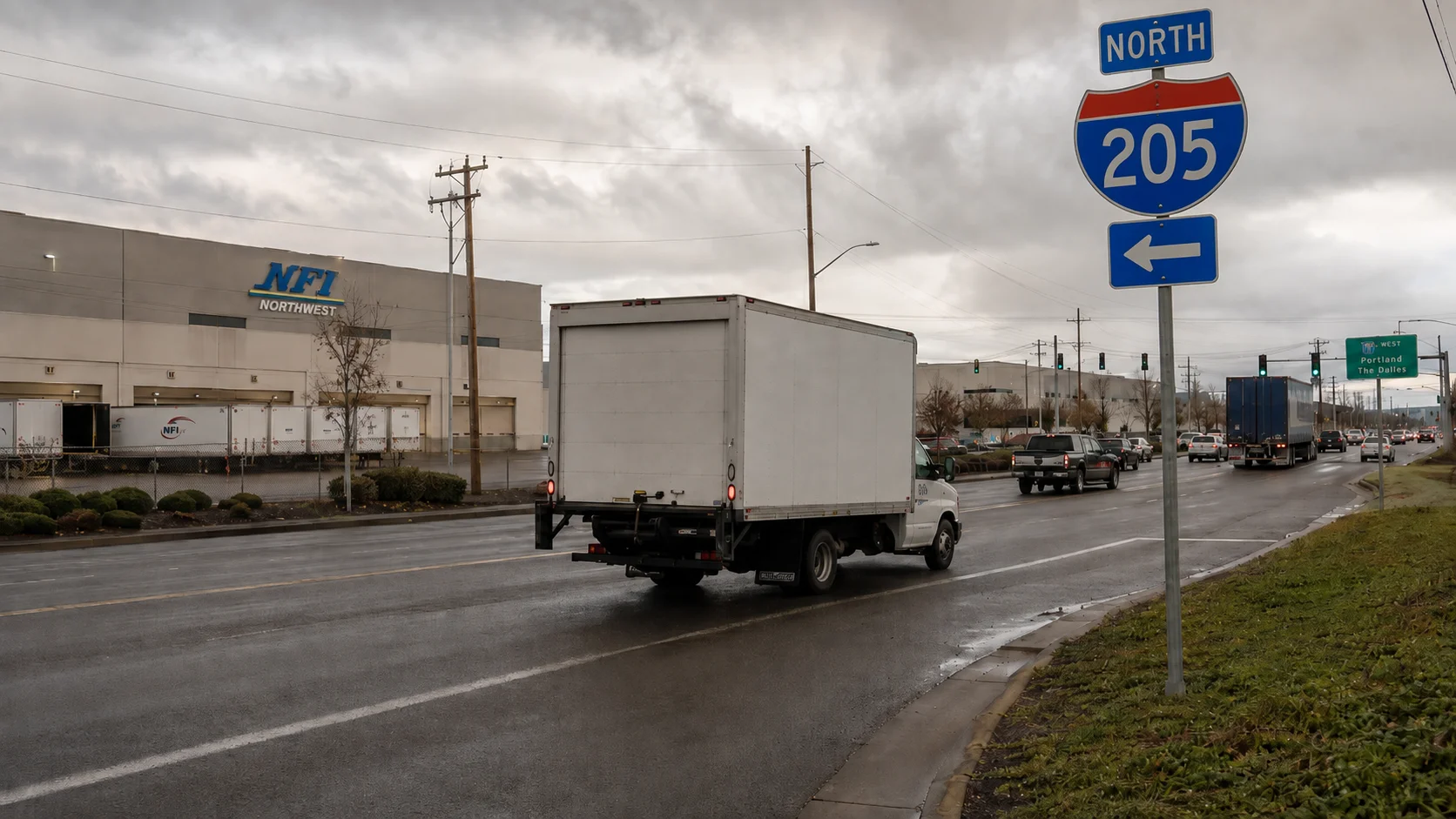
Most people assume every commercial truck crash runs on federal trucking rules. With last-mile vehicles, that often breaks down. A commercial driver's license is required only once a vehicle's gross weight rating hits 26,001 pounds, or for placarded hazardous materials or 16 or more passengers, under 49 CFR 383.5. The core federal safety rules, driver files, hours-of-service limits, and maintenance records, apply mainly to vehicles rated 10,001 pounds or more that cross state lines.
Plenty of parcel vans are rated under 10,001 pounds, and many local box trucks come in under 26,001. A driver running packages around the Portland metro may never need a commercial license and may fall outside the interstate trucking rules. The case then leans on Oregon law and one question: who employed or controlled the driver.
Who Can Be Held Responsible After a Delivery or Box Truck Crash
Box truck crash liability in Oregon rarely stops with the driver. Several parties can share the bill, and finding all of them is the job.
The Driver
Running a light or blowing a stop sign while checking a route app is the starting point, but rarely the end.
The Delivery Company
Most last-mile drivers work for a local delivery outfit, not the name on the side of the van. That company can be liable for its driver's negligence on the job, and for its own choices: hiring a driver with a bad record, skipping training, or loading a route with more stops than anyone can safely finish.
The Brand Whose Packages Were Aboard
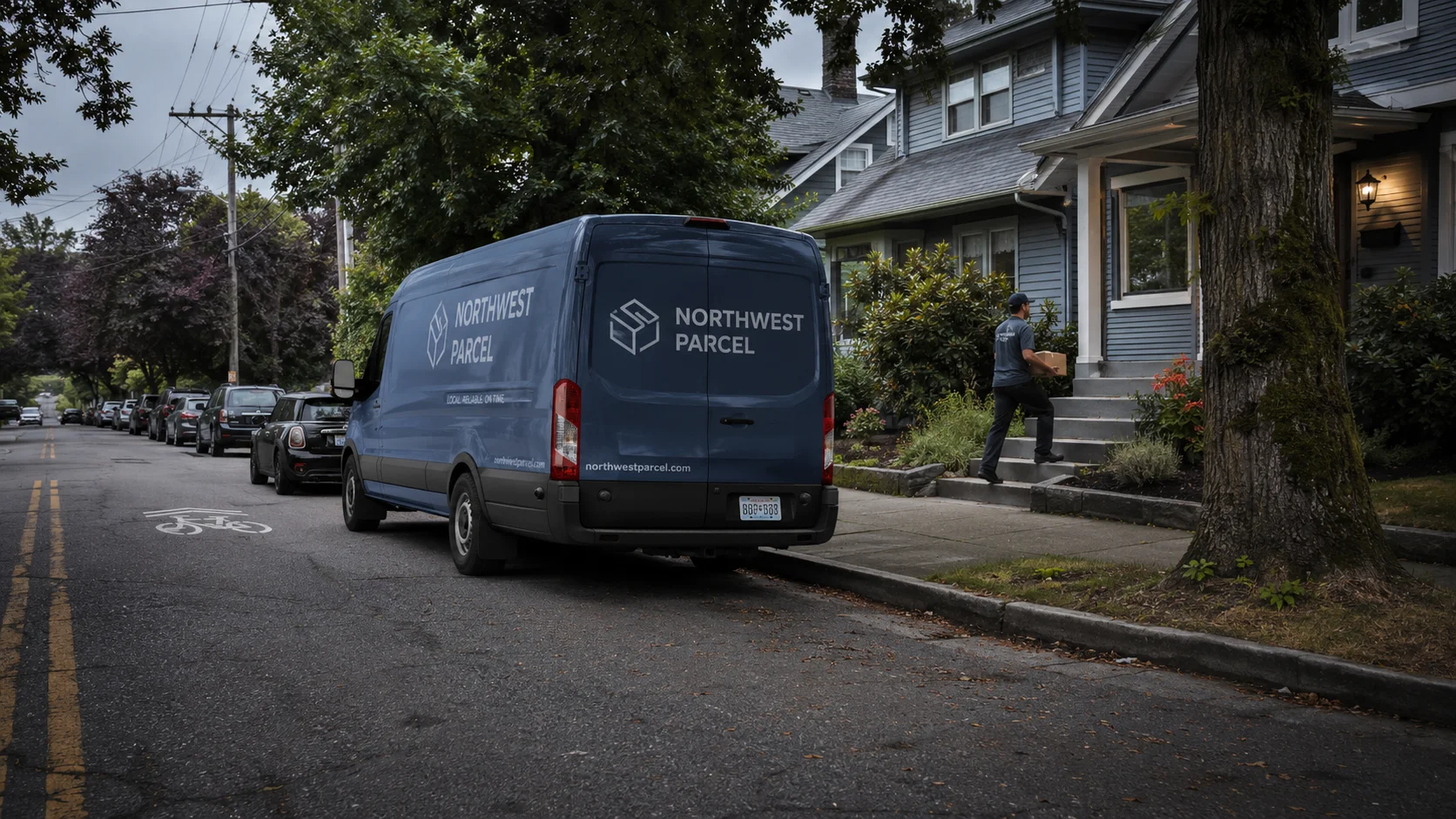
National parcel brands, such as Amazon, often move packages through separate delivery companies rather than employing drivers directly. Amazon's Delivery Service Partner program is the best-known version. On paper, the driver works for an independent contractor, not the brand. Whether the brand shares responsibility depends on how much control it held over the driver, route, and pace of work.
The Vehicle's Owner
When a delivery company runs vans it failed to maintain, a bad brake job or a bald tire can pull the owner into the claim.
How Oregon Looks Past the Contractor Label
The contractor label is the whole game. Call the driver an independent contractor, and the brand claims it walks away without responsibility. Oregon courts do not stop at the label. They look at the real working relationship: who set the schedule, who dictated the route, who tracked the driver minute by minute, and who could fire them. The more control a company held, the harder it is to hide behind a contract.
That question is not academic. The New York City Comptroller's 2025 report found that major companies use subcontracting models like Amazon's DSP program to distance themselves from liability, and it documented truck-related crashes rising 146% near last-mile facilities. Beating that defense means pulling contracts, dispatch records, telematics, and delivery-app data before it overwrites on a schedule, which is why an early preservation of evidence letter matters.
Portland's Last-Mile Map
Portland's delivery density is its own risk. Vans and box trucks stack up along the industrial corridors off I-205 and I-84, thread through east-side loading zones, and fan out across Beaverton, Gresham, and Hillsboro, and a driver making 200 stops a day cuts corners where pedestrians and cyclists get hurt.
The Oregon Rules That Shape Your Claim
Under ORS 31.600, you can still recover if you were partly at fault, as long as your share is not greater than the combined fault of everyone else, which works out to 50% or less. Your award drops by your percentage, so insurers fight to pin more blame on you. Under ORS 12.110, you generally have two years from the crash date to file a personal injury claim, and that window can be shorter when a government vehicle or agency is involved.
If you or a loved one was injured in a crash with a commercial truck, call us at 866-377-3800 or schedule a free consultation at www.metierlaw.com.
Frequently Asked Questions About Delivery and Box Truck Crashes
Who is liable in a delivery driver crash in Portland?
Liability can fall on the driver, the local delivery company that employed them, the brand whose packages were aboard, and the company that owned or maintained the van. A last-mile delivery accident lawyer works through each layer to find every source of coverage.
Is Amazon responsible if one of its delivery vans hits me?
Not automatically. Amazon uses its Delivery Service Partner program, so the driver usually works for a separate contractor. Whether Amazon shares responsibility for a parcel van crash in Portland depends on how much control it exercised over the driver and the route, a question Oregon courts decide case by case.
Do delivery drivers need a commercial license?
Often not. Under 49 CFR 383.5, a commercial driver's license is required only at 26,001 pounds or for hazmat and passenger vehicles. Many parcel vans and box trucks fall below that line, which is why employer vs contractor delivery liability, not federal trucking rules, tends to drive these cases.
How long do I have to file a claim?
Two years from the crash date for most injury claims under ORS 12.110. But evidence can disappear quickly, witness memories can fade, and the at fault parties are already working on their case against you, so it is worth talking to a Portland truck accident lawyer as soon as possible.
Why the Company Behind the Van Matters as Much as the Driver
A delivery crash is never one driver's mistake alone. It is the product of the quota, the training, and a corporate structure built to keep the biggest name off the hook. That is what our Portland truck accident lawyer team does every day, and it is why a Portland truck accident lawyer can tell you exactly who owes you after a delivery or box truck crash.
Call Metier Law Firm at 866-377-3800 or schedule your free consultation today at www.metierlaw.com.
Disclaimer: Past results discussed should not be considered a guarantee of your results as the factors of every case are individually unique. This content is for informational purposes only and does not constitute legal advice. Consult a qualified attorney from Metier Law Firm regarding your individual situation for legal advice.
Tell Us About Your Case – Free Case Review with a Personal Injury Lawyer
(866) 377-3800Our Locations
.webp)
Do I have a Case?
How Much Should I Be Offered?
Do I Need an Attorney?
If these questions have crossed your mind, let us help. You may need a little direction or may not need an attorney at all, but you deserve to be confident knowing your options. We can provide you with information about our Attorneys of the West® accident investigations and legal services. Your confidential consultation with us is totally free.
Keep up with us!
