.svg)

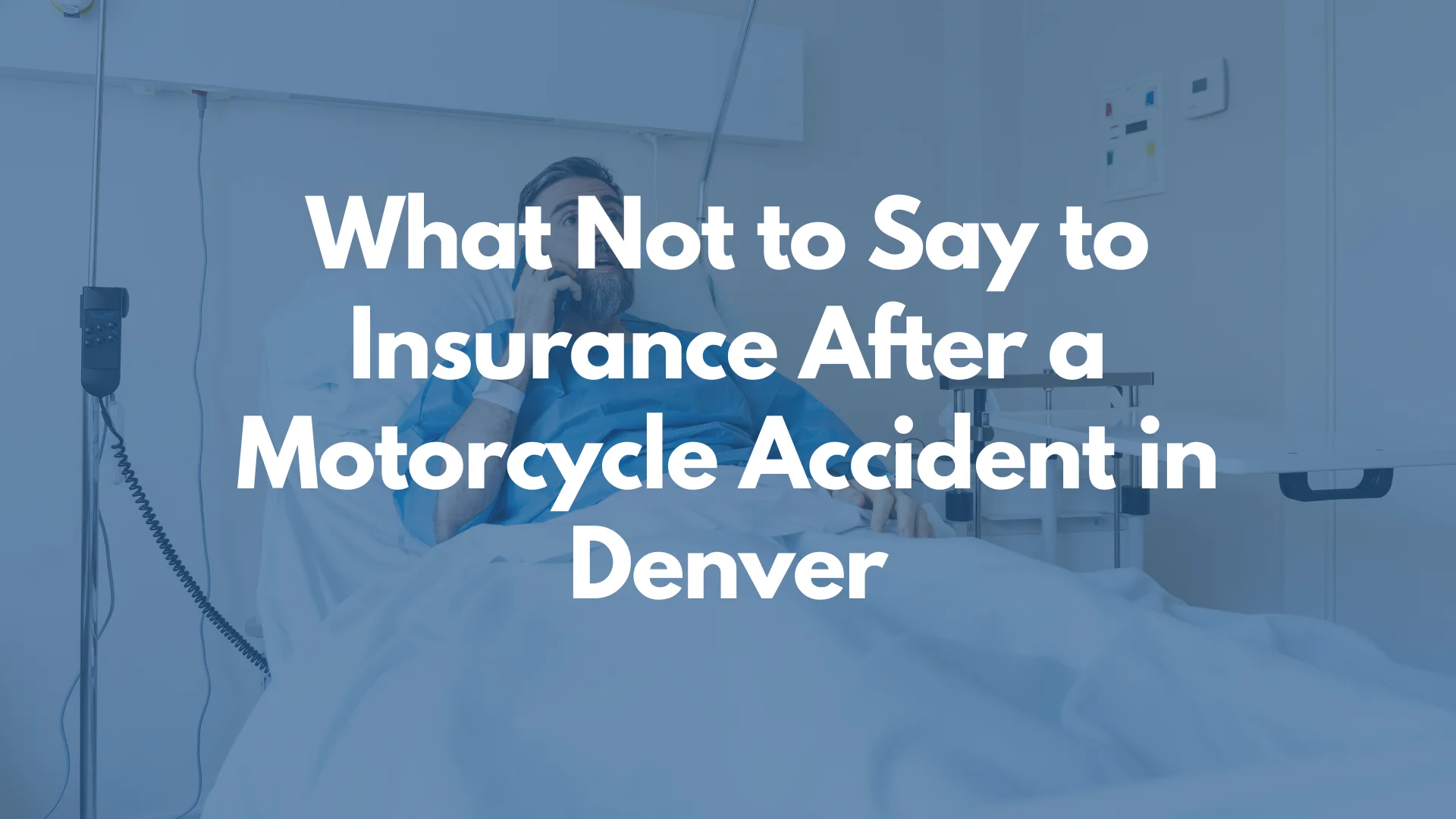

TL;DR: Key Takeaways
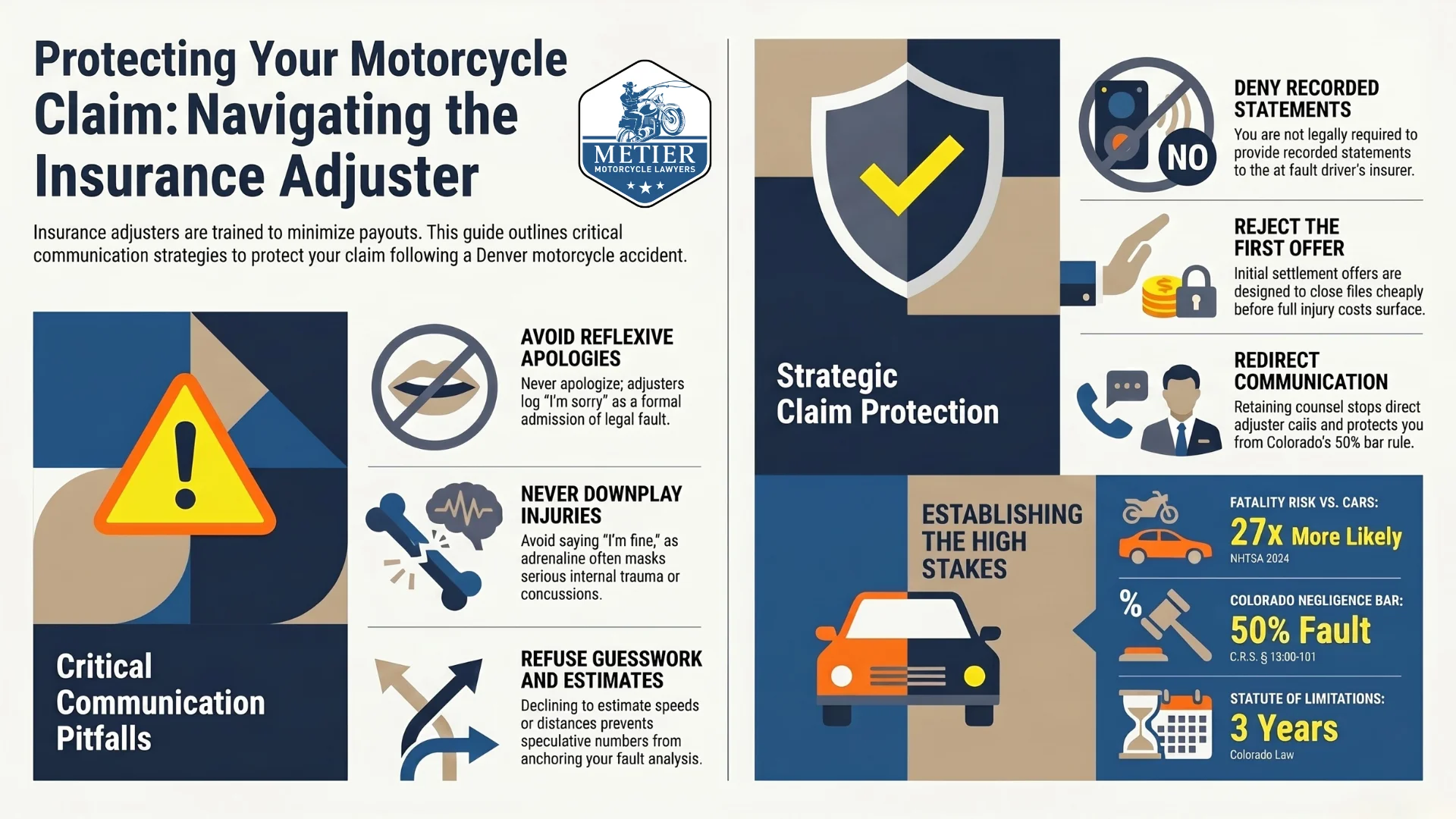
- Never apologize or admit fault. Even a reflexive "I'm sorry" can be turned into an admission against you.
- Don't downplay your injuries. Saying "I'm fine" can gut your claim weeks later when the real pain sets in.
- You're not required to give the at-fault driver's insurer a recorded statement, and in most cases you shouldn't before talking to a lawyer.
- Skip the guesswork on speeds, distances, and who did what. "I don't recall yet" is honest and safe.
- That first settlement offer is almost always far below what your claim is actually worth.
The crash is bad enough. Then your phone rings, and it's an adjuster who sounds friendly, maybe even a little concerned about how you're doing. That call feels harmless. It isn't. What you say in the first days after a Denver motorcycle wreck can shape what your claim is worth, and a few careless words can cost you thousands. Knowing what not to say to insurance after a motorcycle accident matters just as much as knowing your rights.
We ride, so we get it. At Metier Motorcycle Lawyers, we've watched too many riders hand the insurance company ammunition without ever realizing they did it. Patrick DiBenedetto, Partner and a lifelong rider, puts it plainly: "The biggest mistakes happen in that first phone call, before a rider has talked to anyone who's actually on their side. Adjusters are trained to sound friendly. What you say in those early days can decide what your case is worth." Denver traffic is hard on bikes, and the moment a driver takes you down, the other side starts building its file. Here's how to keep from filling it for them.
Call Metier Law Firm at 833-4MOTO-LAW (833-466-8652) or schedule your free consultation today at www.metierlaw.com

Why Insurance Adjusters Are Not on Your Side After a Motorcycle Crash
An insurance adjuster has one core job: pay out as little as possible. The warm tone is part of the playbook, not a sign they're looking out for you. When you're dealing with the at-fault driver's company, that adjuster works for the other side, full stop.
Riders face an extra hurdle. There's a long-running bias that anyone on two wheels was speeding or riding reckless, and adjusters lean on it hard. The physical reality doesn't help either. Per mile traveled, motorcyclists were almost 27 times more likely than people in cars to die in a crash, according to NHTSA's 2024 data. Adjusters know the stakes are high and the stereotypes run deep, so they'll nudge you toward admitting fault every chance they get.
Common Phrases That Can Hurt Your Motorcycle Accident Claim
Most of the damage to a motorcycle accident claim comes from ordinary, polite things people say without thinking. These are the ones we see backfire most.
"I'm sorry" or "It was my fault"
You might say it out of pure reflex, the way most decent people do after any collision. To an adjuster, it's gold. Apologizing or admitting fault, even casually, gets logged and used to shift blame onto you. Let the investigation sort out fault. That's not your job at the scene or on the phone.
"I'm fine" or "I'm just a little sore"
After a crash, adrenaline masks pain, and serious injuries like concussions, soft tissue damage, or internal trauma can take days to show up. If you tell anyone you feel okay, the insurer will replay that line the moment you file for medical costs. Be honest, but don't diagnose yourself. "I'm getting checked out" is the right answer.
Guessing at speeds, distances, or details
"I was probably doing about 40." "He came out of nowhere, I think." Speculation gets treated as fact, and a number you tossed out under stress can anchor the whole fault analysis. If you don't know something for certain, say you don't recall yet. Honesty about what you don't remember protects you.
Why Recorded Statements Are Risky for Injured Riders
Early on, an adjuster will ask to record a quick statement "just to get the details down." Here's what they don't volunteer: you're generally not required to give a recorded statement to the other driver's insurer at all. There's a real difference between first-party and third-party claims, and you have far more leverage than that friendly request suggests. The basics of how first-party and third-party claims work are worth understanding before you agree to anything.
A recorded statement freezes your words in time. Say it days after the crash, while you're on pain medication, foggy, and still learning the extent of your injuries, and any small inconsistency later looks like a lie. Your own insurer is different. Your policy usually requires you to notify them and cooperate, but keep it factual and short, and you still don't have to let them rush you into a recorded statement before you've talked to a lawyer.
If you've been hurt in a motorcycle crash and need answers, call us at 833-4MOTO-LAW (833-466-8652) or schedule a free consultation at www.metierlaw.com.
What You Should Say and Do Instead
Keep it simple and factual. Get the claim number and the adjuster's contact info, confirm the date and basic location of the crash, and stop there. You don't owe the other side a narrative.
Get medical care the same day, even if you feel okay, and follow the treatment plan. Gaps in care are the first thing an adjuster uses to argue your injuries weren't serious. Document everything you can: photos, the police report, witness contacts. And don't grab the first check they wave at you. An early settlement offer is built to close your file cheap, often before you know what your injuries will really cost. It helps to understand how a motorcycle accident settlement is actually valued in Colorado before you sign anything. If an adjuster is acting in bad faith, you also have the right to file a complaint with the Colorado Division of Insurance.
How a Motorcycle Accident Lawyer Handles Insurance Communication
Once you've got a lawyer, the calls stop coming to you. We take over communication with every adjuster so you can heal instead of guarding every word. We gather the evidence, line up the medical picture, and present your motorcycle injury claim the way it deserves to be presented.
This matters more in Colorado than people expect. Under Colorado comparative negligence, if you're found 50% or more at fault, you recover nothing, and adjusters work that number relentlessly. We break down exactly how Colorado's 50% bar rule affects your claim and how a Denver motorcycle accident lawyer fights to keep your fault percentage low. If you want a fuller picture, here's how a Denver lawyer handles a crash claim from the first call through settlement.
Frequently Asked Questions
Do I have to give a recorded statement to the insurance company after a motorcycle accident?
Not to the other driver's insurer, no. You're generally under no obligation to give them a recorded statement, and you usually shouldn't before speaking with a motorcycle accident lawyer. Your own insurer may require cooperation under your policy, but you can still keep it brief and factual.
What should I not say to an insurance adjuster after a crash?
Don't apologize, don't admit fault, and don't downplay your injuries. Avoid guessing at speeds, distances, or details you're not sure about. Anything you say can be used to reduce or deny your motorcycle accident claim, so keep it short and factual.
Should I accept the insurance company's first settlement offer?
Usually not. An early settlement offer is often far below what your claim is worth, especially before you know the full cost of your injuries. Once you accept, you typically can't reopen the claim, so it's worth having a lawyer review the offer first.
How long do I have to file a motorcycle accident claim in Colorado?
Colorado gives you three years from the date of a motor vehicle crash to file a personal injury lawsuit under C.R.S. § 13-80-101. That deadline sounds generous, but evidence fades and adjusters dig in, so the sooner you act, the stronger your case.
Talk to Us Before You Talk to Them
The words you use in those first phone calls can follow your case all the way to the end. You don't have to navigate the adjusters alone, and you definitely don't have to talk to them before you're ready. We're riders and we're lawyers, and we know exactly how the insurance company plays this. Let us handle the talking so you can focus on getting back on your feet.
Our Denver motorcycle accident lawyers hear these same first-call mistakes from riders every week, and Fort Collins motorcycle attorneys on our team see the same pattern further north. A motorcycle lawyer in Colorado Springs applies that same guidance for riders further south.
Call Metier Motorcycle Lawyers at 833-4MOTO-LAW (833-466-8652) or schedule your free consultation today at www.metierlaw.com.
Disclaimer: Past results discussed should not be considered a guarantee of your results as the factors of every case are individually unique. This content is for informational purposes only and does not constitute legal advice. Consult a qualified attorney from Metier Law Firm regarding your individual situation for legal advice.

If You've Been Injured In A Motorcycle Crash, Call Today - (833) 4MOTO-LAW
Tell Us About Your Case – Free Case Review with a Personal Injury Lawyer
(866) 377-3800Our Locations
.webp)
Do I have a Case?
How Much Should I Be Offered?
Do I Need an Attorney?
If these questions have crossed your mind, let us help. You may need a little direction or may not need an attorney at all, but you deserve to be confident knowing your options. We can provide you with information about our Attorneys of the West® accident investigations and legal services. Your confidential consultation with us is totally free.
Keep up with us!
