.svg)


TL;DR: Key Takeaways
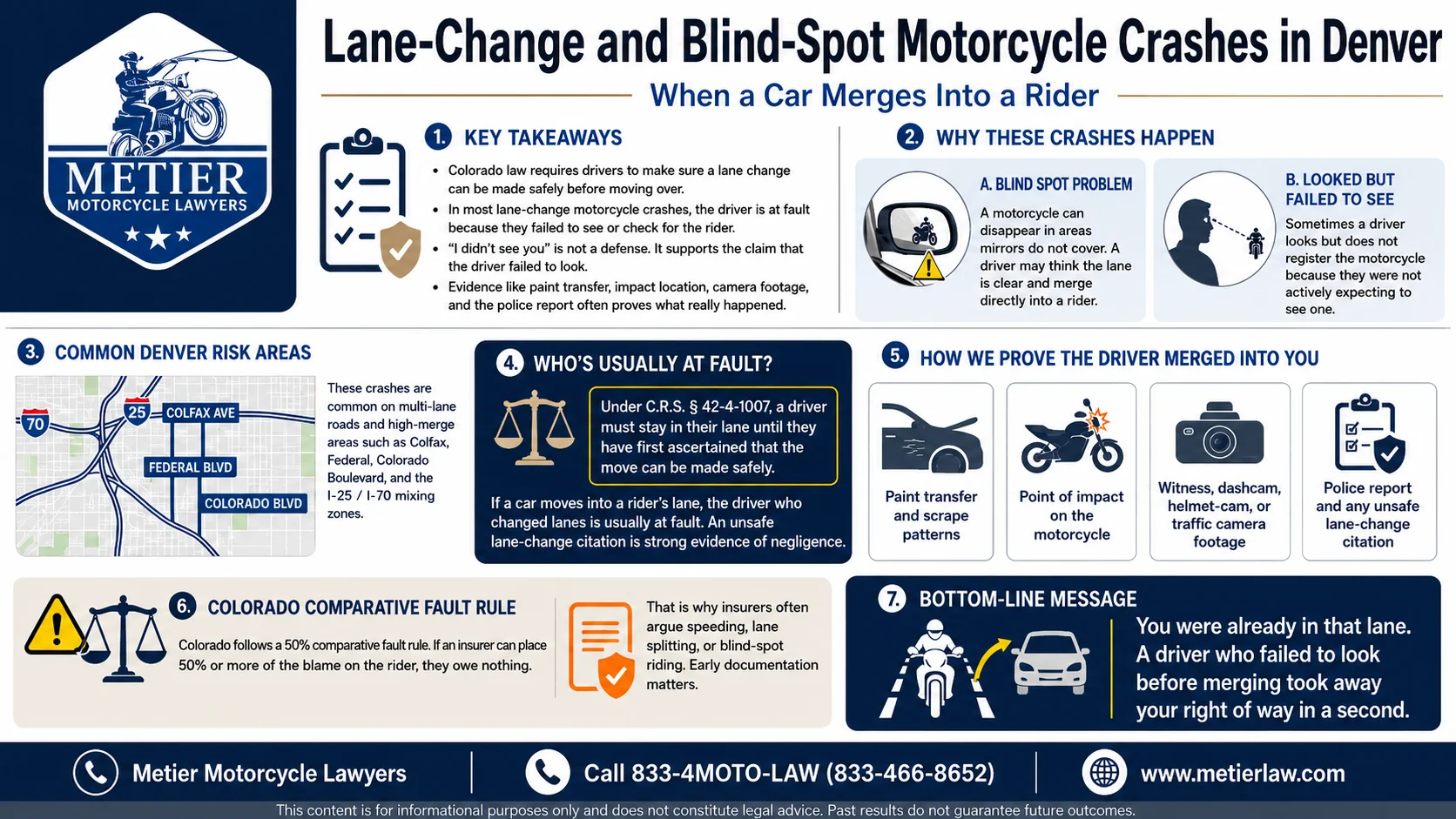
- Colorado law says a driver can't leave their lane until they've made sure it's clear (C.R.S. § 42-4-1007). Moving into a rider they never checked for is negligence, plain and simple.
- Most of these crashes come down to one thing: the driver didn't see the bike. Sometimes the rider was sitting in a blind spot. Sometimes the driver just wasn't looking for a motorcycle at all.
- "Sorry, I didn't see you" isn't a defense. It's evidence the driver failed the duty they owed you before they moved over.
- Insurers try to flip the blame onto you using Colorado's 50% fault rule, because if they can push you to half the blame, they owe nothing.
- Paint transfer, the point of impact on your bike, camera footage, and the police report usually tell the real story, even when the driver's version doesn't.
You're riding down a Denver street you take all the time. Your speed is steady, you're holding your lane, traffic's flowing. The car one lane over signals late or not at all and just comes over, into the space you're already occupying. That half-second is how a lot of riders end up on the pavement, and it almost never starts with anything the rider did wrong.
I'm Patrick DiBenedetto, a partner at Metier Law Firm and a rider myself. I've spent more than 15 years representing injured motorcyclists, and a Denver motorcycle lane-change accident is one of the most common cases that comes through our door. Here's what I tell every client after one of these crashes: "I didn't see you" is not the driver's way out. In Colorado, it's proof they didn't look before they moved.
Why Cars Merge Right Into Motorcycles
A motorcycle takes up a fraction of the visual space a car does. According to NHTSA, a rider's size and visibility are exactly the challenges drivers fail to account for. Two things stack on top of each other in a lane-change crash, and together they put you in danger through no fault of your own.
The Blind Spot Problem
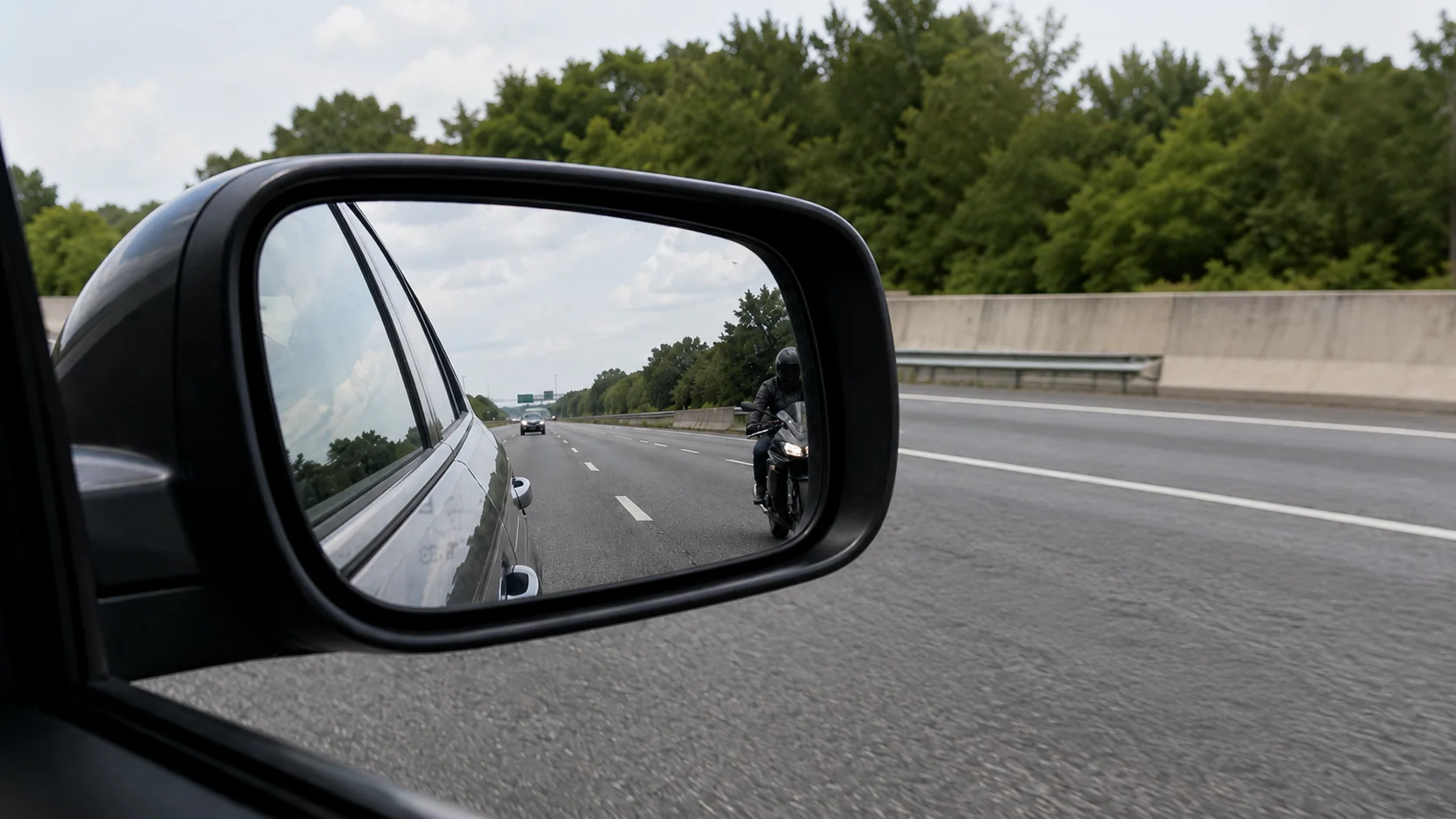
Every car has zones the mirrors don't cover. A full-size sedan or pickup can hide an entire motorcycle in the panel just behind the driver's shoulder. A driver glances at the mirror, sees "clear," and merges, while you're riding in the one spot the mirror never showed them. That's a motorcycle blind spot crash, and it happens even when the driver technically checked. Checking a mirror isn't the same as checking for a rider.
"Sorry, I Didn't See You"
The other half is a perception problem researchers call "looked but failed to see." A driver's eyes pass over you, but their brain isn't expecting a motorcycle, so it doesn't register one. NHTSA tells drivers to actively look for riders where they don't expect them for this exact reason. It's why so many riders hear the same line after a car merged into a motorcycle: the driver swears you appeared out of nowhere. You didn't. You were there the whole time.

Where Blind-Spot Crashes Happen Around Denver
You'll see this pattern anywhere lanes multiply and drivers change them often. Multi-lane stretches like Colfax, Federal, and Colorado Boulevard give drivers constant chances to drift over without looking. The mixing zones where I-25 and I-70 feed traffic on and off are worse, because everyone's changing lanes at once and watching for the next exit instead of the bike beside them. These aren't cursed roads. They're just where the geometry gives a distracted driver the most room to make a bad move.
Who's at Fault in a Denver Motorcycle Lane-Change Accident
Colorado is clear about the duty here. Under C.R.S. § 42-4-1007, a vehicle has to stay in a single lane and can't move out of it until the driver "has first ascertained that such movement can be made with safety." Read that again. The driver owns the responsibility to confirm the lane is clear before they move. An unsafe lane change is a class A traffic infraction, and a citation for one is strong evidence of negligence. In many cases it supports negligence per se, meaning the traffic violation itself helps establish the driver's fault.
So who is at fault when a car changes lanes into a motorcycle? Almost always the driver who moved. Riding legally in your own lane, you had every right to be there. The driver who came into your space is the one who broke the rule. "I didn't see the motorcycle" doesn't change that. It confirms it, because seeing you was their job.
How We Prove the Driver Merged Into You
The at-fault driver's story tends to shift once the evidence comes out. A motorcycle sideswipe leaves marks that don't lie. Paint transfer and scrape patterns show which vehicle crossed into the other's path. The point of impact on your bike, left side or right, tells us the angle they came from. Add witness accounts, any dashcam or helmet-cam footage, and traffic cameras that CDOT runs along I-25, I-70, and I-225, and the picture usually gets clear fast.
Then the insurer goes to work in the other direction. Colorado follows a 50% comparative fault rule, and if they can pin half the blame on you, they pay nothing. So they'll argue you were speeding, that you were splitting lanes, or that you were "hiding" in the blind spot. We break down exactly how that fault-shifting works in our guide on Denver comparative fault motorcycle claims. The short version: your lane position isn't your fault when the other driver had the duty to check before merging. These crashes are also brutal because riders have no cage around them, a reality the CDC has documented for years, which is why insurers fight this hard to keep payouts down.
If you've been hurt in a motorcycle crash and need answers, call us at 833-4MOTO-LAW (833-466-8652) or schedule a free consultation at www.metierlaw.com.
Frequently Asked Questions
Who is at fault when a car changes lanes into a motorcycle?
Usually the driver who changed lanes. Colorado law requires a driver to make sure a lane is clear before moving into it. If they merged into a rider who was already there, they breached that duty, and that's the foundation of a negligence claim. The rider's job was simply to ride in their lane, which they were doing.
What if the driver says they didn't see me?
That admission tends to help your case, not theirs. Under an unsafe lane change motorcycle Colorado standard, the driver was required to look before moving over. Saying they didn't see you is another way of saying they didn't check. It's evidence they failed the duty they owed every other vehicle on the road, including you.
Can I still recover money if I was partly to blame?
Yes, as long as you're less than 50% at fault. Colorado uses a modified comparative negligence rule, so your recovery drops by your share of the blame, and it disappears entirely at 50% or more. That's exactly why insurers push so hard to inflate your fault percentage after a Denver motorcycle lane-change accident, and why documenting the crash early matters so much.
What evidence proves an unsafe lane change?
Physical evidence carries the most weight. Paint transfer, the impact point on your bike, skid and scrape marks, and the vehicles' resting positions all show who moved into whom. Witness statements, camera footage, and the police report round it out. If the officer cited the other driver for the lane change, that citation is powerful support for your claim.
You Were Already in That Lane
The hardest part of a blind-spot crash is that you can do everything right and still get hit. You held your line. You had the right of way. A driver who wasn't looking for a motorcycle took it away in a second. When a car merged into a motorcycle Denver riders trust us to prove what actually happened, because the driver's memory and the physical evidence rarely match. As a Denver motorcycle accident lawyer who rides, I know the difference between an excuse and a defense, and "I didn't see you" is not a defense.
You don't have to sort through the insurance fight alone. Call Metier Motorcycle Lawyers at 833-4MOTO-LAW (833-466-8652) or schedule your free consultation today at www.metierlaw.com.
Disclaimer: Past results discussed should not be considered a guarantee of your results as the factors of every case are individually unique. This content is for informational purposes only and does not constitute legal advice. Consult a qualified attorney from Metier Law Firm regarding your individual situation for legal advice.
Tell Us About Your Case – Free Case Review with a Personal Injury Lawyer
(866) 377-3800Our Locations
.webp)
Do I have a Case?
How Much Should I Be Offered?
Do I Need an Attorney?
If these questions have crossed your mind, let us help. You may need a little direction or may not need an attorney at all, but you deserve to be confident knowing your options. We can provide you with information about our Attorneys of the West® accident investigations and legal services. Your confidential consultation with us is totally free.
Keep up with us!
