.svg)


TL;DR – Key Takeaways
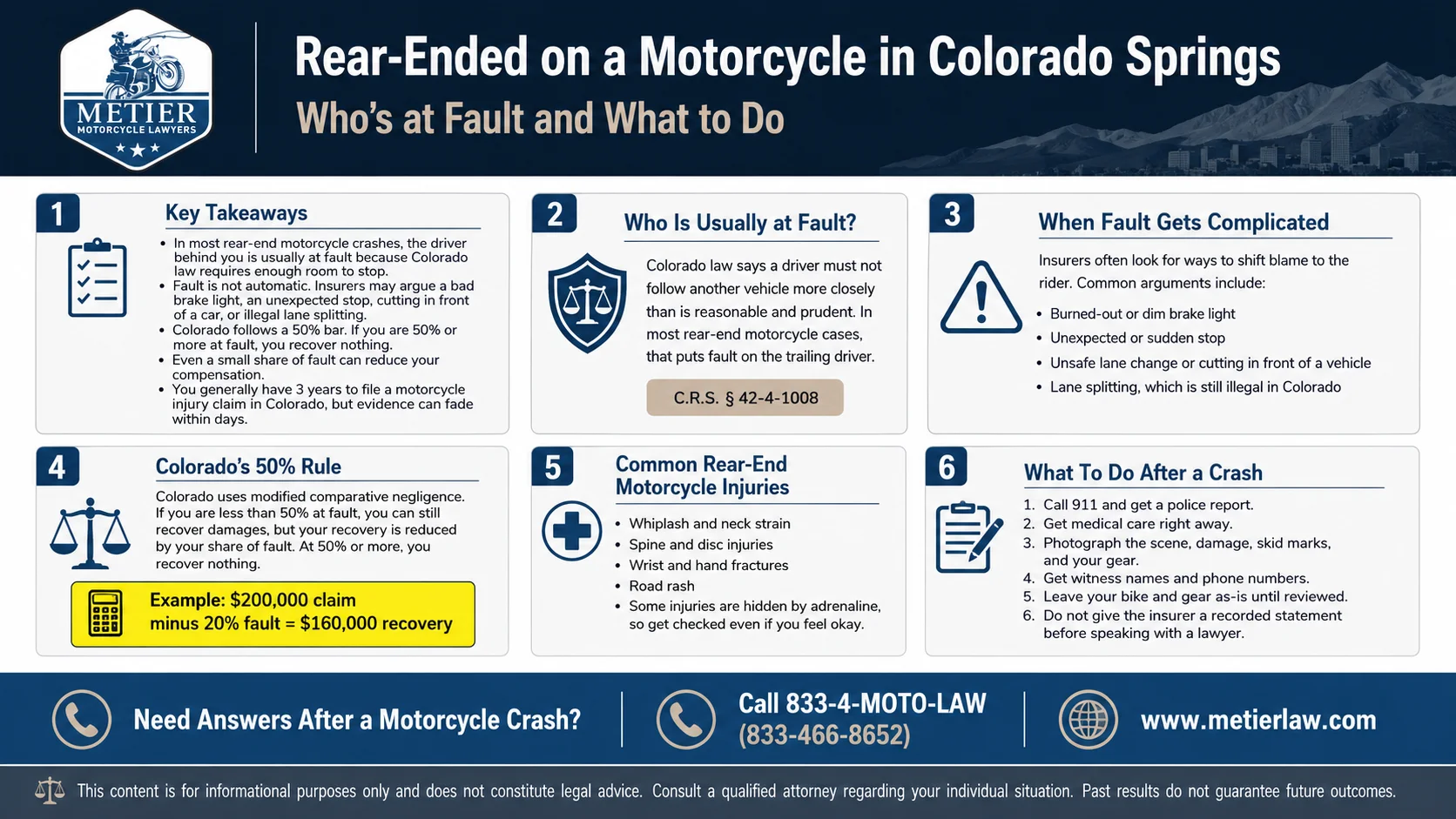
- In most rear-end motorcycle accident cases, the driver who hit you from behind is at fault, because Colorado law requires drivers to leave enough room to stop.
- Fault isn't automatic. A burned-out brake light, an unexpected stop, or cutting in front of a car can give the insurer a reason to blame you.
- Colorado's 50% bar means if you're found 50% or more at fault, you recover nothing, so how fault gets split matters.
- Rear-end hits often cause neck, spine, and wrist injuries that hide behind adrenaline, so get checked even if you feel fine.
- You have three years to file a Colorado injury claim, but the evidence fades within days.
You're stopped at a red light on Academy Boulevard, both feet down, waiting for green. Then you hear tires and there's no time to move. A rear-end motorcycle accident doesn't feel like a fender bender. There's no trunk, no back seat, and no steel behind you. It's just you and the bike.
We see this all the time in Colorado Springs, especially in the stop-and-go corridors along Academy, Powers, and I-25 through town. Riders who did everything right still end up on the pavement because a driver behind them looked at a phone instead of the road. If that's you, a Colorado Springs motorcycle accident lawyer who actually rides can help you sort out fault and protect your claim.
"When a rider gets hit from behind, people assume it's open and shut," says Patrick DiBenedetto, Partner at Metier Law Firm. "Usually the driver who rear-ends you is at fault. But insurers still look for any reason to pin part of the blame on the rider, and in Colorado, even a small share of fault can cost you real money."
A Rear-End Hit Lands Harder on a Bike
In a rear-end motorcycle accident, your body absorbs what a car's frame would take. That's why motorcycle rear-end injuries tend to be serious even at low speed. We see whiplash and neck strain, spine and disc damage, wrist and hand fractures from bracing, and road rash when a rider gets thrown. According to NHTSA, motorcyclists are killed far more often per mile than people in passenger cars, and a hit from behind gives you almost nothing to protect yourself with. Adrenaline hides a lot in the first hour, so a crash you think you walked away from can turn into weeks of pain. Get checked out.
Rear-Ended on a Motorcycle: Who Is at Fault?
Colorado law says a driver "shall not follow another vehicle more closely than is reasonable and prudent." (C.R.S. Section 42-4-1008) In plain terms, the driver behind you has to leave enough room to stop. That's why, in most rear-end motorcycle accident cases, the answer to who is at fault when you're rear ended on a motorcycle is the trailing driver. CDOT even tells drivers to never follow a motorcycle too closely, since bikes can slow down faster than cars.
When the Driver Behind You Is on the Hook
If you were stopped at a light, slowing for traffic, or riding steady in your lane when a hit from behind happened in Colorado, fault usually sits with the driver who ran into you. Distraction, tailgating, and misjudging how fast a bike stops are the causes we see most.
When Fault Gets Complicated
Rear-end fault isn't always clean. An insurer will look hard for a reason to shift blame onto you. After a stopped at light motorcycle crash or a sudden slowdown, expect arguments like these: your brake light was out, you stopped somewhere the driver didn't expect, you changed lanes and cut in front, or you were splitting lanes, which is still illegal in Colorado. That's where Colorado comparative fault motorcycle rules come in, and our breakdown of Colorado's 50% rule is worth a read.
Colorado's 50% Bar and Your Rear-End Motorcycle Accident Claim
Colorado uses modified comparative negligence under C.R.S. Section 13-21-111. If you're less than 50% at fault, you can still recover, but your award drops by your share of responsibility. Hit 50% or more, and you recover nothing. Say your rear-end motorcycle accident claim is worth $200,000 and the insurer convinces a jury you were 20% at fault for a dim brake light. You'd collect $160,000 instead of $200,000. Push that to 50% and you walk away empty-handed. That's why insurers fight over small percentages, and why rear-end collision fault in Colorado Springs deserves attention even when the other driver clearly hit you.
If you've been hurt in a motorcycle crash and need answers, call us at 833-4-MOTO-LAW (833-466-8652) or schedule a free consultation at www.metierlaw.com.
What to Do After a Rear-End Motorcycle Accident in Colorado Springs
- Call 911 and get a police report on file.
- Get medical care, even if you feel okay.
- Photograph the scene: vehicle positions, damage, skid marks, and your gear.
- Get names and numbers from any witnesses.
- Leave your bike and gear as-is until your case is reviewed.
- Don't give the other driver's insurer a recorded statement before you talk to a lawyer.
You have three years from the crash date to file an injury claim in Colorado, but the evidence that proves a rear-end motorcycle accident case fades within days. Our step-by-step guide to the first moves after a Colorado Springs crash covers the scene in more detail.
Rear-End Motorcycle Accident FAQ
If I was rear-ended on my motorcycle, is the other driver automatically at fault?
Not automatically, but usually. Colorado expects the driver behind you to leave enough room to stop, so fault most often lands on them. The exception is when something you did, like a burned-out brake light or an unexpected stop, hands the insurer a comparative fault argument.
What are the most common rear-end motorcycle injuries?
We see neck and whiplash injuries, spine and disc damage, wrist and hand fractures from bracing, and road rash if you're thrown. Many don't show up right away, which is why a medical check matters even after a stopped at light motorcycle crash you think was minor.
How does Colorado's comparative fault rule affect my claim?
Under Colorado comparative fault, your recovery drops by your share of blame and hits zero at 50%. On a rear-end motorcycle accident claim, insurers try to push your percentage up. Keeping your share low is often the difference between a full recovery and a reduced one.
Do I need a Colorado Springs motorcycle accident lawyer for a rear-end crash?
If your injuries are minor and the insurer pays fairly, maybe not. But when there's a fault dispute, a serious injury, or a lowball offer, a Colorado Springs motorcycle accident lawyer who rides can protect your claim and push back on the tactics insurers use against riders.
How long do I have to file after being hit from behind in Colorado?
After a rear-end motorcycle accident, you have three years from the crash date to file a personal injury claim in Colorado. Wrongful death claims follow a different timeline, so families should ask a lawyer about their situation.
Hit From Behind? Let's Talk About Your Options
Getting rear-ended on a bike is frightening, and the aftermath can feel like a second hit: medical bills, a damaged motorcycle, and an insurer already building its case. You don't have to handle it alone. At Metier Motorcycle Lawyers, we ride the same Colorado Springs roads you do, and we know how these cases play out. We'll dig into fault, stand up to the insurance company, and fight for what your rear-end motorcycle accident claim is really worth.
Call Metier Motorcycle Lawyers at 833-4-MOTO-LAW (833-466-8652) or schedule your free consultationtoday at www.metierlaw.com.
Disclaimer: Past results discussed should not be considered a guarantee of your results as the factors of every case are individually unique. This content is for informational purposes only and does not constitute legal advice. Consult a qualified attorney from Metier Law Firm regarding your individual situation for legal advice.

Tell Us About Your Case – Free Case Review with a Personal Injury Lawyer
(866) 377-3800Our Locations
.webp)
Do I have a Case?
How Much Should I Be Offered?
Do I Need an Attorney?
If these questions have crossed your mind, let us help. You may need a little direction or may not need an attorney at all, but you deserve to be confident knowing your options. We can provide you with information about our Attorneys of the West® accident investigations and legal services. Your confidential consultation with us is totally free.
Keep up with us!
