.svg)



TL;DR: Key Takeaways
- Oregon's traffic deaths peaked at 602 in 2022 before easing to 587 in 2023, and large trucks show up in serious and fatal cases far more than their share of traffic suggests.
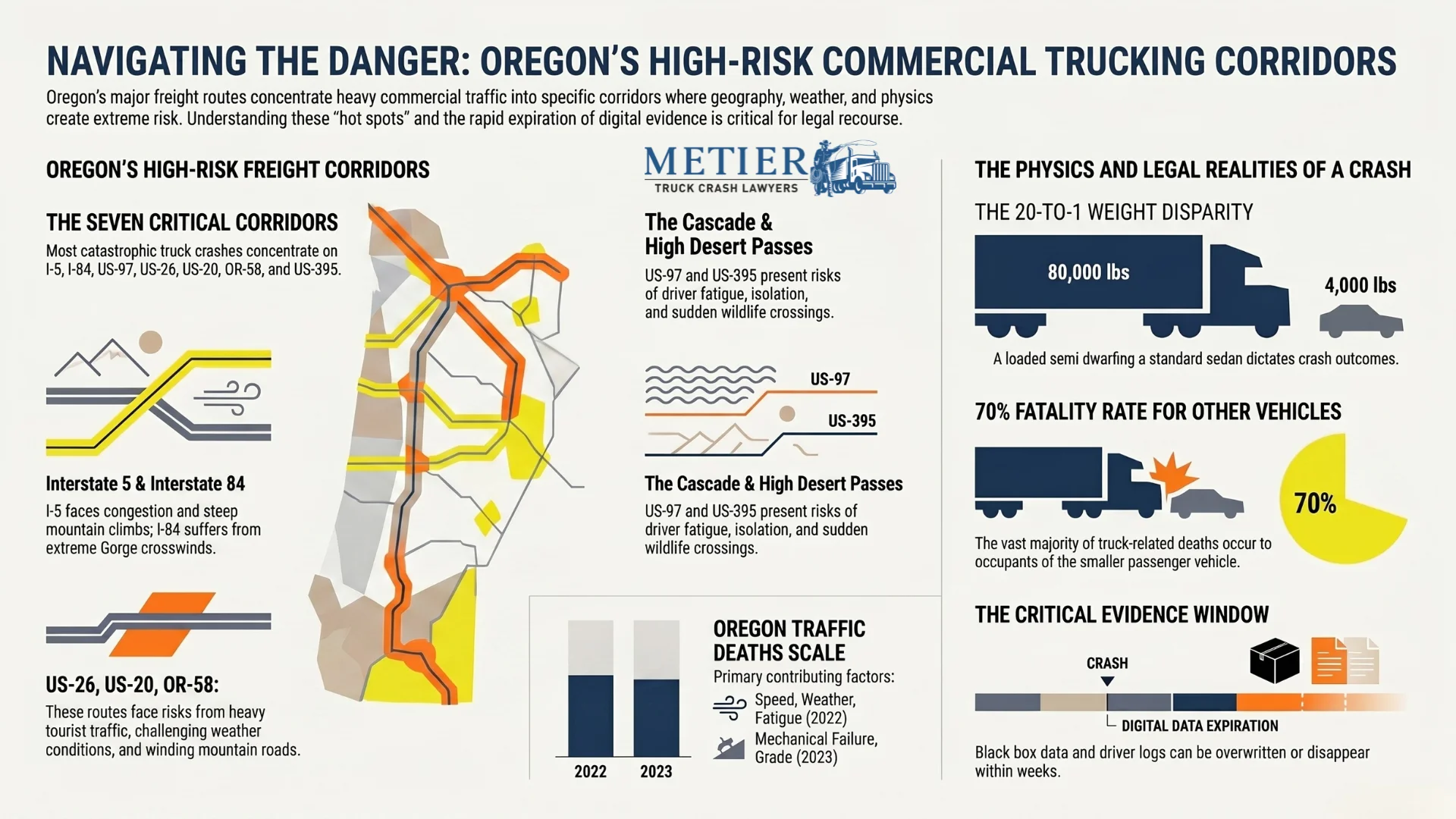
- The most dangerous roads in Oregon for truck accidents cluster on seven corridors: I-5, I-84, US-97, US-26, US-20, OR-58, and US-395.
- Each road carries its own risk, from Gorge crosswinds and Cascade grades to high-desert fatigue.
- Nationwide, 70 percent of people killed in large-truck crashes are in other vehicles, not the truck.
- Black box data and driver logs can be overwritten within weeks, so evidence disappears fast.
- Oregon gives you two years from the crash date to file most injury claims.
A loaded semi can weigh up to 80,000 pounds. A family sedan weighs around 4,000. When those two meet on an Oregon highway, physics decides most of what happens next, and it rarely favors the smaller vehicle. That is why the most dangerous roads in Oregon for truck accidents deserve a closer look, especially if you drive them every week without thinking twice.
We represent people hurt in commercial truck crashes across Oregon and study where these wrecks happen and why. The pattern holds: a short list of corridors carries most of the freight, and those same corridors produce most of the catastrophic truck crashes. Knowing which roads earn that reputation helps you stay alert and understand your options if the worst happens.
Call Metier Law Firm at 866-377-3800 or schedule your free consultation today at www.metierlaw.com
The Oregon Roads Where Truck Crashes Concentrate
Most heavy freight funnels through the same routes, and the danger follows the freight. These are the corridors we see again and again:
- Interstate 5, Portland to Medford, the state's busiest freight artery
- Interstate 84, through the Columbia River Gorge and out to eastern Oregon
- US-97, down the high-desert spine east of the Cascades
- US-26, over the Mt. Hood corridor
- US-20, across Santiam Pass
- OR-58, over Willamette Pass
- US-395, through remote eastern Oregon
Here's what makes each one dangerous for trucks.
Interstate 5: Portland to Medford
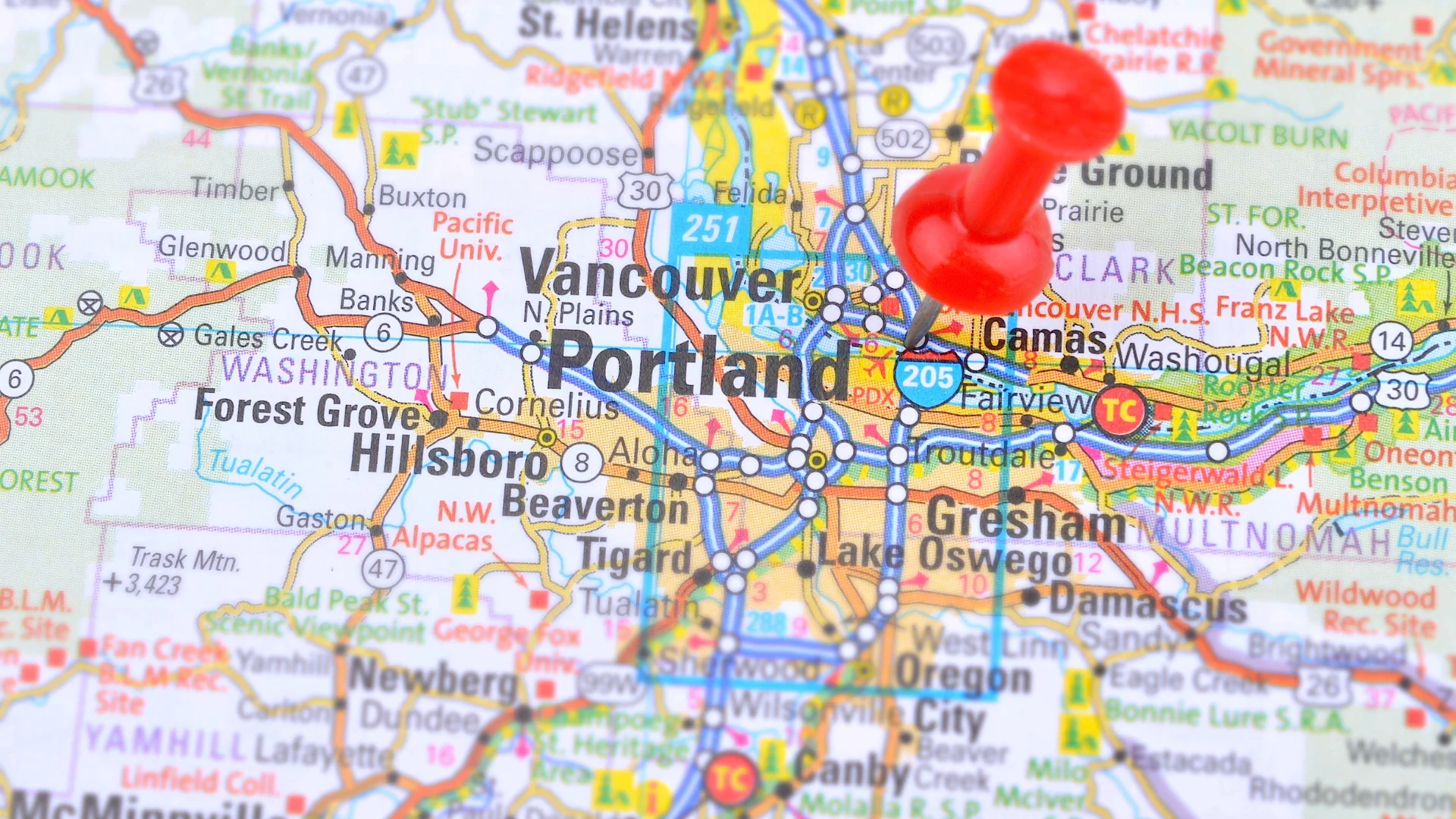
I-5 is the heaviest freight corridor in the state, carrying refrigerated loads, flatbeds, and tankers around the clock. The risk sits in two places. Up north, congested merges through Portland and the Terwilliger curves cause rear-end and sideswipe wrecks. Down south, the climb over Sexton Mountain near Grants Pass tests brakes and tires. We map the metro hot spots in our breakdown of Portland I-5 truck crash zones, and an I-5 Oregon truck crash often involves a driver who misjudges how fast the corridor changes.
Interstate 84: The Columbia River Gorge and Beyond
I-84 follows the Columbia River east out of Portland, and the Gorge acts like a wind tunnel. Crosswinds, sudden gusts, and black ice that forms when the rest of the region only sees rain make this one of the worst trucking corridors in the country. Farther east, the descent down Cabbage Hill near Pendleton drops trucks more than 2,000 feet on a steep grade, and the I-82 junction near Hermiston feeds Washington freight in. We give the Gorge a full deep-dive in our post on I-84 Gorge truck crashes.
US-97: The High Desert
US-97 runs north to south east of the Cascades, linking Biggs Junction, Bend, Redmond, and Klamath Falls. It is a long-haul route with two-lane stretches, limited services, and few places to rest. Fatigue is the quiet danger. A driver pushing through the night has miles of dark, monotonous road to fight, and that is where US-97 truck accidents in Oregon tend to happen. Rural passing zones and intersections add head-on and turning-crash risk.
US-26: The Mt. Hood Corridor
US-26 climbs from the Portland suburbs over Mt. Hood, peaking near Government Camp. Steep grades, tight curves, and hard winter weather mix with weekend ski and recreation traffic. Loaded trucks share icy switchbacks with families towing trailers to the mountain. Runaway-truck risk climbs on the long descents, and snow can turn a small mistake into a pileup.
Call Metier Law Firm at 866-377-3800 or schedule your free consultation today at www.metierlaw.com
US-20: Santiam Pass
US-20 carries freight between the Willamette Valley and Bend over Santiam Pass, one of the snowiest crossings in the state. The two-lane sections near Tombstone Pass and Hoodoo see chain-up requirements much of the winter. When a truck loses traction on a grade, there is little room to recover and almost no shoulder to use.
OR-58: Willamette Pass
OR-58 connects I-5 near Eugene to US-97, and freight uses it as a shortcut. The climb to Willamette Pass and the descent past Salt Creek bring steep grades and heavy snow. Because it feels like a quick connector, drivers carry too much speed into curves that punish it, and we see brake and lane-departure crashes here, often in fast-changing winter conditions.
US-395: Eastern Oregon
US-395 threads through some of the emptiest country in the state, past Pendleton, John Day, Burns, and Lakeview. The danger is distance and isolation. Long gaps between towns wear drivers down, wildlife crosses without warning, and help can be far away when a crash happens.
What Makes These Roads So Dangerous for Trucks
The corridors differ, but the reasons trucks crash on them rhyme. A few factors come up over and over in our cases:
- Grade and brakes. Long descents heat brakes until they fade, and overloaded or poorly maintained rigs lose stopping power.
- Weather. Gorge wind, Cascade snow, and high-desert ice cut traction and visibility in seconds.
- Fatigue. Remote routes and tight delivery windows push drivers past safe limits.
- Freight volume. Busy corridors mix long-haul semis with drivers who misjudge how a loaded truck behaves.
- Speed. Speeding factors into about a quarter of Oregon's fatal and serious-injury crashes, and a heavy truck has little margin to correct.
ODOT crash data backs this up. On I-205, targeted truck inspections and driver screenings cut truck-at-fault crashes by roughly 60 percent, and in one recent year, 40 percent of inspected vehicles were pulled out of service for mechanical or operational problems.
If you or a loved one was injured in a crash with a commercial truck, call us at 866-377-3800 or schedule a free consultation at www.metierlaw.com.
What We Look At After an Oregon Truck Crash
A truck case is not a bigger car case. It runs on federal law. The hours-of-service rules in 49 CFR Part 395 limit how long a driver can stay behind the wheel, and carriers violate them more often than people realize. When they do, that violation becomes evidence.
We move quickly to preserve the electronic logging records, black box data, and dispatch logs that show what the driver and company were doing. We also read the crash against the corridor. A rollover on I-84 in a wind advisory, a brake failure on a US-26 grade, and a fatigue crash on US-395 point to different failures and different responsible parties. The driver, carrier, cargo loader, and a maintenance contractor can all share fault, and a jackknife crash on a slick grade often traces back to more than one.
Call Metier Law Firm at 866-377-3800 or schedule your free consultation today at www.metierlaw.com
Frequently Asked Questions
What are the most dangerous roads in Oregon for truck accidents?
I-5, I-84, US-97, US-26, US-20, OR-58, and US-395 carry the heaviest commercial truck traffic and the most serious truck crashes in the state. I-5 leads on volume, while the mountain and Gorge routes lead on weather and grade-related wrecks.
Why are Oregon highways so dangerous for large trucks?
Steep Cascade grades, Columbia River Gorge crosswinds, high-desert fatigue, and heavy freight volume stack up. Add winter ice and narrow shoulders on two-lane passes, and a loaded truck has little room to recover from a mistake.
How often do trucks cause fatal crashes?
Large trucks are involved in thousands of deaths a year nationwide. According to NHTSA's 2023 large-truck data, 70 percent of the people killed in those crashes are in other vehicles, not the truck. Oregon crash data shows trucks overrepresented in the most severe outcomes.
How long do I have to file a truck accident claim in Oregon?
Oregon generally gives you two years from the crash date for a personal injury claim. The exceptions matter, so see our guide to Oregon's personal injury statute of limitations and don't wait to get advice.

Know the Road, Know Your Rights
You can't always avoid the corridors where trucks crash. I-5, the Gorge, and the Cascade passes are how Oregon moves, and most of us have to share them. What you can do is understand the risk and know that a serious truck crash is rarely a simple accident. When a carrier cuts corners on maintenance, scheduling, or training, real people pay for it.
If a truck hurt you or someone you love on one of the most dangerous roads in Oregon for truck accidents, you deserve a team that knows how these cases work and how to hold the right parties accountable. We focus on truck accident injury cases, and we know what the evidence should show. If you were hurt near Portland, our Portland truck accident lawyers page is a good place to start.
Call Metier Law Firm at 866-377-3800 or schedule your free consultation today at www.metierlaw.com.
Disclaimer: Past results discussed should not be considered a guarantee of your results as the factors of every case are individually unique. This content is for informational purposes only and does not constitute legal advice. Consult a qualified attorney from Metier Law Firm regarding your individual situation for legal advice.
Tell Us About Your Case – Free Case Review with a Truck Accident Lawyer
Tell Us About Your Case – Free Case Review with a Personal Injury Lawyer
(866) 377-3800Our Locations
.webp)
Do I have a Case?
How Much Should I Be Offered?
Do I Need an Attorney?
If these questions have crossed your mind, let us help. You may need a little direction or may not need an attorney at all, but you deserve to be confident knowing your options. We can provide you with information about our Attorneys of the West® accident investigations and legal services. Your confidential consultation with us is totally free.
Keep up with us!
