.svg)


TL;DR: Key Takeaways
● The Columbia River Gorge acts as a natural wind tunnel where sustained winds of 20+ mph are common and severe weather events bring dangerous gusts that can flip trucks.
● Trucking companies often pressure drivers to operate during high wind warnings and hazardous conditions, violating federal safety regulations.
● The "Ice Box" effect creates black ice on I-84 when surrounding Oregon areas only have rain, catching unfamiliar drivers off guard.
● We investigate using ECM black box data, meteorological records, and dispatch logs to prove negligence when trucking companies blame "unavoidable" weather.
● Having a CDL-holding attorney matters because we understand truck operations, federal regulations, and what evidence proves liability in Gorge crashes.
Every year, Interstate 84 through the Columbia River Gorge becomes the site of dozens of serious truck crashes. We've seen rollovers caused by powerful wind gusts, jackknifes on black ice that forms when the rest of Oregon is just getting rain, and multi-vehicle pileups near Multnomah Falls that shut down the freeway for hours. This stretch of highway isn't just scenic. It's one of the most dangerous trucking corridors in the United States, and when negligence plays a role, the results can be catastrophic.
As a truck crash lawyer who holds a Commercial Driver's License and has spent years representing victims of truck accidents on hazardous roads, I understand what makes this corridor so treacherous. More importantly, I know when a crash was preventable and how to prove it.
Why the Columbia River Gorge Acts as a Natural Wind Tunnel
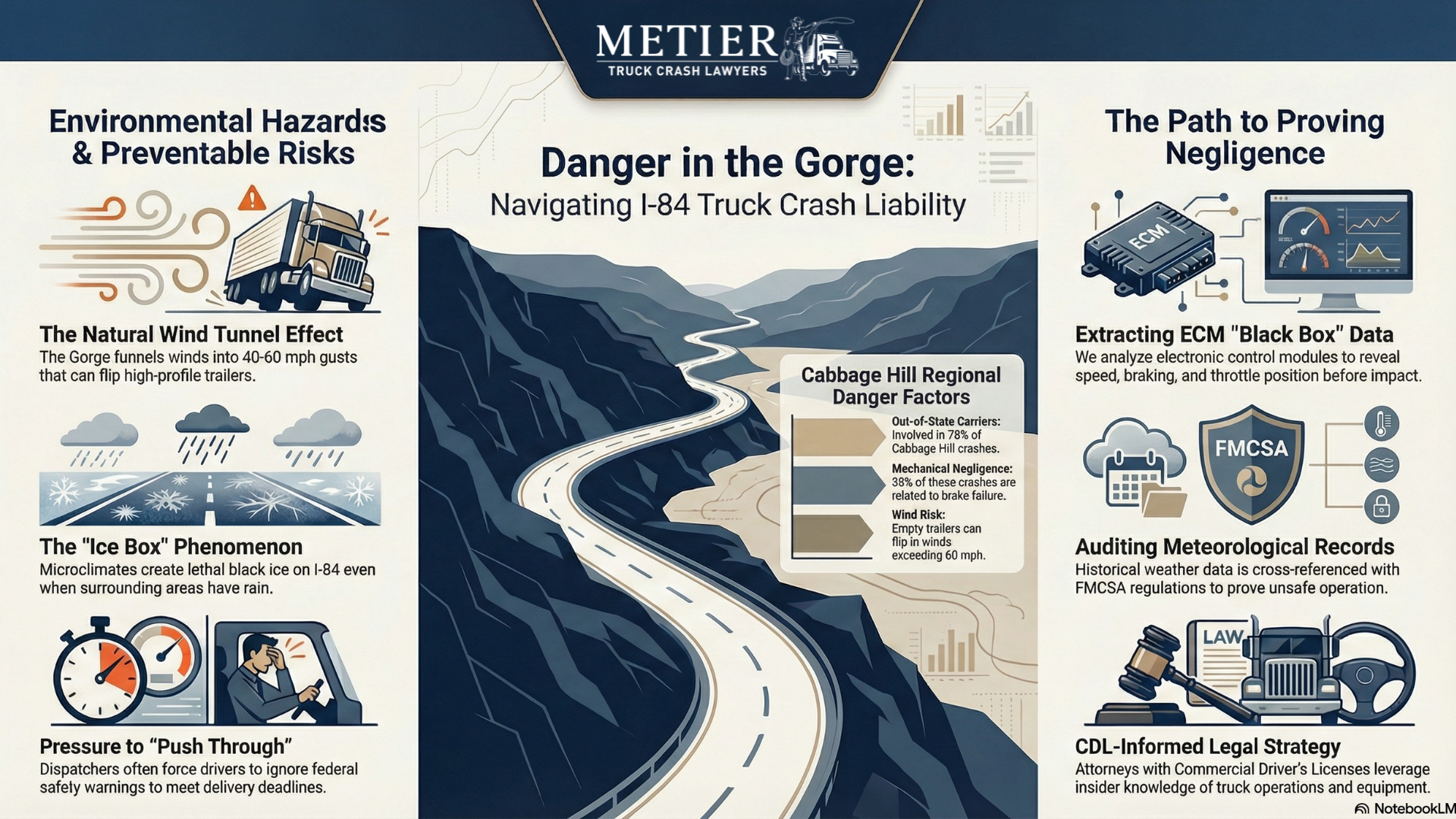
The Columbia River Gorge isn't just a beautiful passage through the Cascade Mountains. It's the only sea-level route through the range, which means it acts as a natural wind tunnel. When high-pressure air from the east meets low-pressure air from the west, the Gorge funnels those winds into powerful gusts.
According to the Northwest Power and Conservation Council, the steep walls of the Columbia River Gorge act as a funnel where frequent and sustained winds of 20 mph or faster are common. During severe weather events, wind speeds can reach dangerous levels for high-profile vehicles. For truckers, this creates a perfect storm of risk. An 18-wheeler with an empty or lightly loaded trailer can flip in winds exceeding 60 mph, and winds between 40 and 60 mph can cause dangerous swaying and loss of control.
The problem isn't just that the winds are strong. It's that trucking companies know the risks and often send drivers out anyway. We've seen dispatch logs where drivers expressed concern about high wind warnings, only to be told to "push through" to meet a delivery deadline in Portland. That's negligence, plain and simple.
The Deadliest Crash Types We See on I-84
Rollover Accidents
Rollovers are the most common type of Columbia River Gorge truck accident we investigate. The physics are straightforward: semi-trucks have high centers of gravity, and the wide, flat sides of trailers catch the wind like a sail. When a strong crosswind hits an empty or lightly loaded trailer, the entire rig can tip.
What makes these crashes even more dangerous is that they often happen on curves near Hood River, where tight turns combine with sudden wind gusts. Drivers who don't reduce speed or who fail to account for their load weight are putting everyone around them at risk.
Jackknife Crashes on Black Ice
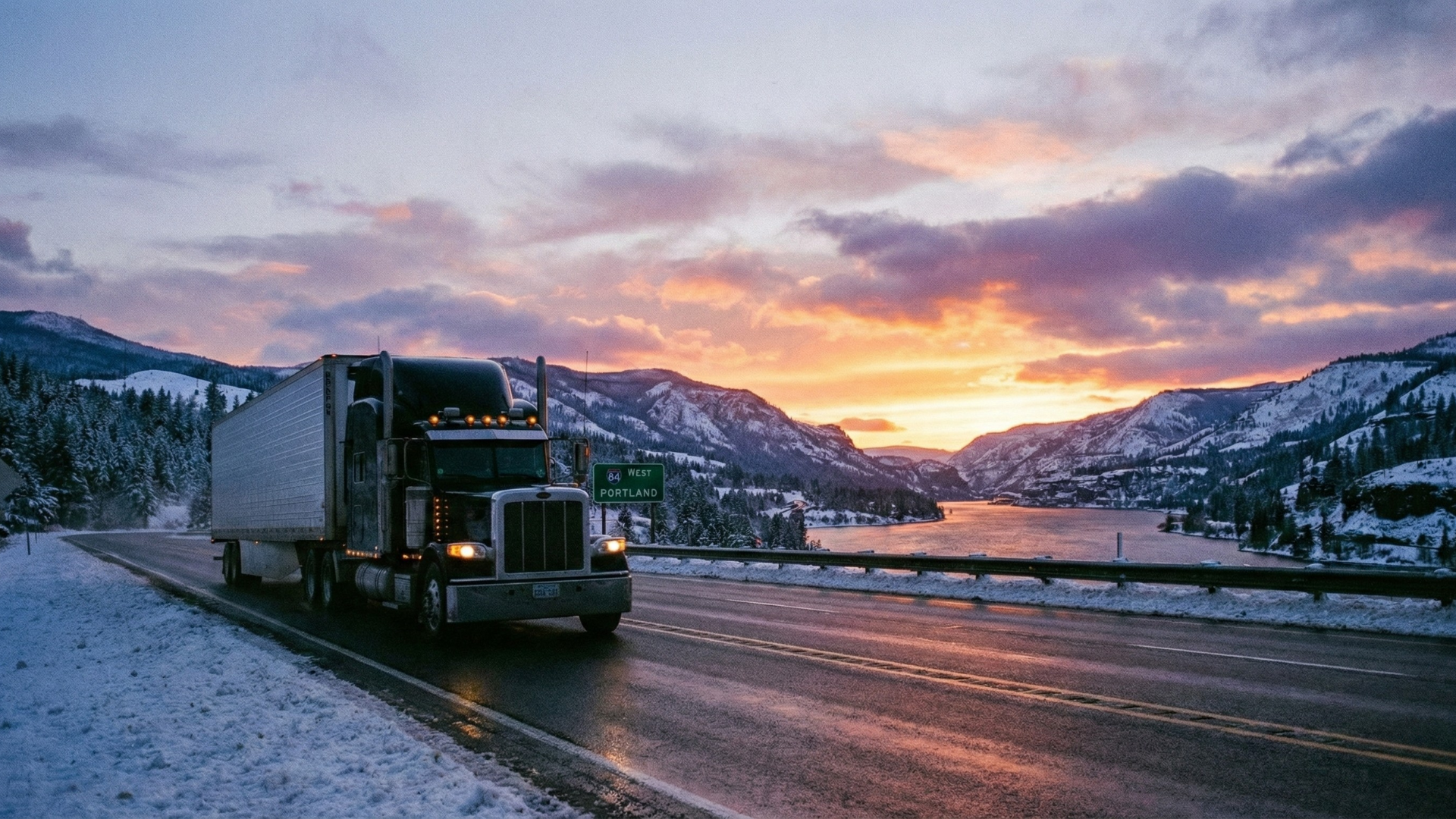
The Gorge has a unique weather phenomenon locals call "the Ice Box." Cold air gets trapped along the river, creating black ice conditions even when Portland and other parts of Oregon are just dealing with rain. Truck drivers unfamiliar with this microclimate often don't realize they're driving on ice until it's too late.
When a truck jackknifes on black ice, the trailer swings out at a 90-degree angle from the cab, often blocking multiple lanes of traffic. Trucking companies love to claim these are unavoidable accidents, but we've proven time and again that they're the result of driving too fast for conditions. Federal Motor Carrier Safety Administration regulation 49 CFR § 392.14 requires drivers to exercise "extreme caution" in hazardous conditions and to stop driving if conditions become "sufficiently dangerous." If a driver ignored those rules, there's liability.
Underride Collisions Near Multnomah Falls
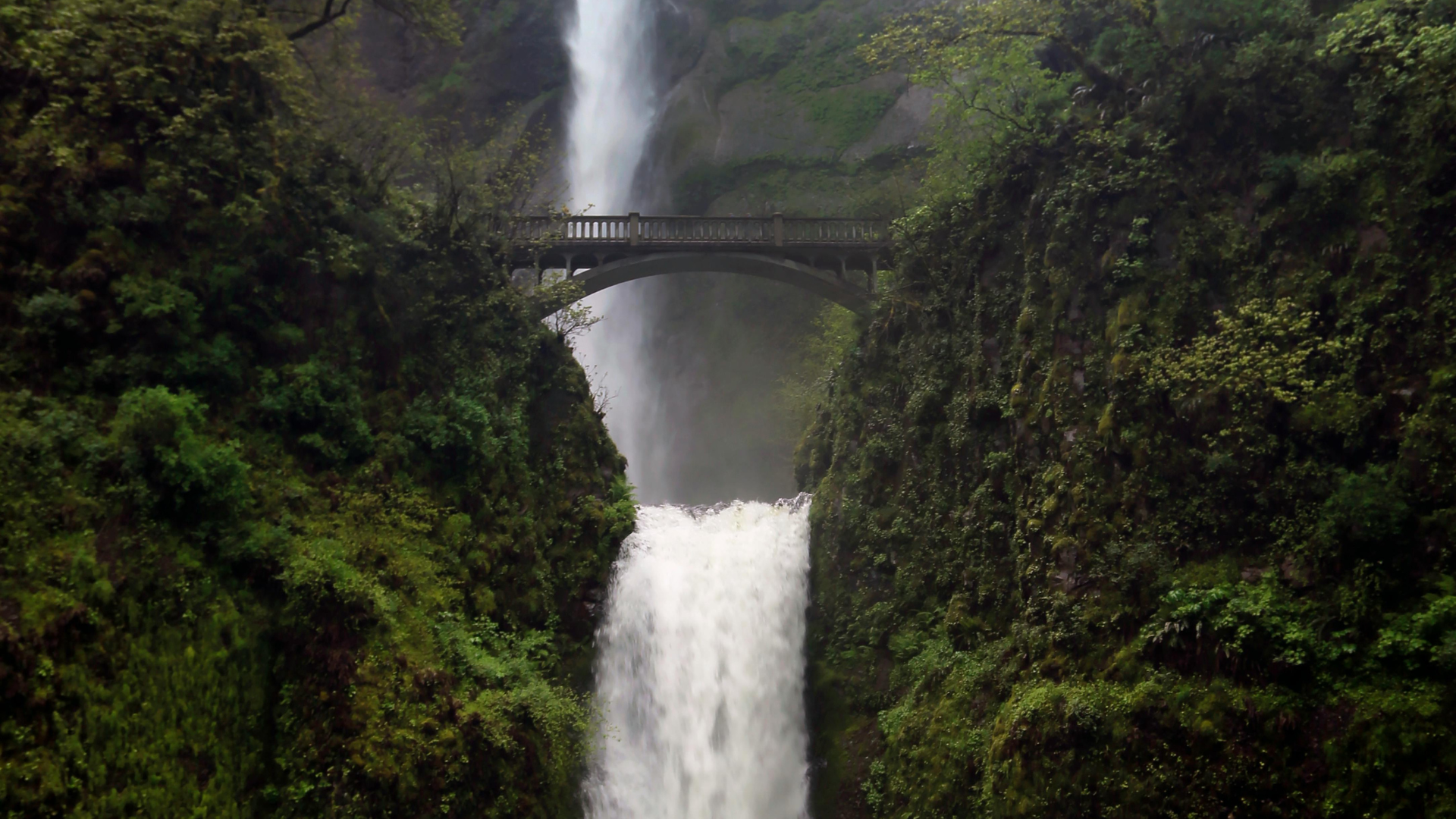
Multnomah Falls attracts millions of tourists every year, and that creates heavy traffic along I-84. When trucks have to brake suddenly in congested areas, passenger vehicles following too closely or unable to stop in time can slide underneath the trailer. These underride accidents are among the deadliest truck crashes we see, often resulting in severe head and spinal injuries or fatalities.
If you or a loved one was injured in a crash with a commercial truck, call us at 866-377-3800 or schedule a free consultation at www.metierlaw.com.
Three Danger Zones Every Driver Should Know
Hood River's Tight Curves
The curves near Hood River combine two deadly factors: sharp turns and unpredictable wind. When you're driving a 40-ton rig through a curve and a sudden 60 mph gust hits your trailer, you've got maybe a second to react. Experienced drivers know to slow down before these curves, but out-of-state carriers and inexperienced operators often don't respect the danger until it's too late.
The Ice Box Effect
This isn't folklore. The Columbia River Gorge traps cold air in a way that creates ice when surrounding areas only have rain or fog. We've pulled meteorological data showing surface temperatures below freezing on I-84 while Portland sat at 40 degrees. Drivers who assume conditions match the forecast are making a fatal mistake.
Deadman Pass and Cabbage Hill
While technically east of the main Gorge corridor, Deadman Pass near Pendleton is part of the I-84 danger zone. This section features a 6% downgrade over 7 miles with double hairpin turns. According to Oregon DOT's Emigrant Hill safety data, 78% of crashes on Cabbage Hill involve out-of-state motor carriers, and 59% are related to brake failures.
The runaway truck ramps at mileposts 221 and 220 exist for a reason. When trucking companies fail to ensure their drivers check brakes before the descent or send trucks with worn brakes onto that grade, people die.
How We Investigate Columbia River Gorge Truck Accidents
Police reports only tell part of the story. We go deeper because we know what to look for. My CDL background gives me an advantage most attorneys don't have. I understand how trucks operate, what data systems record, and what regulations apply.
ECM Data (The Black Box): Every modern commercial truck has an electronic control module that records speed, braking, throttle position, and more. We pull this data to see exactly what the driver was doing in the moments before the crash. Was the truck speeding? Did the driver attempt to brake? The ECM tells us the truth.
Meteorological Data: We don't rely on general weather reports. We pull historical data from the National Weather Service showing wind speeds, visibility, and temperature for the exact location and time of the crash. This data proves whether the driver ignored safety bans or operated in conditions that violated FMCSA regulations.
Dispatch Logs: Trucking companies often pressure drivers to meet unrealistic deadlines. We subpoena dispatch communications to see if the company told the driver to "push through" dangerous weather. If they did, the company shares liability for the crash.
This level of investigation requires both legal expertise and trucking knowledge. That's what we bring to every case.
Frequently Asked Questions
What should I do immediately after a Columbia River Gorge truck accident?
Get medical attention first, even if you don't think you're seriously hurt. Adrenaline can mask injuries. Then, if it's safe, take photos of the scene, the truck's identification numbers, and any visible damage. Contact a truck accident lawyer as soon as possible because evidence like ECM data can be lost if we don't preserve it quickly.
How long do I have to file a claim after a truck crash in Oregon?
Oregon's statute of limitations for personal injury claims is generally two years from the date of the accident. However, there are exceptions, and waiting too long can make it harder to gather evidence. We recommend contacting an attorney within days of the crash, not months.
Can I sue if the truck driver claims the weather caused the accident?
Absolutely. Weather doesn't cause accidents. Driver decisions do. If the driver was operating in conditions that violated FMCSA safety regulations, or if the trucking company pressured them to drive despite high wind warnings or ice, there's liability. We've won cases where trucking companies tried to blame "unavoidable" weather.
What compensation can I recover after a truck accident on I-84?
You may be entitled to compensation for medical expenses, lost wages, future medical care, disability, pain and suffering, and property damage. In cases involving gross negligence, punitive damages may also be available. Every case is different, which is why a detailed investigation matters.
Why does it matter that you have a CDL?
Because I've been behind the wheel of a commercial truck. I know what it feels like to navigate the Gorge in high winds. I understand the regulations, the equipment, and the pressures drivers face. That insider knowledge helps us build stronger cases and cross-examine trucking company experts who try to downplay negligence.
Why You Need a Truck Accident Lawyer Who Knows the Road
Trucking companies have teams of lawyers and investigators working to minimize their liability the moment a crash happens. They'll try to blame you, the weather, or road conditions. They'll offer quick settlements that don't come close to covering your actual damages.
We level the playing field. Our firm has the resources to conduct thorough investigations, hire expert witnesses, and take cases to trial when insurance companies refuse to offer fair compensation. More importantly, we understand the specific dangers of I-84 through the Columbia River Gorge. We know where crashes happen, why they happen, and how to prove negligence.
If you've been injured or lost a loved one in a truck crash on I-84, you deserve representation from attorneys who won't back down from well-funded trucking companies. Call Metier Law Firm at 866-377-3800 or schedule your free consultation today at www.metierlaw.com. Speak with an experienced Denver truck accident lawyer serving Colorado Springs, Fort Collins, Seattle, Portland, and Cheyenne.
Disclaimer: Past results discussed should not be considered a guarantee of your results as the factors of every case are individually unique. This content is for informational purposes only and does not constitute legal advice. Consult a qualified attorney from Metier Law Firm regarding your individual situation for legal advice.
Tell Us About Your Case – Free Case Review with a Truck Accident Lawyer
Tell Us About Your Case – Free Case Review with a Personal Injury Lawyer
(866) 377-3800Our Locations
.webp)
Do I have a Case?
How Much Should I Be Offered?
Do I Need an Attorney?
If these questions have crossed your mind, let us help. You may need a little direction or may not need an attorney at all, but you deserve to be confident knowing your options. We can provide you with information about our Attorneys of the West® accident investigations and legal services. Your confidential consultation with us is totally free.
Keep up with us!
