.svg)


TL;DR: Key Takeaways
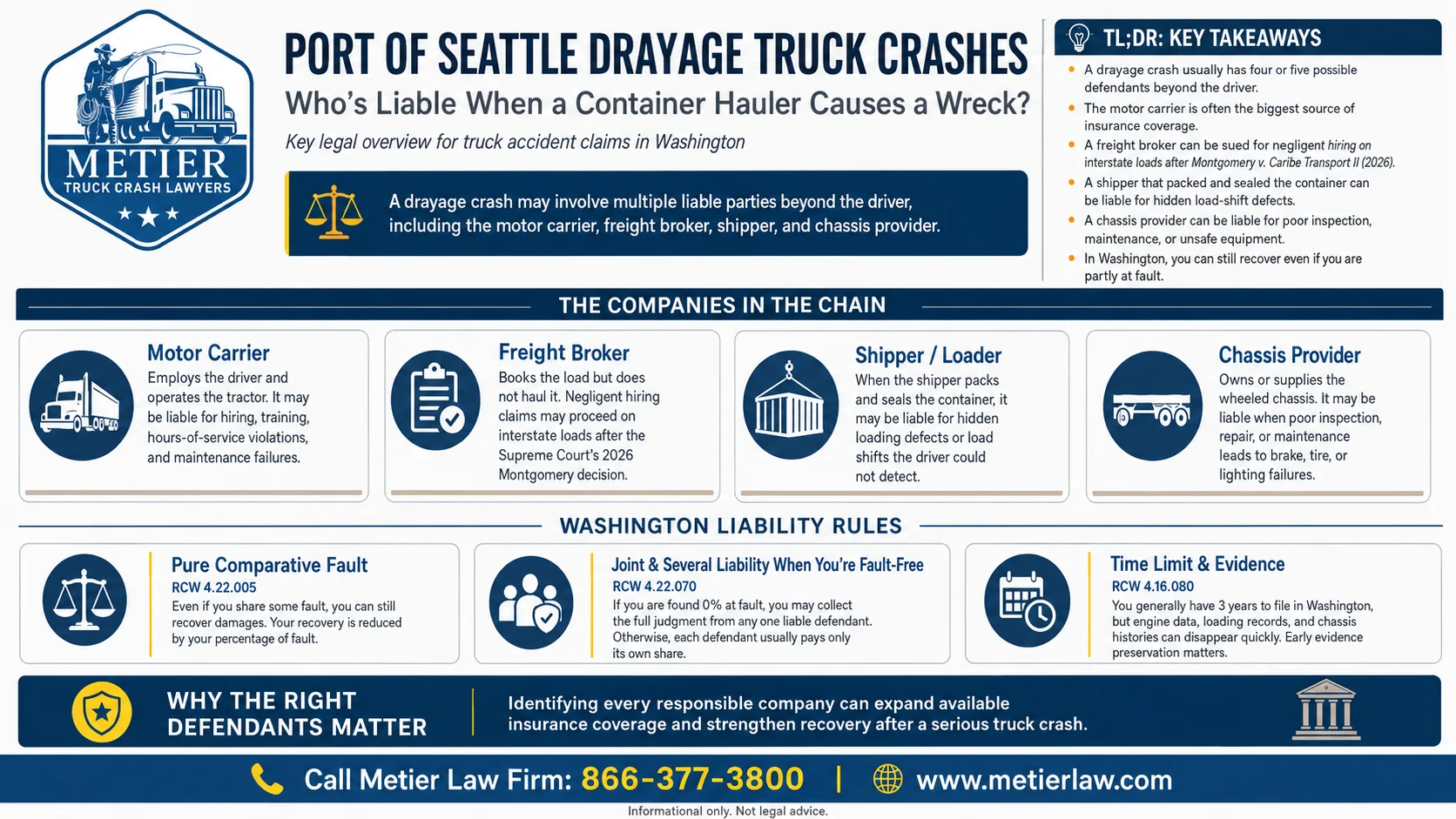
- A drayage crash usually has four or five possible defendants beyond the driver: the motor carrier, freight broker, shipper that loaded the container, and chassis provider.
- After the Supreme Court's 2026 ruling in Montgomery v. Caribe Transport II, a freight broker can be sued for hiring an unsafe carrier on interstate loads.
- A shipper that packs and seals a container can be liable when a hidden load shift causes the wreck, under a rule courts have used since 1953.
- Under Washington's pure comparative fault law you can recover even if you're partly at fault, and staying fault-free lets you collect the full judgment from any one defendant.
- You generally have three years to file in Washington, and the evidence that proves these cases disappears fast.
Every working day, thousands of containers come off ships at Terminal 5 and Terminal 18, drop onto chassis, and roll out through SODO toward warehouses along I-5 and I-90. That short trip from dock to distribution center is called drayage, and the trucks that do it haul a load someone else packed, on equipment someone else owns, for a trip someone else booked. So when a container hauler causes a wreck, the person it hits faces a hard question: who actually pays?
I'm Mike Chaloupka, managing partner at Metier Law Firm. I hold a Class A commercial driver's license, and our team has spent years untangling these cases. Port of Seattle drayage truck accident liability rarely lands on one party. It usually spreads across four or five companies, and knowing which ones belong on your claim is where these cases are won.
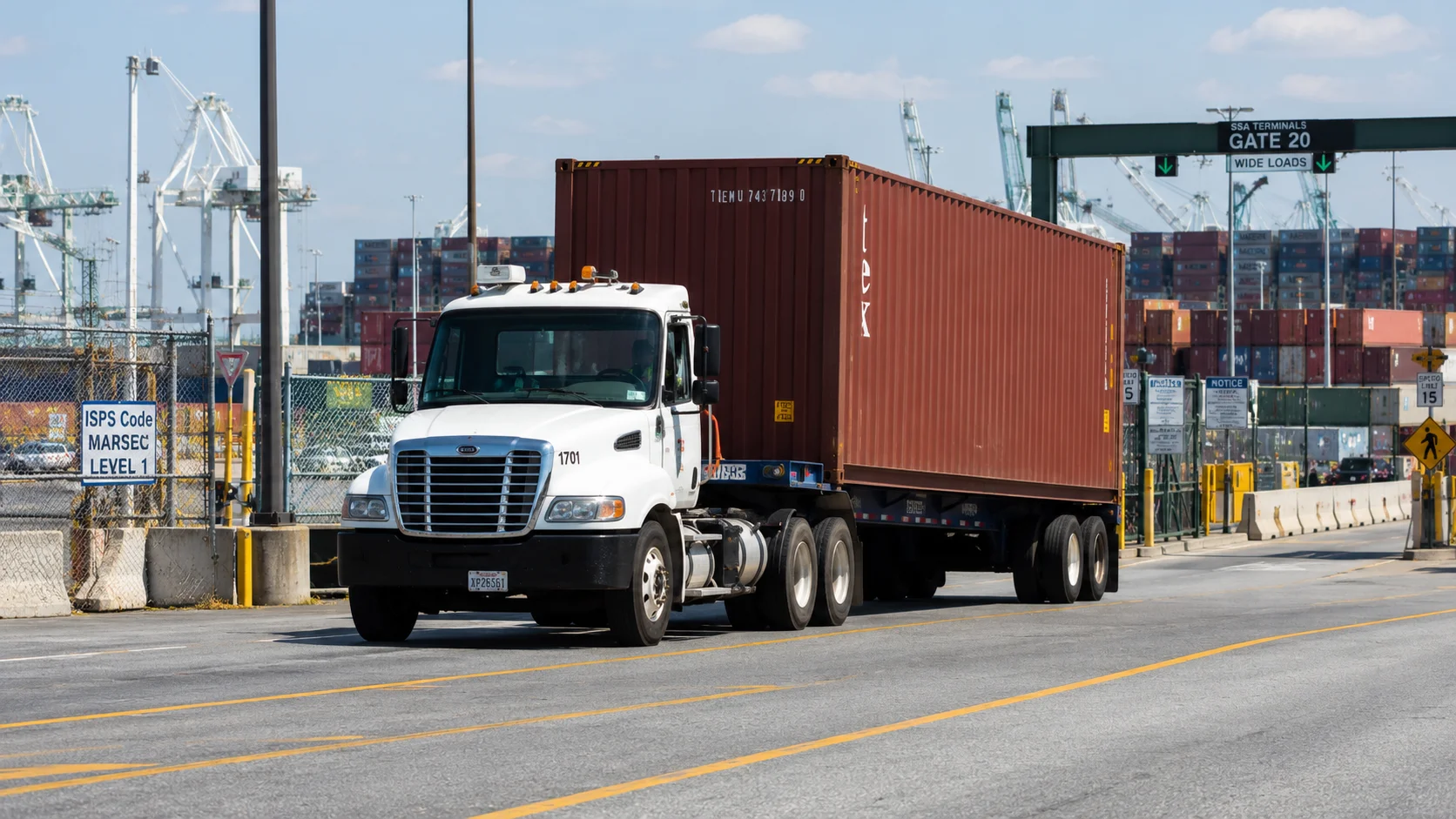
The Companies in the Chain
A container truck crash in Seattle isn't a two-driver wreck. Figuring out who is liable in a port truck accident means checking every link, because the driver, chassis, box, and load can each answer to a different company.
The motor carrier
The motor carrier employs the driver and runs the tractor, and it's usually the biggest source of coverage. Under the Federal Motor Carrier Safety Regulations, it answers for who it hires, how it trains, whether the driver stayed inside the federal hours-of-service limits, and how the truck was maintained. A fatigued, unqualified, or over-pressured driver is the carrier's responsibility.
The freight broker
A broker never touches the freight. It books the load, matching cargo to a carrier for a fee. Brokers long used a federal preemption argument to escape these cases early, but that defense is largely gone. In Montgomery v. Caribe Transport II, decided in May 2026, the Supreme Court held 9-0 that federal law doesn't block a state negligent-hiring claim against a broker on interstate freight. If a broker handed a load to a carrier it knew or should have known was unsafe, it can be sued for the crash.
One caveat matters here. The Court left open whether that claim survives on a purely local, intrastate run. Many import containers belong to a longer interstate journey even when the dray leg is short, which can keep the broker in, but the line isn't always clear.
The shipper who loaded the container
When a shipper packs and seals a container, the driver can't see inside or check how the freight was stacked. If the load shifts on a turn, he never had a fair chance to catch it.
Courts have handled this since United States v. Savage Truck Line, Inc., 209 F.2d 442 (4th Cir. 1953). When a shipper takes on the loading, it's liable for hidden defects the carrier couldn't catch by ordinary inspection; if the bad loading was obvious, the carrier shares the blame for accepting it. A sealed container is the classic hidden-defect case, pointing back at whoever packed it. And if you were in another vehicle, you aren't bound by how the shipper and carrier split fault, so you can pursue the shipper directly. Under 49 CFR 392.9, a truck can't legally move unless its cargo is properly distributed and secured. We take the same approach with unsafe loading in Washington logging truck cases.
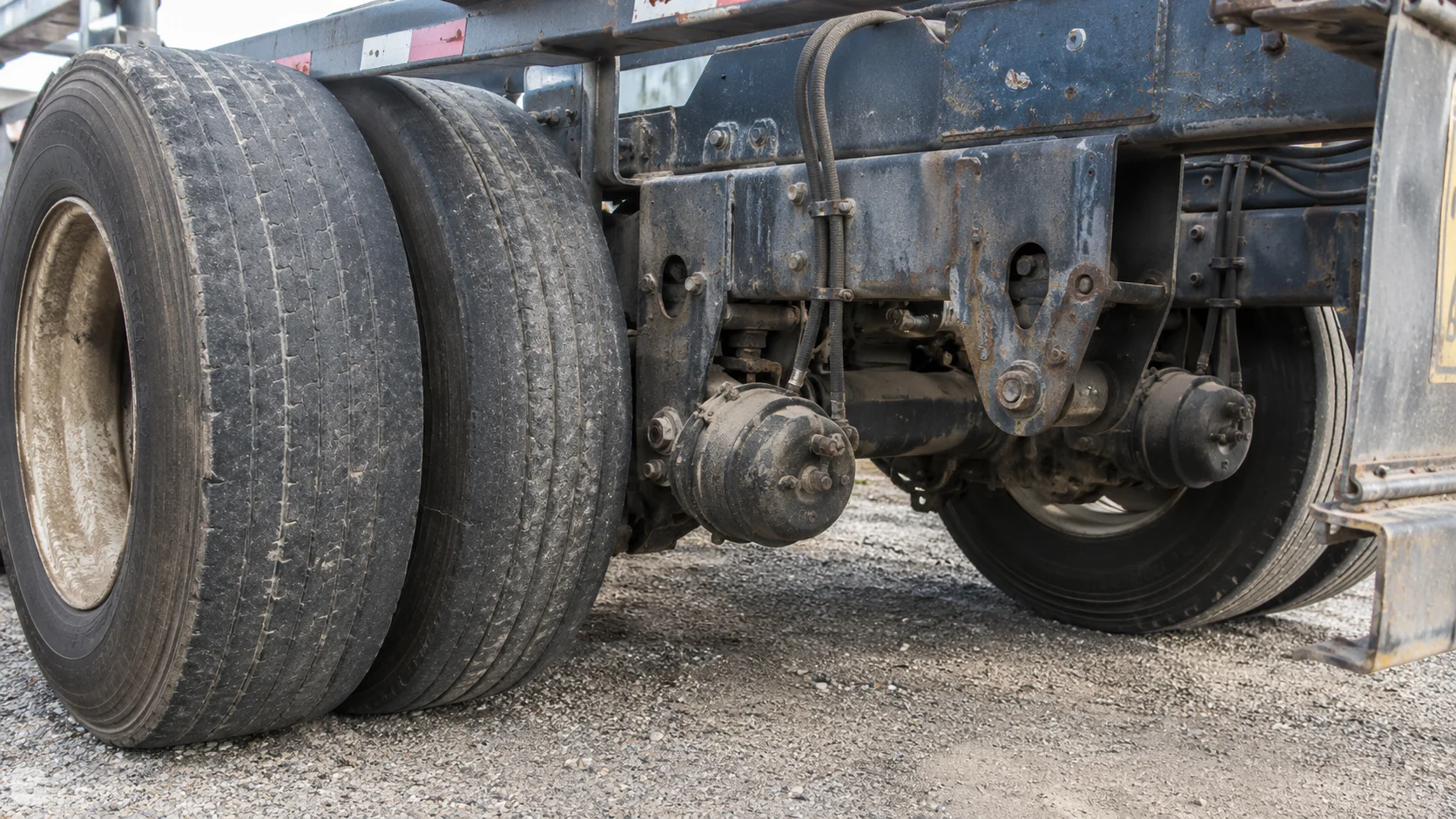
The chassis provider
The chassis is the wheeled frame the container rides on, usually owned by a separate intermodal equipment provider. Under 49 CFR 390.40, that provider must inspect, repair, and maintain the chassis and confirm it's safe before handoff. When a chassis defect truck crash traces back to bad brakes, bald tires, or a failed light that should have pulled the equipment from service, that provider can be a defendant.
If you or a loved one was injured in a crash with a commercial truck, call us at 866-377-3800 or schedule a free consultation at www.metierlaw.com.
How Port of Seattle Drayage Truck Accident Liability Gets Divided in Washington
Washington law decides how the money splits, and two rules matter most.
Washington uses pure comparative fault under RCW 4.22.005. Even if the insurers pin some blame on you, you still recover; your award just drops by your percentage. Unlike most states, no cutoff erases your claim.
The second rule surprises people. Liability is usually several only under RCW 4.22.070, so each company pays only its own share, and if one is broke or underinsured you can come up short. But when you're found completely fault-free, the companies become jointly and severally liable, and you can collect the whole judgment from any one of them. That's why we fight to keep blame off our clients, and why the tactics trucking companies use matter so much.
You generally have three years to file under RCW 4.16.080, but the evidence moves faster. Engine data can overwrite in weeks, and loading records and chassis histories vanish if nobody demands them. A spoliation letter sent early by an experienced Seattle truck accident lawyer from Metier Truck Crash Lawyers locks that material down.
Frequently Asked Questions
Who is liable in a port truck accident in Seattle?
The motor carrier, freight broker, shipper that loaded the container, and chassis provider are all possibilities. A drayage truck accident in Washington often has several at-fault parties, each with its own insurance.
Can I sue the company that loaded the container?
Yes. Shipper liability in a truck crash is real when cargo was packed or secured badly and that caused the wreck. A sealed container hides how it was loaded, so responsibility often points back to the shipper.
What if a bad chassis caused the crash?
The chassis provider has a federal duty to keep that equipment roadworthy. If a chassis defect caused your freight truck crash in Seattle, that provider can be held responsible.
Do I need a lawyer near me for a drayage case?
These cases involve federal law, multiple companies, and evidence that disappears fast. A "Seattle truck accident lawyer near me" search is a fair start, but you want a firm that handles commercial truck cases and knows the port freight system, like our Seattle truck accident lawyers.
Why the Right Defendants Change Everything
A drayage crash can leave you with injuries that don't heal on schedule and bills that don't wait. The trucking company's insurer will keep the case small, blame the driver alone, and settle before anyone looks upstream. Finding every responsible party opens up the coverage a serious injury needs. We know how to read the interchange records, load documents, and safety data, and we'll take these companies to trial when that's what it takes.
Call Metier Law Firm at 866-377-3800 or schedule your free consultation today at www.metierlaw.com.
Disclaimer: Past results discussed should not be considered a guarantee of your results as the factors of every case are individually unique. This content is for informational purposes only and does not constitute legal advice. Consult a qualified attorney from Metier Law Firm regarding your individual situation for legal advice.
Tell Us About Your Case – Free Case Review with a Personal Injury Lawyer
(866) 377-3800Our Locations
.webp)
Do I have a Case?
How Much Should I Be Offered?
Do I Need an Attorney?
If these questions have crossed your mind, let us help. You may need a little direction or may not need an attorney at all, but you deserve to be confident knowing your options. We can provide you with information about our Attorneys of the West® accident investigations and legal services. Your confidential consultation with us is totally free.
Keep up with us!
