.svg)


TL;DR - Key Takeaways
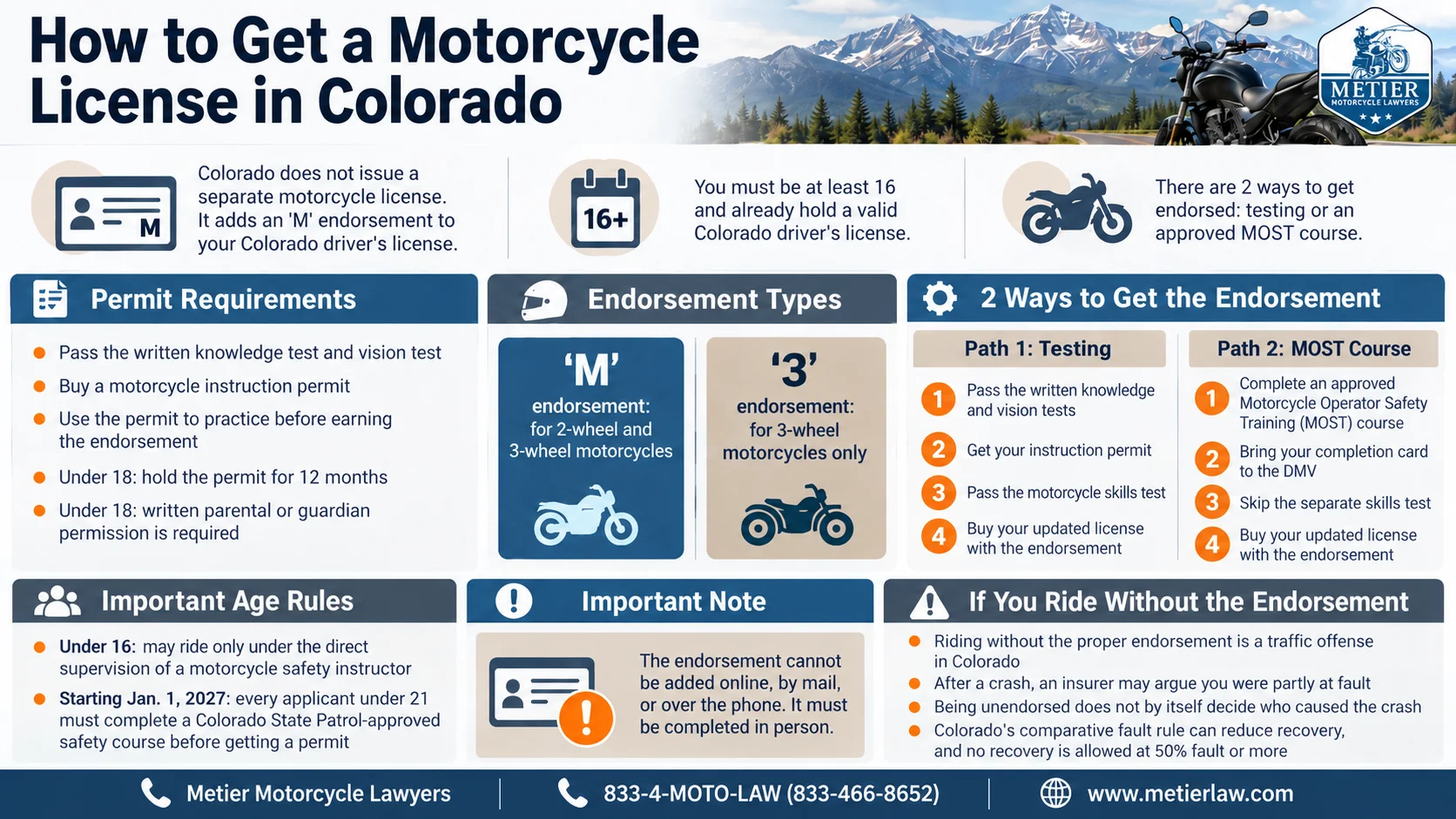
- Colorado doesn't issue a separate motorcycle license. You add an "M" endorsement to the Colorado driver's license you already hold.
- There are two ways to earn it: pass the written knowledge test, get a permit, and pass a skills test, or finish an approved MOST safety course and skip the road test.
- You must be at least 16 with a valid Colorado driver's license. Riders under 18 need written parental permission and have to hold the permit for 12 months first.
- Starting January 1, 2027, every applicant under 21 has to complete a Colorado State Patrol-approved safety course before getting a permit.
- Riding without the endorsement is a traffic offense, and after a crash an insurer can use it to argue fault, though it doesn't decide who caused the crash.
Colorado lost 165 riders in 2024, the most the state has ever recorded. Being licensed and trained won't stop a careless driver from pulling out in front of you, but it puts real skill under you and keeps your paperwork clean if you ever have to file a claim. Plenty of riders think they need a Colorado motorcycle license. The state doesn't issue one. It adds a motorcycle endorsement to the license you already carry.
"People come to us after a crash and learn their paperwork wasn't in order, and they panic that it sinks their case," says Patrick DiBenedetto, Partner at Metier Law Firm and a lifelong rider. "Getting your Colorado motorcycle license squared away protects you two ways. It keeps you legal, and it takes an easy argument away from the insurance company."
Colorado Motorcycle Permit Requirements
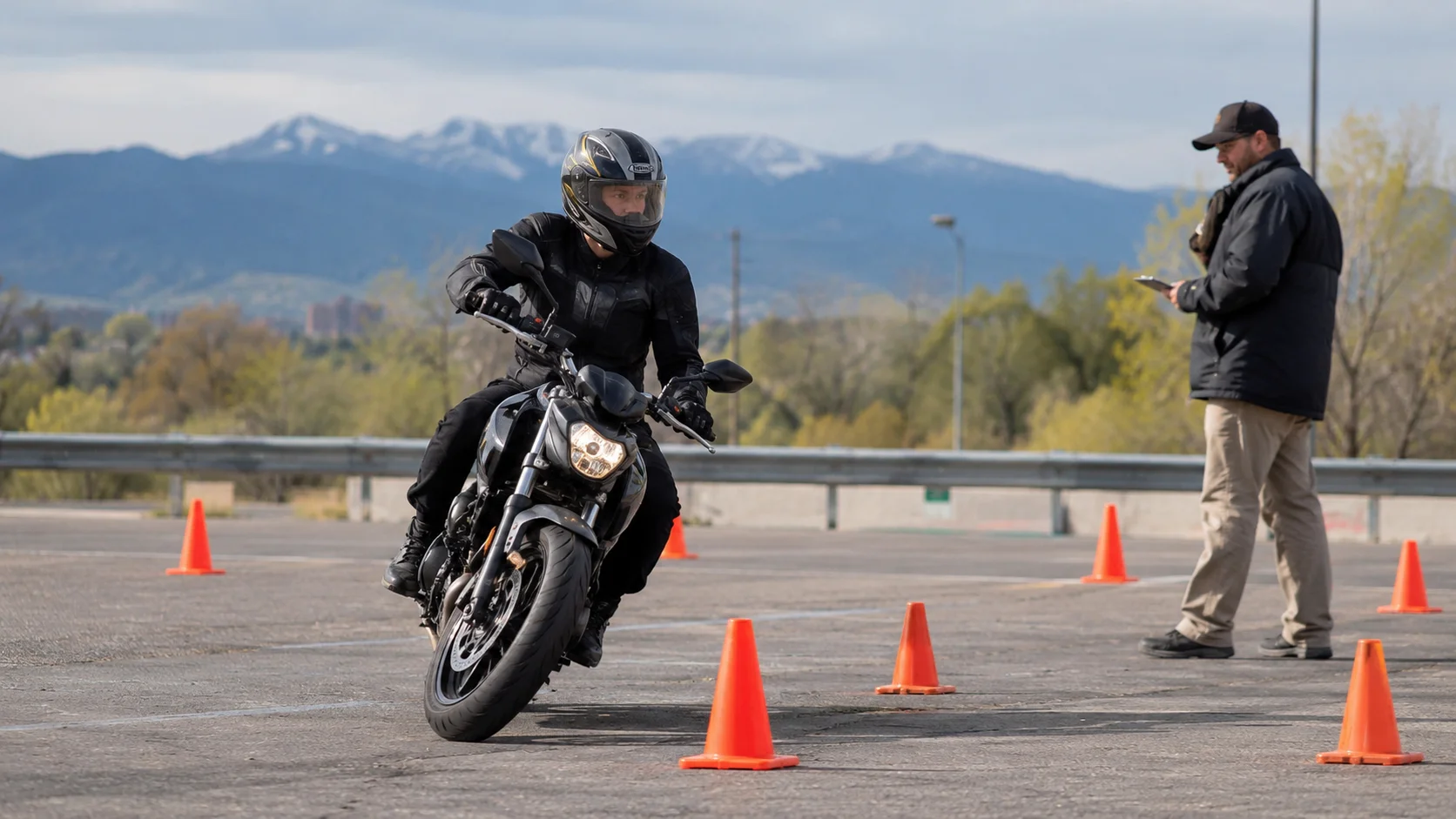
Most riders start with a motorcycle instruction permit before they ever hold a full Colorado motorcycle license. To qualify, you have to be at least 16 and already carry a valid Colorado driver's license, according to the Colorado DMV. You pass a written knowledge test and a vision test, then buy the permit, which lets you practice on the road while you work toward the endorsement.
Riders under 18 have a few extra steps. You must hold the permit for a full 12 months before you move up to the endorsement, and a parent or legal guardian signs an affidavit of liability when the permit is issued. As of August 12, 2026, a minor also needs written permission from a parent or legal guardian to get the permit at all. That requirement comes from House Bill 26-1079, known as the Cole Bradley Act. Emancipated minors and foster children are the exceptions. We walked through that change and five others in our rundown of new Colorado traffic laws for 2026. Riders under 16 can only operate under the direct supervision of their motorcycle safety instructor.
Motorcycle Endorsements and the Testing Process
Colorado marks a rider with one of two endorsements. An "M" endorsement covers two- and three-wheeled motorcycles. A "3" endorsement covers three-wheeled machines only. Whichever you're after, the DMV gives you two ways to earn it.
One path runs through testing. You pass the written knowledge test, buy your instruction permit, then schedule and pass a motorcycle skills test at a driver license office. Take that test on two wheels for the "M," on three wheels for the "3." Pass it, and you buy a new license with the endorsement added.
The other path trades the road test for a course. Finish an approved Motorcycle Operator Safety Training program, bring your completion card to the DMV, and you skip the skills test. Neither path lets you add the endorsement online, by mail, or over the phone. You have to do it in person.
Required Safety Courses in Colorado
Colorado runs its Motorcycle Operator Safety Training program, MOST for short, through the Colorado State Patrol. A basic MOST course pairs classroom time with hands-on riding, and finishing one lets new and experienced riders earn the endorsement without a separate skills test. Even when it isn't required, we tell riders it's worth the day. The Motorcycle Safety Foundation built these classes to drill the skills that keep you upright: hard braking, cornering, and spotting a bad situation early.
Riders and parents should note one change on the calendar. Starting January 1, 2027, under House Bill 24-1021, every applicant under 21 has to complete a Colorado State Patrol-approved motorcycle safety training program before the state will issue a motorcycle instruction permit. That training is optional for adults today. Once the new rule takes effect, it becomes a required first step for anyone under 21 pursuing a Colorado motorcycle license.

If you've been hurt in a motorcycle crash and need answers, call us at 833-4-MOTO-LAW (833-466-8652)
What Happens If You Ride Without a Proper License?
Riding without the right endorsement is a traffic offense in Colorado, and an officer can cite you for it. The bigger problem shows up after a crash. If a driver hits you while you're riding unendorsed, that violation doesn't decide who caused the collision, but the at-fault driver's insurer will try to make it your problem anyway.
Colorado follows modified comparative fault under C.R.S. § 13-21-111. Your compensation drops by your share of the blame, and once the insurer pushes your share to 50% or more, you recover nothing. An adjuster who spots a licensing gap has a reason to paint you as a careless rider, even when the driver ran the light. Being unendorsed doesn't bar your claim, but it hands the other side an argument, and Colorado's 50% bar is the number they push toward. We'd rather riders have the Colorado motorcycle license paperwork settled long before any of that comes up.
Frequently Asked Questions
How do I get a motorcycle license in Colorado?
To get a motorcycle license in Colorado, you add an "M" endorsement to your driver's license. Pass the written knowledge and vision tests, buy an instruction permit, and pass a skills test, or finish an approved MOST safety course and skip the skills test. You must be at least 16 and hold a valid Colorado driver's license.
How old do you have to be to get a Colorado motorcycle license?
At least 16. Riders under 18 must hold the instruction permit for 12 months and get written parental permission first. Starting January 1, 2027, anyone under 21 also has to finish a Colorado State Patrol-approved safety course before getting a permit.
Do you need a separate motorcycle license in Colorado?
No. Colorado adds a motorcycle endorsement to your existing driver's license rather than issuing a standalone license. The "M" endorsement covers two- and three-wheeled motorcycles, and the "3" covers three-wheeled models only.
What happens if you ride without a motorcycle endorsement in Colorado?
It's a traffic offense, so you can be ticketed. After a crash, the at-fault driver's insurer may use it to argue you share fault under Colorado's comparative fault rule, though riding unendorsed doesn't by itself decide who caused the collision.
Do you have to take a class to get a motorcycle license in Colorado?
Not yet, if you're 21 or older, since adults can test out instead. But every applicant under 21 will have to complete a Colorado State Patrol-approved safety course before getting a permit once House Bill 24-1021 takes effect on January 1, 2027.
If You're Hurt Riding, Talk to a Lawyer Who Rides
Sorting out your Colorado motorcycle license is straightforward. Recovering after a careless driver puts you on the pavement is not, and that's the work we do for you when that happens. We ride these roads too, and we've watched insurers pick at a rider's paperwork to shave down a claim that should be paid in full. If a driver hurt you, don't let a licensing question turn into their excuse. Our Colorado motorcycle accident lawyers will look at what happened and tell you where you stand.

Call Metier Motorcycle Lawyers at 833-4MOTO-LAW (833-466-8652) or schedule your free consultation today at www.metierlaw.com.
Disclaimer: Past results discussed should not be considered a guarantee of your results as the factors of every case are individually unique. This content is for informational purposes only and does not constitute legal advice. Consult a qualified attorney from Metier Law Firm regarding your individual situation for legal advice.
Tell Us About Your Case – Free Case Review with a Personal Injury Lawyer
(866) 377-3800Our Locations
.webp)
Do I have a Case?
How Much Should I Be Offered?
Do I Need an Attorney?
If these questions have crossed your mind, let us help. You may need a little direction or may not need an attorney at all, but you deserve to be confident knowing your options. We can provide you with information about our Attorneys of the West® accident investigations and legal services. Your confidential consultation with us is totally free.
Keep up with us!
