



TL;DR - Key Takeaways
- A Colorado Springs DUI motorcycle accident claim is a civil case, separate from the criminal case.
- A DUI conviction record can’t be used as evidence in your civil case under C.R.S. § 42-4-1713.
- Under C.R.S. § 13-21-111, your damages drop by your percentage of fault. Against one driver, 50% or more bars recovery.
- Injury lawsuits must be filed within three years under C.R.S. § 13-80-101(1)(n)(I), and wrongful death actions within two years of the death under § 13-80-102(1)(d).
You’re riding home through Colorado Springs when a driver drifts across the center line or runs a red light into your path. The officer smells alcohol and begins roadside sobriety tests. A Colorado Springs DUI motorcycle accident claim starts there, but the arrest doesn’t decide what the at-fault driver’s insurer will pay.
In the impaired-driving cases we handle at Metier Motorcycle Lawyers, the insurer still tries to put part of the fault on the rider. “The arrest report shows us where the impairment evidence is,” says Patrick DiBenedetto, Partner at Metier Law Firm and a rider himself. “We build the civil claim from that evidence: the test results, the officer’s observations, and the scene. Then we answer the speed and lane arguments with facts.”
Colorado’s Impaired-Driving Law Under C.R.S. § 42-4-1301
C.R.S. § 42-4-1301 sets out three strict liability offenses. DUI means alcohol or drugs left the driver substantially incapable of clear judgment, sufficient physical control, or due care in safely operating a vehicle. DWAI means alcohol or drugs affected the driver to the slightest degree and left the driver less able to do those things. DUI per se means a blood or breath alcohol content (BAC) of 0.08 or more at the time of driving or within two hours after.
BAC Evidence and Drug Test Results
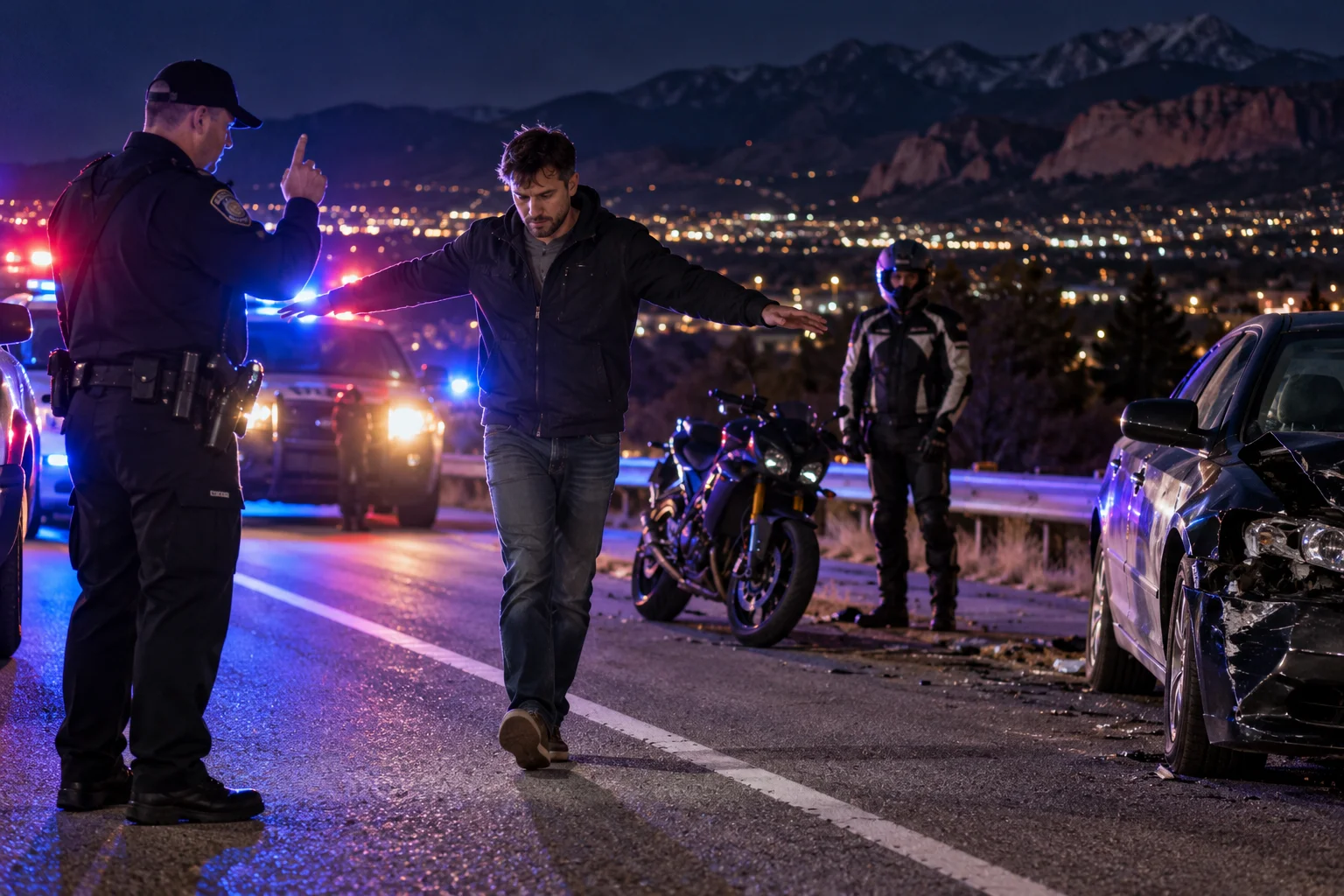
Subsection (6)(a) applies in a DUI or DWAI prosecution. It sets these rules for test results taken within a reasonable time after driving:
- BAC of 0.05 or less: presumed not under the influence and not impaired by alcohol
- BAC over 0.05 but less than 0.08: permissible inference that alcohol impaired the driver’s ability
- BAC of 0.08 or more: permissible inference that the driver was under the influence
- Five nanograms or more of delta 9-tetrahydrocannabinol (THC) per milliliter of whole blood: permissible inference that the driver was under the influence of drugs

The Criminal DUI Case and Your Civil Claim
The prosecution must prove DUI beyond a reasonable doubt under C.R.S. § 18-1-402. Your civil claim needs only a preponderance of the evidence under C.R.S. § 13-25-127(1).
DUI falls under Article 4 of Title 42. C.R.S. § 42-4-1713 keeps the record of any conviction under that article out of evidence in your injury lawsuit.
A criminal court can order restitution under C.R.S. § 18-1.3-603. Under § 18-1.3-602(3)(a), though, restitution excludes pain and suffering, loss of consortium, loss of enjoyment of life, loss of future earnings, and punitive damages. Those losses belong to the civil claim.
How Insurers Argue Fault in a Colorado Springs DUI Motorcycle Accident
When a drunk driver hits a motorcycle in Colorado Springs, the fault arguments we see most are speed, lane position, and whether the rider had been drinking. C.R.S. § 13-21-111(1) reduces your damages by your percentage of fault. Subsection (3) bars recovery if your negligence equals or exceeds the driver’s. Against one driver, that’s 50% or more.
Even willful and wanton conduct by the driver doesn’t change that comparison. In White v. Hansen, a jury found a defendant’s driving under the influence willful and wanton. It also found the injured pedestrian equally at fault, so the Colorado Supreme Court held the pedestrian recovered nothing. Our post on how Colorado’s 50% rule affects a motorcycle claim walks through the math.
Lane Splitting and Lane Filtering Arguments
Lane position comes up because C.R.S. § 42-4-1503(3)(a) bars riding between lanes of traffic or rows of vehicles. Subsection (3)(b) lets a two-wheeled motorcycle filter past stopped vehicles only under its listed conditions. Those include stopped traffic in your lane and adjacent same-direction lanes, lanes wide enough to pass safely, a speed of 15 miles per hour or less, and conditions that permit prudent operation. Subsection (3)(b)(IV) repeals the filtering rule on September 1, 2027. We test the insurer’s argument against each one.
Evidence That Shows Impairment
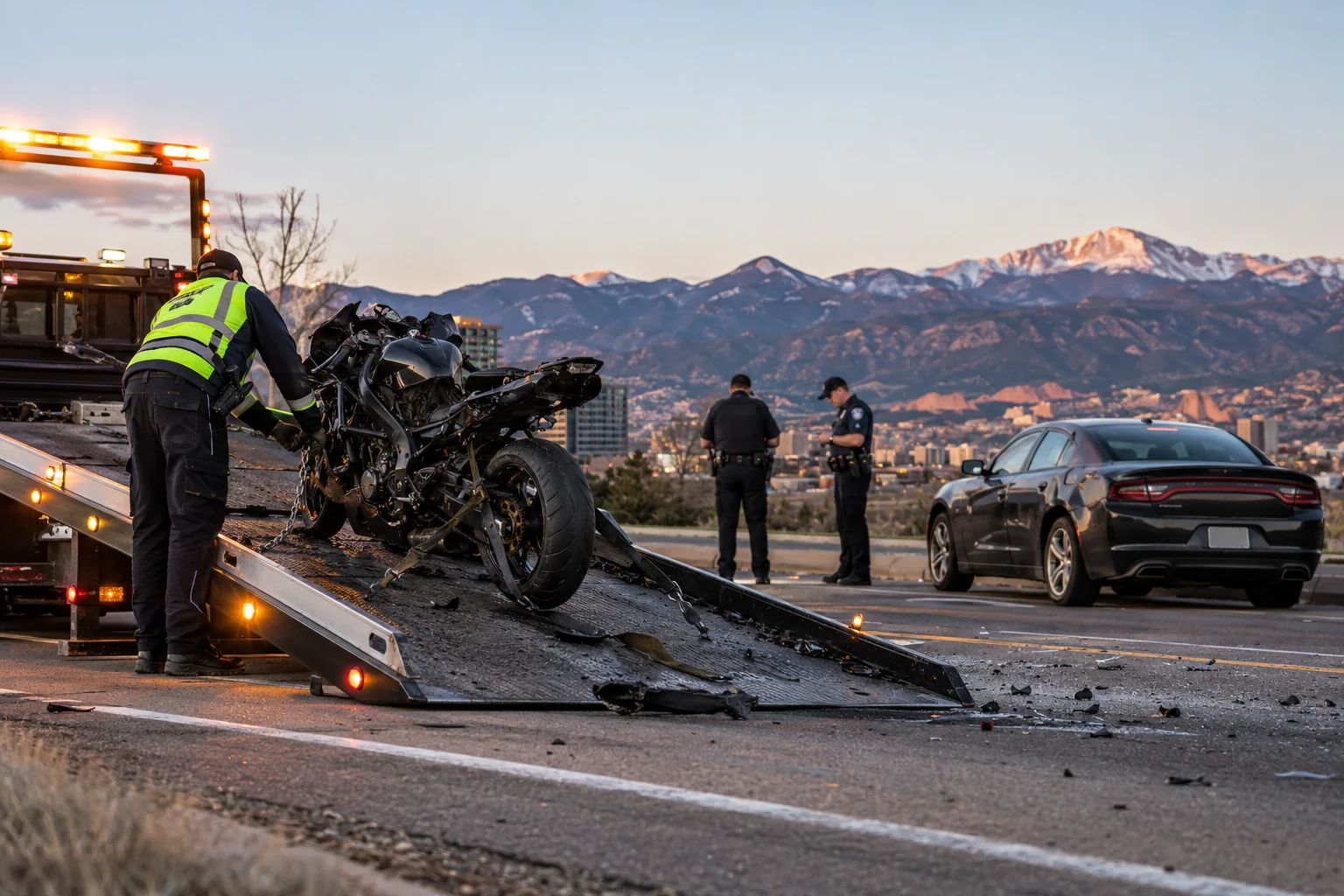
We move quickly to secure the BAC evidence for your Colorado Springs motorcycle claim and proof of how the crash happened:
- The crash report from the Colorado Springs Police Department, El Paso County Sheriff’s Office, or Colorado State Patrol
- Breath or blood test results and toxicology reports
- The officer’s observations, sobriety test notes, and body camera or dashcam video
- Witness accounts of the driver’s conduct before and after the crash
- Open containers, receipts, and records showing where the driver was served
- Event data recorder downloads and intersection or business video
If the driver rear-ended you or pulled out in front of you, read our posts on rear-end motorcycle crashes and failure-to-yield crashes in Colorado Springs.
If you’ve been hurt in a motorcycle crash and need answers, call us at 833-4-MOTO-LAW (833-466-8652) or schedule a free consultation at www.metierlaw.com.
Exemplary Damages Against an Impaired Driver
Colorado calls punitive damages exemplary damages. A jury may award them under C.R.S. § 13-21-102(1)(a) when fraud, malice, or willful and wanton conduct attends the injury. Subsection (1)(b) defines willful and wanton conduct as purposeful conduct the driver must have realized was dangerous. It’s done heedlessly and recklessly, without regard to consequences or the rights and safety of others.
Alhilo v. Kliem was a 2016 motorcycle wrongful death case where the driver fled the scene. The Colorado Court of Appeals upheld exemplary damages based on circumstantial evidence of intoxication.
Exemplary damages must be proven beyond a reasonable doubt under § 13-25-127(2). The award can’t exceed your actual damages unless § 13-21-102(3) applies. That subsection lets the court raise it to as much as three times actual damages based on the driver’s conduct during the case. The driver must have willfully and wantonly continued or repeated the conduct, or willfully and wantonly aggravated your damages when the driver knew or should have known that would happen.
Filing Deadlines After an Impaired-Driver Motorcycle Crash in Colorado
You have three years to file a bodily injury lawsuit under C.R.S. § 13-80-101(1)(n)(I). The clock starts when you knew, or should have known, of the injury and its cause under § 13-80-108(12). A wrongful death action has two years from the date of death under § 13-80-102(1)(d) and § 13-80-108(2). That becomes four years under § 13-80-102(2) if the driver committed vehicular homicide and, in the same criminal episode, left the scene of a fatal crash.
Frequently Asked Questions
Who is at fault in a DUI motorcycle accident in Colorado?
The impaired driver is liable if that driver’s negligence caused the crash. Your damages still drop by your percentage of fault under C.R.S. § 13-21-111, and 50% or more bars recovery against one driver.
Does a DUI conviction prove my civil claim?
No. The conviction record stays out of your civil case under C.R.S. § 42-4-1713, so we prove impairment and causation with test results, officer testimony, witnesses, and video.
Can I recover punitive damages from a drunk driver in Colorado?
Yes, if you win actual damages and prove beyond a reasonable doubt that the driver’s conduct was willful and wanton, under C.R.S. § 13-21-102 and § 13-25-127(2). Punitive damages are capped at your actual damages unless the court increases them under § 13-21-102(3).
How long do I have to file after a Colorado Springs DUI motorcycle accident?
After a Colorado Springs DUI motorcycle accident, you have three years from when your injury claim accrues under C.R.S. § 13-80-101(1)(n)(I). Wrongful death claims have two years from the date of death under § 13-80-102(1)(d). The limit is four years under § 13-80-102(2) if the driver committed vehicular homicide and left the scene.
When the Driver Chose to Drive Impaired
We ride El Paso County roads too, and we represent motorcycle riders hurt in drunk driving crashes. Your claim rests on proving the driver’s negligence caused the crash, and impairment evidence is part of that proof. Comparative fault then decides how much you keep. Before you give the insurer a recorded statement or accept an early offer, talk to our Colorado Springs motorcycle accident lawyer team at Metier Law Firm.
Call Metier Motorcycle Lawyers at 833-4-MOTO-LAW (833-466-8652) or schedule your free consultation today at www.metierlaw.com.
Disclaimer: Past results discussed should not be considered a guarantee of your results as the factors of every case are individually unique. This content is for informational purposes only and does not constitute legal advice. Consult a qualified attorney from Metier Law Firm regarding your individual situation for legal advice.
Related Blog Posts
Tell Us About Your Case – Free Case Review with a Personal Injury Lawyer
(866) 377-3800Our Locations

Do I have a Case?
How Much Should I Be Offered?
Do I Need an Attorney?
If these questions have crossed your mind, let us help. You may need a little direction or may not need an attorney at all, but you deserve to be confident knowing your options. We can provide you with information about our Attorneys of the West® accident investigations and legal services. Your confidential consultation with us is totally free.
Keep up with us!
