.svg)


TL;DR - Key Takeaways
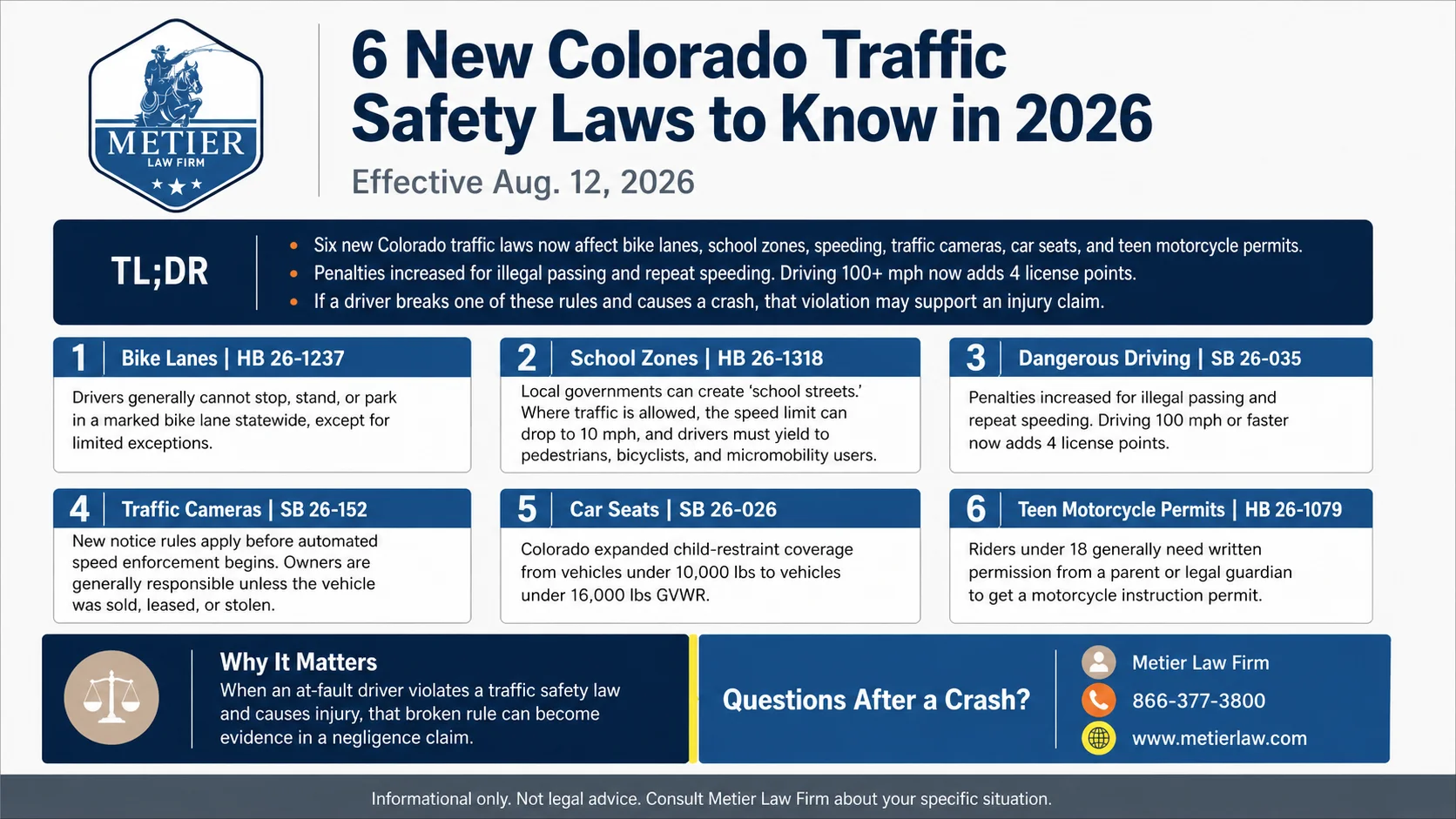
- Six new Colorado traffic laws took effect Wednesday, August 12, 2026. They cover bike lanes, school zones, speeding, traffic cameras, car seats, and teen motorcycle permits.
- Drivers generally can't stop, stand, or park in a marked bike lane anywhere in the state.
- Penalties went up for illegal passing and repeat speeding. Driving 100 mph or faster now adds four points to your license.
- A rider under 18 now needs a parent's written permission to get a motorcycle instruction permit.
- When an at-fault driver breaks one of these rules and hurts you, that violation can become evidence in your injury claim.
Most of us don't read the state legislature's website for fun. If you ride, drive, or buckle kids into the back seat, though, the new Colorado traffic laws that took effect on Wednesday, August 12, 2026, are worth ten minutes. Six of them changed how our roads work, and a few hit close to home for anyone on two wheels.
We represent people injured in truck and motorcycle accidents, as well as for other personal injuries across Colorado, Washington, Oregon, Wyoming, and Nebraska. We read these bills closely because they help decide who's at fault after a crash. "Every one of these Colorado traffic laws sets a rule of the road, and a broken rule is often what decides an injury case," says Mike Chaloupka, Managing Partner at Metier Law Firm. "When a driver ignores one and hurts someone, that violation turns into evidence."
These six Colorado traffic laws each changed a specific rule of the road. We'll take them one at a time.
Bike Lanes Are Off-Limits for Parking (HB 26-1237)
Colorado's bike lane laws changed under HB 26-1237, which amended the state parking statute (C.R.S. 42-4-1204). Drivers generally may no longer stop, stand, or park in a marked bike lane. The rule now applies statewide, with only limited exceptions. Anyone who rides knows the problem it fixes: a delivery van in the bike lane pushes cyclists into moving traffic.
The same clear-lane logic behind these bike lane laws helps motorcyclists, since predictable lanes mean fewer sudden swerves around you. For how drivers should pass cyclists, the NHTSA's bicycle safety guidance is a solid read.
School Zones Get Tighter, and "School Streets" Arrive (HB 26-1318)
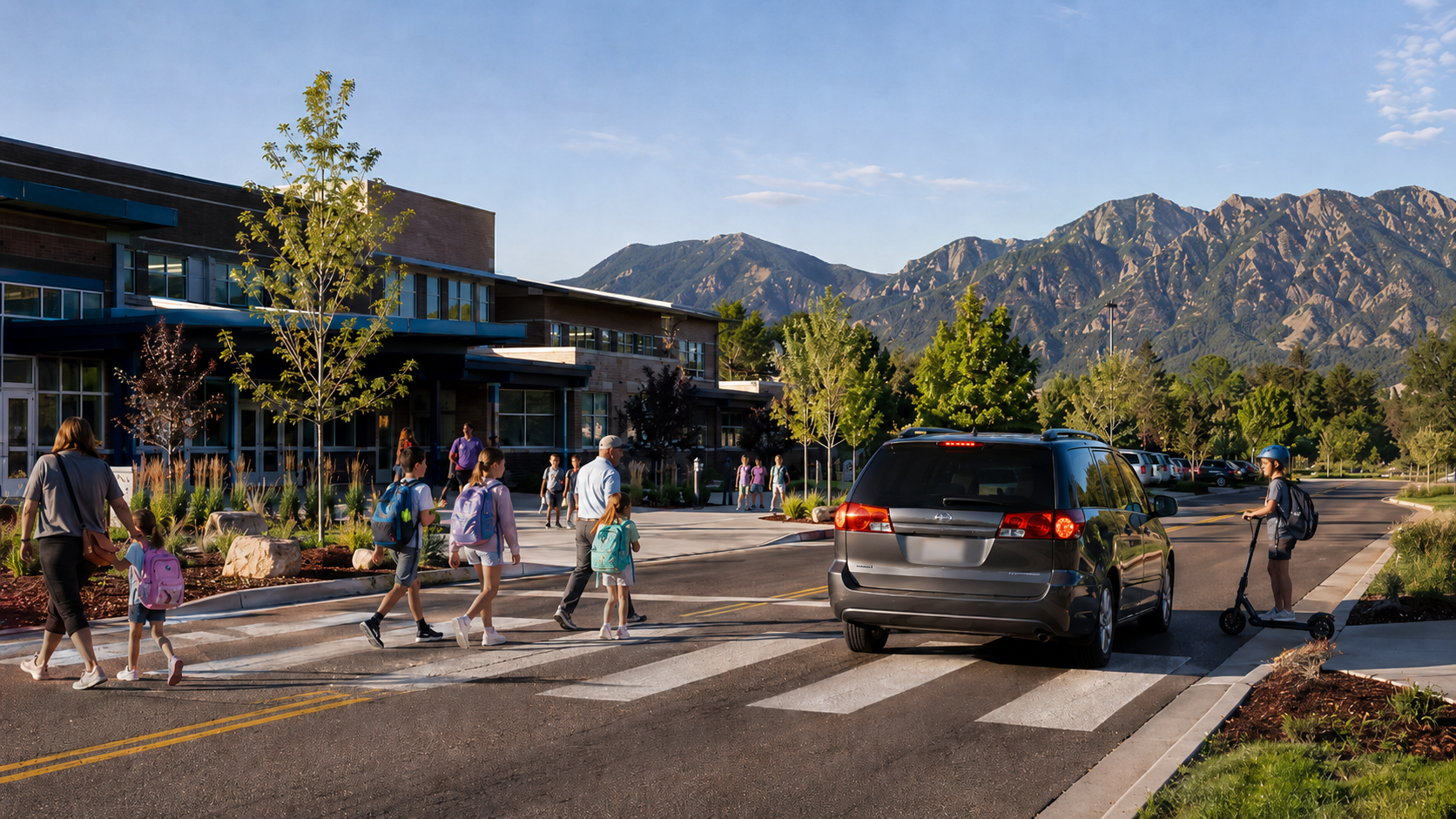
HB 26-1318, one of the new Colorado traffic laws in this group, reworked the school zone. It amended the school-zone statute (C.R.S. 42-4-615) and created a new section, C.R.S. 42-4-119, for "school streets." A local government can now designate a stretch of road next to a school as a school street. Where traffic is still allowed on one, the speed limit drops to 10 mph. Drivers must yield to pedestrians, bicyclists, and micromobility users like e-scooters.
A lower school zone speed limit saves lives, so watch for new signs this fall.
Bigger Penalties for Dangerous Driving (SB 26-035)
For riders, SB 26-035 is the most important of these new Colorado traffic laws. It amended the traffic-penalty and license-points statutes (C.R.S. 42-4-1701 and 42-2-127). The penalty for improperly passing in a no-passing zone went up, and the speeding ticket points assessed for repeat offenders rose over one, two, and five-year windows. Drivers caught going 100 mph or faster now pick up four license points on top of the fine.
On a two-lane road, an illegal pass is one of the most dangerous moves a driver can make, and it lands riders in the hospital. A repeat Colorado speeding ticket now carries more points, which gives injured riders something concrete to point to.
If you've been hurt in a motorcycle crash and need answers, call us at 833-4MOTO-LAW (833-466-8652) or schedule a free consultation at www.metierlaw.com.
New Rules for Traffic Cameras (SB 26-152)
SB 26-152 changed how Colorado's automated speed enforcement cameras operate (C.R.S. 42-4-110.5). A government must follow new notice requirements before switching on a system. The registered vehicle owner is responsible for the civil penalty unless the vehicle was sold, leased, or stolen, and an owner who proves one of those exceptions can avoid it. Vendors also can't be paid based on how many tickets a camera writes. For most drivers, the speed enforcement cameras rule is the one most likely to show up in the mail.
Car Seat Rules Now Cover More Vehicles (SB 26-026)
Colorado widened which vehicles fall under its car seat laws. SB 26-026, amending the child-restraint statute (C.R.S. 42-4-236), raised the covered gross vehicle weight rating from under 10,000 pounds to under 16,000 pounds. More passenger vehicles now have to meet the state's car seat requirements. If you're unsure your setup qualifies, the Colorado Department of Transportation keeps a clear guide to the state's car seat rules and child passenger safety law.
Teen Riders Need a Parent's Signature (HB 26-1079)
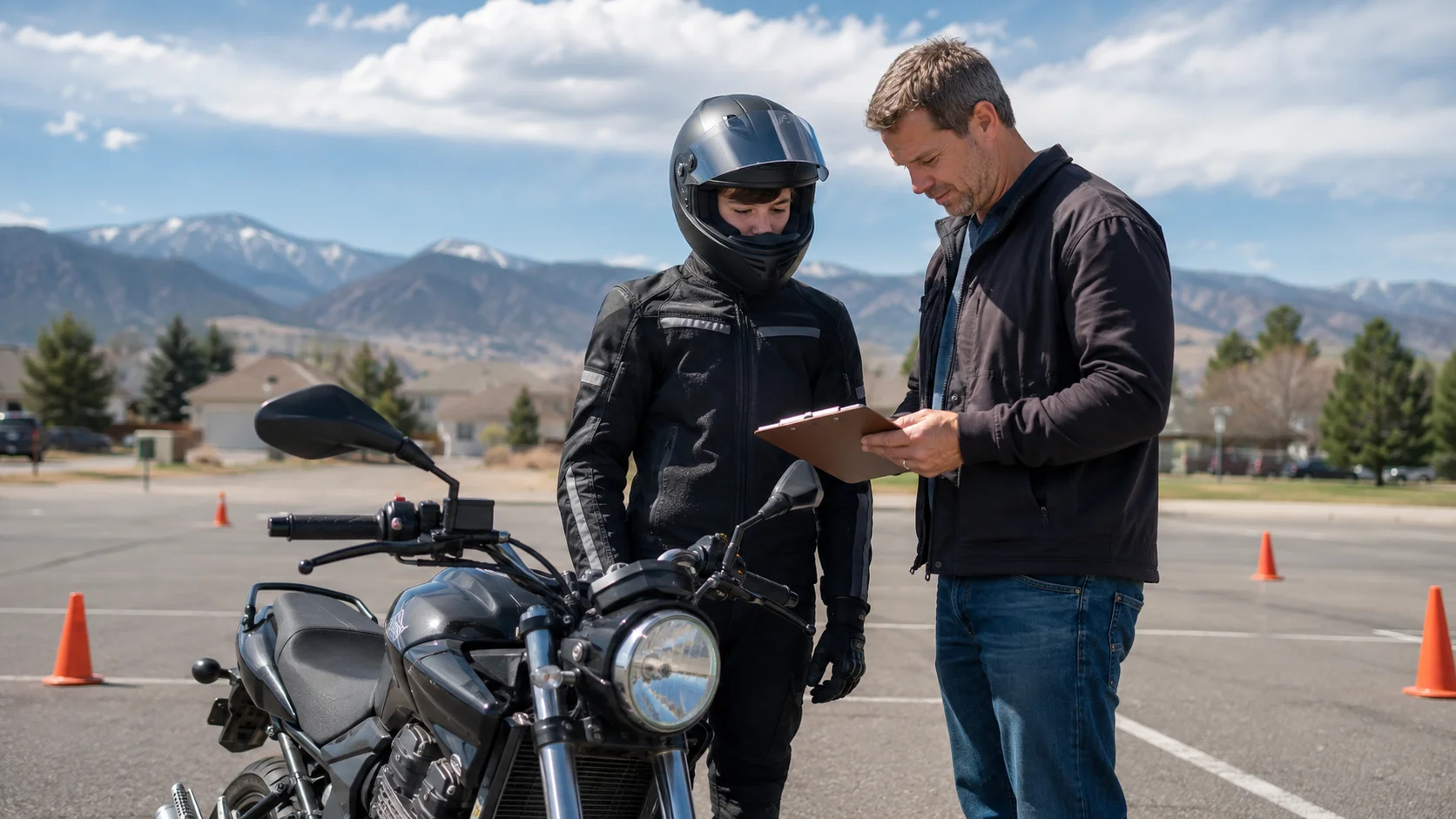
This one is for motorcycle riding families. Under HB 26-1079, amending the instruction-permit statute (C.R.S. 42-2-106), a rider under 18 generally needs written permission from a parent or legal guardian to get a motorcycle instruction permit. The rule doesn't apply to emancipated minors.
We're glad to see it. A permit is the first real step toward a Colorado motorcycle license, and getting a young rider trained before that step pays off for decades. The Motorcycle Safety Foundation runs beginner classes that teach new riders to read traffic, brake hard, and stay upright. The NHTSA backs licensing and training as the base of rider safety. A signature on the permit form is a good moment to talk it through.
What These Colorado Traffic Laws Mean If You Get Hurt
In Colorado, when a driver violates a traffic statute and that violation causes your injury, the broken law can support a negligence claim against the at-fault driver. A car parked in a bike lane, a driver speeding through a 10 mph school street: each of these new Colorado traffic laws draws a line a jury can understand.
That's why we track these Colorado traffic laws closely. The clearer the rule, the easier it is to show a driver ignored it, which strengthens your injury claim.
Frequently Asked Questions
When did the new Colorado traffic laws take effect?
All six took effect Wednesday, August 12, 2026. The legislature passed them without a safety clause, so they became law 90 days after the session ended.
What are the new Colorado car seat laws?
SB 26-026 expanded Colorado's car seat laws to cover more vehicles, raising the gross vehicle weight rating from under 10,000 pounds to under 16,000 pounds. It's one of six new Colorado traffic laws now in effect.
How many points do you get for driving 100 mph in Colorado?
SB 26-035, one of the new Colorado traffic laws now in effect, adds four license points for driving 100 mph or faster, on top of the speeding fine. It also raised the points for repeat speeding and toughened the penalty for illegal passing in a no-passing zone.
Does my teenager need my permission to get a Colorado motorcycle license?
To start toward a Colorado motorcycle license, a rider under 18 first needs a motorcycle instruction permit. Under HB 26-1079, that permit now requires written permission from a parent or legal guardian. Emancipated minors are the exception.
Do these new Colorado traffic laws affect my injury case?
They can. When an at-fault driver breaks one of these traffic safety laws and causes a crash, that violation can serve as evidence of negligence in your claim. It's one of the first things we check.
You Deserve Straight Answers After You’ve Been Injured
We drive and ride the same roads you do, so we know what a clear rule is worth when a driver's mistake leaves you on the pavement or leaves you injured after a crash. The new Colorado traffic laws give riders, cyclists, and families a bit more protection, and they hand injured people firmer ground to stand on when someone else's carelessness causes real harm. Knowing the rules matters. So does having someone in your corner who has argued these traffic safety laws in real cases.
Call Metier Law Firm’s experienced truck, motorcycle and injury lawyers at 866-377-3800 or schedule your free consultation today at www.metierlaw.com.
Disclaimer: Past results discussed should not be considered a guarantee of your results as the factors of every case are individually unique. This content is for informational purposes only and does not constitute legal advice. Consult a qualified attorney from Metier Law Firm regarding your individual situation for legal advice.

Tell Us About Your Case – Free Case Review with a Personal Injury Lawyer
(866) 377-3800Our Locations
.webp)
Do I have a Case?
How Much Should I Be Offered?
Do I Need an Attorney?
If these questions have crossed your mind, let us help. You may need a little direction or may not need an attorney at all, but you deserve to be confident knowing your options. We can provide you with information about our Attorneys of the West® accident investigations and legal services. Your confidential consultation with us is totally free.
Keep up with us!
