.svg)


TL;DR - Key Points
- Container and drayage crashes near the Port of Portland rarely involve just one at-fault company. The carrier, the freight broker, the shipper, and the chassis provider can all share the blame.
- A May 2026 U.S. Supreme Court ruling, Montgomery v. Caribe Transport II, opened the door to suing freight brokers in state court for hiring unsafe trucking companies.
- Oregon spreads fault by percentage. You can still recover if you are 50% or less at fault, and each company generally pays only its own share.
- A shipper that loaded the container can share fault when a hidden loading defect causes the wreck, and you can sue that shipper directly.
- Chassis providers must keep their equipment roadworthy under federal rules, so a bad chassis can put that company in the lawsuit.
- You have two years from the crash to file in Oregon, and evidence in port cases disappears fast, so hiring a truck accident lawyer fast is in your best interests.
In 2024, large tractor-trailers were involved in 982 crashes on Oregon roads, and those wrecks killed 48 people, according to the Oregon Department of Transportation. A lot of that freight moves through one place: the Port of Portland. I am Mike Chaloupka, managing partner at Metier Law Firm, and I hold a commercial driver's license, so I know how container loads get hauled and where the safety system breaks down. When a port-bound truck crashes near Terminal 6 or on the Rivergate routes feeding I-5 and I-84, the question I hear first is simple: who pays for this? Usually it is more than one company, and figuring out which ones is the biggest challenge.
Call Metier Law Firm at 866-377-3800 or schedule your free consultation today at www.metierlaw.com
Why Port Freight Crashes Spread the Blame Around
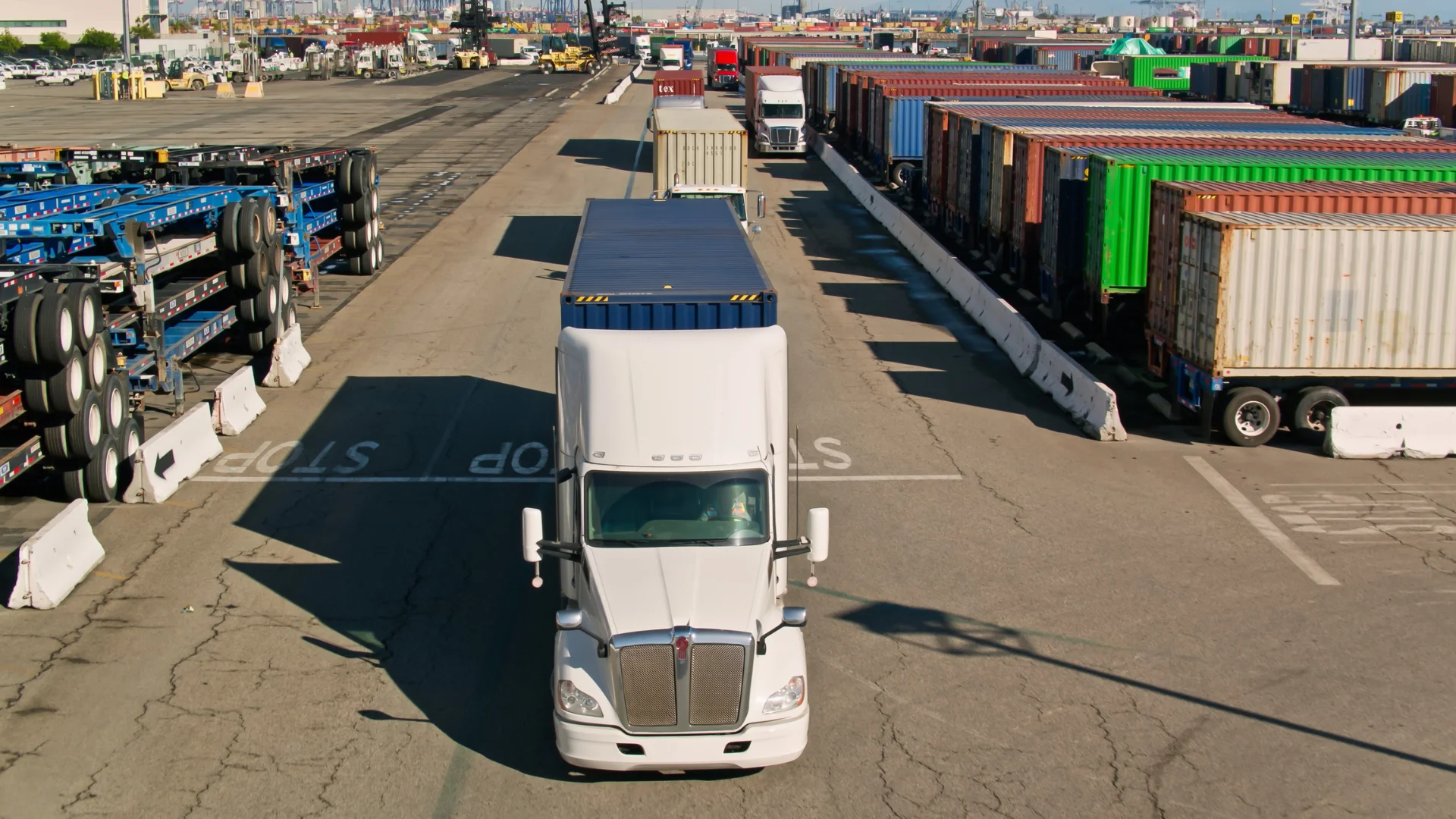
A single container can pass through four or five sets of hands before it hits the highway. A retailer or manufacturer, the shipper, books the load. A freight broker finds a trucking company to haul it. That carrier sends a driver to the marine terminal to pick up the box, often on a chassis owned by yet another company. By the time the rig rolls down Marine Drive toward I-5, four businesses have touched the trip, and each one had a chance to prevent what went wrong. That is what makes drayage and container cases different from a regular fender bender, and it is why a Portland truck accident lawyer digs into the paperwork behind the load, not just the police report.
The Carrier and the Driver
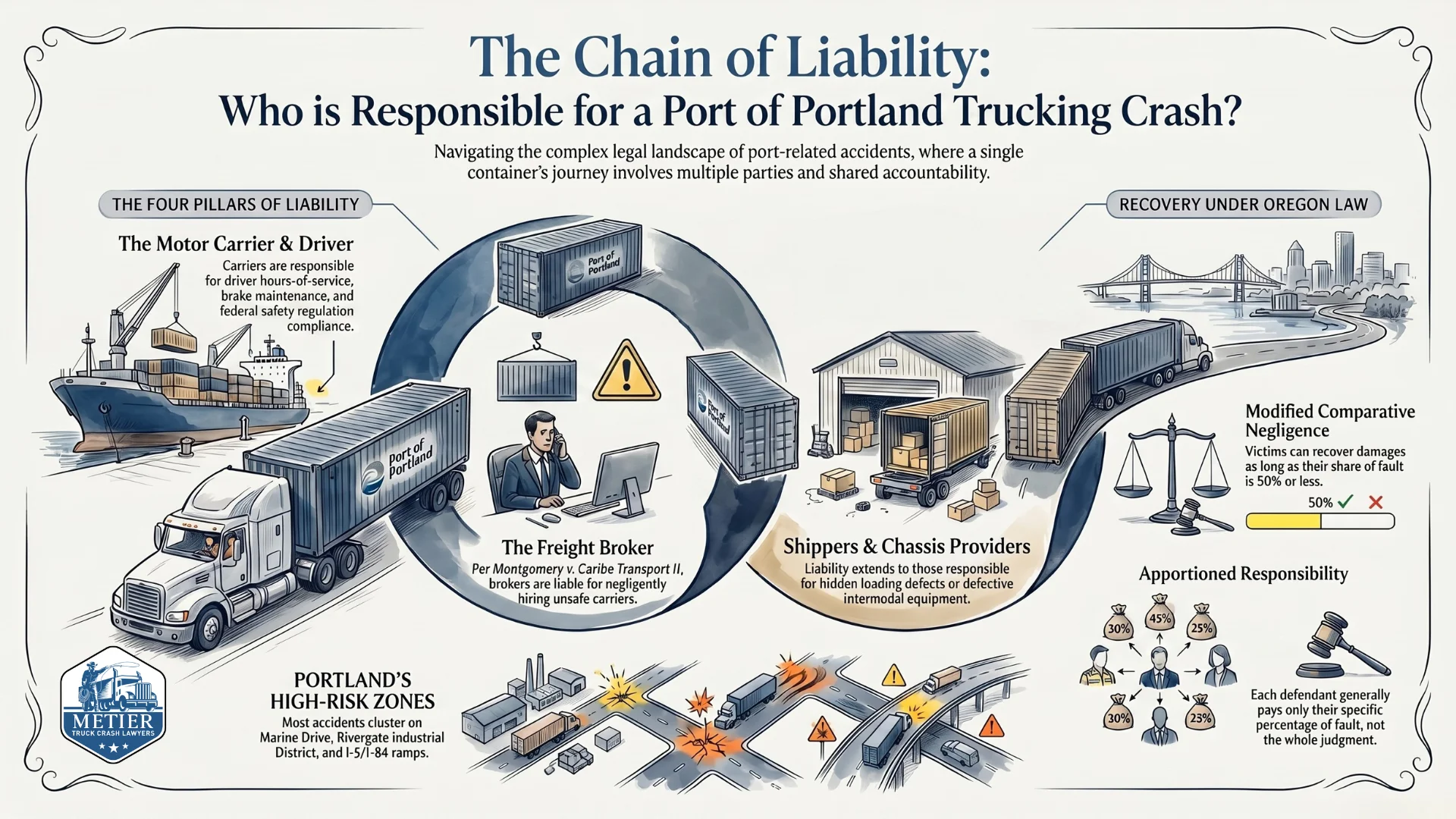
The driver is the obvious starting point, and the company that employs the driver usually answers for the driver's mistakes. Carriers also have their own duties under the Federal Motor Carrier Safety Regulations in 49 CFR: limits on driving hours, brake and tire maintenance, and rules for securing cargo. When a carrier pushes a tired driver past the hours-of-service limits or skips a brake inspection, that violation becomes evidence of negligence. Federal leasing rules also make the carrier whose name and DOT number are on the truck responsible for it, even when the driver is a leased owner-operator. The company on the door cannot just blame the driver and walk away.
Call Metier Law Firm at 866-377-3800 or schedule your free consultation today at www.metierlaw.com
The Freight Broker
Here is where the law just changed in a big way. Freight brokers arrange the haul but do not own the trucks, and for years they used a federal preemption argument to get dismissed from injury cases. That argument is mostly dead now. On May 14, 2026, the U.S. Supreme Court ruled unanimously in Montgomery v. Caribe Transport II that a broker can be sued under state law for negligently hiring an unsafe carrier. If a broker handed your load to a trucking company with a bad safety record and that carrier caused the crash, the broker can be named too. This matters in Portland, where national brokers route much of the freight leaving the port. It does not make brokers automatically liable, but the courthouse door is open when a broker ignored obvious warning signs about the carrier it picked.
The Shipper That Loaded the Box
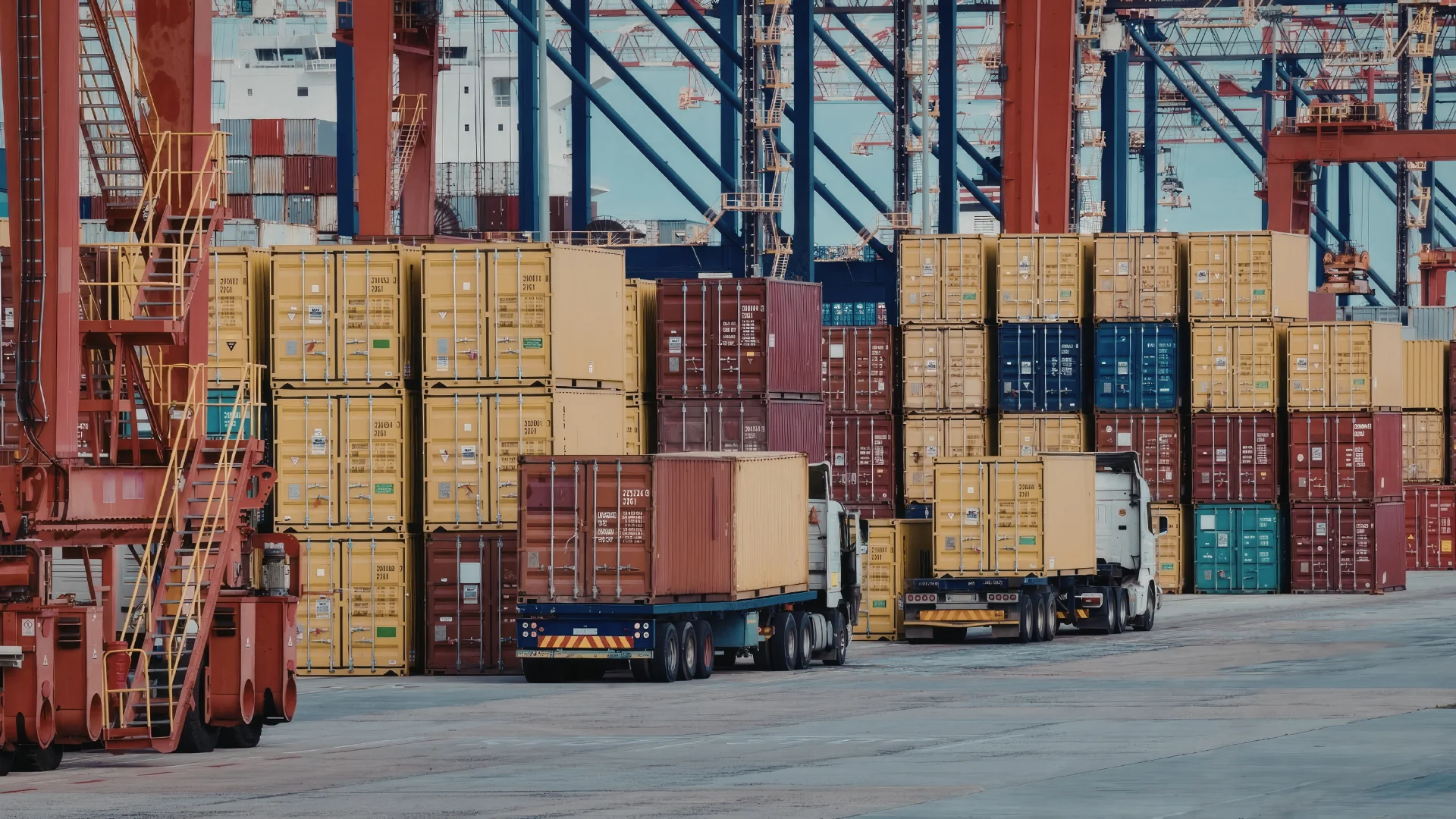
The company that loads the cargo can share fault when the load itself is the problem. The general rule is that the carrier has the primary duty to make sure a load is safe. But when the shipper takes on the loading and creates a hidden defect the driver could not catch with an ordinary look, the shipper becomes responsible for that concealed problem. Picture a container packed so the weight sits wrong, then sealed, with nothing a driver could spot on a walk-around. If that load shifts on a ramp off I-84 and the truck rolls, the shipper's loading is squarely in play. And if you are the person hurt in that wreck, you are not bound by the carrier-versus-shipper rules that apply inside the industry, so you can pursue the shipper directly.
The Marine Terminal and the Chassis Provider
The chassis, the wheeled frame that carries the container, is its own liability story. Federal roadability rules require the company that supplies that chassis, the intermodal equipment provider, to inspect, repair, and maintain it and hand it over in safe operating condition. You can read those duties on the FMCSA's intermodal equipment page. When a worn brake or a bald tire on a port chassis causes a crash, the provider that tendered it can be liable. The terminal operator can also answer for unsafe yard conditions. These are the parties most victims never think to look at, which is why they sometimes slip out of accountability.
If you or a loved one was injured in a crash with a commercial truck, call us at 866-377-3800 or schedule a free consultation at www.metierlaw.com.
How Oregon Decides Who Pays What
Naming several companies does not mean one of them writes a check for everything. Oregon uses modified comparative negligence under ORS 31.600. You can still recover as long as your share of fault is 50% or less, and your award drops by your percentage. Just as important, each defendant is generally responsible only for its own share of the fault, not the whole judgment. So the work is twofold: prove each company's role, then pin the right percentage to each one. For how we build that proof, see our piece on how negligence is established in a Portland truck accident. One hard deadline sits over all of it. Under ORS 12.110 you usually have two years from the crash date to file, and our breakdown of Oregon's personal injury deadlines covers the exceptions.
What This Looks Like on the Ground in Portland
Most of these wrecks happen on the freight routes feeding the port: Marine Drive, the Rivergate Industrial District, and the ramps to I-5 and I-205. Our Portland truck accident lawyers know those corridors, and the evidence that proves each company's role vanishes within days. Our guide to high-risk I-5 truck crash zones in Portland shows where these collisions cluster.
Frequently Asked Questions
Who is liable in a Port of Portland container truck crash?
Often several parties at once: the trucking company and driver, the freight broker that booked the carrier, the shipper that loaded the container, and the chassis provider. A Portland truck accident lawyer sorts out which ones had a role and how much fault belongs to each.
Can I sue a freight broker after a truck accident in Oregon?
In many cases, yes. After the Supreme Court's 2026 Montgomery decision, a broker that negligently hired an unsafe carrier can be sued under state law. The broker has to have done something wrong in choosing the carrier, so it is not automatic.
What if the crash was caused by a bad chassis from the port?
The company that supplied the chassis has a federal duty to keep it roadworthy. If a defective chassis caused or contributed to the wreck, that provider can be held responsible along with the other parties.
How long do I have to file a truck accident claim in Portland?
Generally two years from the date of the crash under ORS 12.110, with limited exceptions. Port cases involve evidence that disappears quickly, so it is smart to talk with a Portland truck accident attorney well before that deadline.
Get the Full Picture Before You Settle
Insurers for one company love to point at another and hope you give up. In a port or drayage crash, the money is usually spread across the carrier, the broker, the shipper, and the chassis provider, and leaving any of them out can cost you what you are owed. Mapping that whole chain is the work we do for every client.
As a Portland truck accident lawyer team, we handle this kind of multi-party investigation daily given how much drayage traffic moves through the Port of Portland. That same experience extends to our Seattle truck accident lawyer team, who apply it to the drayage crashes moving through the Port of Seattle. Metier Law Firm represents families across the entire region, with offices also serving Fort Collins, Denver, Colorado Springs, Cheyenne, Casper, Gillette, and Omaha.
When one of these crashes proves fatal, a Portland wrongful death lawyer from our team steps in to hold every responsible party accountable, and a Seattle wrongful death lawyer offers that same support to families further north.
Call Metier Law Firm at 866-377-3800 or schedule your free consultation today at www.metierlaw.com.
Disclaimer: Past results discussed should not be considered a guarantee of your results as the factors of every case are individually unique. This content is for informational purposes only and does not constitute legal advice. Consult a qualified attorney from Metier Law Firm regarding your individual situation for legal advice.
Tell Us About Your Case – Free Case Review with a Truck Accident Lawyer
Tell Us About Your Case – Free Case Review with a Personal Injury Lawyer
(866) 377-3800Our Locations
.webp)
Do I have a Case?
How Much Should I Be Offered?
Do I Need an Attorney?
If these questions have crossed your mind, let us help. You may need a little direction or may not need an attorney at all, but you deserve to be confident knowing your options. We can provide you with information about our Attorneys of the West® accident investigations and legal services. Your confidential consultation with us is totally free.
Keep up with us!
