.svg)


TL;DR / Key Takeaways
- A jackknife truck accident happens when a semi-trailer swings outward at the coupling, folding the rig into a sharp angle that blocks multiple lanes
- Improper braking, excessive speed on descent, and brake equipment failures are the most common causes on Colorado and Wyoming mountain corridors
- Federal law under 49 CFR Part 393 requires carriers to inspect and maintain brakes before every trip — violations are legally actionable
- Icy mountain passes are foreseeable hazards, not legal excuses, and Colorado and Wyoming courts have consistently held carriers responsible
- Colorado's personal injury statute of limitations is 3 years; Wyoming's is 4 years
If you were on I-70 near Vail Pass, or crossing I-80 through Wyoming's high plains, when a semi folded across the highway, you know how fast a jackknife truck accident shuts everything down. One rig. A fraction of a second. Every vehicle behind it has no time to stop.
"I hold a Class A CDL, and I've spent 18 years building these cases," says Mike Chaloupka, Managing Partner at Metier Truck Crash Lawyers. "A jackknife truck accident on a mountain pass is not a weather event. It is a brake maintenance failure, a training failure, or a carrier that sent an unprepared truck into conditions it should have anticipated. We have proven that in court."
Here is what you need to know about why these crashes happen, what federal law requires, and who is liable when one of them takes out your vehicle.
What Causes a Jackknife Truck Accident?
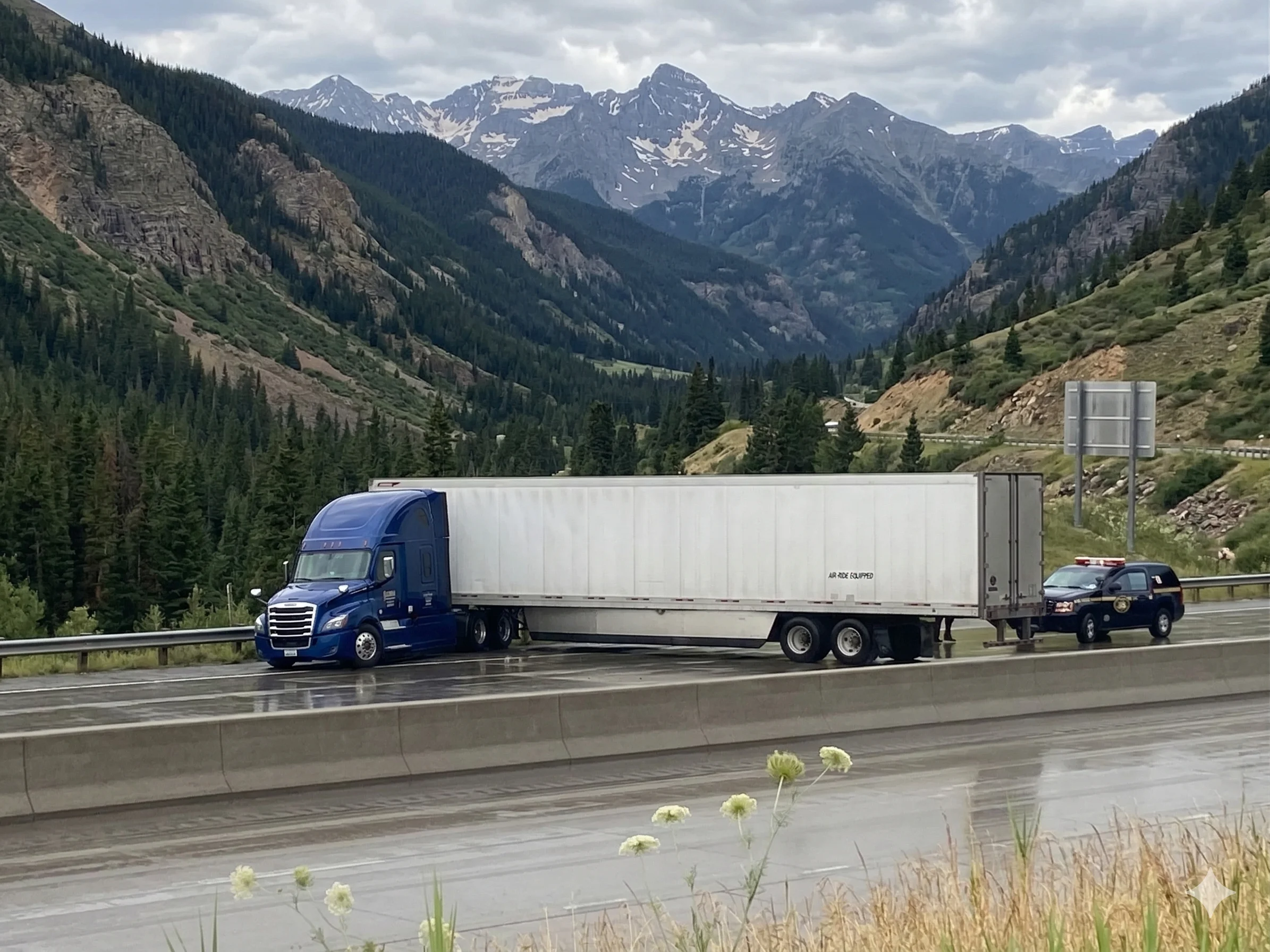
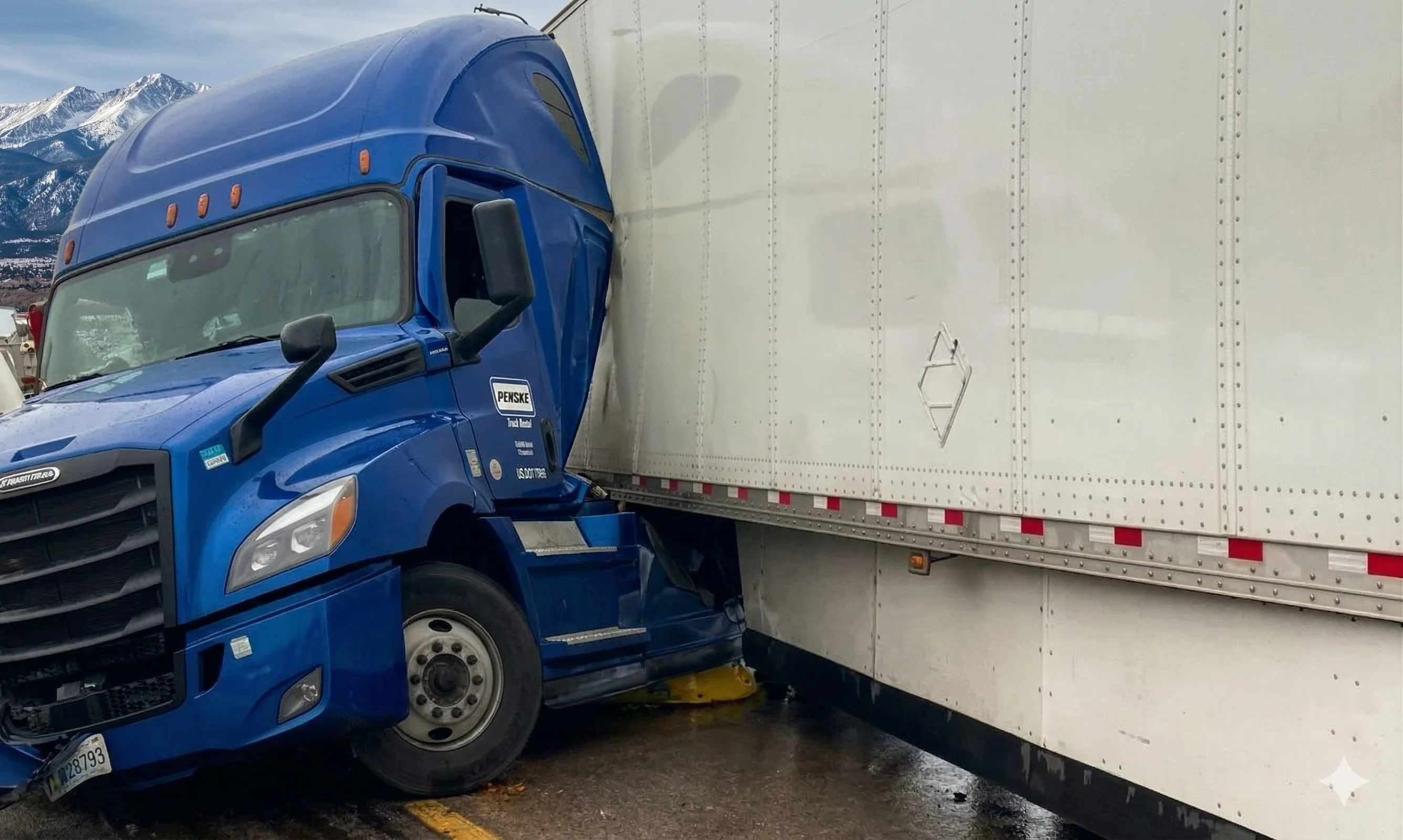
In a jackknife truck accident, the trailer swings outward at the fifth-wheel coupling while the cab pushes forward. The rig folds at a sharp angle, typically blocking multiple lanes. At highway speed on a downgrade, the driver's window to correct it is less than a second.
Three causes account for most jackknife truck accident crashes on Colorado and Wyoming corridors:
Improper Braking
When a driver applies brakes too hard or unevenly, drive-axle wheels lock while the trailer keeps rolling. The trailer's momentum carries it outward. This is the most common semi truck jackknife cause, and it traces almost directly to equipment condition or driver training.
Excessive Speed on Descent
Speed management on steep grades starts before the brakes come in. A rig running too fast approaching Eisenhower Tunnel, Teton Pass, or the grades west of Denver has already lost its recovery margin.
Equipment Failure
Worn brake pads, air brake leaks, and out-of-adjustment components reduce stopping power unevenly across axles. Federal regulations require full brake inspection before every commercial run.
What Federal Regulations Require From Carriers
Under 49 CFR Part 393, Subpart C, commercial vehicle braking systems must be maintained in good working order and capable of functioning in the temperature and altitude ranges the vehicle will encounter. For mountain freight, that is a specific and enforceable obligation.
FMCSA pre-trip inspection requirements mandate brake system checks before every commercial trip. A driver who signs off without actually inspecting, or a company that pressures drivers to rush through the checklist, is violating federal law. When a jackknife truck accident investigation reveals that brakes were out of adjustment or improperly calibrated for steep grades, the carrier faces direct liability.
For more on how carriers cut corners with driver compliance, see our post on unqualified truck drivers on the road right now.
Why Weather Does Not Excuse a Carrier
After a jackknife truck accident on mountain pass terrain, the carrier's first defense is almost always weather. Ice, wind, blowing snow, reduced visibility.
Colorado and Wyoming courts have pushed back on this consistently when conditions were foreseeable. Icy roads on these corridors are not surprises. They are seasonal, predictable, and a known part of the route. A carrier running freight through Vail Pass from October through April knows what those conditions look like. That foreseeability creates a legal duty: proper equipment, trained drivers, speed management protocols, and honest route planning.
When a carrier skips any of those duties and a jackknife crash follows, weather is not a defense. It is context that makes the failure worse.
If you or a loved one was injured in a crash with a commercial truck, call us at 866-377-3800 or schedule a free consultation at www.metierlaw.com.
Who Is Liable in a Jackknife Crash?
Jackknife crash liability in Colorado and Wyoming cases typically points to one or more of these parties:
The Trucking Company
Carriers are responsible for maintenance, pre-trip inspections, driver qualification, and route planning. Most jackknife crash liability cases are built around failures in at least one of these areas.
The Driver
A driver who was speeding on a downgrade, skipped a real inspection, or applied brakes incorrectly in demanding conditions may carry personal liability alongside the company.
A Third-Party Maintenance Contractor
If brake service was outsourced and performed negligently, the repair provider may share responsibility.
For multi-vehicle pile-ups, each impacted vehicle may generate separate claims. See our reporting on why Wyoming's roads have been especially deadly this year for context on how these corridor crashes compound.
Frequently Asked Questions
How long do I have to file a claim after a jackknife truck accident in Colorado or Wyoming?
Colorado's personal injury statute of limitations is 3 years from the crash date. Wyoming gives you 4 years. Wrongful death timelines may differ. Trucking companies also start collecting — and sometimes destroying — evidence immediately. Acting quickly gives your attorney the best shot at preserving black box data, inspection logs, and maintenance records.
How do you prove a jackknife truck accident was the carrier's fault?
Black box data, pre-trip inspection logs, brake maintenance records, driver qualification files, and dispatch communications are all relevant. An attorney who holds a CDL knows what those records should look like under federal regulations and where carriers typically falsify or lose paperwork.
Does it matter if I was in another vehicle rather than the truck itself?
No. If you were in a vehicle struck by a jackknifed semi, or caught in the pile-up it caused, you have the same right to pursue a claim against the carrier as any other injured party.
Why You Want a CDL Attorney on Your Side
A jackknife truck accident case on a Colorado or Wyoming mountain pass is not a standard car accident claim. It involves federal regulations, commercial vehicle mechanics, and carrier liability structures that most personal injury attorneys have never worked with.
Metier Truck Crash Lawyers includes a Managing Partner with an active Class A CDL and 18 years of experience building exactly these cases. We know what the records should show, what carriers hide, and how to hold them accountable when they fail.
Call Metier Law Firm at 866-377-3800 or schedule your free consultation today at www.metierlaw.com. Speak with an experienced Denver truck accident lawyer serving Colorado Springs, Fort Collins, Seattle, Portland, Casper, and Cheyenne.
Disclaimer: Past results discussed should not be considered a guarantee of your results as the factors of every case are individually unique. This content is for informational purposes only and does not constitute legal advice. Consult a qualified attorney from Metier Law Firm regarding your individual situation for legal advice.
Tell Us About Your Case – Free Case Review with a Truck Accident Lawyer
Tell Us About Your Case – Free Case Review with a Personal Injury Lawyer
(866) 377-3800Our Locations
.webp)
Do I have a Case?
How Much Should I Be Offered?
Do I Need an Attorney?
If these questions have crossed your mind, let us help. You may need a little direction or may not need an attorney at all, but you deserve to be confident knowing your options. We can provide you with information about our Attorneys of the West® accident investigations and legal services. Your confidential consultation with us is totally free.
Keep up with us!
