.svg)


TL;DR / Key Takeaways
- Seattle sees precipitation on roughly 150 days per year. Olympia averages over 168 rainy days annually. On I-5, wet pavement is the default condition for much of the riding season.
- Wet road motorcycle accidents carry the same legal rights as any other crash. Rain doesn't reduce your ability to recover compensation if another driver caused the collision.
- Insurance adjusters routinely use weather conditions to argue rider negligence. Knowing how to protect your claim from day one makes a real difference.
- Injured riders in Washington can recover medical expenses, lost wages, property damage, and pain and suffering, regardless of the weather at the time of the crash.
- If you were hurt on I-5 or anywhere on Washington's wet roads, the first call you make matters. Make it to a lawyer who rides.
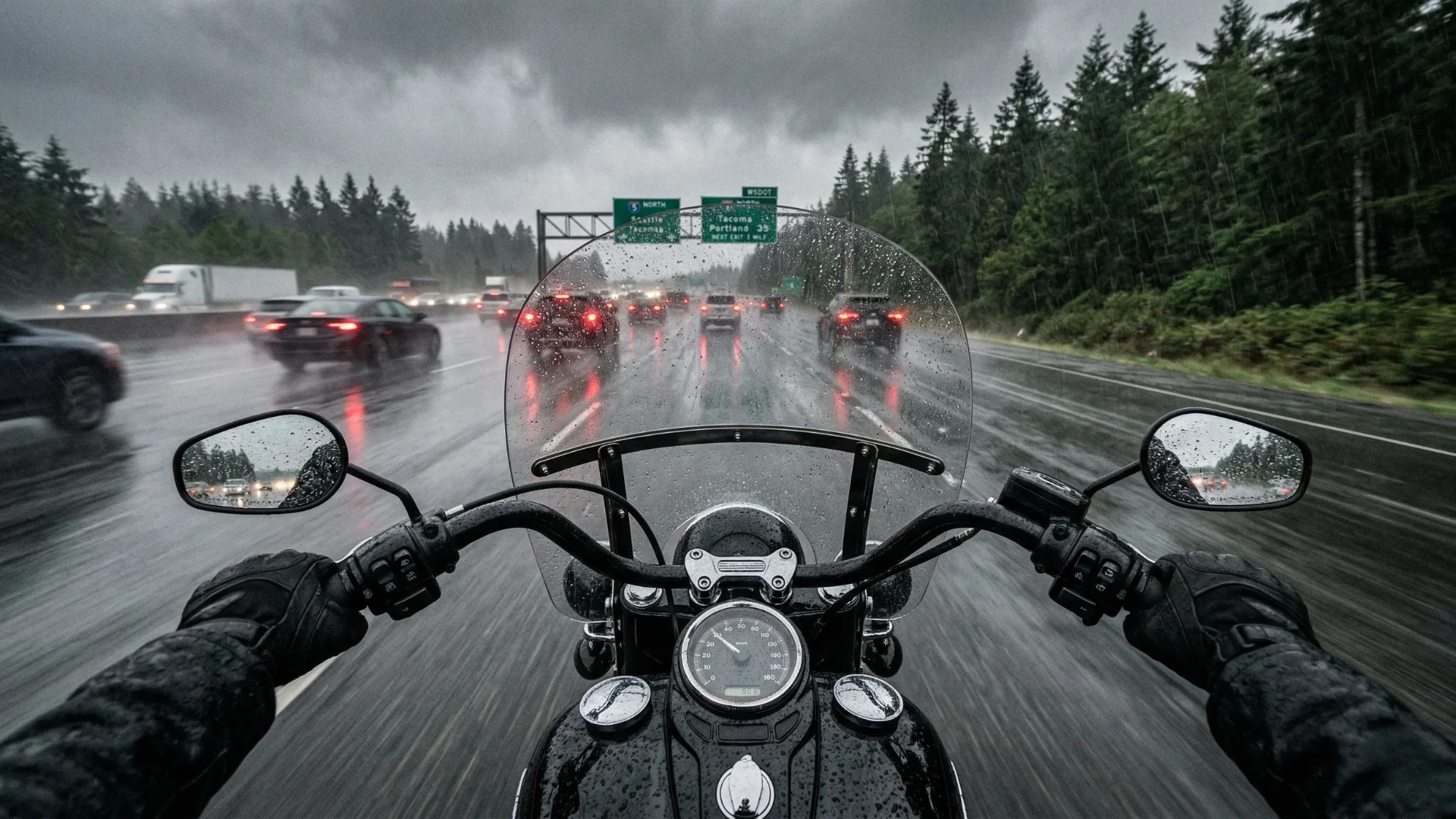
There's something riders in Washington understand that people from drier states just don't. Rain here isn't a weather event. It's a condition. From Olympia up through Tacoma and into Seattle, the I-5 corridor stays wet for a significant portion of the year. Olympia averages more than 168 rainy days annually, and Seattle sees measurable precipitation on around 150 days per year, according to climate data from NOAA. For riders, that's not a statistic. It's the backdrop for nearly every commute, every weekend ride, every errand run on two wheels.
Most of us ride through it anyway. We adjust our lane position, slow down on painted lines, watch for the oil slick that forms in the center of a lane after the first rain of the week. We know the routine.
What we don't always know is what happens legally when a wet road motorcycle accident puts us on the ground and someone else is responsible for why.
"Wet roads don't change who was at fault," says Patrick DiBenedetto, Partner at Metier Law Firm and an experienced motorcycle rider. "What they do is give insurance companies a convenient narrative. They want to argue the conditions made the crash inevitable, or that the rider should have stayed home. We push back on that every time, because negligence is negligence, rain or shine."
What Washington's Wet Roads Actually Do to Motorcycles
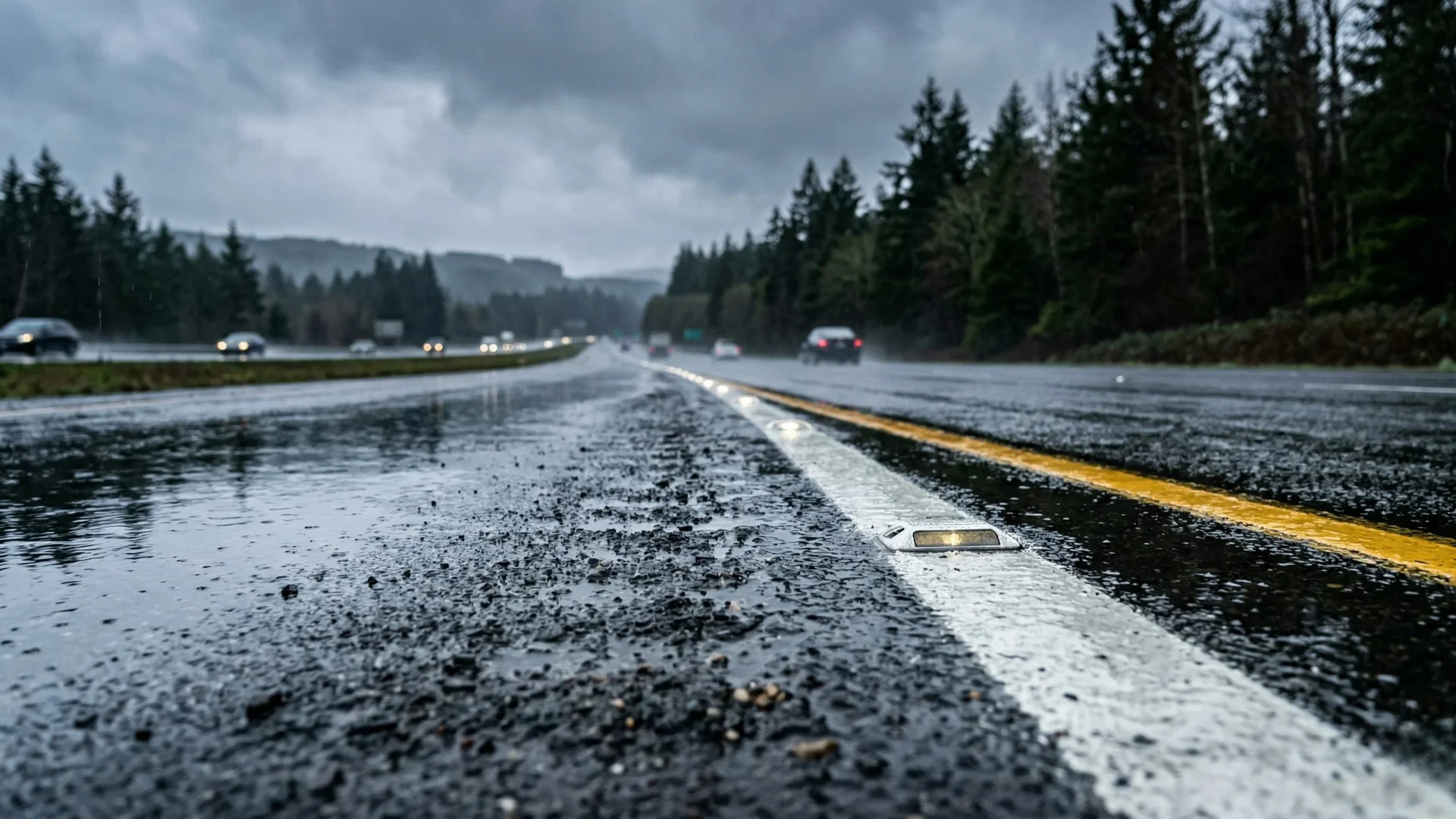
Cars lose traction in the rain. Motorcycles lose it faster and with far less margin for error. Tire contact patches are small. Painted lane markings, manhole covers, bridge expansion joints, and the first half-inch of accumulated oil on a dry stretch of I-5 that finally gets rained on all become serious hazards.
According to the Washington State Department of Transportation, weather-related crashes on state highways increase by 15 to 20 percent during Washington's rainy season. The risk compounds on a corridor like I-5 between Olympia and Seattle, where volume is high, lanes merge frequently, and drivers often underestimate how much stopping distance they've lost on wet asphalt.
Understanding the most common types of motorcycle accidents helps explain why this corridor is so dangerous in the rain. Wet road motorcycle accidents here happen for predictable reasons: drivers following too closely, late lane changes without checking mirrors, and the reduced visibility that comes with heavy spray from trucks doing 65 mph in the left lane. These are driver failures. The rain is the setting, not the cause.
When Drivers Are Still at Fault in the Rain
This is the part that matters most if you've been hurt. In Washington, a driver who causes a crash in wet conditions is still liable for the harm they caused. The legal standard doesn't change because it was raining. What changes is how aggressively the other side will try to shift blame onto you.
Adjusters handling a motorcycle injury claim in Washington know exactly what they're doing when they bring up the weather. They're looking for comparative fault arguments. Under Washington's pure comparative negligence system, any percentage of fault assigned to you reduces your compensation by that amount. So if they can convince an insurer or a jury that you were 20% at fault for riding in the rain, your recovery drops by 20%.
The way to counter that is documentation and early legal help. Photos of the scene, road conditions, skid marks, and vehicle positions matter enormously in a wet road crash. So does the police report, witness accounts, and any traffic camera footage from the I-5 corridor. Knowing exactly what to do after a motorcycle accident before the next rainstorm washes the scene clean can be the difference between a strong claim and a weak one.
If you've been hurt in a motorcycle crash and need answers, call us at 833-4MOTO-LAW (833-466-8652) or schedule a free consultation at www.metierlaw.com.
What an Injured Rider Can Actually Recover
If another driver caused your wet road motorcycle accident on I-5, you have the right to pursue full compensation for what that crash cost you. That includes both economic and non-economic damages.
On the economic side, that means:
- Medical expenses, including emergency care, surgeries, hospitalization, physical therapy, and future treatment costs
- Lost wages for the time you couldn't work during recovery
- Loss of future earning capacity if your injuries affect your ability to work long-term
- Property damage to your motorcycle, helmet, gear, and anything else destroyed in the crash
Non-economic damages cover the losses that don't come with a receipt but are just as real. Pain and suffering, emotional distress, loss of enjoyment of activities you could do before the crash, and in serious cases, loss of consortium for your spouse or partner. Washington law allows injured riders to pursue all of these, and we've seen how much they can add up when a crash leaves lasting damage. Slides on wet asphalt also commonly cause road rash injuries that require weeks or months of treatment and may leave permanent scarring, adding significantly to the value of a claim.
One thing worth knowing: insurers often move fast after a motorcycle accident in Washington state. They may contact you within days, before you fully understand your injuries, and offer a settlement that sounds reasonable but doesn't account for ongoing treatment, lost earning potential, or the full scope of your pain and suffering. Signing early closes the door on recovering more later.
The Bias Problem: Why Riders Face an Uphill Battle
We've handled motorcycle accident cases throughout Seattle, Tacoma, and all along the I-5 corridor at Metier Motorcycle Lawyers. One pattern shows up consistently. When the crash involves rain, the immediate assumption from the other side is that the rider took a risk they shouldn't have.
That bias is baked into how adjusters approach these claims. A car driver in the same wet conditions gets the benefit of the doubt. A rider gets asked why they were even out there. It's frustrating, and it's unfair, but it's real. There's a reason the most common myths about motorcycle crash lawyers all center on the same thing: insurance companies counting on riders not knowing their rights.
The answer isn't to accept it. It's to build a claim that doesn't leave room for that argument. That means getting medical treatment immediately, not giving recorded statements to the other driver's insurer without counsel, and preserving every piece of evidence before it disappears in the next rainstorm.
The Motorcycle Safety Foundation notes that trained riders are significantly better equipped to handle wet conditions than untrained ones. If you completed an MSF course, that's relevant. If you were riding responsibly, staying in your lane, adjusting your speed, doing everything right, that matters to your claim.
Riding Through It Is Not Consent to Being Hit
There's a version of this conversation where someone tells you that riding in the rain means accepting whatever happens next. That's not how Washington law works. Choosing to ride on wet roads is legal. Doing it carefully is reasonable. Getting hit by a distracted driver who changed lanes without looking is not something you assumed the risk of when you put on your gear and got on the freeway.
I-5 motorcycle crashes involving rain come down to the same questions as any other crash. Who had a duty of care? Who breached it? And what did that breach cost the rider who got hurt? Weather is context. Negligence is still the issue.
The National Highway Traffic Safety Administration consistently shows that motorcyclists are disproportionately represented in serious injury and fatality statistics compared to other road users. Understanding how many motorcycle accidents result in serious injury or death makes clear why that vulnerability matters so much when building a claim. When someone else's carelessness puts a rider down, the consequences are severe and the compensation needs to reflect that.
Frequently Asked Questions
Can I file a motorcycle injury claim if the crash happened on wet roads in Washington?
Yes. Wet road conditions don't bar you from recovering compensation. If another driver's negligence caused the crash, you have the right to pursue damages for medical costs, lost wages, property damage, and pain and suffering under Washington law. The weather may factor into how fault is argued, but it doesn't eliminate your claim.
How do I prove the other driver was at fault in a rain-related motorcycle accident on I-5?
Evidence is everything in these cases. Photos of the accident scene, road surface, skid marks, and vehicle positions are critical. Get the police report, collect witness information, and ask about traffic camera or dashcam footage. A Seattle motorcycle accident attorney can help secure evidence quickly before conditions change or footage gets overwritten.
Will Washington's comparative negligence law reduce my recovery if I was riding in the rain?
It can, if the other side successfully argues you were partially at fault. Under Washington's pure comparative negligence system, your compensation is reduced by your percentage of fault. That's why it's important to document that you were riding responsibly and to have an attorney who can challenge attempts to assign blame to you for simply being on the road.
What kinds of compensation can an injured rider recover after a wet road motorcycle accident?
Washington law allows injured motorcyclists to pursue economic damages, including medical bills, lost wages, and future treatment costs, as well as non-economic damages like pain and suffering, emotional distress, and loss of enjoyment. In fatal crashes, surviving family members may also have a wrongful death claim.
How soon after a motorcycle crash on I-5 should I contact an attorney?
As soon as possible. The other driver's insurance company may reach out quickly with a settlement offer before you understand the full extent of your injuries. An attorney can protect your claim from the start, help preserve evidence, and make sure you don't accept less than what your case is actually worth.
We Know What It's Like Out There
Riding I-5 in the rain between Olympia and Seattle isn't reckless. It's what Washington riders do. We know these roads, we know the risks, and when we get hit by someone who wasn't paying attention, we know what it costs.
At Metier Law Firm, we represent injured riders across Washington, and we understand the specific challenges that come with wet road motorcycle accidents. We know how insurers approach these cases. We know how to build a claim that holds up when the other side tries to make the weather the story. And we know that getting hurt on a rainy stretch of I-5 doesn't make you any less entitled to full compensation.
Call Metier Motorcycle Lawyers at 833-4MOTO-LAW (833-466-8652) or schedule your free consultation today at www.metierlaw.com.
Disclaimer: Past results discussed should not be considered a guarantee of your results as the factors of every case are individually unique. This content is for informational purposes only and does not constitute legal advice. Consult a qualified attorney from Metier Law Firm regarding your individual situation for legal advice.
Tell Us About Your Case – Free Case Review with a Personal Injury Lawyer
(866) 377-3800Our Locations
.webp)
Do I have a Case?
How Much Should I Be Offered?
Do I Need an Attorney?
If these questions have crossed your mind, let us help. You may need a little direction or may not need an attorney at all, but you deserve to be confident knowing your options. We can provide you with information about our Attorneys of the West® accident investigations and legal services. Your confidential consultation with us is totally free.
Keep up with us!
