.svg)

.png)
TL;DR: Key Takeaways
- Every truck accident involves three distinct collision stages: the vehicle impact, the human collision, and the internal organ collision.
- Understanding these stages explains why semi truck crash injuries are often severe, even when external damage appears minimal.
- The massive weight difference between commercial trucks and passenger vehicles creates extreme forces during each collision stage.
- Internal injuries from the third collision stage may not show symptoms immediately but can be life-threatening.
- Documenting all three collision stages is critical for building a strong personal injury claim after a truck crash.
When a semi truck crashes into a passenger vehicle, the collision happens in a split second. But what most people don't realize is that your body actually goes through three separate impacts during that single crash. The vehicle hits something and crumples. Your body slams forward into the interior or restraints. And your internal organs keep moving inside your body, striking bones and other organs.
"Most people don't realize their body goes through three separate impacts in a single truck crash," says Todd Ingram, Partner at Metier Law Firm. "Understanding this helps explain why injuries can be so severe, even when the damage to your vehicle doesn't look that bad from the outside."
These truck accident collision stages happen so fast that you can't feel them as separate events. But understanding what happens during each stage explains why semi truck crash injuries are often catastrophic, why you need immediate medical attention even if you feel fine, and why your injury claim needs to account for forces you couldn't see or feel at the time.
The physics behind commercial vehicle collision impact is straightforward but brutal. A fully loaded tractor trailer can weigh 80,000 pounds. Your passenger car weighs maybe 4,000 pounds. When these two vehicles collide, the laws of physics don't care who had the right of way. The smaller vehicle absorbs most of the destructive energy, and the people inside that vehicle experience trauma across all three collision stages.
Stage One: Vehicle Impact
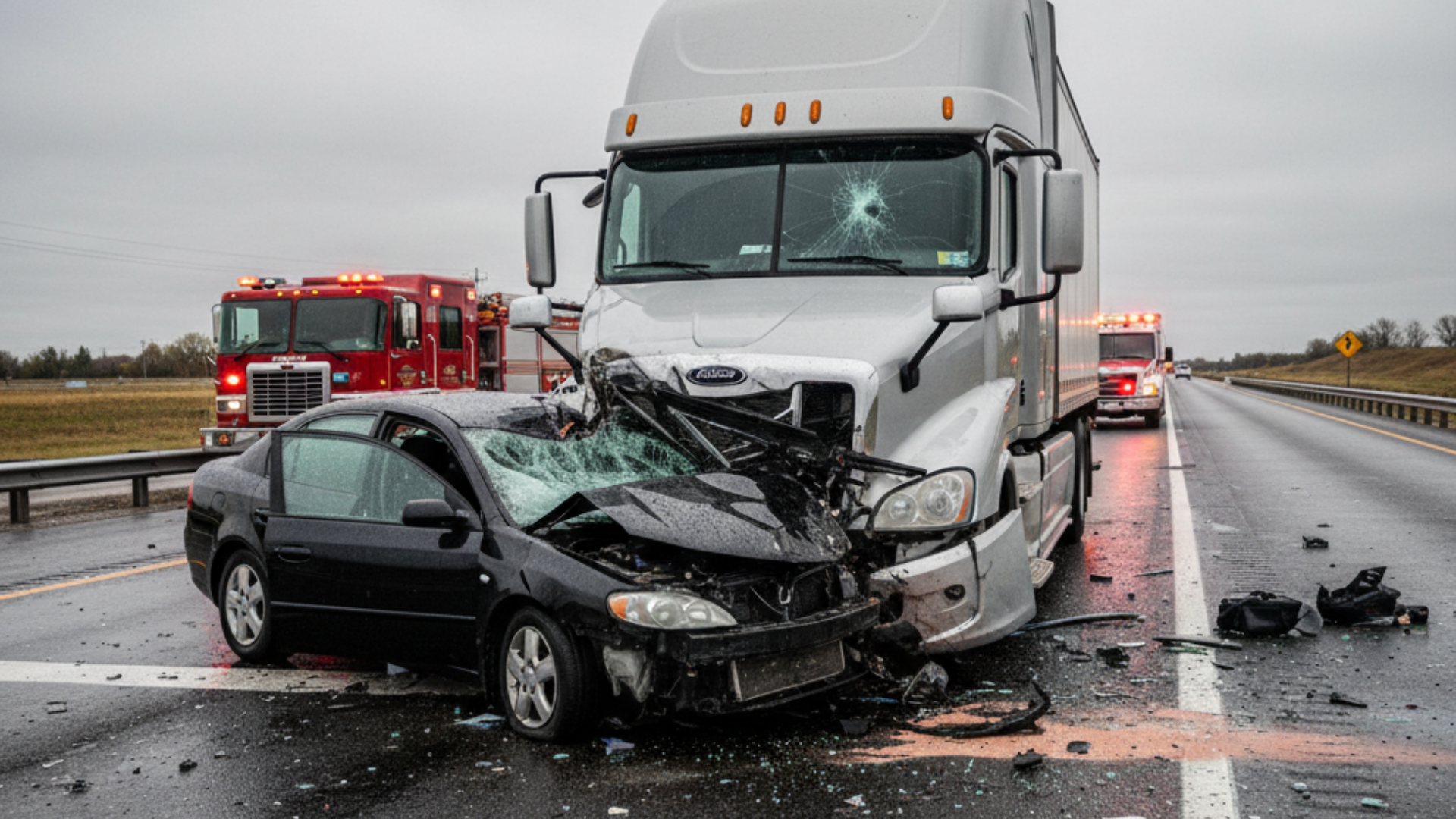
The first collision stage begins the instant the truck makes contact with your vehicle. This is the vehicle collision, where metal meets metal and the crash forces start transferring from one vehicle to another. In crashes involving commercial trucks across Colorado, Washington, Oregon, Wyoming, and Nebraska, this stage typically lasts less than one-tenth of a second at highway speeds.
During this fraction of a second, your vehicle begins to deform. Modern cars are designed with crumple zones that absorb some of the impact energy by crushing in a controlled way. This is good engineering, but when you're hit by a semi truck with massive momentum, even the best crumple zones can only do so much. The front or side of your vehicle compresses, and that crushing action is actually trying to protect you by slowing the deceleration rate.
But here's what makes tractor trailer accident force so devastating. That 80,000-pound truck carries enormous kinetic energy. When it strikes your 4,000-pound car, your vehicle might crumple two or three feet in a matter of milliseconds. The National Highway Traffic Safety Administration notes that proper vehicle design and restraint systems work together to manage crash forces, but the extreme weight difference in truck crashes means your vehicle bears almost all of the structural damage.
The vehicle collision stage sets everything else in motion. How your car crumples, where it's struck, and how quickly it decelerates all affect what happens to your body in the next two stages. This is why accident reconstruction experts spend so much time analyzing vehicle damage patterns when investigating serious truck crashes.
Stage Two: Human Impact
While your vehicle is crushing and slowing down, you're still moving at the same speed you were traveling before impact. This is basic physics. Objects in motion stay in motion unless something stops them. Your car has been stopped or dramatically slowed by the truck, but your body hasn't.
This is the human collision stage, and it's where you experience direct physical trauma. If you're wearing a seatbelt, the belt and airbag work to slow your forward motion over a slightly longer period than the vehicle collision took. This spreading out of the stopping force is what saves lives. Without restraints, your body keeps moving forward at full speed until it hits the steering wheel, dashboard, windshield, or you're thrown from the vehicle entirely.
Even with a seatbelt, the forces involved in semi truck collision physics are extreme. Your chest presses hard against the belt. Your head might snap forward and back. Your knees could strike the dashboard. Side-impact truck crashes can throw you sideways into the door or center console. The Federal Motor Carrier Safety Administration tracks thousands of injury crashes involving large trucks each year, and the human collision stage is where most visible injuries occur.
This stage also explains why unbelted passengers in the back seat are so dangerous to front-seat occupants. In a severe truck crash, that unbelted person becomes a projectile, and they can strike front-seat passengers with devastating force during the human collision.
Truck crash injury severity during this stage depends on several factors. The angle of impact matters. Whether you were braced for impact makes a difference. Your position in the vehicle, your size, and your age all affect how the human collision traumatizes your body. But in crashes involving commercial trucks, the massive forces involved mean even properly restrained occupants often suffer serious injuries.
Stage Three: Internal Organ Collision
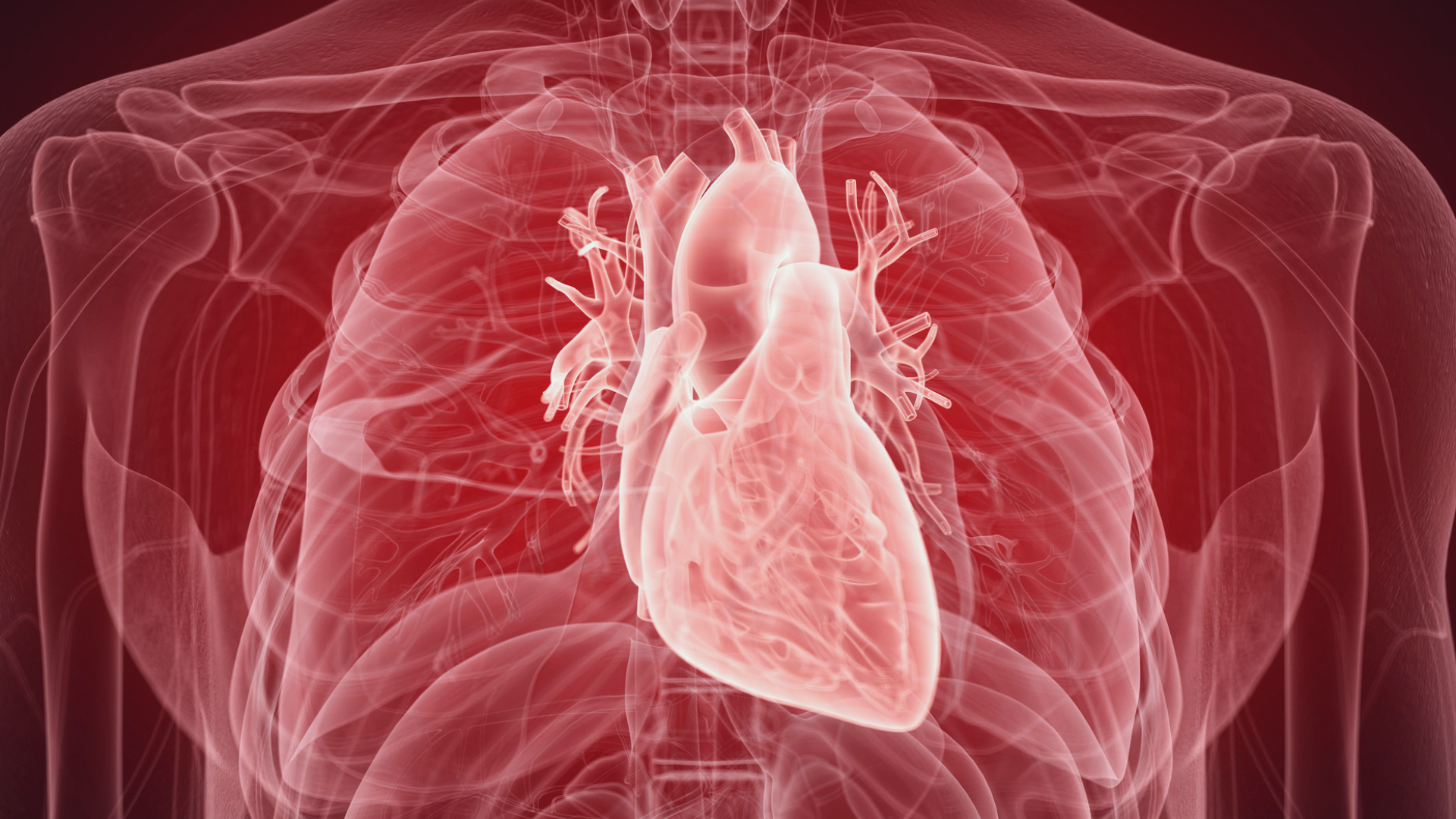
Here's the collision stage that most people never think about, but it's often the most dangerous. After the vehicle has crumpled and your body has been stopped by the restraints or interior, your internal organs are still moving forward. They have mass and momentum, and they keep traveling toward the point of impact until something stops them.
This is the internal collision, and it causes some of the most serious and hardest-to-diagnose injuries in truck crashes. Your brain continues moving forward inside your skull until it impacts the inside of your cranium. According to the Centers for Disease Control and Prevention, traumatic brain injuries affect how the brain works and can cause serious long-term problems. This is how these injuries happen, and why you can have a serious brain injury without any visible wound on your head. Your heart, lungs, liver, spleen, and kidneys all shift forward and can strike your ribcage, spine, or other organs.
The forces involved in semi truck crash biomechanics are high enough that solid organs can tear, rupture, or bleed internally. Your aorta, the main blood vessel leaving your heart, can be stretched or torn. These internal injuries are life-threatening, but they don't always cause immediate pain or obvious symptoms. You might walk away from the crash scene feeling shaken but okay, only to collapse hours later from internal bleeding.
This is why emergency responders and doctors take truck accident victims so seriously, even when they claim to feel fine. The internal collision stage can cause injuries that won't show up on a quick visual examination. You need CT scans, X-rays, and careful monitoring to catch internal damage before it becomes fatal.
If you or a loved one was injured in a crash with a commercial truck, call us at 866-377-3800 or schedule a free consultation at www.metierlaw.com.
How These Stages Affect Injury Claims
Understanding truck accident collision stages isn't just academic. It has real implications for your injury claim and your medical treatment. Insurance adjusters and defense lawyers often try to minimize injuries by pointing to relatively minor vehicle damage. But now you understand why that argument is nonsense. The vehicle damage only tells you about the first collision stage. It tells you nothing about what happened to your body during the human collision, and even less about the internal damage from the third collision stage.
When we investigate truck crashes, we document evidence from all three stages. Vehicle damage patterns tell us about impact speeds and forces. Witness statements and your injuries tell us about the human collision. Medical imaging and ongoing symptoms reveal the internal collision damage. All three stages matter when proving the full extent of your injuries.
The timing of symptoms also makes more sense when you understand these stages. Some injuries from the vehicle collision or human collision show up immediately. You know right away if your arm is broken or your face hit the airbag. But internal collision injuries can be delayed. Brain swelling takes hours to develop. Internal bleeding might be slow at first. Organ damage can cause problems days or weeks after the crash.
This is why you need to see a doctor immediately after any truck crash, even if you feel okay. And it's why you need an attorney who understands commercial vehicle collision impact and can explain to insurance companies and juries why your injuries are as serious as they are.
FAQ: Common Questions About Collision Stages in Truck Accidents
What makes truck accident collision stages more dangerous than car accidents?
The extreme weight difference between commercial trucks and passenger vehicles creates much higher forces during all three collision stages. When an 80,000-pound semi hits a 4,000-pound car, the physics are brutally one-sided. The car absorbs most of the crash energy, leading to more severe vehicle deformation in stage one, higher human collision forces in stage two, and more devastating internal organ impacts in stage three.
Can I have serious internal injuries even if my vehicle doesn't look badly damaged?
Yes. Internal organ collision injuries depend on the deceleration forces your body experienced, not on how much your vehicle crumpled. You can have life-threatening internal injuries even with moderate external damage, especially in side-impact crashes where there's less vehicle structure to absorb impact forces before they reach your body.
Why do truck crash symptoms sometimes appear days after the accident?

Many injuries from the internal collision stage develop slowly. Brain swelling, internal bleeding from organ damage, and soft tissue injuries can take hours or days to produce noticeable symptoms. The adrenaline from the crash can also mask pain initially. This delayed onset is why medical professionals monitor truck crash victims carefully even when they seem fine at the scene.
How do seatbelts and airbags affect the three collision stages?
Restraints don't prevent the three collision stages from happening, but they dramatically reduce injury severity during stages two and three. Seatbelts slow your body's forward motion over a longer time period, reducing peak forces during the human collision. This, in turn, reduces the velocity of your internal organs during the internal collision stage. The difference between restrained and unrestrained occupants in truck crashes is often the difference between survival and death.
What evidence do lawyers need from each collision stage?
For stage one, we need vehicle damage photos, accident reconstruction analysis, and data from electronic logging devices showing the truck's speed. For stage two, we need witness statements, interior damage photos, and restraint system information. For stage three, we need comprehensive medical imaging, expert medical testimony, and documentation of how internal injuries developed over time. All three stages provide different pieces of evidence that build your complete injury claim.
Why You Need an Attorney Who Understands Collision Biomechanics
The three collision stages in every truck crash create a complex injury picture that insurance companies would rather ignore. They want to look at your vehicle damage, make a quick lowball offer, and close your claim. But we know better.
At Metier Law Firm, we investigate truck crashes across Colorado, Washington, Oregon, Wyoming, and Nebraska with a focus on documenting all three collision stages. We work with accident reconstruction experts who can calculate the forces involved in each stage. We consult with medical professionals who understand how internal collision injuries develop. And we build comprehensive cases that show insurance companies and juries exactly what happened to your body during those critical fractions of a second.
You deserve an attorney who understands why your injuries are as severe as they are, even when the crash happened so fast you couldn't process what was happening. Someone who can explain to a jury how your brain impacted your skull, how your organs shifted and tore, and why you'll be dealing with the consequences for years to come.
Call Metier Law Firm at 866-377-3800 or schedule your free consultation today at www.metierlaw.com.
Disclaimer: Past results discussed should not be considered a guarantee of your results as the factors of every case are individually unique. This content is for informational purposes only and does not constitute legal advice. Consult a qualified attorney from Metier Law Firm regarding your individual situation for legal advice.

Tell Us About Your Case – Free Case Review with a Personal Injury Lawyer
(866) 377-3800Our Locations
.webp)
Do I have a Case?
How Much Should I Be Offered?
Do I Need an Attorney?
If these questions have crossed your mind, let us help. You may need a little direction or may not need an attorney at all, but you deserve to be confident knowing your options. We can provide you with information about our Attorneys of the West® accident investigations and legal services. Your confidential consultation with us is totally free.
Keep up with us!
