.svg)


TL;DR - Key Takeaways
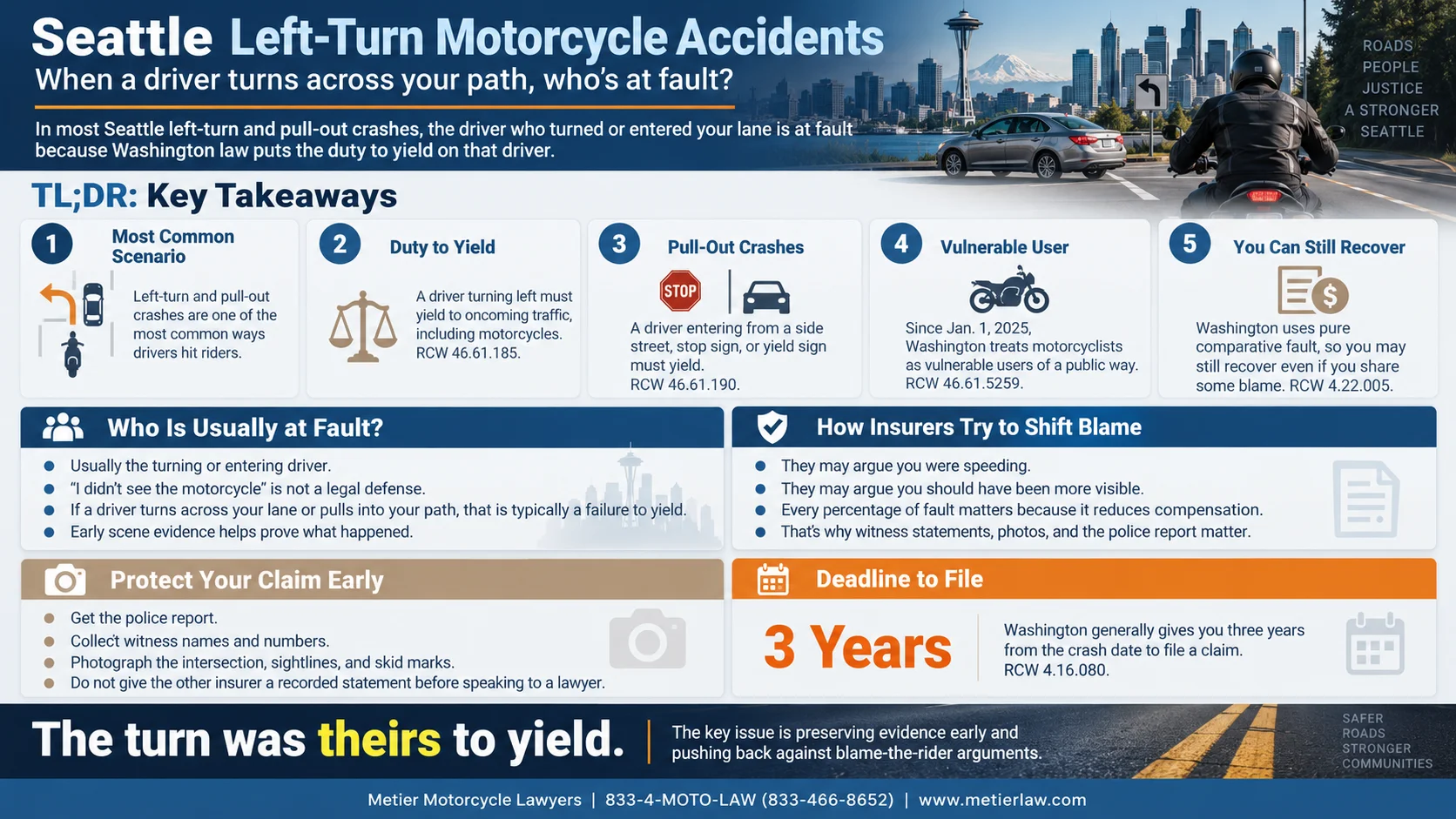
- A left-turn or pull-out crash is the most common way a driver hits a rider, and the turning or entering driver carries the legal duty to yield.
- "I didn't see the motorcycle" is no defense. Under RCW 46.61.185, a driver turning left has to yield to oncoming traffic.
- Since January 1, 2025, Washington lists a motorcycle as a "vulnerable user of a public way," so a driver who fails to yield to a rider faces an added fine (RCW 46.61.5259).
- Washington uses pure comparative fault (RCW 4.22.005), so you can recover even if you're assigned part of the blame.
- You have three years from the crash to file (RCW 4.16.080), and early evidence is what defeats a blame-the-rider argument.
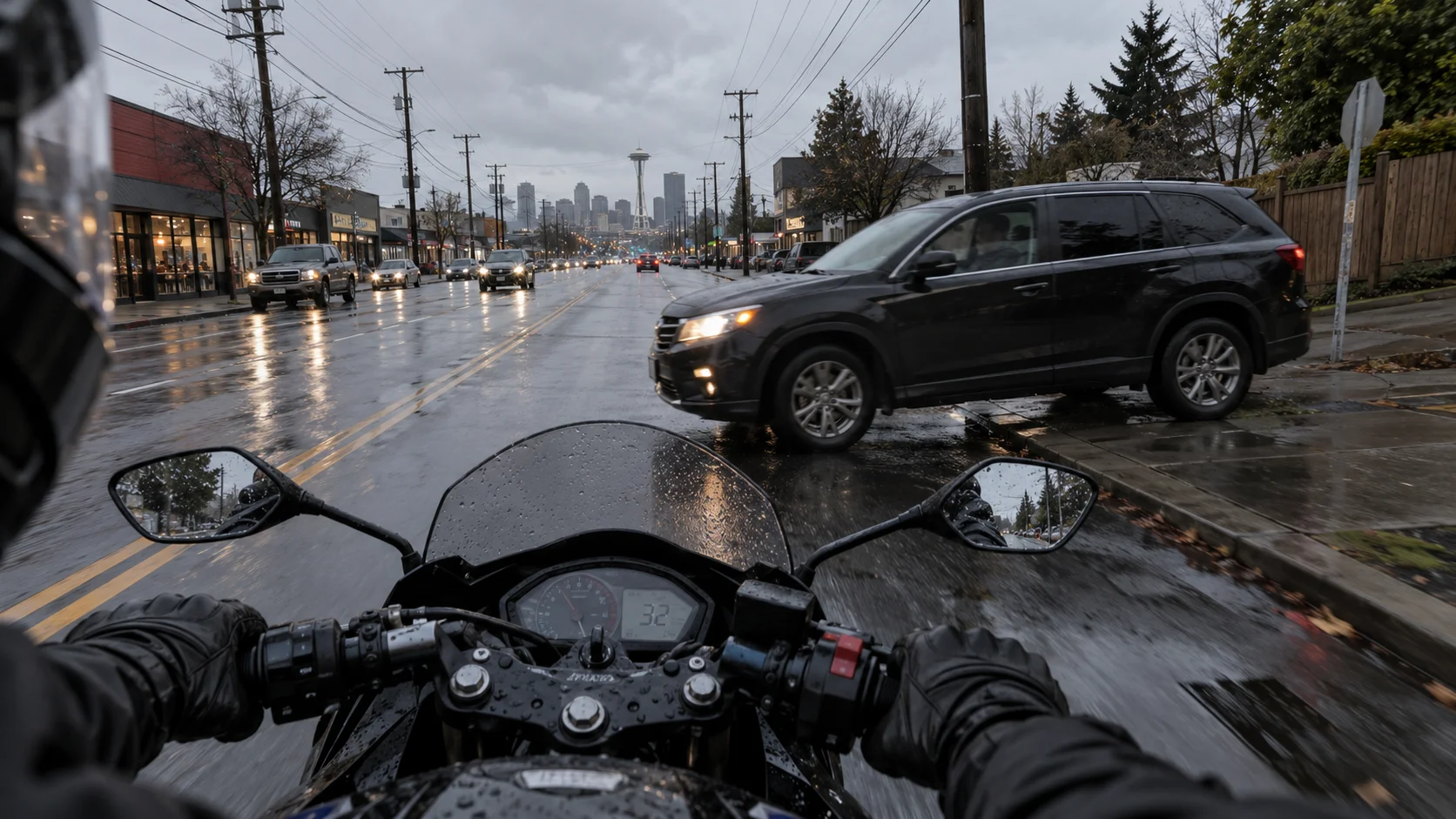
You're rolling through a Seattle intersection on a green light when a car coming the other way swings left across your lane. Or one pulls out from a side street on Aurora, straight into your path. You had barely a second to react. This is the left-turn crash, and if it put you on the pavement, one question comes first: who's at fault in a Seattle left turn motorcycle accident.
We handle these cases across the Seattle metro, and the pattern rarely changes. As Patrick DiBenedetto, partner at Metier Law Firm and a lifelong rider, puts it: "In these cases the driver usually says the same thing, that they never saw the motorcycle. That's an admission, not an excuse. Washington puts the duty to yield on the driver turning across your lane, and I hold them to it before the insurance company tries to flip the story onto the rider."
How a Left-Turn Crash Happens to Riders
Traffic engineers call this a left-turn-across-path collision, or LTAP: a driver heading toward you turns left across your lane, or a driver at a stop sign misjudges your speed and pulls out. Either way, a car crosses into space you're legally entitled to. It's one of the most common motorcycle crash types in Washington, and one of the most defensible when the evidence is preserved early.
The cause is motorcycle conspicuity. A bike is narrow, and a driver scanning for cars can look right at a rider and never register the motorcycle. The National Highway Traffic Safety Administration notes that most multi-vehicle motorcycle crashes happen because the other driver simply didn't see the motorcyclist. That looked-but-failed-to-see problem, shortened to SMIDSY, is what turns a routine left turn into a failure to yield motorcycle crash.
Who Is at Fault in a Seattle Left Turn Motorcycle Accident?
Fault comes down to the duty to yield, and in a turn or pull-out crash that duty sits with the other driver.
A driver turning left has to yield
Under RCW 46.61.185, a driver turning left at an intersection, alley, or driveway must yield to oncoming traffic close enough to be an immediate hazard. Your motorcycle is that traffic. When a driver turns across your lane and leaves you no room to stop, they broke that rule.
A driver pulling out has to yield too
When the car comes from a side street or stop sign, RCW 46.61.190 controls. A driver entering on a stop or yield sign must yield to traffic already in the intersection or approaching close enough to be an immediate hazard. Pull out and hit a rider, and the failure to yield is theirs. The statute goes further: a crash right after a driver rolls a yield sign is evidence the driver failed to yield.
The law treats you as the protected party
There's a newer point in riders' favor. Since January 1, 2025, Washington lists a motorcycle as a "vulnerable user of a public way" (RCW 46.61.5259). A driver who breaks these rules against a rider now faces an added fine on top of the base penalty. That fine is a traffic matter, not money in your pocket. The designation still carries weight, because Washington law now counts riders among the vulnerable users it moves to protect.
None of this shifts because the driver didn't see you. "I didn't see the motorcycle" explains how the crash happened. It doesn't move the duty to yield off the driver who turned.
How Insurers Try to Put the Blame on You
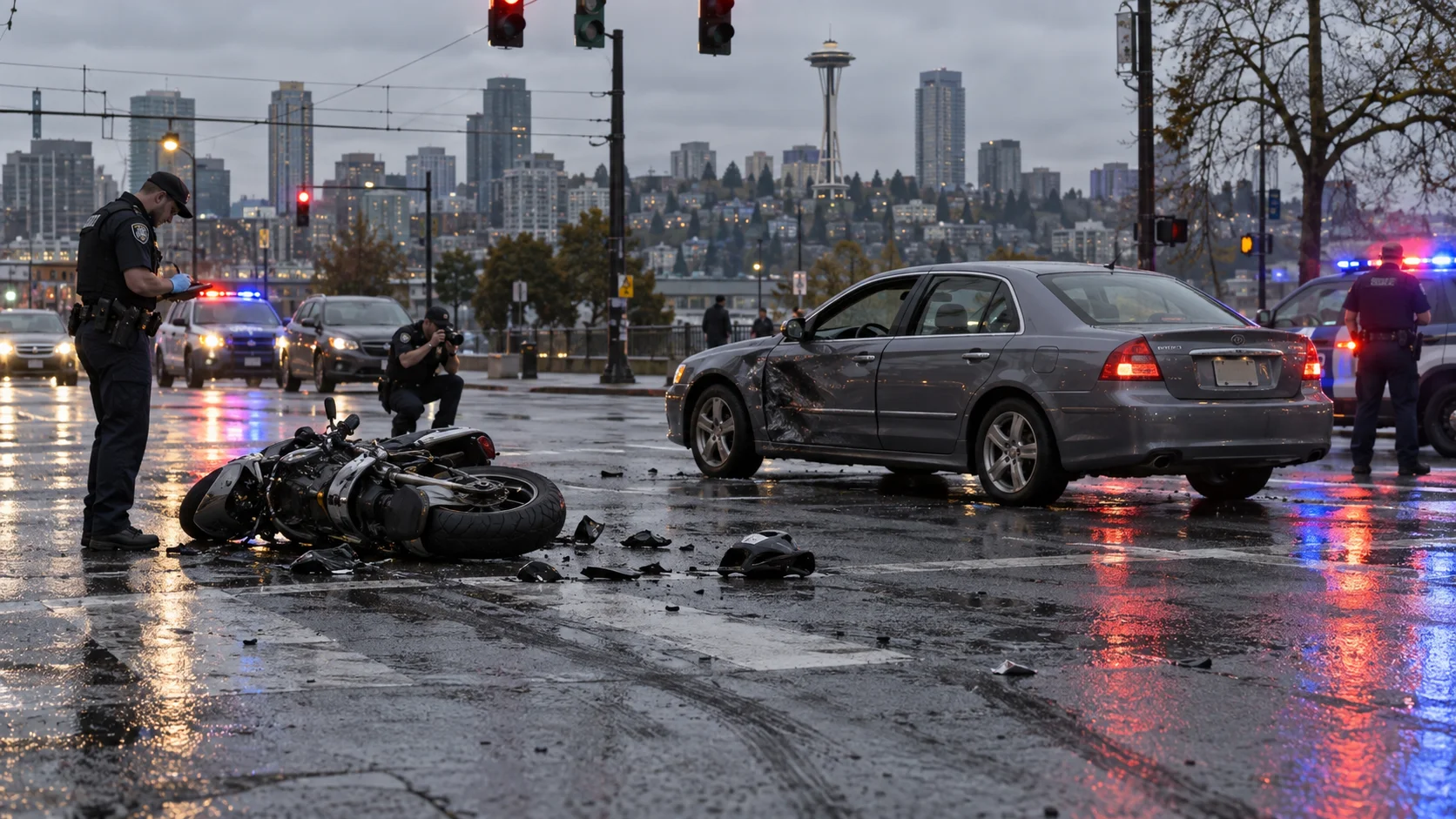
Once fault looks clear, the insurer looks for a way to share it with you. In a Seattle intersection motorcycle crash, that comes down to one of two claims: you were speeding, or you should have made yourself more visible.
The insurer is counting on you not knowing one thing. Washington uses pure comparative fault (RCW 4.22.005): your compensation drops by your share of the blame, but you're never barred from recovering, even if you're found mostly at fault. So when an adjuster tries to pin 30 percent on you for your speed, that percentage is worth fighting, because every point comes out of your recovery. Our post on Seattle riders' rights shows how these arguments play out.
If the driver who turned into you carries little or no coverage, your own uninsured or underinsured motorist policy may cover your bills. We explain that in our guide for riders hit by an uninsured or underinsured driver in Seattle.

Protect Your Claim After a Failure-to-Yield Crash
The blame-the-rider argument weakens the more you lock down early. A few things carry weight:
- Get the police report and note any fault the officer assigned at the scene.
- Collect names and numbers from anyone who saw the driver turn or pull out.
- Photograph the intersection, sightlines, and skid marks before they fade.
Don't give the other driver's insurer a recorded statement before you talk to a lawyer. You also have a filing deadline. Washington gives you three years from the crash to file (RCW 4.16.080), and intersection evidence disappears long before that runs out.
Frequently Asked Questions
Who is at fault in a Seattle left turn motorcycle accident?
Usually the driver who turned or pulled out. Washington puts the duty to yield on the driver turning left (RCW 46.61.185) and on the one entering from a stop or yield sign (RCW 46.61.190). If that driver crossed into your path, the fault is theirs, even when they say they never saw you.
What if the driver says they didn't see my motorcycle?
That isn't a defense. NHTSA notes that most multi-vehicle motorcycle crashes happen because a driver didn't see the rider, and the driver still had to yield. "I didn't see the motorcycle" describes the crash; it doesn't excuse it.
Can I still recover if the insurer says I was speeding?
Yes. Washington uses pure comparative fault (RCW 4.22.005), so your recovery is reduced by your share of fault but never barred. Even if an adjuster assigns you part of the blame, you can still recover, and that percentage is worth challenging.
How long do I have to file a Seattle left turn motorcycle accident claim?
Three years from the date of the crash (RCW 4.16.080). Intersection evidence fades quickly, so if you're searching for a motorcycle accident attorney near me, it's better to call early than to wait.
Do I need a lawyer for a failure-to-yield crash?
Not every minor collision does, but a failure to yield motorcycle crash with real injuries does, because insurers fight hardest over fault when the payout is large. A motorcycle accident lawyer near me search is a fine place to start, and our Seattle team handles these left-turn cases regularly.
The Turn Was Theirs to Yield
A left-turn or pull-out crash puts you down because another driver failed to yield, then hands the insurer a script: blame the rider. We've heard that script for decades, and we know how to take it apart. The statute put the duty on the driver who turned; the scene and the witnesses back it up. Our job is to make the record show it.

Disclaimer: Past results discussed should not be considered a guarantee of your results as the factors of every case are individually unique. This content is for informational purposes only and does not constitute legal advice. Consult a qualified attorney from Metier Law Firm regarding your individual situation for legal advice.
Tell Us About Your Case – Free Case Review with a Personal Injury Lawyer
(866) 377-3800Our Locations
.webp)
Do I have a Case?
How Much Should I Be Offered?
Do I Need an Attorney?
If these questions have crossed your mind, let us help. You may need a little direction or may not need an attorney at all, but you deserve to be confident knowing your options. We can provide you with information about our Attorneys of the West® accident investigations and legal services. Your confidential consultation with us is totally free.
Keep up with us!
