.svg)


TL;DR: Key Takeaways
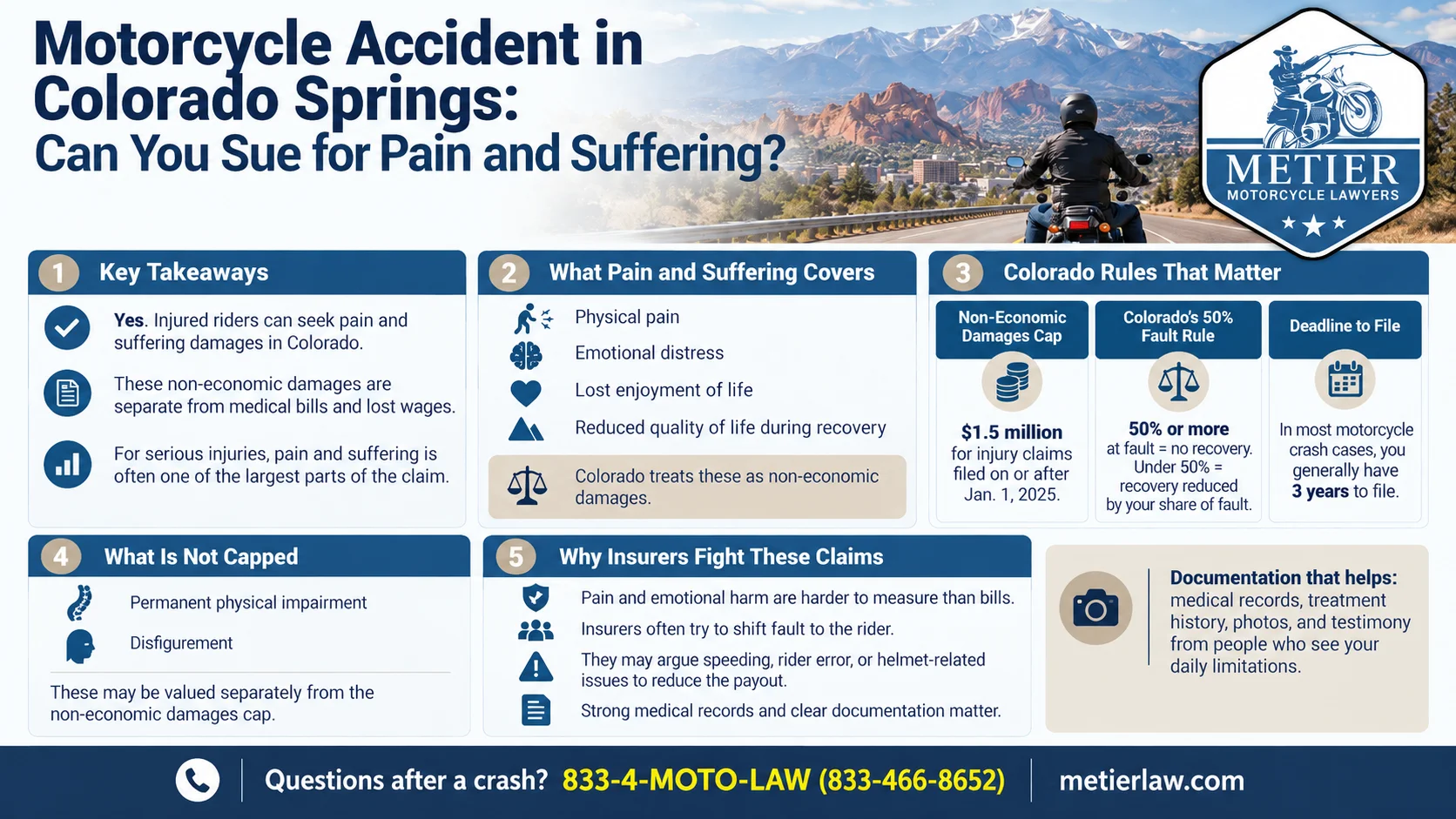
- Yes. A Colorado Springs rider can pursue pain and suffering, which the law treats as non-economic damages, separate from medical bills and lost wages.
- For a seriously hurt rider, that non-economic piece is often the largest part of the claim, and the part insurers fight hardest.
- Colorado caps non-economic damages at $1.5 million for injury claims filed on or after January 1, 2025. Permanent physical impairment and disfigurement are paid on top of that cap.
- Under Colorado's true 50% bar, you recover nothing if you're 50% or more at fault, so insurers push to move that number.
- You generally have three years from a motor vehicle crash to file in Colorado.
Every rider here knows the intersection where a driver turned across their path. El Paso County led the state with 26 fatal motorcycle crashes in 2024, more than any other county. The riders who walk away carry home what an X-ray never shows: pain, surgeries, sleepless nights, the ride they're now afraid to take. Colorado law lets you recover for that.
Patrick DiBenedetto, Partner at Metier Law Firm and a lifelong rider, puts it plainly: "The insurance company can measure a hospital bill to the penny. What they won't put an honest number on is what a rider lives with after a crash. That part of your claim is just as real, and it's where they shortchange you."
A Colorado Springs motorcycle accident pain and suffering claim is worth real money, even though no receipt ever proves it.z
What pain and suffering means in a Colorado Springs motorcycle claim
Pain and suffering is the physical pain, emotional distress, and lost quality of life a crash leaves behind. The law calls these non-economic damages: real harm with no receipt attached. So can you sue for pain and suffering after a motorcycle accident? Yes. It's a standard part of any injury claim against the at-fault driver.
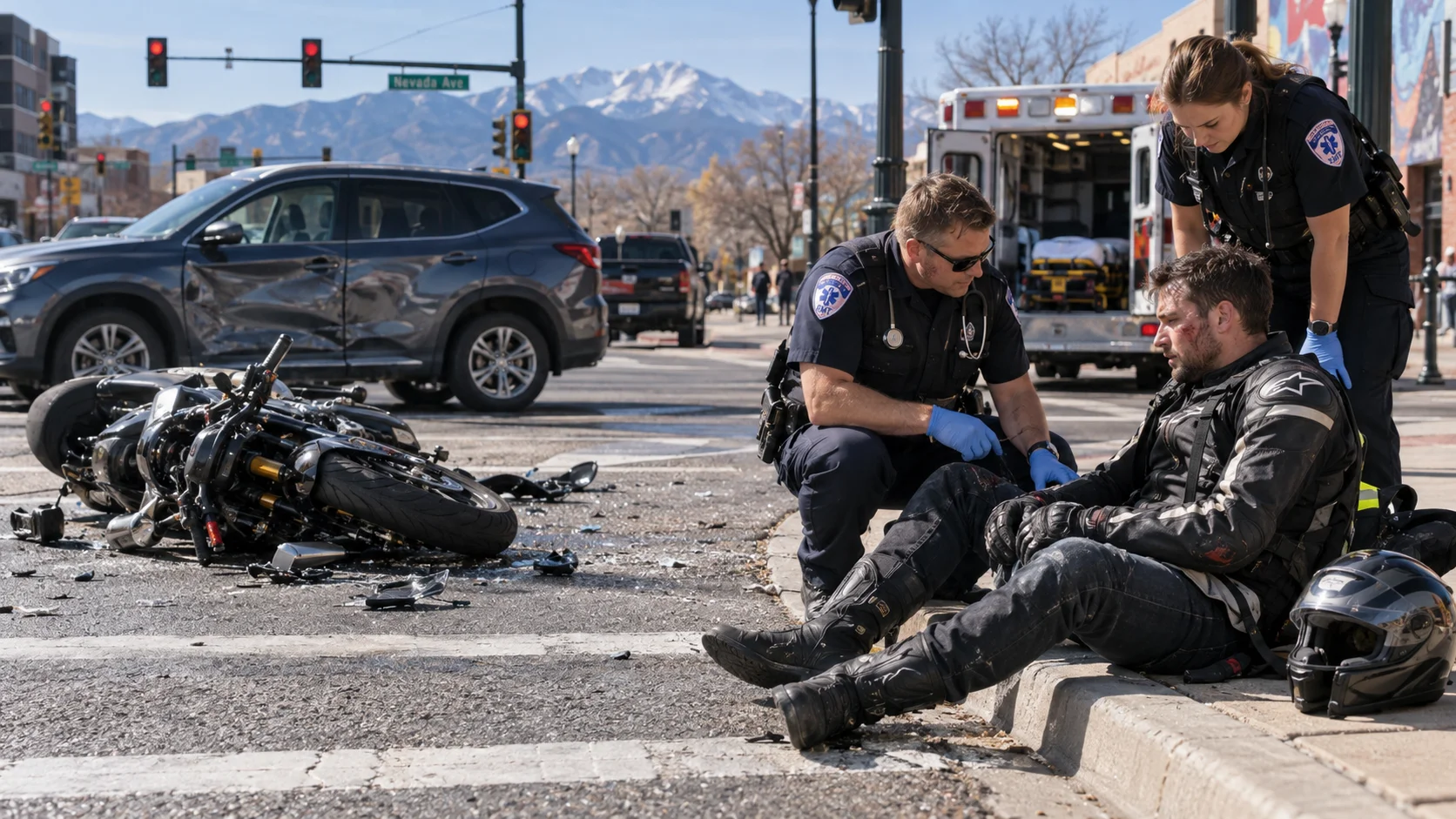
Riders feel it harder than most. A driver has a steel cage and airbags. You have a helmet and your gear. Motorcyclists were nearly a quarter of Colorado's traffic deaths in 2024 while being about 3% of registered vehicles. That exposure is why road rash, fractures, and head injuries hurt longer and heal harder, and why a rider's pain and suffering runs high.
Economic vs. non-economic damages after a crash
Every injury claim has two buckets. Economic damages are the losses you can document: medical bills, future care, lost wages, and the value of your bike. Non-economic damages cover pain, suffering, emotional distress, and lost enjoyment of life.
The split matters because insurers treat the two differently. A hospital bill is a fixed number, so they pay it. With economic vs. non-economic damages, the human cost is harder to price, and that's the part an adjuster discounts. In our experience, for a badly hurt rider it's often the biggest single piece.
How pain and suffering gets calculated
No state formula produces a number, but you'll hear about two approaches. The multiplier method multiplies your economic damages by a severity-based figure. Per diem instead sets a daily rate across your recovery. Neither is automatic, so treat any pain and suffering settlement figure as a starting point, not a promise.
The motorcycle injury settlement factors behind it are what matter: how severe and permanent the injury is, how long recovery takes, and whether you can work as before. How well all of that is documented can decide the number. A spinal or brain injury sits at one end, a two-week scrape at the other. The middle is where riders lose the most, because they're easy to understate on paper. For how the full claim comes together, see our breakdown of motorcycle accident settlement value in Colorado.
What Colorado's non-economic damages cap limits, and what it doesn't
Colorado's non-economic damages cap applies to pain and suffering. For injury claims filed on or after January 1, 2025, HB24-1472 set that cap at $1.5 million under C.R.S. § 13-21-102.5. That's the ceiling on pain, suffering, emotional distress, and lost enjoyment.
The same statute says the cap does not apply to permanent physical impairment or disfigurement. An amputation, a permanent limp, or the scarring from severe road rash is valued separately, on top of that cap. For a rider with a lasting injury, that distinction matters, and an adjuster won't point it out.
Why insurers undervalue a rider's pain and suffering
Non-economic damages are subjective, which makes them the easiest to attack. Adjusters suggest the rider must have been speeding. They point to a missing helmet to argue a head injury was self-inflicted. Above all, they try to pin fault on you. Colorado runs on a true 50% bar. Under C.R.S. § 13-21-111, you recover nothing at 50% or more fault, and any recovery below that drops by your percentage. Raising your fault number is the cheapest way for an insurer to shrink the check. We break that math down in our guide to Colorado's 50% rule and motorcycle claims. A low first offer is a negotiating position, not the true cost of the crash.

How long you have to act
Colorado gives you three years from a motor vehicle crash to file an injury claim under C.R.S. § 13-80-101. That's the outer deadline, not a suggestion. A fair number depends on whether you've reached maximum medical improvement or still have surgeries ahead, so settlement waits on your medical picture. Clear liability and a healed injury resolve faster; disputed fault takes longer. Evidence fades as the clock runs, so the sooner a Colorado Springs motorcycle accident attorney builds your case, the stronger it is.
Frequently Asked Questions
Can you sue for pain and suffering after a motorcycle accident in Colorado Springs?
Yes. Pain and suffering is a recognized category of non-economic damages in a Colorado injury claim. If another driver caused your crash, you can seek compensation for the physical pain, emotional toll, and lost quality of life on top of medical bills and lost wages.
How is pain and suffering calculated in a motorcycle settlement?
There's no fixed formula. Insurers and attorneys often use a multiplier tied to injury severity or a per-diem daily rate, but both are negotiated. What drives it is how serious and permanent the injury is, and how well it's documented.
Is there a cap on pain and suffering in Colorado?
Yes. Non-economic damages are capped at $1.5 million for injury claims filed on or after January 1, 2025. Compensation for permanent physical impairment or disfigurement is separate and isn't subject to that cap.
Does not wearing a helmet hurt my Colorado Springs claim?
It can, though it doesn't end it. Colorado only requires helmets for riders under 18 under C.R.S. § 42-4-1502. If you had a head injury while riding without one, an insurer may argue it made the injury worse to shift fault to you. Medical evidence can challenge that.
How much is a motorcycle accident claim worth in Colorado Springs?
There's no average. Value tracks your injuries, the fault picture, and the insurance available. The pain and suffering portion depends heavily on injury severity and documentation. A short consultation is the honest way to read your case.
Putting a Real Number on What You Live With
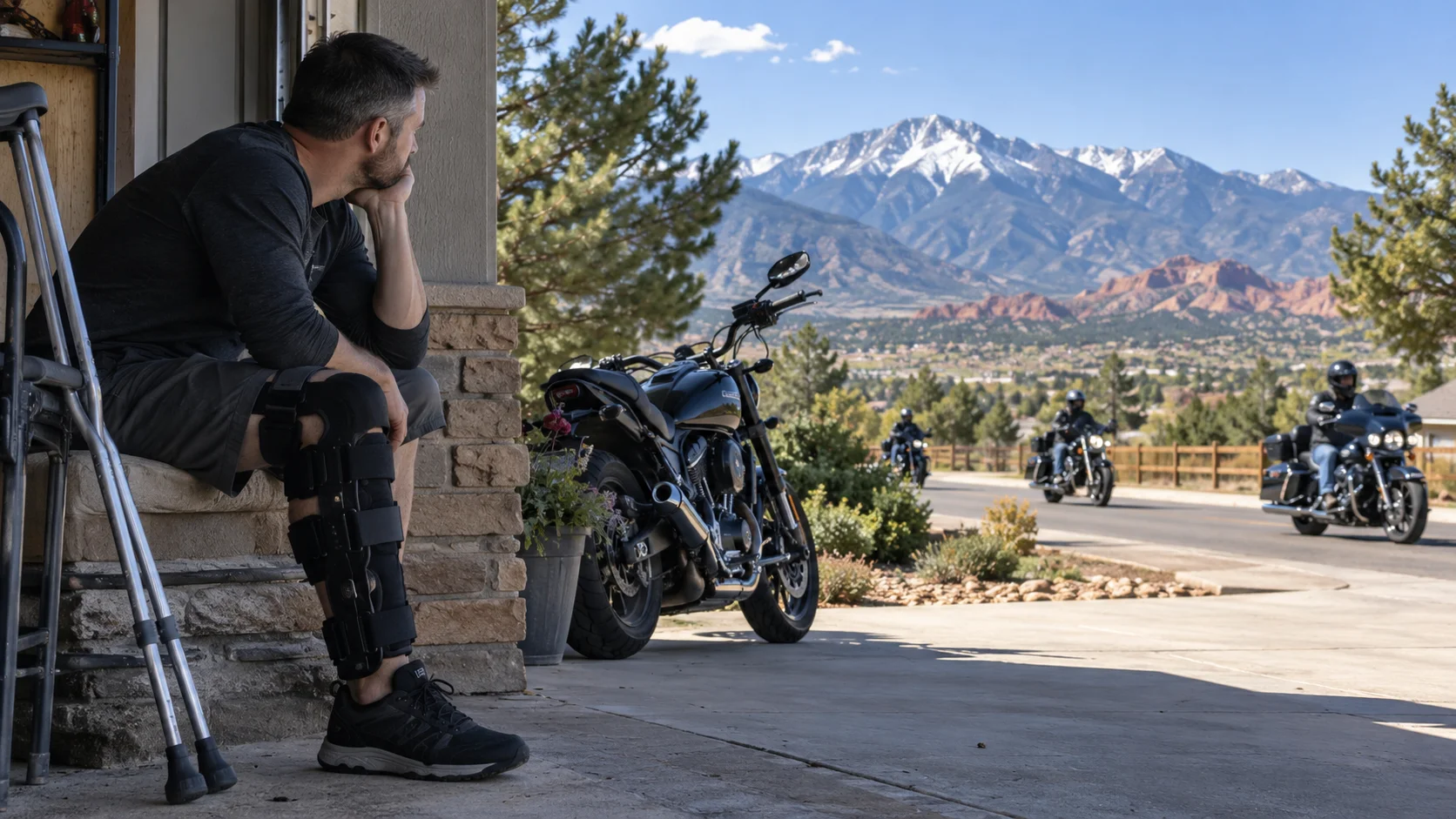
Insurers pay what's printed on a receipt without much fight. The pain, the fear, and the life you had before the crash are the parts they'd rather ignore, and the parts we build hardest. We document the human side with medical records, treating-physician input, and testimony from people who see you daily. Then we hold the line when the offer comes in low. Patrick rides, and he has spent his career making insurers account for what a serious injury costs. If you're staring at a low offer or want to know where you stand, a Colorado Springs motorcycle accident lawyer at Metier Law Firm will tell you straight, no obligation. Our Colorado Springs office is on South Tejon Street.

Disclaimer: Past results discussed should not be considered a guarantee of your results as the factors of every case are individually unique. This content is for informational purposes only and does not constitute legal advice. Consult a qualified attorney from Metier Law Firm regarding your individual situation for legal advice.
Tell Us About Your Case – Free Case Review with a Personal Injury Lawyer
(866) 377-3800Our Locations
.webp)
Do I have a Case?
How Much Should I Be Offered?
Do I Need an Attorney?
If these questions have crossed your mind, let us help. You may need a little direction or may not need an attorney at all, but you deserve to be confident knowing your options. We can provide you with information about our Attorneys of the West® accident investigations and legal services. Your confidential consultation with us is totally free.
Keep up with us!
