.svg)


Key Takeaways
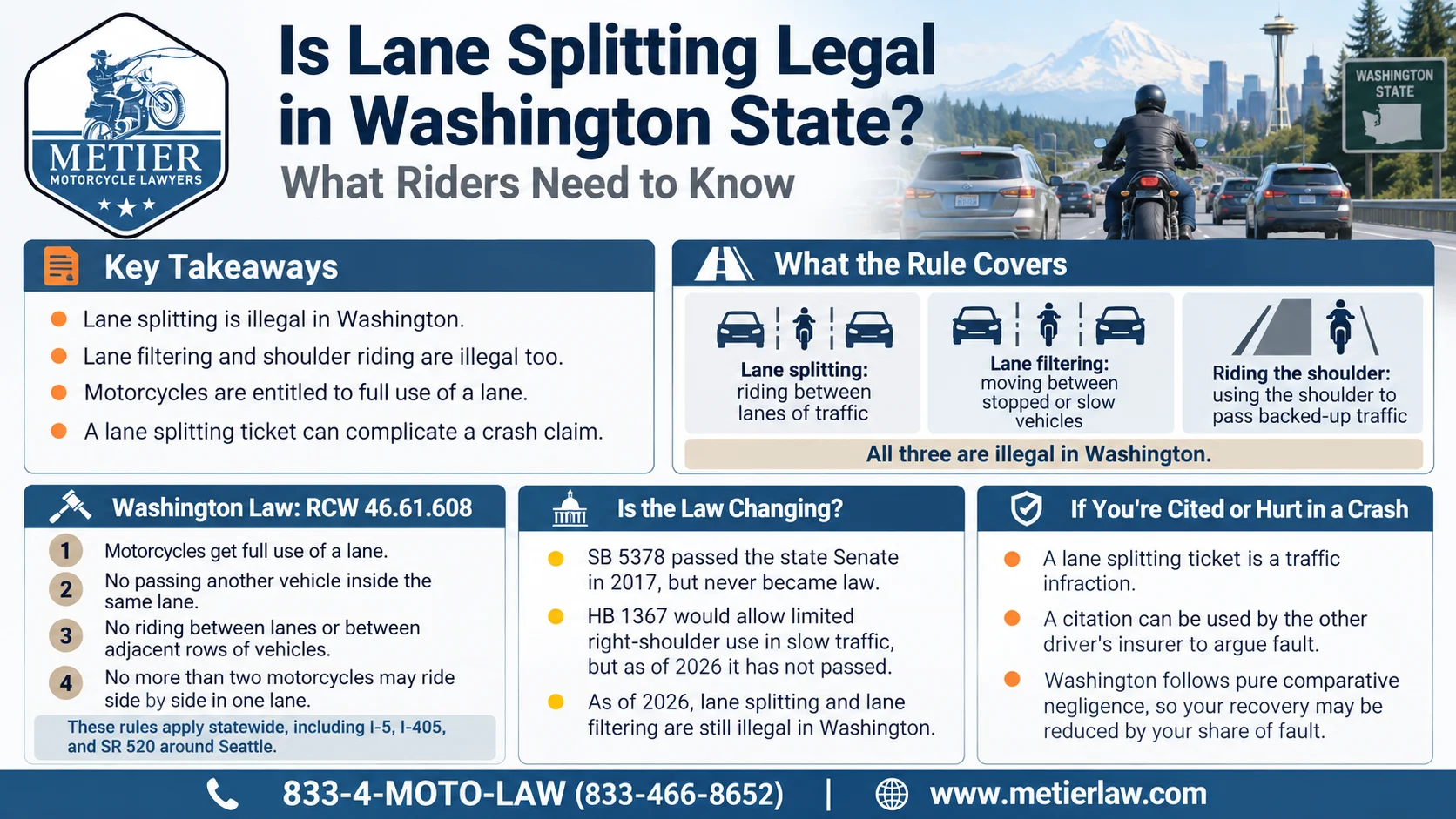
- Lane splitting in Washington is illegal. State law bars any motorcycle from operating between lanes or between adjacent rows of vehicles.
- Lane filtering and riding the shoulder are illegal here too, even when traffic is stopped or crawling.
- Bills to allow filtering or shoulder use have come up for years. One passed the state Senate in 2017, but none became law.
- Motorcycles are entitled to full use of a lane, and no driver may crowd a rider out of one.
- A lane splitting ticket is a traffic infraction, and getting cited can complicate a claim if you're hurt in a crash.
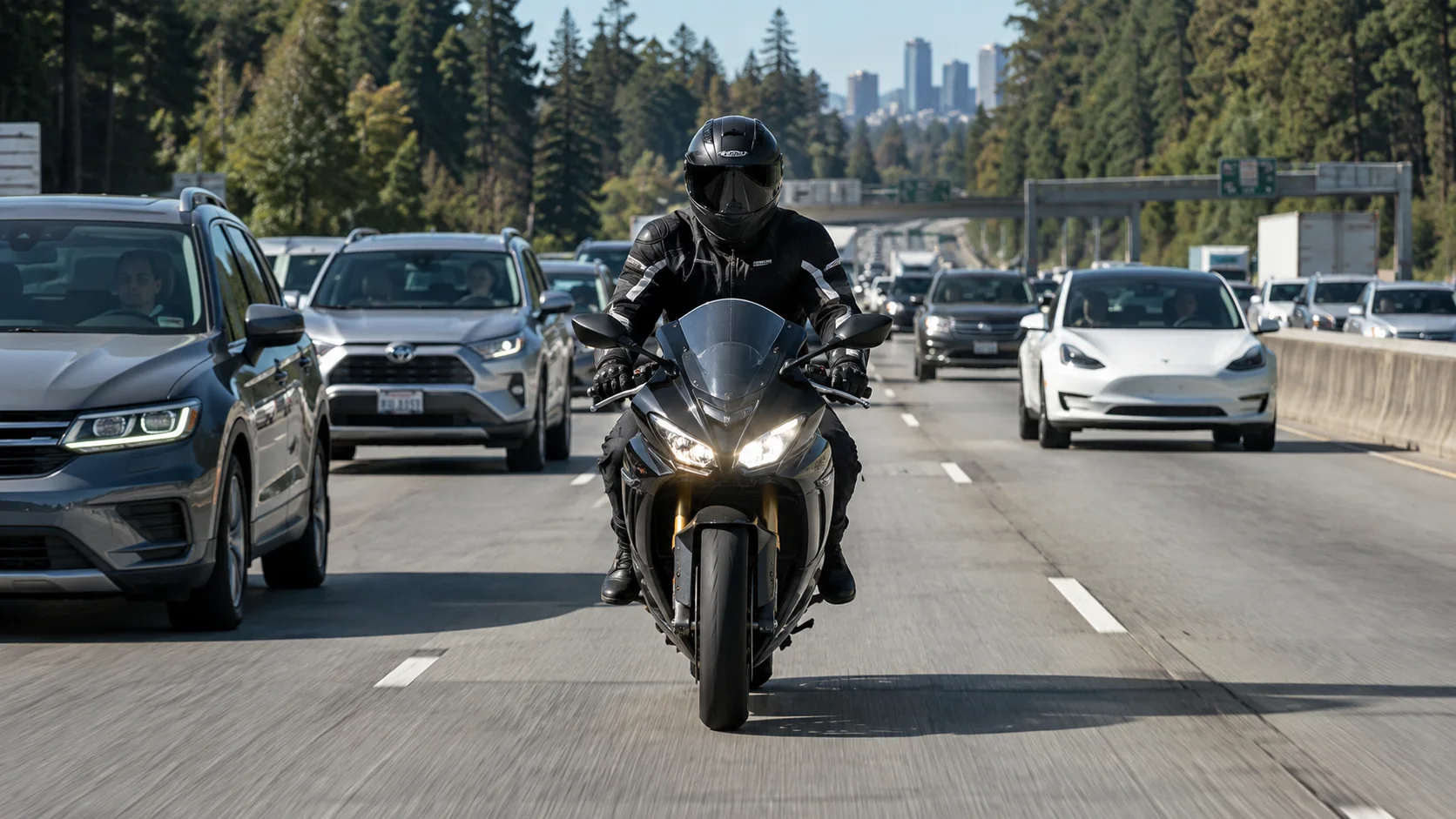
Picture a July afternoon on I-5 through Seattle. Traffic's dead stopped, engine heat soaking through your jeans, cars packed tight on both sides. A clean gap runs down the lane line, and just about every rider has thought the same thing: could I roll through it? The rules on lane splitting in Washington are clear, and they apply whether you're stuck downtown or sitting still on SR 520.
We hear this question all the time. As Patrick DiBenedetto, partner at Metier Law Firm, puts it: "I get the lane splitting question almost every week, usually from a rider who's been stuck in Seattle traffic or just got rear-ended sitting still. In Washington the answer hasn't changed. It's against the law here, and it doesn't matter how slow traffic is moving. I'd rather riders hear that from us than learn it from a ticket or a denied claim."
The short answer: lane splitting in Washington is illegal
Lane splitting in Washington is illegal under RCW 46.61.608, and subsection (3) reads: "No person shall operate a motorcycle between lanes of traffic or between adjacent lines or rows of vehicles."
That rule holds everywhere in the state, Seattle included, in any traffic condition. Bumper to bumper or wide open, riding the gap between vehicles breaks the law, and no speed makes lane splitting in Washington legal.
Lane splitting, lane filtering, and shoulder riding aren't the same thing
Riders and drivers mix these three up, and the difference matters.
Lane splitting
Riding between lanes of vehicles that are moving at speed, usually to get through slow highway traffic.
Lane filtering
Moving between stopped or slow vehicles, often up to a red light. Lane filtering in Washington is treated the same as splitting under the statute.
Riding the shoulder
Using the paved shoulder to slip past backed-up traffic instead of waiting in line.
All three are illegal right now. The gap between cars, the space up to the light, and the shoulder are all off limits, so lane splitting in Washington isn't a legal option.
What Washington law actually says (RCW 46.61.608)
It's worth walking through the statute, because Washington motorcycle laws give riders real protection in the same section that bans splitting.
Motorcycles get full use of a lane
Subsection (1) says every motorcycle is "entitled to full use of a lane," and no driver may operate in a way that deprives a rider of it. No car gets to squeeze you to the edge, because the whole lane is yours.
No passing inside the same lane
Passing another vehicle inside that same lane is barred by subsection (2), with a narrow carve-out for safely passing a pedestrian or bicyclist while leaving at least three feet of space.
No riding between lanes or rows
Subsection (3) is the provision that makes both splitting and filtering illegal. It's the language an officer or an insurer points to when lane splitting in Washington leads to a citation or a dispute over fault.
No more than two abreast
And under subsection (4), no more than two motorcycles may ride side by side in a single lane.
These rules apply on I-5, I-405, and SR 520 around Seattle, where splitting is most tempting. Motorcycle lane splitting stays off limits no matter how bad the backup gets.
Is lane splitting about to change in Washington?
This comes up a lot, and lawmakers have tried to loosen these rules for years. A filtering-style bill, SB 5378, passed the state Senate in 2017 but stalled in the House and never became law. More recently, HB 1367 would let motorcycles use the right shoulder in slow traffic. It got a committee hearing in early 2026 without passing either chamber.
As of 2026, lane splitting in Washington and lane filtering in Washington are both still illegal. A bill that's been introduced, or even one that cleared a committee, isn't a legal defense. You can track any active proposal through the Washington State Legislature bill search.
What happens if you're cited for lane splitting
The ticket
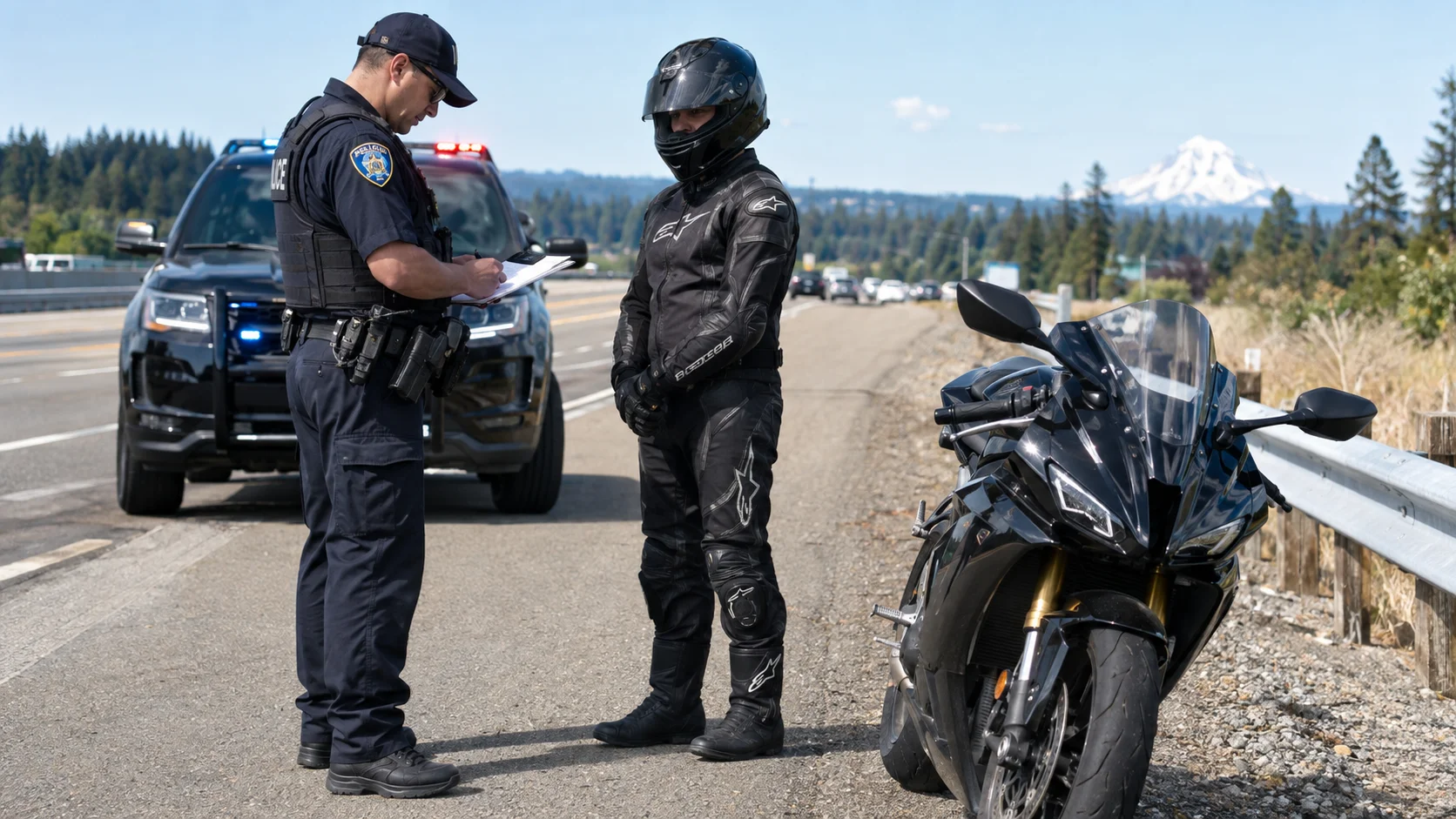
A lane splitting ticket in Washington is a traffic infraction, not a criminal charge. It carries a monetary penalty rather than jail time, and a citation for lane splitting in Washington goes on your driving record.
How a citation can affect a crash claim
This is more serious than a fine, because if you're splitting lanes when a collision happens, the other driver's insurer will argue you share the blame. Washington follows pure comparative negligence, so your recovery can be reduced by your share of fault, though you can still recover even when you were partly at fault. We break this down in our post on how Washington's pure comparative fault rule affects your claim. An illegal maneuver hands the insurer an argument, so talk to a lawyer before accepting any share of the fault.

Riding legally in Washington traffic
In a Seattle jam, the legal move is also the safer one, so hold your lane, stay out of blind spots, and leave yourself an escape gap if the car behind you doesn't stop. Splitting might save a few minutes, but lane splitting in Washington puts a ticket and a fault argument on the table if anything goes wrong. Our Seattle motorcycle accident team sees what happens when a rider's rights get ignored on these roads.
Frequently Asked Questions
Is lane splitting legal in Washington?
No. Under state law, a motorcycle can't operate between lanes or rows of vehicles anywhere in the state, and lane splitting in Washington is prohibited in Seattle, on the interstate, and in stop-and-go traffic.
Can motorcycles split lanes in Washington traffic?
No. Whether motorcycles can split lanes in Washington comes down to the statute, which prohibits the maneuver at any speed, so lane splitting in Washington isn't legal in slow traffic or at a dead stop.
Is lane filtering legal in Washington?
No, filtering between stopped or slow cars, even creeping up to a light, falls under the same ban as splitting, and no separate rule carves it out.
What's the penalty for lane splitting in Washington?
It's a traffic infraction rather than a criminal charge, and beyond the fine itself, a citation can be used against you if you're later hurt in a crash and the claim comes down to fault.
Is Washington going to legalize lane splitting?
Not yet. Bills have been introduced repeatedly, and one passed the Senate in 2017, but none has become law, so check the Washington State Legislature site for the status of any current proposal.
We Ride These Roads Too
We ride the same jammed stretches of I-5 and I-405 you do, so we get the pull of that open gap. The law is clear today: lane splitting in Washington is illegal, and the bills in the legislature haven't changed that. Knowing where you stand keeps a frustrating commute from becoming a ticket or a weakened claim. If a driver hurt you while you were riding legally, you've got rights worth protecting.

Disclaimer: Past results discussed should not be considered a guarantee of your results as the factors of every case are individually unique. This content is for informational purposes only and does not constitute legal advice. Consult a qualified attorney from Metier Law Firm regarding your individual situation for legal advice.

Tell Us About Your Case – Free Case Review with a Personal Injury Lawyer
(866) 377-3800Our Locations
.webp)
Do I have a Case?
How Much Should I Be Offered?
Do I Need an Attorney?
If these questions have crossed your mind, let us help. You may need a little direction or may not need an attorney at all, but you deserve to be confident knowing your options. We can provide you with information about our Attorneys of the West® accident investigations and legal services. Your confidential consultation with us is totally free.
Keep up with us!
