.svg)


TL;DR - Key Takeaways
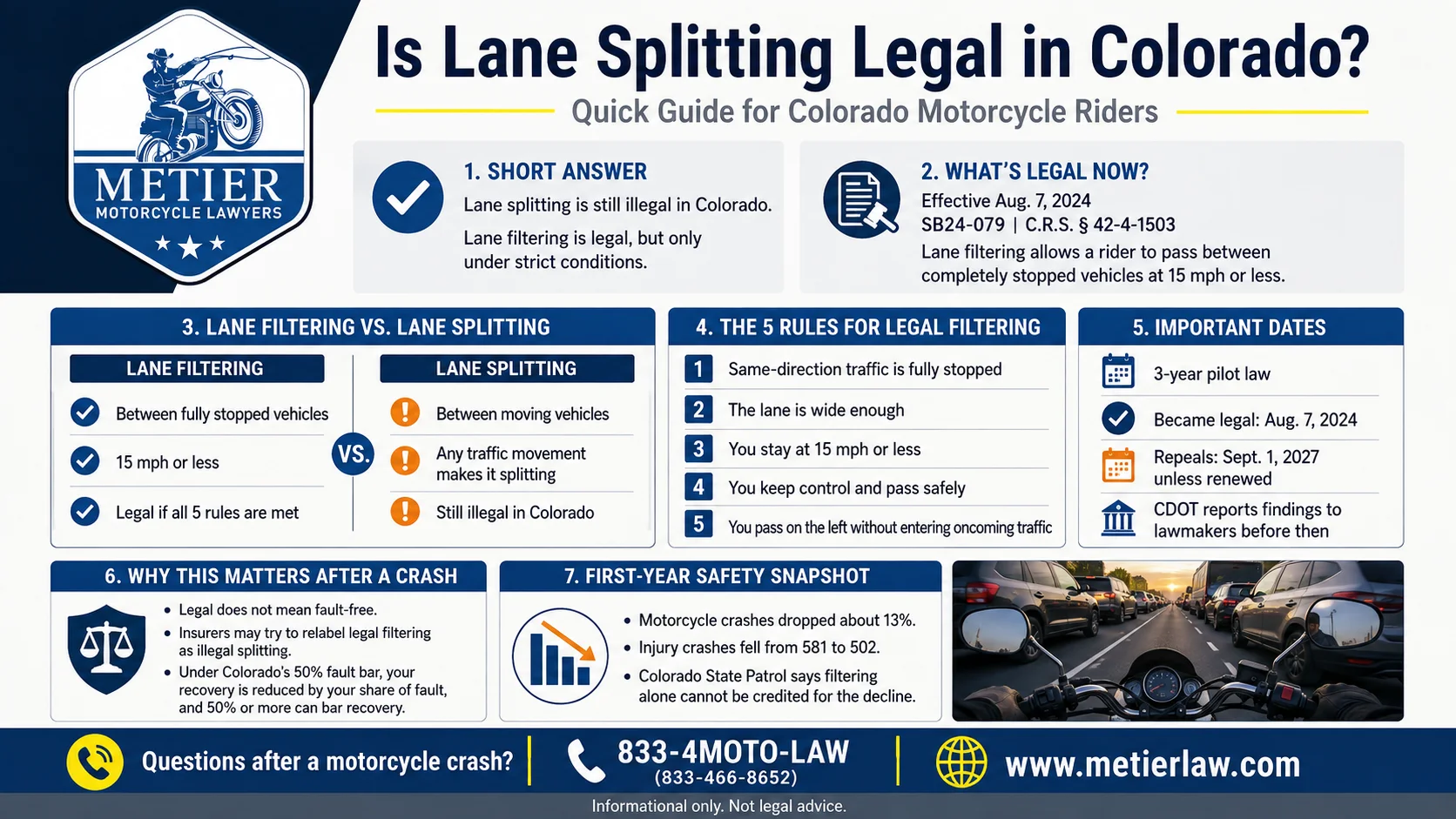
- Lane splitting, riding between lanes of moving traffic, is still illegal in Colorado. What has changed is lane filtering, which is now legal under strict conditions.
- Lane filtering became legal statewide on August 7, 2024 under SB24-079, now codified as C.R.S. § 42-4-1503. It lets you pass between completely stopped vehicles at 15 mph or less.
- Filtering is legal only when all five rules are met at once: surrounding same-direction traffic is fully stopped, the lane is wide enough, you stay at or under 15 mph, you keep control and pass safely, and you pass on the left without entering oncoming traffic.
- The law is a three-year pilot. It automatically repeals on September 1, 2027 unless lawmakers renew it, and CDOT reports its findings to the legislature before then.
- Legal filtering does not make you fault-free. Because your bike is the only vehicle moving, insurers often relabel a legal filter as illegal splitting to push fault onto you under Colorado's 50% bar.
In the first year after Colorado legalized lane filtering, crashes involving motorcycles dropped about 13%, and injury crashes fell from 581 to 502. The Colorado State Patrol is careful to say it can't credit filtering alone for that, but the first-year numbers moved down, not up. For riders, the shift matters, because the rules changed and plenty of people still ride like they didn't.
If you learned years ago that Colorado banned moving between cars, that is only half right today. "The biggest mistake I see is riders and drivers treating filtering and splitting like the same move," says Patrick DiBenedetto, Partner at Metier Law Firm and a motorcycle rider himself. "They aren't, and after a crash that one difference can decide whether an insurer respects your claim or tries to blame you for it."
Lane splitting in Colorado is still off-limits, but a related move, lane filtering, is now legal, and the gap between the two is where riders get tripped up after a crash.
Lane filtering and lane splitting are not the same thing
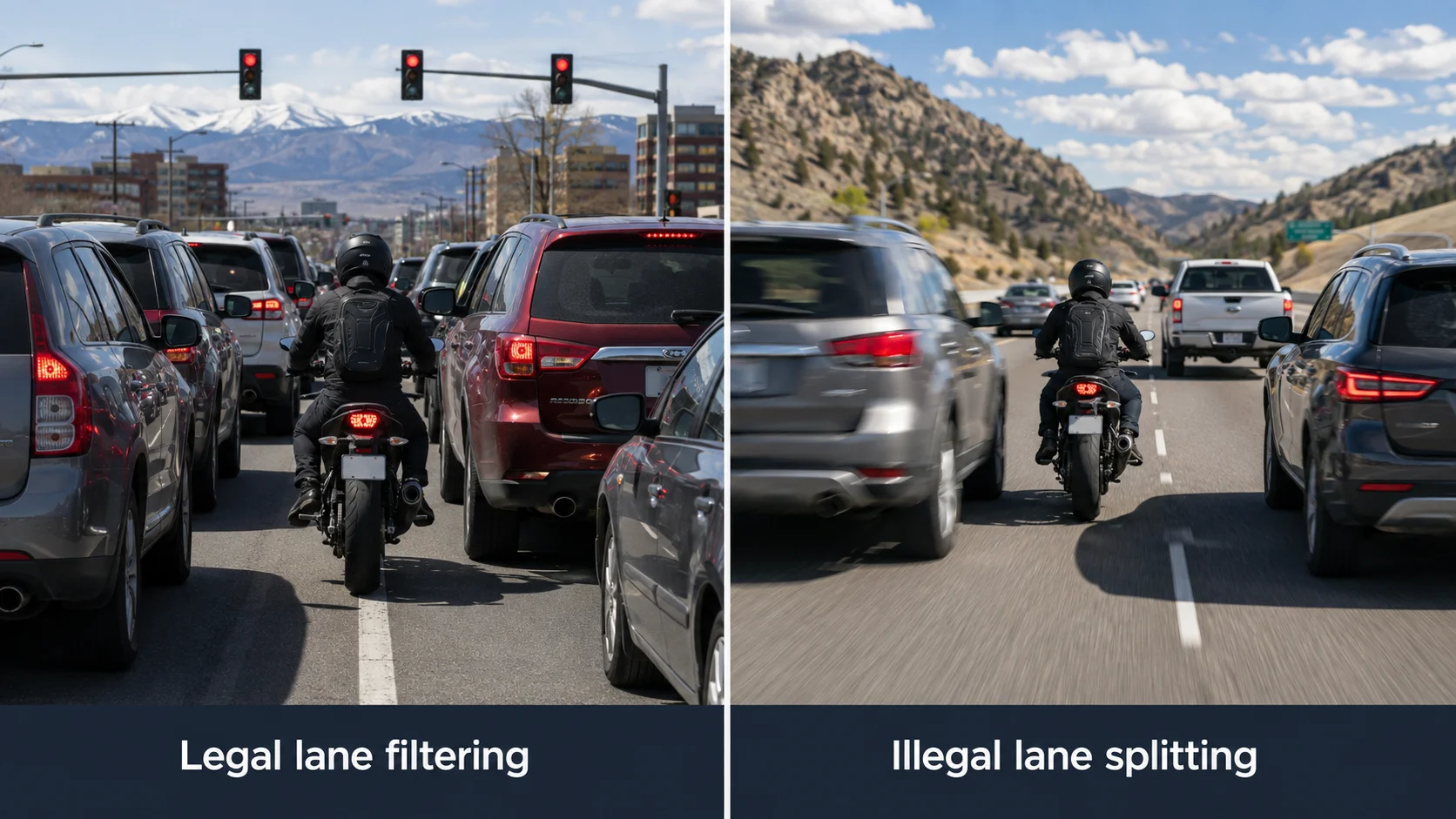
Lane filtering means easing between rows of stopped vehicles, usually at a light or in gridlock, so you reach the front instead of sitting boxed in. Lane splitting means riding between lanes of traffic that is still moving. That single distinction is what an insurer will focus on after a crash. Colorado legalized filtering. It did not legalize splitting.
The Colorado Department of Transportation draws that line at a full stop. If vehicles are rolling forward or crawling in congestion, the traffic is not stopped, and you are no longer filtering.
Is lane filtering legal in Colorado? The five rules
Yes. As of August 7, 2024, under SB24-079, now written into law as C.R.S. § 42-4-1503, lane filtering is legal across the state. But legal comes with conditions, and all five have to be true at the same time:
- Traffic in your lane and the adjacent same-direction lanes has to be at a complete stop.
- The lane has to be wide enough to fit both your motorcycle and the vehicle you are passing.
- You stay at 15 mph or less.
- You keep control and pass only when conditions let you do it safely.
- You pass on the left, and you do not cross into oncoming traffic.
Miss any one of those and you are outside the law, even when the other four are fine. One misconception trips up a lot of riders: that filtering only counts on roads with two lanes in each direction, or only below a set speed limit. The statute includes neither requirement. The Colorado State Patrol's conditions set no lane count and no speed-limit cap. What matters is that the traffic around you is fully stopped and you meet the five rules.
Lane splitting in Colorado is still against the law
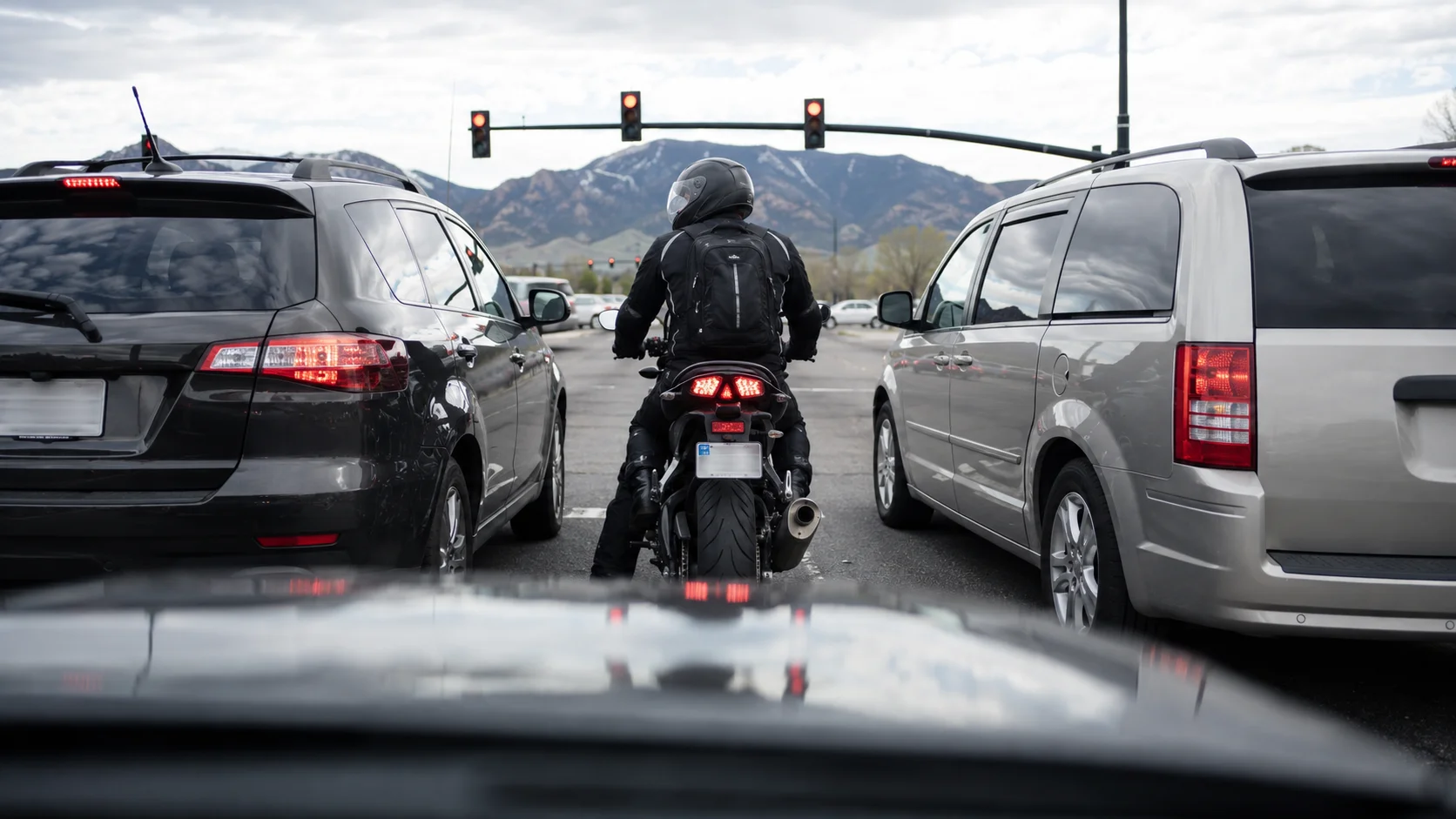
Lane splitting in Colorado remains illegal. If traffic is inching along at even a few miles an hour and you move between lanes, that is lane splitting, not lane filtering, and you can be cited for it. Colorado drew the line at fully stopped traffic on purpose. The point of the law is to cut down on rear-end collisions, which are one of the most common and dangerous ways riders get hurt at a stop. Holding filtering to stopped traffic at low speed is how the state tried to capture that safety benefit without the added risk of weaving through moving cars.
Colorado's filtering law expires in 2027
Colorado passed filtering as a three-year pilot. The authorization automatically repeals on September 1, 2027 unless lawmakers extend it. CDOT is tracking rear-end and sideswipe crash data and reports its findings to the legislature by early 2027, and that report will shape whether filtering stays. The rules you follow today could change, so confirm the current status before the pilot ends.
If you've been hurt in a motorcycle crash and need answers, call us at 833-4MOTO-LAW (833-466-8652) or schedule a free consultation at www.metierlaw.com.
Legal doesn't mean fault-free
Even when you filter exactly right, you are the only vehicle moving in that moment, and insurers know it. We have seen adjusters take a clean, legal filter and describe it as reckless lane splitting to shift blame onto the rider. Under Colorado's modified comparative fault rule, C.R.S. § 13-21-111, your recovery shrinks by your share of fault, and if they push you to 50% or more, you collect nothing. An adjuster who can relabel your filter as splitting has a direct financial reason to try.
That is why the evidence matters. Traffic camera footage, dashcam video, witness accounts, and the positions of the stopped vehicles all help prove you met the five rules. Our breakdown of how Colorado's 50% fault rule hits motorcycle claims walks through the math, and if your case is dragging, our look at what actually slows a Colorado motorcycle case covers the filing deadlines that apply.
Frequently Asked Questions
Is lane splitting legal in Colorado?
No. Lane splitting in Colorado, riding between lanes of moving traffic, is still illegal. Lane filtering, passing between fully stopped vehicles at 15 mph or less, has been legal statewide since August 7, 2024 under C.R.S. § 42-4-1503.
What is the difference between lane filtering and lane splitting?
Filtering happens only when the traffic around you is completely stopped, like at a red light. Splitting happens when that traffic is still moving. Colorado allows the first and prohibits the second.
How fast can I legally lane filter in Colorado?
15 mph or less, and only while the surrounding same-direction traffic is at a full stop. The moment cars start moving, you have to settle back into your lane position.
Can an insurer blame me for a crash if I was filtering legally?
They can try. Because your motorcycle is the only vehicle moving during a filter, adjusters often argue you were lane splitting or riding carelessly to raise your fault percentage under Colorado's 50% bar. Clear evidence that you met the five rules is how we answer that.
When does Colorado's lane filtering law expire?
The pilot automatically repeals on September 1, 2027 unless the legislature renews it. CDOT reports its crash findings to lawmakers before that date.
If a driver hits you while filtering legally
Filtering finally gave Colorado riders a way to get out from between two bumpers at a red light, but it comes with a narrow set of rules that insurers are still learning to argue. If you filtered by the book and a driver hit you anyway, you should not lose money because an adjuster blurred the line between filtering and splitting. We ride these roads ourselves, and we know how insurers build a fault argument against a rider. Call Metier Motorcycle Lawyers at 833-4MOTO-LAW (833-466-8652) or schedule your free consultation today at www.metierlaw.com.
Disclaimer: Past results discussed should not be considered a guarantee of your results as the factors of every case are individually unique. This content is for informational purposes only and does not constitute legal advice. Consult a qualified attorney from Metier Law Firm regarding your individual situation for legal advice.
Tell Us About Your Case – Free Case Review with a Personal Injury Lawyer
(866) 377-3800Our Locations
.webp)
Do I have a Case?
How Much Should I Be Offered?
Do I Need an Attorney?
If these questions have crossed your mind, let us help. You may need a little direction or may not need an attorney at all, but you deserve to be confident knowing your options. We can provide you with information about our Attorneys of the West® accident investigations and legal services. Your confidential consultation with us is totally free.
Keep up with us!
