.svg)


TL;DR - Key Takeaways
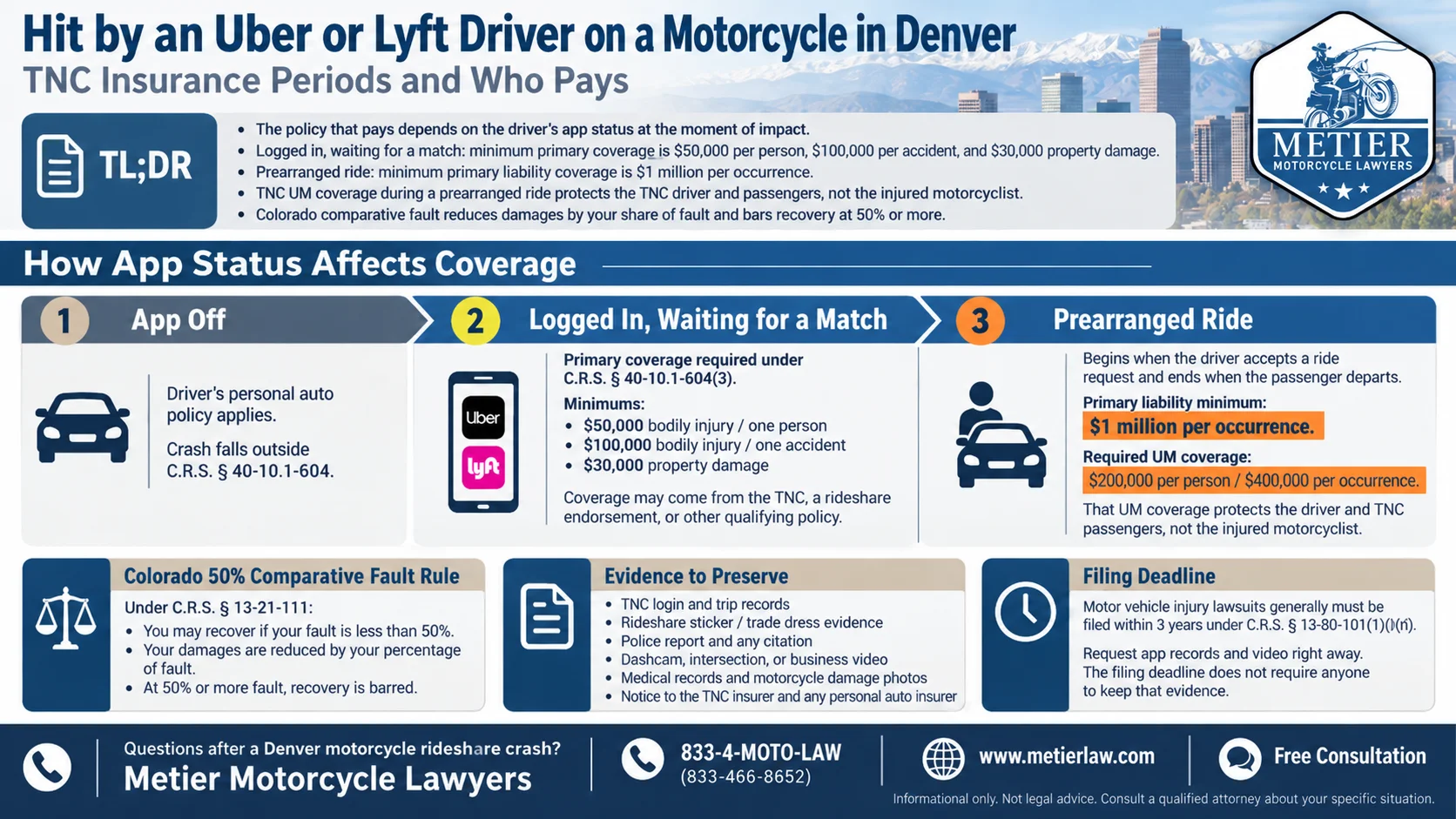
- When a rideshare driver hits a motorcyclist in Denver, the policy that pays depends on whether the driver's app was on and whether a prearranged ride had started.
- Under C.R.S. § 40-10.1-604, while the driver is logged into a transportation network company (TNC) digital network but not on a prearranged ride, primary liability coverage must meet at least $50,000 per person, $100,000 per accident, and $30,000 for property damage.
- During a prearranged ride, primary liability coverage must be at least $1 million per occurrence. The TNC must also secure uninsured-motorist coverage of at least $200,000 per person and $400,000 per occurrence, which protects only the TNC driver and passengers.
- A "prearranged ride" begins when the driver accepts a requested ride through the digital network, continues while the passenger is transported, and ends when the passenger departs, under C.R.S. § 40-10.1-602.
- Colorado's comparative fault statute, C.R.S. § 13-21-111, reduces a rider's damages by the rider's percentage of fault and bars recovery at 50% or more.
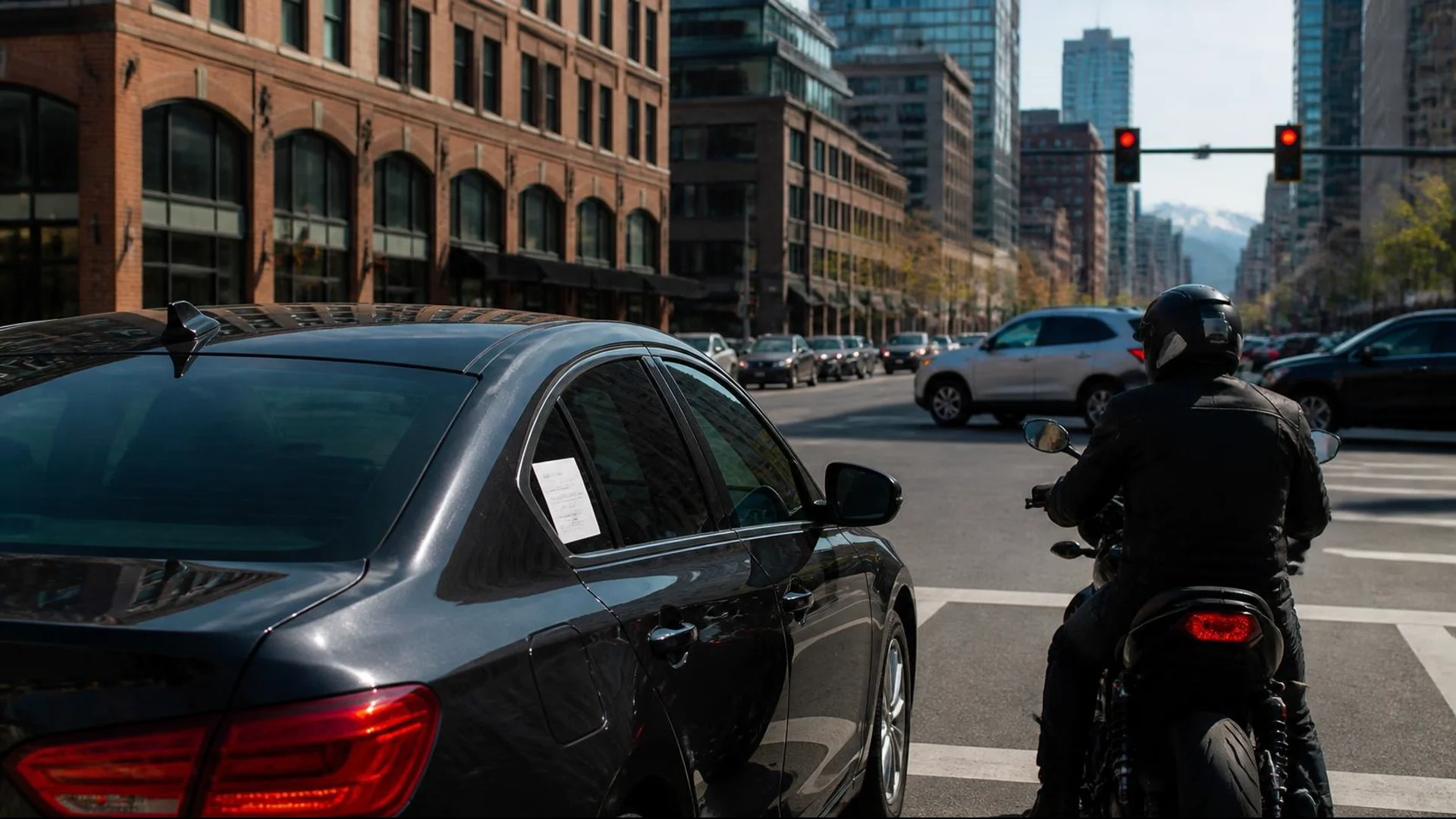
You're on a Denver street when a car with an Uber or Lyft sticker cuts across your lane or pulls out without seeing you. The first insurance question is whose policy pays. The answer turns on the driver's app status at the moment of impact.
In Denver motorcycle Uber accident claims at Metier Motorcycle Lawyers, we treat the app timeline as evidence from the first day. The Colorado Public Utilities Commission lists Uber and Lyft as examples of transportation network companies (TNCs). State law sets insurance minimums specifically for TNC drivers. "Colorado ties the higher TNC limits to a prearranged ride," says Patrick DiBenedetto, Partner at Metier Law Firm and a rider himself. "If the driver was logged in and waiting for a match, the minimum drops to $50,000 per person. The driver's personal auto policy doesn't have to cover any of that logged-in time."
How Colorado Defines a Prearranged Ride
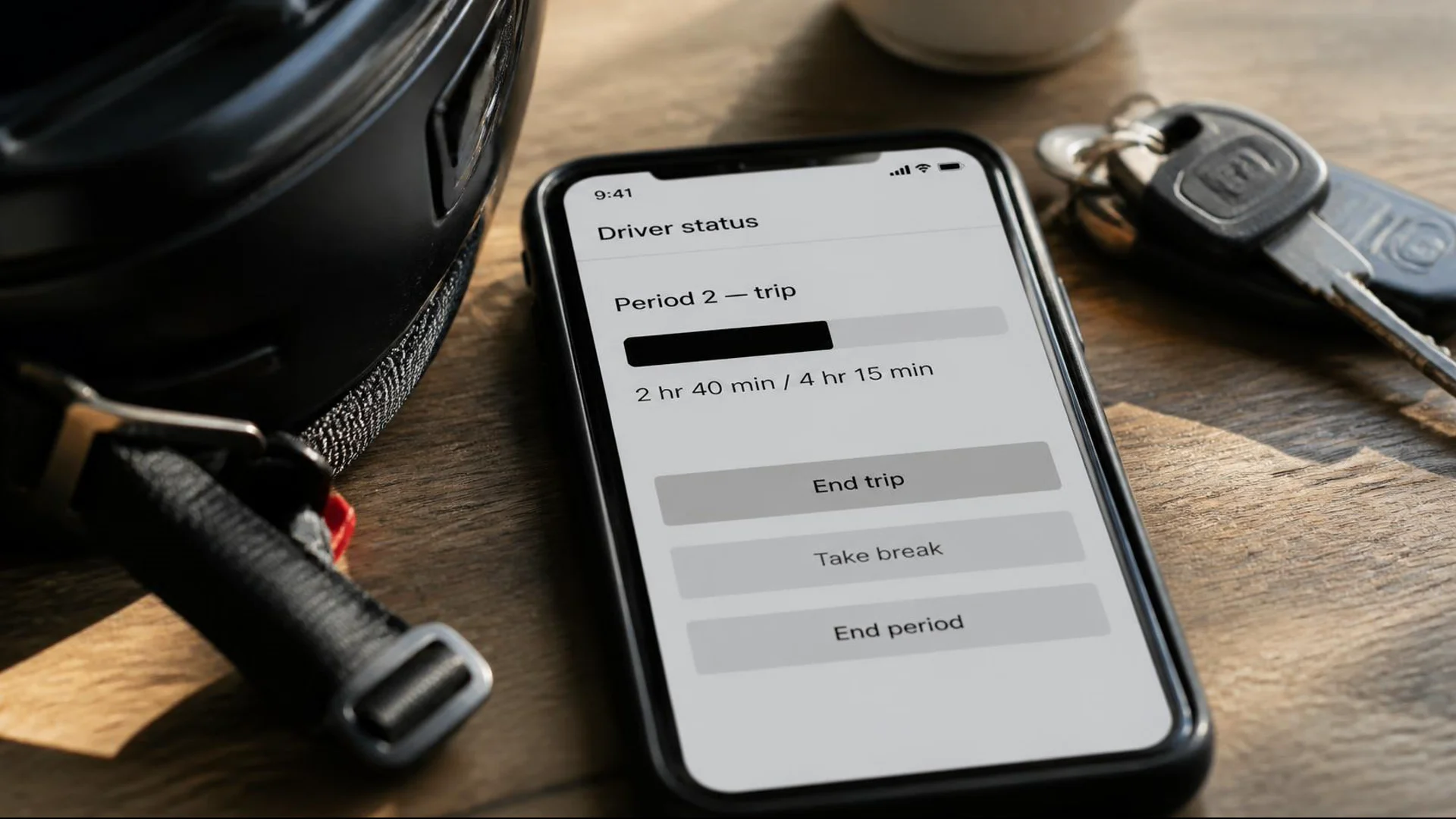
C.R.S. § 40-10.1-602 defines a prearranged ride as the period that begins when a driver accepts a requested ride through a digital network. It continues while the driver transports the passenger in a personal vehicle and ends when the passenger departs. That puts the drive to the pickup inside the ride period, along with the trip itself.
The adjusters we deal with on these claims talk about three periods: app off, app on while waiting for a match, and trip accepted through drop-off. Colorado's statute uses two TNC coverage tiers: one for time logged into the network without a prearranged ride, and a higher one for time on a prearranged ride. A crash with the app off falls outside § 40-10.1-604 and goes to the driver's personal auto policy.
TNC Insurance Limits While the App Is On
Logged In, Waiting for a Match
Under C.R.S. § 40-10.1-604(3), a driver logged into a TNC network but not on a prearranged ride must have primary auto coverage that recognizes the driver as a TNC driver and covers TNC services while logged in. Either the driver or the TNC can buy it. It must provide at least $50,000 for injury to one person, $100,000 for all persons in one accident, and $30,000 for property damage.
The statute allows three kinds of policy. It can be a TNC corporate policy, a TNC endorsement on the driver's personal auto policy, or full-time coverage similar to what Public Utilities Commission rules require under § 40-10.1-107(1).
Trip Accepted Through Drop-Off
During a prearranged ride, C.R.S. § 40-10.1-604(2) requires primary liability coverage of at least $1 million per occurrence. Since August 10, 2022, subsection (2.5), added by HB22-1089, also requires uninsured-motorist (UM) coverage of at least $200,000 per person and $400,000 per occurrence. The required UM coverage protects the driver and TNC passengers in the vehicle, not a motorcyclist the rideshare driver hits. Your injury claim is made against the $1 million liability coverage.
Personal Policies and Competing Coverage
Subsection (5) says a personal auto policy doesn't have to cover time logged into a TNC network. Whether the driver's personal policy pays for a logged-in crash depends on its own terms. We check that language and the driver's app status at the start of the claim.
If more than one policy provides valid and collectible coverage, subsection (6) divides responsibility for the claim equally among those policies. Only a written agreement among the insurers and the policy owners can change that split. Subsection (7) requires the TNC to give the dates and times of a logged-in incident to an insurer that also covers the driver's vehicle.
Fault Still Matters Under Colorado's 50% Rule
Once you know which policy applies, fault decides whether you recover and how much. Under C.R.S. § 13-21-111, your own negligence doesn't bar recovery if it was "not as great as" the negligence of the person you sue. At 50% or more fault, recovery is barred. Below that line, damages drop by your share.
In our rideshare cases, adjusters still raise the rider's speed, lane position, and visibility. Our post on Denver comparative fault motorcycle claims covers that math.
If you've been hurt in a motorcycle crash and need answers, call us at 833-4-MOTO-LAW (833-466-8652) or schedule a free consultation at www.metierlaw.com.
Evidence to Preserve After a Denver Motorcycle Uber Accident
After a crash with an Uber or Lyft driver, we work to secure:
- TNC trip or login records showing when the app was on and when a ride was accepted
- Screenshots or witness accounts of the rideshare sticker or trade dress
- The police report and any citation issued to the driver
- Dashcam, intersection, or business video
- Medical records and motorcycle damage photos
- Prompt notice to the TNC insurer and any personal auto insurer that may apply
If a carrier stalls after the coverage period is established, our guide on what to do when the insurer delays or denies a Denver motorcycle injury claim explains next steps. A lawsuit for bodily injury from the use or operation of a motor vehicle must be filed within three years under C.R.S. § 13-80-101(1)(n)(I). Those three years run from the date the cause of action accrues. Nothing in that deadline protects app data or video, so we send written preservation requests right away.
Frequently Asked Questions
Whose insurance pays if an Uber or Lyft driver hits my motorcycle in Denver?
It depends on the driver's app status under C.R.S. § 40-10.1-604. With the app off, the driver's personal auto policy applies. While logged in but not on a prearranged ride, primary coverage must meet the $50,000 / $100,000 / $30,000 minimums. During a prearranged ride, primary liability coverage must be at least $1 million per occurrence.
What is a prearranged ride under Colorado TNC law?
C.R.S. § 40-10.1-602 says it starts when the driver accepts a requested ride through the digital network and continues while the driver transports the passenger. The ride ends when the passenger leaves the vehicle.
Does the driver's personal auto policy cover a rideshare crash?
Not always. C.R.S. § 40-10.1-604(5) doesn't require a personal policy to cover time logged into a TNC network. Whether it pays depends on the policy's own terms. If it excludes that time, the claim goes to the TNC-required policy for whichever tier applies.
Can I still recover if the insurer says I was partly at fault?
Yes, if your fault is less than 50% under C.R.S. § 13-21-111. Your award is reduced by your percentage. At 50% or more, you recover nothing.
How long do I have to file after a Denver motorcycle rideshare crash?
After a Denver motorcycle Uber accident, you have three years to file an injury lawsuit under C.R.S. § 13-80-101(1)(n)(I). Request TNC records and scene video right away. The filing deadline doesn't require anyone to keep them.
When the App Status Decides Who Pays
A Denver motorcycle Uber accident is both a fault case and a coverage-period case. Colorado sets one minimum for logged-in time and a higher one for a prearranged ride. The driver's personal policy doesn't have to cover either. Our Denver motorcycle accident lawyer team at Metier Law Firm can map the app timeline and the available policies before you give a recorded statement or accept an early settlement offer.
Call Metier Motorcycle Lawyers at 833-4-MOTO-LAW (833-466-8652) or schedule your free consultation today at www.metierlaw.com.
Disclaimer: Past results discussed should not be considered a guarantee of your results as the factors of every case are individually unique. This content is for informational purposes only and does not constitute legal advice. Consult a qualified attorney from Metier Law Firm regarding your individual situation for legal advice.
Related Blog Posts
Tell Us About Your Case – Free Case Review with a Personal Injury Lawyer
(866) 377-3800Our Locations
.webp)
Do I have a Case?
How Much Should I Be Offered?
Do I Need an Attorney?
If these questions have crossed your mind, let us help. You may need a little direction or may not need an attorney at all, but you deserve to be confident knowing your options. We can provide you with information about our Attorneys of the West® accident investigations and legal services. Your confidential consultation with us is totally free.
Keep up with us!
