.svg)


TL;DR - Key Takeaways
- With no cage around you, the common injuries in a Colorado crash run from road rash and broken bones to head, spinal, and internal injuries.
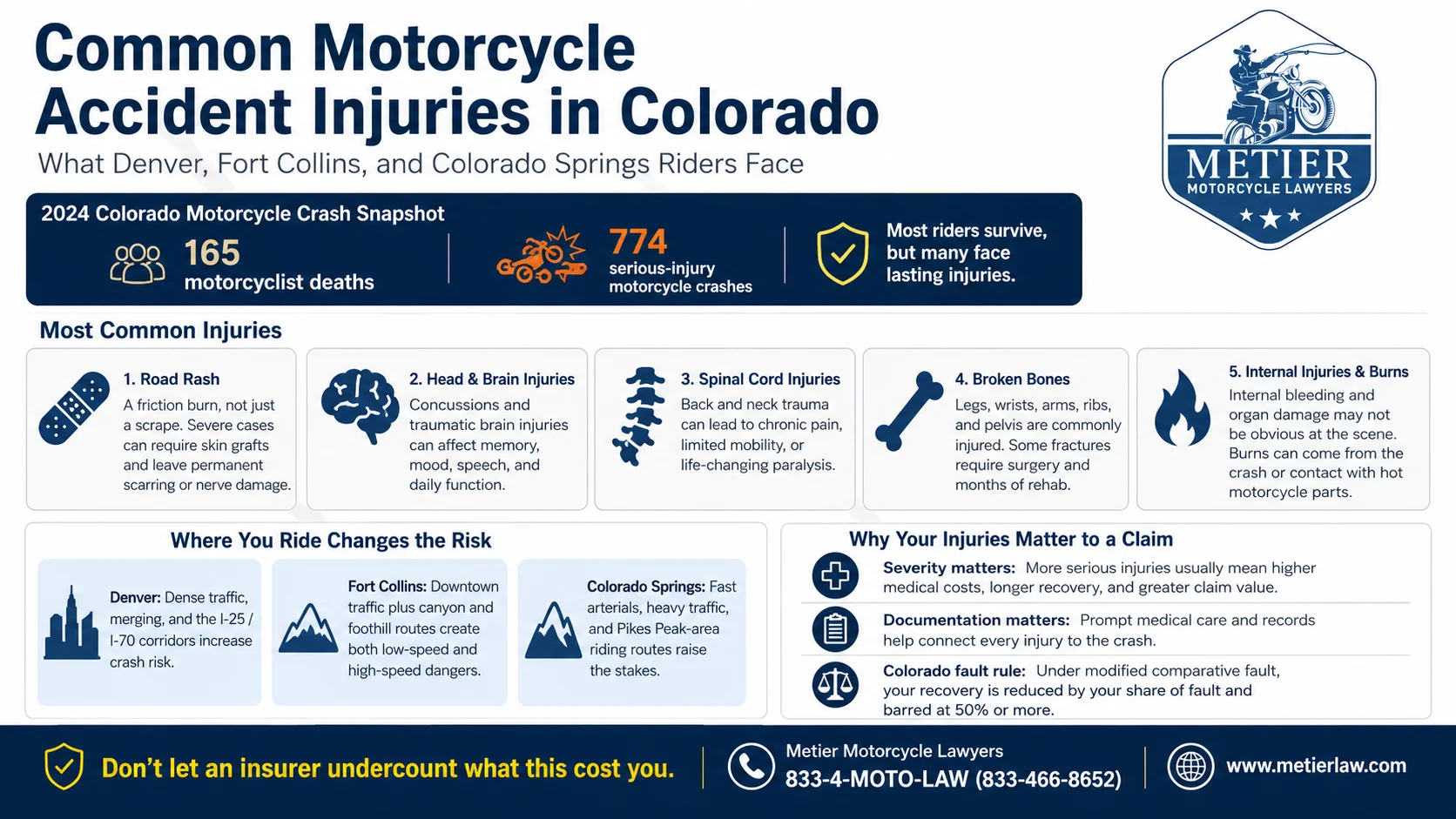
- Colorado recorded 165 motorcyclist deaths in 2024, a record, plus 774 serious-injury motorcycle crashes. Most riders survive, often with injuries that reshape their lives.
- Road rash is a friction burn, not a scrape. A deep case can strip skin to the muscle and need skin grafts.
- The law is the same in Denver, Fort Collins, and Colorado Springs, but the crash picture differs by market.
- How badly you're hurt, and how well it's documented, drives what your claim is worth under Colorado's comparative fault rule.
Colorado lost 165 motorcyclists in 2024, the most the state has ever recorded. Behind that figure sits a larger one that gets less attention: motorcycles were involved in 774 serious-injury crashes that year, according to the Colorado Department of Transportation. Most riders live through a crash. What they carry afterward is the part that lasts.
"On a bike, there's nothing between you and the road, so the injuries run deeper than people expect," says Patrick DiBenedetto, Partner at Metier Law Firm and a rider himself. "We've watched insurers treat serious road rash or a shattered leg like a minor claim. Part of our job is putting the real medical picture on the table."
The most common motorcycle accident injuries in Colorado are predictable, and knowing which ones you're facing tells you what to watch for medically and what an insurer will try to minimize.
Road rash is a burn, not a scrape
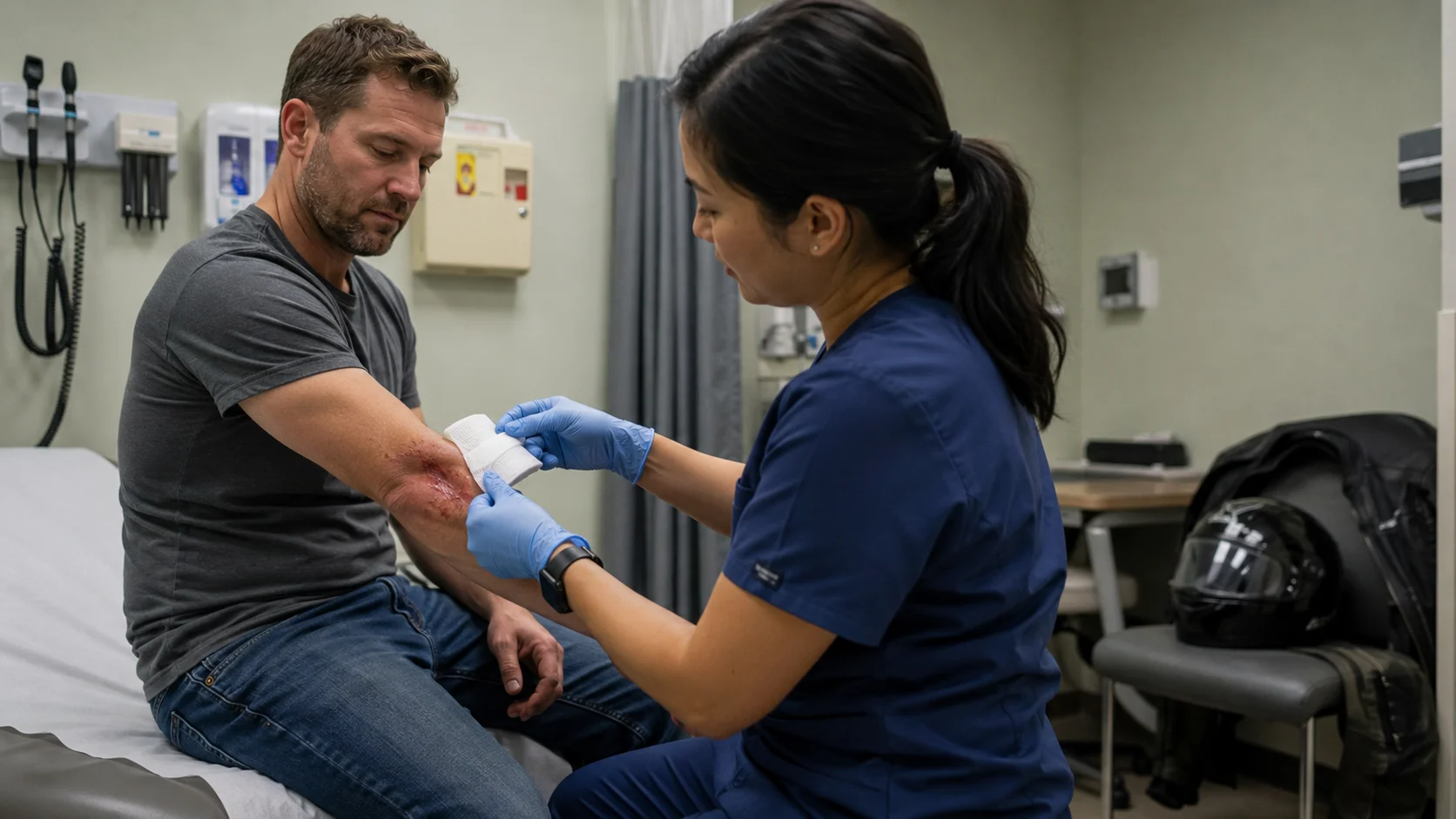
Road rash is the injury riders most often walk away with, and the one insurers are quickest to dismiss. Medically, it's a friction burn: skin dragged across asphalt hard enough to grind through layers and generate heat. The Cleveland Clinic grades it by depth, the way it grades any burn, from a superficial scrape that reddens the skin, to a partial-thickness wound that breaks the surface, to a full-thickness injury that strips skin down to fat or muscle.
A full-thickness case can need skin grafts, leave permanent scarring and nerve damage, and drive grit deep enough to stay visible for life as traumatic tattooing. Any open wound carries an infection risk, and because it takes a hard slide to cause, serious road rash often signals the rider was hurt in other ways too. Our full guide to motorcycle road rash covers treatment and recovery in more depth.
Head and spinal injuries
Head injuries are the leading cause of death and lasting disability among riders, and they don't require going helmetless to happen. A hard enough impact jolts the brain inside the skull, and the result runs from a concussion to a severe traumatic brain injury, with effects on memory, mood, speech, or movement that can last years.
Spinal cord injuries sit in the same tier. Damage to the cord can mean partial or complete paralysis and a lifetime of care. These are the injuries that can reshape a household for good, and the ones an insurer tends to push to settle fast, before the real cost is clear.
Broken bones, internal injuries, and burns
Broken bones are close to a given in a serious crash. The leg takes the worst of it, often when the bike comes down on it, while wrists, arms, ribs, and the pelvis break when a rider braces or takes a direct hit. Some are clean breaks that heal in weeks. Others are complex fractures that need surgery, hardware, and months of physical therapy.
Internal injuries are the ones you can miss. Organ damage and internal bleeding don't always show at the scene, and adrenaline can mask them for hours. That's one reason we tell every rider to get checked even when they feel fine. Burns round out the list: riders get burned in the crash itself and by the bike, and contact with a hot exhaust pipe is common enough that we wrote a separate guide to exhaust burns. Deeper burns can need grafts and leave lasting scars.
Where you ride changes the risk
Colorado's rules don't change from city to city, but the risk does.
Denver stacks the odds through sheer volume. The I-25 and I-70 corridors, constant merging, and drivers who miss a motorcycle in traffic feed a steady run of crashes across the metro. If you were hurt there, our Denver motorcycle accident lawyers can walk you through what comes next.
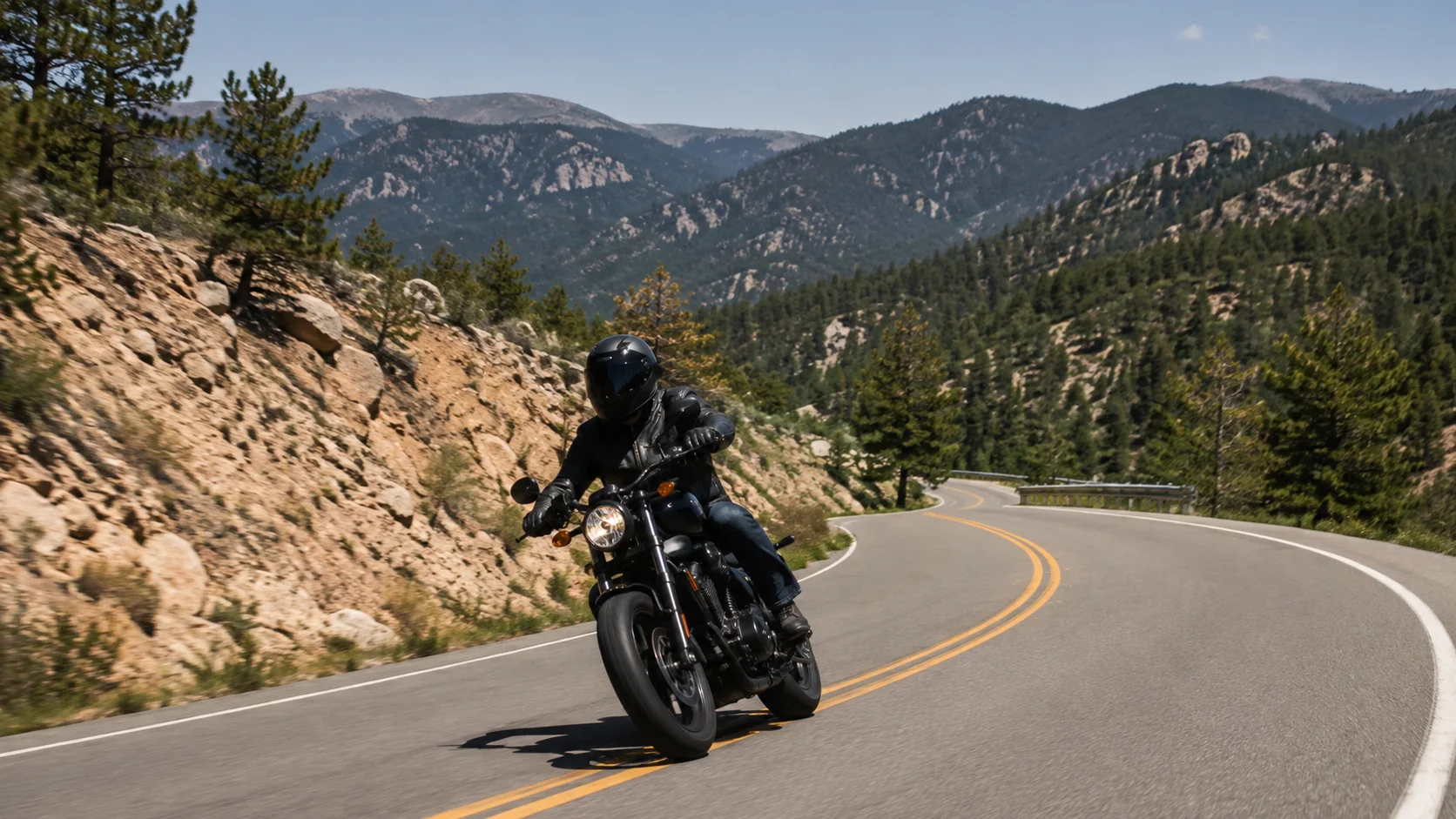
North in Larimer County, Fort Collins layers a growing-city traffic problem onto mountain country. Busier streets downtown plus the canyon and foothill routes riders love produce everything from low-speed intersection hits to high-speed runs off a curve. The Fort Collins motorcycle accident lawyers on our team ride those roads.
Colorado Springs and the rest of El Paso County have ranked first in the state for fatal motorcycle crashes, a product of wide fast arterials, heavy traffic near Fort Carson, and the tourist pull toward Pikes Peak. Our Colorado Springs motorcycle accident lawyers handle cases across the region.

Why your injuries decide what your claim is worth
In Colorado, a claim's value tracks closely with how badly you were hurt and how well it's documented. A rider with a clean scan and a healed scrape has a different claim entirely from one facing a second surgery or lasting nerve pain. Medical records draw the line between the crash and every injury it caused, which is why the gap before your first appointment matters.
Colorado also runs on a modified comparative fault rule, C.R.S. § 13-21-111. It cuts your recovery by your share of fault and bars it entirely at 50% or more, so an insurer has every reason to call your injuries minor. We answer that with the full medical picture, including the future costs a fair settlement has to cover. Our breakdowns of what a motorcycle claim is worth in Colorado and how the 50% fault rule works go deeper, and how long a Colorado case takes covers the three-year filing deadline.
Frequently Asked Questions
What are the most common motorcycle accident injuries in Colorado?
Road rash and broken bones are the most frequent, followed by head injuries, spinal cord injuries, internal injuries, and burns. Severity ranges widely, from a scrape that heals in a week to injuries that need lifelong care.
Is road rash really that serious?
It can be. Road rash is a friction burn, and a full-thickness case can strip skin to the muscle, need skin grafts, and leave permanent scarring or nerve damage. It also carries an infection risk and often signals deeper injury.
Can I still recover if I wasn't wearing a helmet?
Colorado only requires helmets for riders under 18, so an adult riding without one broke no law. An insurer may still argue a head injury was worse because of that choice, which can reduce the pain-and-suffering part of your claim under comparative fault, not erase a claim you didn't cause.
How long do I have to file a motorcycle injury claim in Colorado?
Colorado gives injured riders three years from the date of the crash to file a personal injury claim. Acting sooner protects evidence and gives your medical picture time to become clear.
Don't let an insurer undercount what this cost you
Motorcycle injuries in Colorado run from a scrape that heals in a week to a spinal injury that changes everything, and the ones in between are where riders lose the most, because they're easy to understate on paper. Whether you went down in Denver traffic, on a Larimer County canyon road, or on a Colorado Springs arterial, we build the record that shows what happened to you.
Disclaimer: Past results discussed should not be considered a guarantee of your results as the factors of every case are individually unique. This content is for informational purposes only and does not constitute legal advice. Consult a qualified attorney from Metier Law Firm regarding your individual situation for legal advice.
Tell Us About Your Case – Free Case Review with a Personal Injury Lawyer
(866) 377-3800Our Locations
.webp)
Do I have a Case?
How Much Should I Be Offered?
Do I Need an Attorney?
If these questions have crossed your mind, let us help. You may need a little direction or may not need an attorney at all, but you deserve to be confident knowing your options. We can provide you with information about our Attorneys of the West® accident investigations and legal services. Your confidential consultation with us is totally free.
Keep up with us!
