.svg)


TL;DR - Key Takeaways
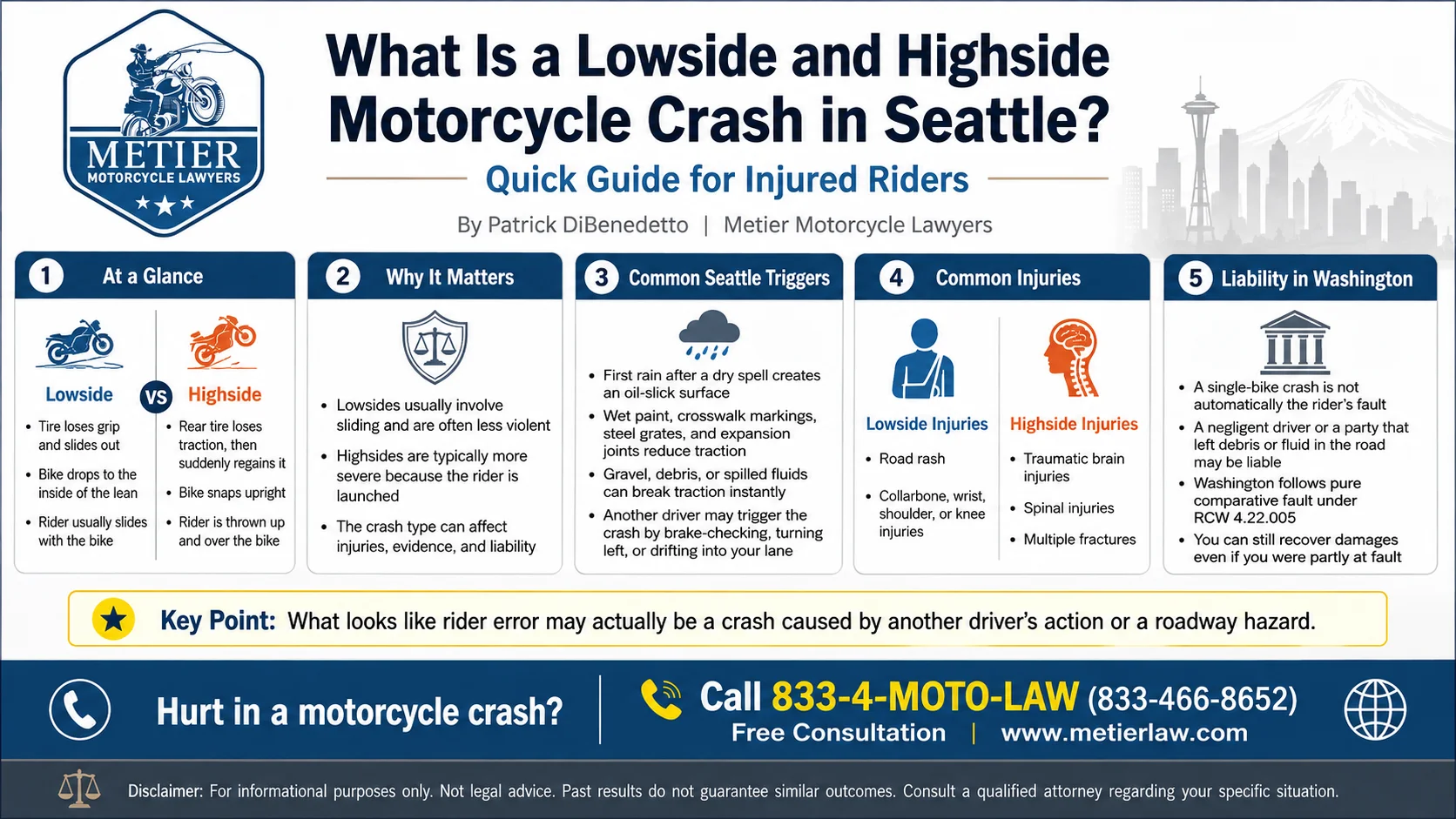
- A lowside motorcycle crash happens when a tire loses grip and slides out, dropping the bike and sending the rider sliding across the pavement.
- A highside is more violent. The rear tire loses traction, then abruptly regains grip, launching the rider up and over the bike.
- Highside crashes tend to cause the worst injuries, including head trauma and multiple fractures, because the rider gets thrown instead of sliding.
- These crashes often look like rider error, but many are set off by another driver's action or a hazard someone else left in the road.
- Washington's pure comparative fault rule lets an injured rider recover compensation even when they share part of the fault.
The first hard rain after a dry stretch turns Seattle asphalt into something close to ice. Weeks of oil and rubber lift off the surface, and a rider leaning through a familiar corner on Rainier Ave suddenly has no grip. What happens in the next half second decides whether it's a lowside or a highside, and how badly that rider gets hurt.
I'm Patrick DiBenedetto, a partner at Metier Law Firm and a rider myself. After years of reading crash reconstructions for injured riders across Washington, I keep running into the same thing. "Most people assume a lowside or highside is just the rider's mistake. When you actually look at the evidence, a lot of these traction-loss crashes can be traced back to other factors."
The difference between a highside vs lowside motorcycle crash comes down to more than a name. It affects how badly a rider is hurt and, often, who is legally responsible.
What Is a Lowside Motorcycle Crash?
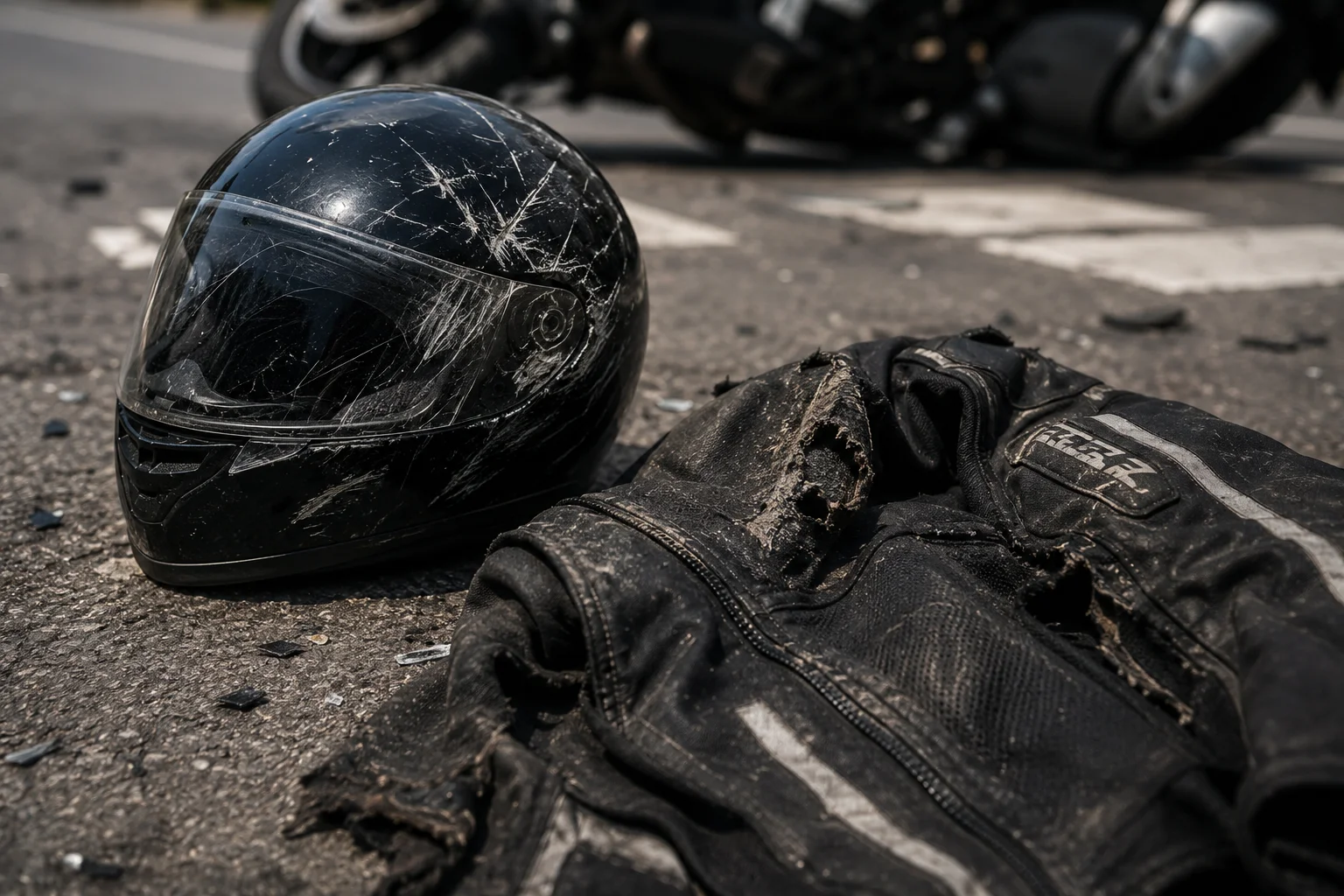
A lowside happens when a tire loses lateral grip and slides out from under you. The bike falls onto its low side, the inside of the lean, and you usually slide along the road with it.
Riders lowside when they ask more from a tire than the surface can give. Too much lean or speed for the available traction, hard braking in the middle of a corner, or a slick patch of oil, gravel, or wet paint under the tire. The Motorcycle Safety Foundation describes traction like a pie: cornering, braking, and accelerating each take a slice, and when you run out, the tire lets go.
A lowside is usually the less severe of the two. You and the bike tend to slide the same direction, which spreads the energy out instead of concentrating it in a single impact.
What Is a Highside Motorcycle Crash?
The highside is the crash that scares experienced riders. The rear tire loses traction and steps out, then abruptly regains grip while the bike is still out of line. That sudden bite snaps the motorcycle upright and past vertical, catapulting you up and over the high side.
It happens fast, with almost no warning. A locked rear wheel that gets released, a chopped throttle in the middle of a slide, or an overcorrection can all set it off. Instead of sliding, you get thrown clear of the bike and land hard, often into whatever is in the way.
Key Differences Between Highside and Lowside Crashes
The difference comes down to what happens to your body. A lowside drops the bike and you slide with it. A highside throws you off entirely, and it does that with almost no warning once the rear tire grabs. So the same corner at the same speed can send one rider home sore and another to the trauma ward. It's the throw that does the damage, because of how much energy hits the rider all at once.
Common Causes of Each Crash Type on Seattle Roads
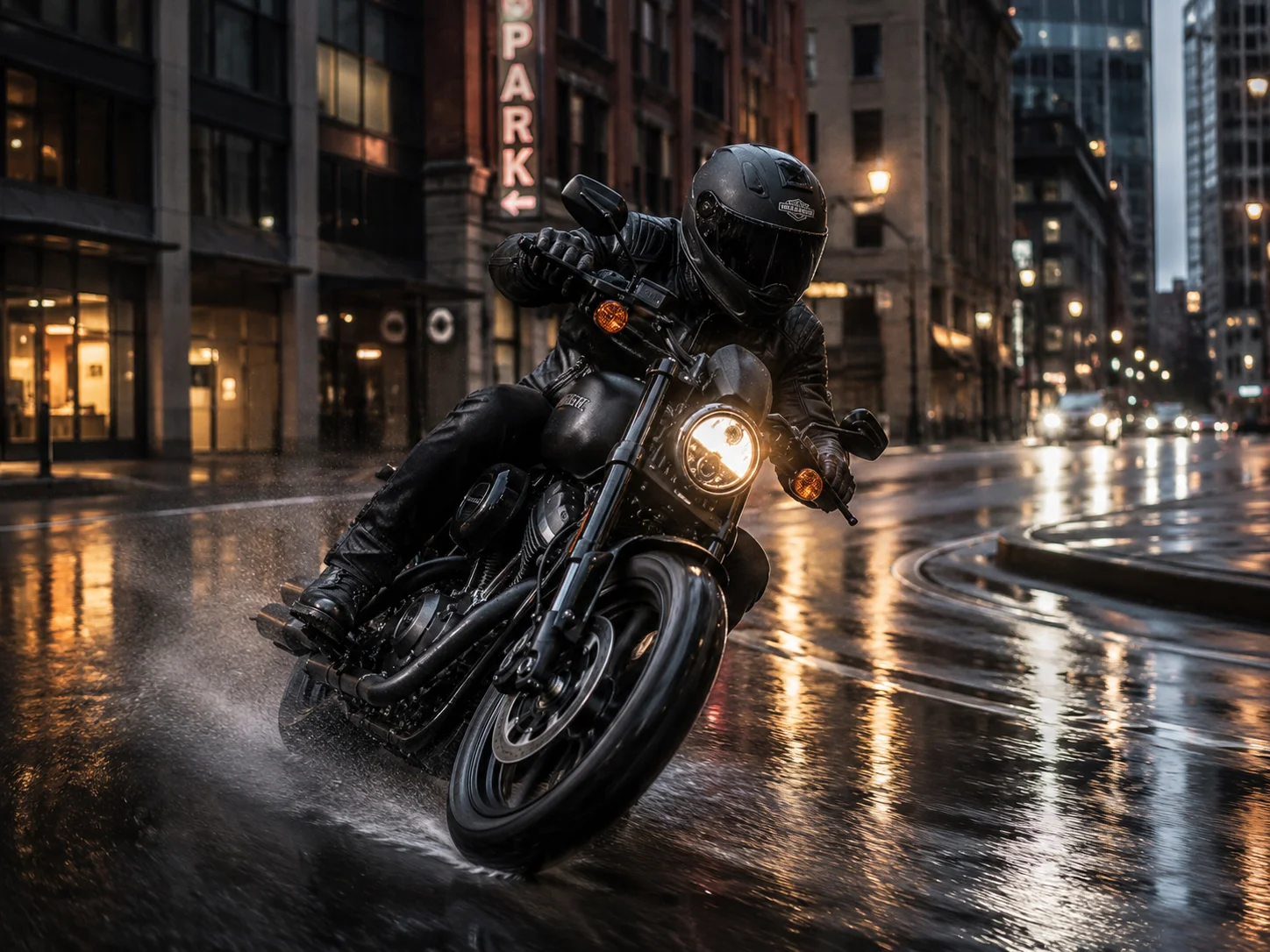
There are a lot of ways to lose traction on Seattle roads. Wet steel bridge grates and expansion joints, painted crosswalks and arrows that turn slick in the rain, and that first-rain oil sheen all cut grip in an instant. For a fuller breakdown of the city's problem corridors, we covered Seattle's road hazards and what to do after a crash separately.
What turns a road condition into someone else's fault is human behavior. A driver who brake-checks you, turns left across your path, or drifts into your lane forces a hard swerve or a panic stop, and that input is often what breaks traction and starts the slide. Spilled fluid or debris left by a negligent trucker or a nearby business can do the same. Road conditions alone aren’t always the cause to put a rider down. Several other factors can turn a slick surface into a crash, and it’s my job to fully investigate the root causes of the crash for our injured clients in these situations.

Injuries Associated With Highside vs Lowside Motorcycle Accidents
Lowside injuries usually come from sliding: road rash deep enough to need skin grafts, broken collarbones, wrist and shoulder fractures, and knee damage. Painful and slow to heal, but a rider in a DOT-compliant helmet and abrasion-resistant gear stands a much better chance in a lowside.
Highside injuries come from being thrown and then striking the ground or a fixed object without the sliding deceleration that softens a lowside. Traumatic brain injuries, spinal damage, and multiple fractures are common. Motorcyclists are far more likely to strike a fixed object in a fatal crash than people in cars, according to NHTSA crash data, and getting launched off the bike is exactly how that happens. NHTSA reports 6,228 motorcyclists were killed in 2024, about 16 percent of all traffic deaths.
Who Can Be Held Liable in a Highside or Lowside Crash in Washington?
A crash with no second vehicle left in the wreckage isn't automatically your fault. Responsibility can fall on another party whose negligence forced the crash. Some examples would be:
- An at-fault driver whose action forced your evasive maneuver could be a cause. If a car pulls out or turns across your lane and you lowside avoiding it, that driver's negligence set the crash in motion, even if they never touched you.
- Another party who created a hazard, like a company that let fluid run onto the road or dropped debris from an unsecured load.
Washington follows pure comparative fault under RCW 4.22.005. Even if you carried too much speed into that corner, you can still recover damages, reduced by your share of the fault. Being partly responsible does not bar your recovery.
How Crash Type Affects Your Motorcycle Accident Claim in Seattle
Insurance companies routinely dismiss a single-bike crash as rider error and close the file. The physical evidence can tell a different story. Gouge marks, tire scrub, the resting position of the bike, and the pattern of your injuries all help a reconstructionist show whether you lowsided or highsided, and what forced it.
That matters because the mechanics are what tie your crash back to the at-fault party. A highside and a lowside leave different marks on the road, and a reconstructionist who reads them correctly can turn a denied claim into a paid one.
Frequently Asked Questions About Highside and Lowside Motorcycle Crashes
What is the difference between a highside and lowside motorcycle crash?
In a lowside, a tire loses grip and the bike slides out, dropping to the inside of the lean while you slide with it. In a highside, the rear tire loses traction and then suddenly regains it, throwing you up and over the bike. The highside is generally faster and more violent.
Are highside crashes more dangerous than lowside crashes?
Usually, yes. Because a highside launches you off the motorcycle, you hit the ground or a fixed object with far more force than a sliding lowside. That's why highside crashes are linked to traumatic brain injuries, spinal injuries, and multiple fractures.
Can someone else be at fault if I lowsided or highsided my motorcycle?
Often, yes. If another driver forced you into a swerve or a hard stop, that driver can be liable even though no car hit you. There may also be several other factors that caused your crash created by someone else’s negligence. What looks like a solo crash can have a cause someone else created.
Can I still recover damages in Washington if I was partly at fault?
Yes. Under Washington's pure comparative fault rule, you can recover even if you share part of the fault. Your compensation is reduced by your percentage of fault, but partial responsibility does not bar your claim.
We Ride These Roads and We Know How These Crashes Really Happen
A lowside or highside can leave you with serious injuries and an insurance company that has already decided the crash was your fault. Often it wasn't, or at least not entirely. We've read the reconstructions, we ride the same wet corners, and we know how to prove what actually forced that slide. If a highside or lowside crash hurt you or someone you love, call Metier Motorcycle Lawyers at 833-4-MOTO-LAW or schedule your free consultation today.

Disclaimer: Past results discussed should not be considered a guarantee of your results as the factors of every case are individually unique. This content is for informational purposes only and does not constitute legal advice. Consult a qualified attorney from Metier Law Firm regarding your individual situation for legal advice.
Tell Us About Your Case – Free Case Review with a Personal Injury Lawyer
(866) 377-3800Our Locations
.webp)
Do I have a Case?
How Much Should I Be Offered?
Do I Need an Attorney?
If these questions have crossed your mind, let us help. You may need a little direction or may not need an attorney at all, but you deserve to be confident knowing your options. We can provide you with information about our Attorneys of the West® accident investigations and legal services. Your confidential consultation with us is totally free.
Keep up with us!
