



TL;DR - Key Takeaways
- Under ORS 811.260(7), a driver facing a steady circular red alone must stop and stay stopped until green, unless ORS 811.360 permits a turn on red.
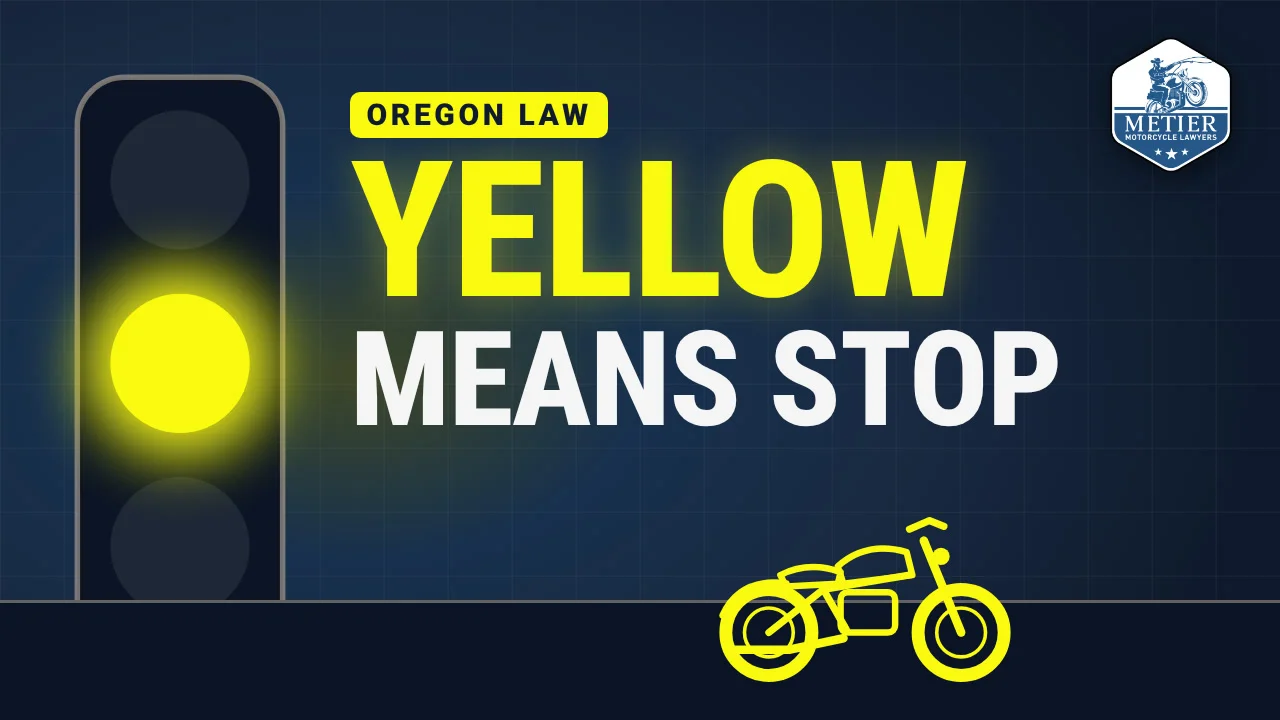
- On a steady circular yellow, ORS 811.260(4) requires the driver to stop. The driver may drive cautiously through only if the driver cannot stop in safety.
- Disobeying a traffic signal is a Class B traffic violation under ORS 811.265. ORS 153.108(2) bars any plea, finding, or judgment in that traffic case from being admitted as evidence in your injury case.
- Under ORS 31.600, you recover if your fault is not greater than the combined fault of the others in the comparison, and your damages drop by your share.
- ORS 12.110(1) requires an injury lawsuit within two years. A claim against a public body also requires notice within 180 days after the injury under ORS 30.275.
In 2024, 1,119 people were killed in U.S. crashes involving red light running, according to the Insurance Institute for Highway Safety. Half of them were pedestrians, bicyclists, and people in other vehicles hit by the red light runner. If a driver ran a red light and hit your motorcycle in Portland, expect the insurer to say the light was still yellow or the motorcycle was hard to see. Your Portland red light motorcycle accident claim depends on what Oregon's signal statute required of that driver and on proof of the light's color when the driver entered the intersection.
At Metier Motorcycle Lawyers, we see the yellow-light argument in these claims, and Oregon's statute answers it. "Oregon's yellow-light rule tells a driver to stop, with one exception for a driver who can't stop in safety," says Patrick DiBenedetto, Partner at Metier Law Firm and a rider himself. "When an adjuster tells us the light was yellow, we ask how fast that driver was going and how far from the stop line the car was when the light changed. Those facts decide whether the exception applies."
How Oregon's Signal Rules Apply in a Portland Red Light Motorcycle Accident
ORS 811.260 lists the response each signal requires. Any other response is driver failure to obey a traffic control device, a Class B traffic violation under ORS 811.265. The exemptions in ORS 811.265(2) include following a police officer's directions.
Steady Red Under ORS 811.260(7)
A driver facing a steady circular red alone must stop at a clearly marked stop line. Without a stop line, the driver stops before the marked crosswalk on the near side, and without a crosswalk, before entering the intersection. The driver must remain stopped until a green light is shown, except when ORS 811.360 permits the driver to proceed, such as a lawful turn on red.

Oregon's Yellow Light Law and the Safety Exception
Under ORS 811.260(4), a steady circular yellow warns the driver that the related right of way is being terminated and that a red or flashing red light will be shown immediately. The driver must stop at the same points that apply on red. Only a driver who cannot stop in safety may drive cautiously through the intersection. A driver who could have stopped safely and kept going violated subsection (4), even though the light hadn't turned red.

Your Green Light Under ORS 811.260(1)
A driver facing a green light may proceed. Say you entered on your green and were still in the intersection when the cross street's light turned green. ORS 811.260(1) required drivers facing that new green to yield to vehicles within the intersection, including your motorcycle.
Penalties and Oregon's Vulnerable User Law
ORS 801.608 names a person operating or riding on a motorcycle on a public way as a "vulnerable user of a public way." If a court finds careless driving contributed to a vulnerable user's serious physical injury or death, ORS 811.135(3) requires penalties that include a traffic safety course and 100 to 200 hours of community service. Those penalties don't set fault in your civil claim.
How to Prove the Other Driver Ran a Red Light in Oregon
Liability turns on the light's color when the driver crossed the stop line and, on a yellow, whether the driver could have stopped safely. That evidence can be lost quickly, so after a driver runs a red light and hits a motorcycle in Portland, we move to secure:
- Video from nearby businesses and homes, requested quickly because recordings can be overwritten
- Dashcam and helmet-cam footage, including your own
- Names and statements of independent witnesses who saw the signal
- The police crash report
- Vehicle damage, debris, and final rest positions
- Signal timing records showing how long the yellow lasts at that intersection
- Event data recorder downloads from the driver's vehicle
When a passenger car built on or after September 1, 2012 has an event data recorder, 49 CFR Part 563 requires it to record vehicle speed and brake use for at least the 5 seconds before a crash that triggers it.
The driver's ticket isn't part of that proof. Under ORS 153.108(2), a plea, finding, or judgment in a traffic violation case, or the fact that the case was brought, can't be admitted as evidence in any civil proceeding. Your claim stands on the evidence above.

If you've been hurt in a motorcycle crash and need answers, call us at 833-4-MOTO-LAW (833-466-8652) or schedule a free consultation at www.metierlaw.com.
Comparative Fault and Filing Deadlines After a Red Light Crash
Even when the driver entered on red, the insurer can still blame your speed, lane position, or visibility. Under ORS 31.600, you recover if your fault is not greater than the combined fault of the parties you're suing, liable third-party defendants, and anyone you've settled with. Your damages drop by your percentage. With one at-fault driver, a rider found 50% at fault still recovers half, and any share above 50% bars recovery. Our posts on Portland motorcycle accident comparative fault and what to do after a motorcycle accident in Portland cover how adjusters move those numbers and what to do at the scene.
ORS 12.110(1) requires an injury lawsuit within two years. A wrongful death action under ORS 30.020(1) must be filed within three years after the fatal injury is discovered or reasonably should have been discovered, and never later than three years after the death. ORS 30.275 applies if the driver was a public body's employee or agent acting within the scope of employment or duties. Notice of claim is then due within 180 days after the injury, or one year after it for wrongful death. Those periods exclude up to 90 days when the injury or another incapacity prevents notice, and the lawsuit is due within two years after the injury. Video and vehicle data can be lost long before any of these dates.
Frequently Asked Questions
How do you prove the other driver ran a red light in Oregon?
Prove the light's color when the driver crossed the stop line, using video, dashcam or helmet-cam footage, independent witnesses, event data, and signal timing records. Entering against a steady circular red violates ORS 811.260(7) unless ORS 811.360 permits the movement.
The driver says the light was yellow. What does Oregon's yellow light law mean for my accident claim?
ORS 811.260(4) requires a driver facing a steady yellow to stop unless the driver cannot stop in safety, and even then to drive through cautiously. Speed, distance from the stop line, and the length of the yellow show whether the driver could have stopped safely.
Do I need a police citation to win a red light crash injury claim in Portland?
No. ORS 153.108(2) keeps the driver's traffic violation case out of evidence in a Portland red light motorcycle accident claim. That covers any plea, finding, or judgment, and the fact that the case was brought. Video, witness, vehicle, and scene evidence carry the claim.
Proving What the Signal Showed
I've ridden Multnomah County roads, and I scan every intersection when my light turns green, because a green light doesn't stop cross traffic. Oregon puts the stop duty on the driver facing the red. A red light crash injury claim in Portland comes down to proving what that driver's signal showed. Our Portland motorcycle accident lawyer team at Metier Law Firm can request that evidence while it still exists. Talk with us before you give the at-fault driver's insurer a recorded statement.
Call Metier Motorcycle Lawyers at 833-4-MOTO-LAW (833-466-8652) or schedule your free consultation today at www.metierlaw.com.
Disclaimer: Past results discussed should not be considered a guarantee of your results as the factors of every case are individually unique. This content is for informational purposes only and does not constitute legal advice. Consult a qualified attorney from Metier Law Firm regarding your individual situation for legal advice.

Tell Us About Your Case – Free Case Review with a Personal Injury Lawyer
(866) 377-3800Our Locations

Do I have a Case?
How Much Should I Be Offered?
Do I Need an Attorney?
If these questions have crossed your mind, let us help. You may need a little direction or may not need an attorney at all, but you deserve to be confident knowing your options. We can provide you with information about our Attorneys of the West® accident investigations and legal services. Your confidential consultation with us is totally free.
Keep up with us!
