.svg)


TL;DR / Key Takeaways
- Washington legalized motorcycle lane filtering in 2021 under RCW 46.61.608, but legal riding and easy insurance recovery are two different things
- The law permits filtering only when traffic is stopped or moving at 10 mph or less, the rider is under 25 mph, and the maneuver is safe and prudent
- Washington is a pure comparative negligence state, meaning insurers fight to push your fault percentage up and reduce your payout
- Insurers routinely attack lane splitting accident fault claims even when the rider was fully within the law
- You have 3 years from the crash date to file a personal injury claim in Washington
Washington is one of the few states where riders have a real, codified right to lane filter. Senate Bill 5254 passed in 2021, and riders here have been exercising that right ever since. But if you've been hurt in a motorcycle lane splitting accident in Washington, you've probably already learned something uncomfortable: having a right and being able to collect after someone violates it are two very different things.
"Riders come to us after crashes where they did everything the law required, and the insurance company is still fighting them," says Patrick DiBenedetto, Partner at Metier Motorcycle Lawyers. "We know Washington's lane filtering law inside and out. We know how insurers weaponize it. And we know how to counter every argument they throw at a rider who was acting completely within their rights."
Here's what the statute actually says, how fault works, and what to do if you were hit while filtering.
What Washington's Lane Filtering Law Actually Says
Senate Bill 5254, effective July 25, 2021, created RCW 46.61.608, Washington's lane filtering statute. The law permits a motorcyclist to ride between adjacent lanes of traffic moving in the same direction, but only when all of the following conditions are met:
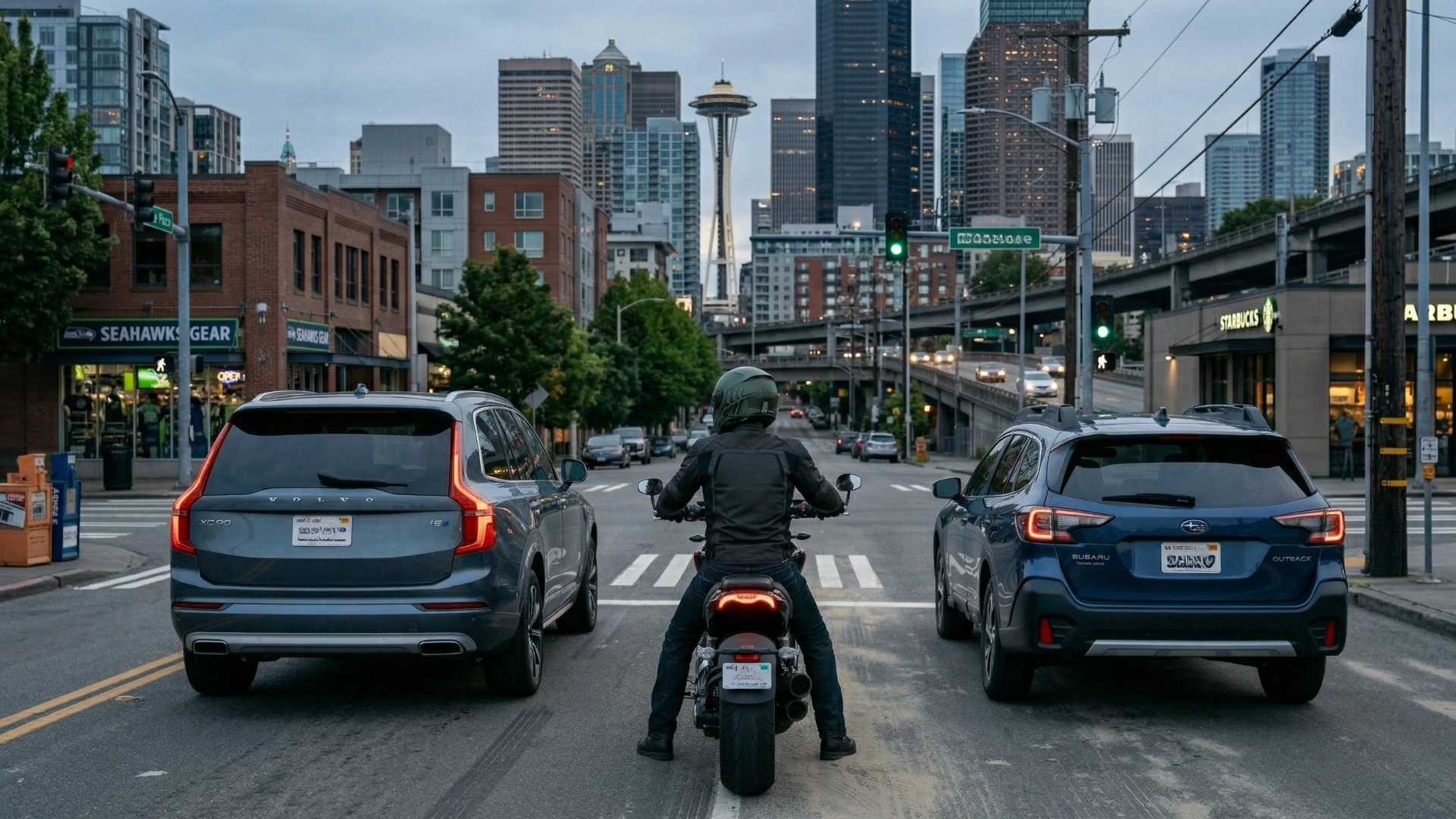
- The roadway has two or more adjacent lanes of traffic moving in the same direction
- Traffic in those adjacent lanes is stopped or moving at 10 mph or less
- The motorcycle is traveling at no more than 25 mph
- The maneuver is done in a safe and prudent manner
That last condition is deliberately broad. "Safe and prudent" is also the phrase insurers lean on hardest when denying or reducing a lane splitting accident fault claim.
Washington's law does not authorize high-speed freeway splitting between vehicles moving at highway speeds. It authorizes low-speed filtering through stopped or near-stopped traffic, including I-5 backups through downtown Seattle, SR-99 gridlock near the Battery Street Tunnel, or I-405 congestion through Bellevue or Renton.
How Washington's Comparative Negligence Rules Apply to Your Claim
Washington is a pure comparative negligence state under RCW 4.22.005. That means:
- You can recover damages even if you were partially at fault
- Your recovery is reduced by your percentage of fault
- There is no cutoff — even a rider who was 80% at fault can technically recover 20% of their damages
This sounds rider-friendly, and it can be. But it also means that every percentage point of fault an insurer assigns to you directly reduces your check. If your damages are $200,000 and the insurer argues 40% fault for lane filtering, your recovery drops to $120,000. That is exactly why insurance companies fight so hard on Washington lane splitting cases. They don't need to deny the claim entirely. They just need to push your fault percentage up.
For more on how Washington motorcycle riders get undervalued after crashes, see our post on wet road motorcycle accidents on I-5.
How Insurance Companies Attack Lane Filtering Claims
Even when a rider was clearly within the parameters of RCW 46.61.608, expect these arguments from the at-fault driver's insurer:
"Traffic wasn't really stopped." Was the adjacent traffic moving at 10 mph or less? An adjuster will challenge this, especially without dashcam footage or independent witnesses to establish the speed at the moment of impact.
"The rider was over 25 mph." Without GPS data or helmet cam, speed is contested. Even 2 mph over the limit gives the insurer a negligence angle.
"The maneuver wasn't safe and prudent." Since an accident occurred, the insurer will argue it proves the maneuver was unsafe. This circular argument is beatable, but it requires the right legal strategy.
"The driver couldn't see the rider." Many motorcycle lane splitting accidents happen because a driver changes lanes without signaling or checking mirrors. Insurers try to reframe this as the rider's failure to anticipate an inattentive driver. Your attorney should reframe it as the driver's duty to check before moving.
If you've been hurt in a motorcycle crash and need answers, call us at 833-4MOTO-LAW (833-466-8652) or schedule a free consultation at www.metierlaw.com.
What Evidence Matters Most in a Washington Lane Splitting Case
Building a strong claim means getting the right evidence early:
Traffic camera and dashcam footage
WSDOT cameras along major Washington corridors capture traffic conditions in real time. That footage can establish whether traffic was truly stopped or moving at 10 mph or less at the time of your crash.
Witness statements
Independent witnesses who saw traffic conditions before the impact carry weight. Get contact information at the scene if you can.
GPS and data recorder information
Your motorcycle's data, your phone's GPS history, and any event data recorder information from the at-fault vehicle can all speak to speeds.
Medical records tied to the crash
Your injuries help establish the severity of the impact and counter any argument that a slow-speed filtering collision couldn't have caused your damages.
Frequently Asked Questions
Is lane splitting legal in Washington state?
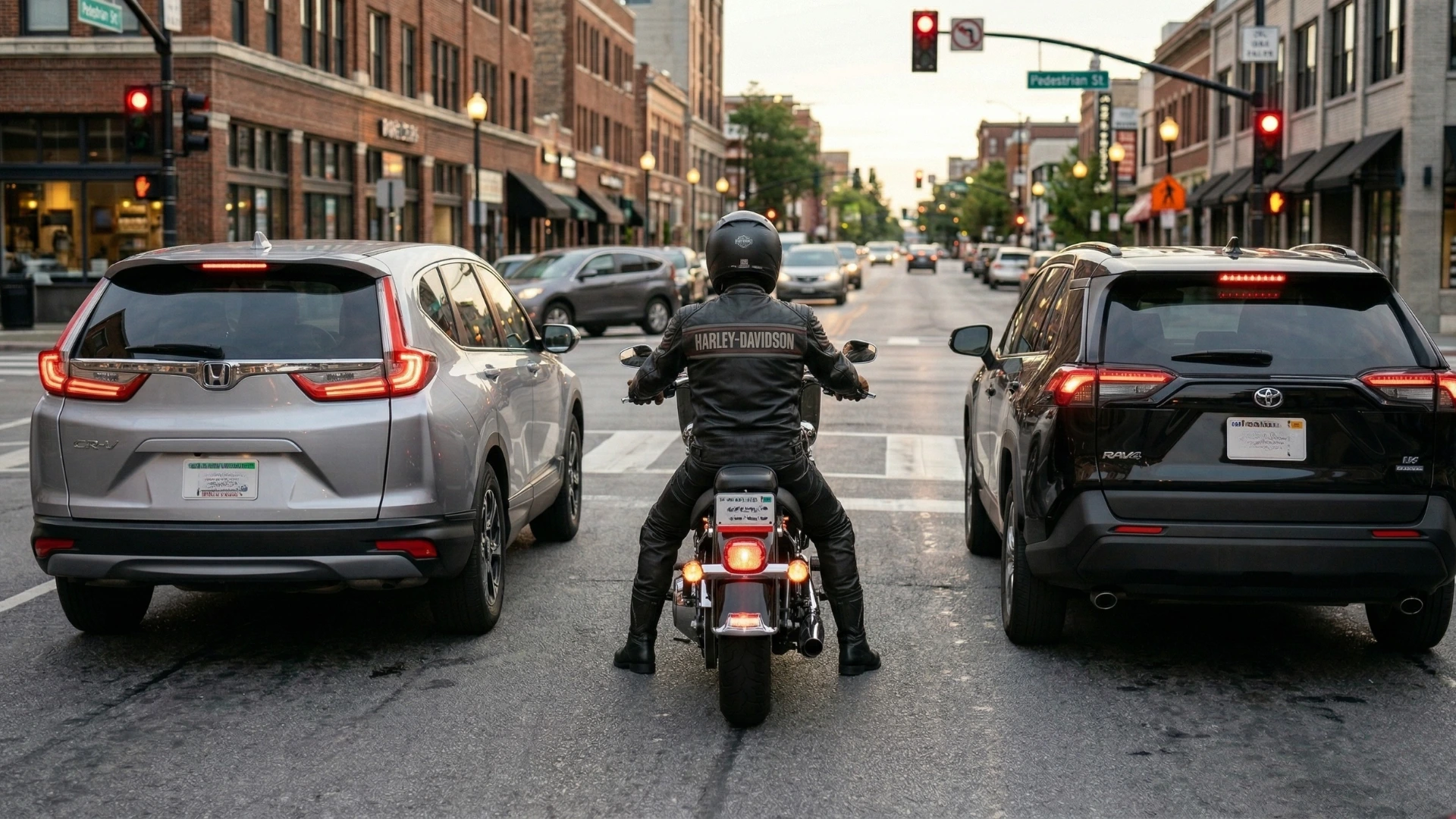
Lane filtering — riding between stopped or slow-moving lanes of same-direction traffic — is legal under RCW 46.61.608. High-speed freeway lane splitting between vehicles moving at normal highway speeds is not covered by the law.
Can I still recover damages if the insurance company says I was lane filtering improperly?
Yes. Washington's pure comparative negligence rules let you recover even if you were partially at fault. The fight is over the percentage — and that's where having an attorney who knows Washington's lane filtering law makes a significant difference.
How long do I have to file a claim after a motorcycle lane splitting accident in Washington?
Washington's personal injury statute of limitations is 3 years from the date of the crash. Don't wait — evidence fades, witnesses forget, and cameras overwrite footage quickly.
We Know What It's Like Out There
Lane filtering isn't reckless. Done right and within the law, it moves traffic and keeps riders out of rear-end collisions at intersections. When a driver opens a door, drifts into a lane, or changes without looking and hits you while you're filtering legally, they are at fault.
Metier Motorcycle Lawyers represents Washington riders who have been hit while doing exactly what the law allows. We know the statute, we know how insurers fight it, and we know how to get you a fair recovery.
Call Metier Motorcycle Lawyers at 833-4MOTO-LAW (833-466-8652) or schedule your free consultation today at www.metierlaw.com or speak with an experienced motorcycle accident lawyer serving Fort Collins, Denver, Colorado Springs, Omaha, Cheyenne, Gillette, Casper, Portland, and Seattle.
Disclaimer: Past results discussed should not be considered a guarantee of your results as the factors of every motorcycle crash case are individually unique. This content is for informational purposes only and does not constitute legal advice. Consult a qualified motorcycle accident lawyer from Metier Law Firm regarding your individual situation for legal advice.
Related Blog Posts
 How Long Does a Washington Motorcycle Accident Case Take?
 Riding Through Cheyenne Frontier Days: Safety and Liability for Motorcyclists
 Left-Turn Motorcycle Collisions in Fort Collins: Who's at Fault and Why
If You've Been Injured In A Motorcycle Crash, Call Today - (833) 4MOTO-LAW
Tell Us About Your Case – Free Case Review with a Personal Injury Lawyer
(866) 377-3800Our Locations
.webp)
Do I have a Case?
How Much Should I Be Offered?
Do I Need an Attorney?
If these questions have crossed your mind, let us help. You may need a little direction or may not need an attorney at all, but you deserve to be confident knowing your options. We can provide you with information about our Attorneys of the West® accident investigations and legal services. Your confidential consultation with us is totally free.
Keep up with us!
