


TL;DR: Key Takeaways
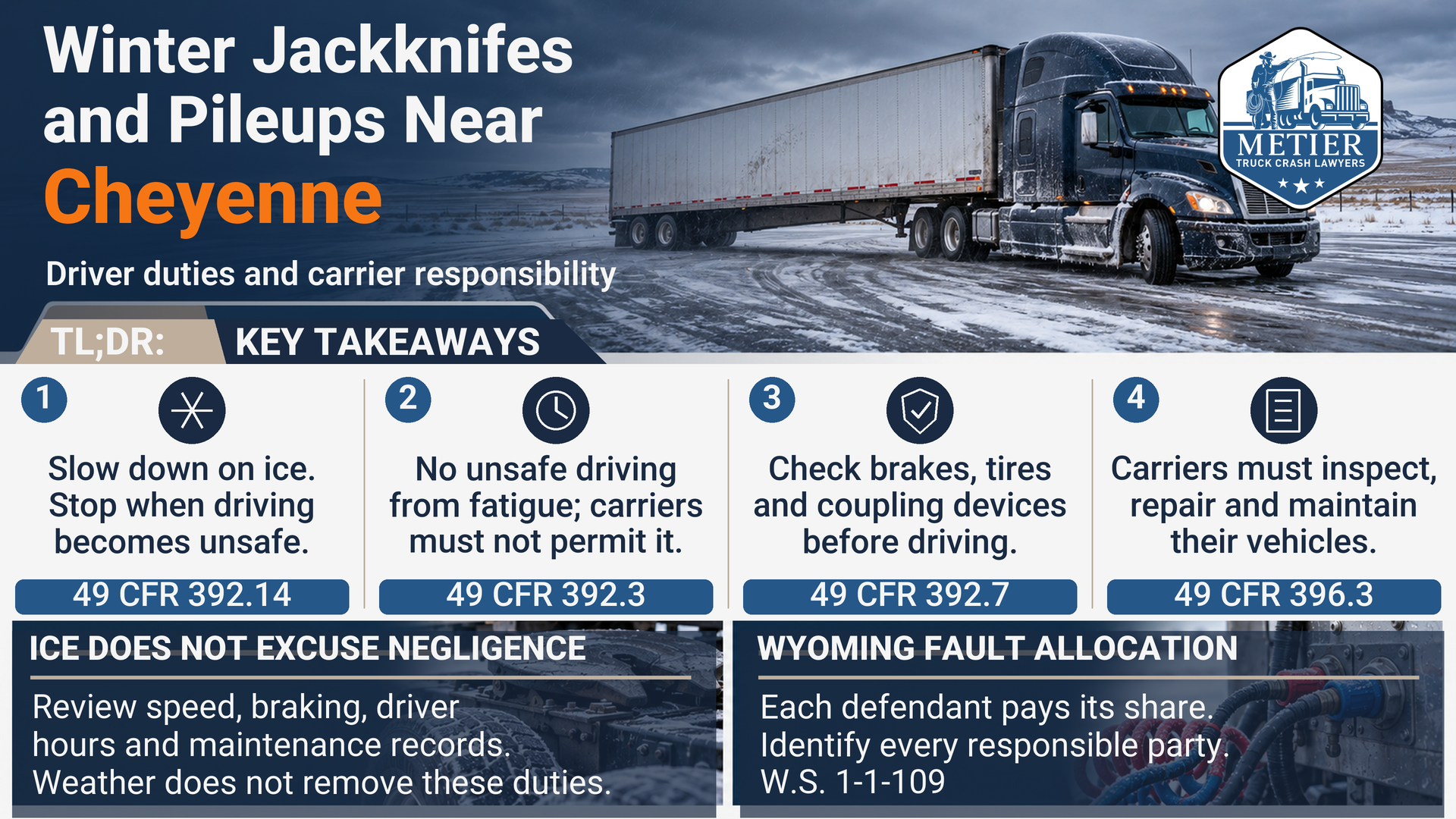
- In a jackknife, a semi's tractor and trailer fold toward each other at the coupling, and on a divided interstate the trailer can block every lane in one direction.
- Federal rule 49 CFR 392.14 requires truck drivers to reduce speed in snow and ice and to stop driving when it's no longer safe to continue.
- Carriers must systematically inspect and maintain their trucks (49 CFR 396.3) and can't require or permit a fatigued or ill driver to operate (49 CFR 392.3).
- Bad weather doesn't relieve the driver or carrier of these rules, so a jackknife on ice can still support a claim against both.
- Wyoming's fault statute, W.S. 1-1-109, makes each defendant pay only its own percentage of fault, so every responsible party in a pileup has to be identified.
- Injury lawsuits in Wyoming have a four-year filing deadline, and wrongful death claims must be filed within two years of the death.
Federal trucking rules already tell drivers what to do on ice. Under 49 CFR 392.14, a commercial driver has to use extreme caution when snow, ice, fog or similar conditions reduce visibility or traction, and the regulation states, "Speed shall be reduced when such conditions exist." If conditions become dangerous enough, the driver has to stop. That rule is our starting point whenever we review a Cheyenne jackknife truck accident. For a Colorado crash, where different laws apply, see our Colorado truck accident lawyers page.
"I hold a Class A CDL, and the training is direct about ice: slow down, and stop driving once it's no longer safe," says Mike Chaloupka, Managing Partner at Metier Law Firm. "When one semi jackknifes on I-80 and the trucks around it don't, we look at the truck's speed, its brakes and the driver's hours before we accept weather as the explanation."
Why Jackknifes Start Winter Pileups Around Cheyenne
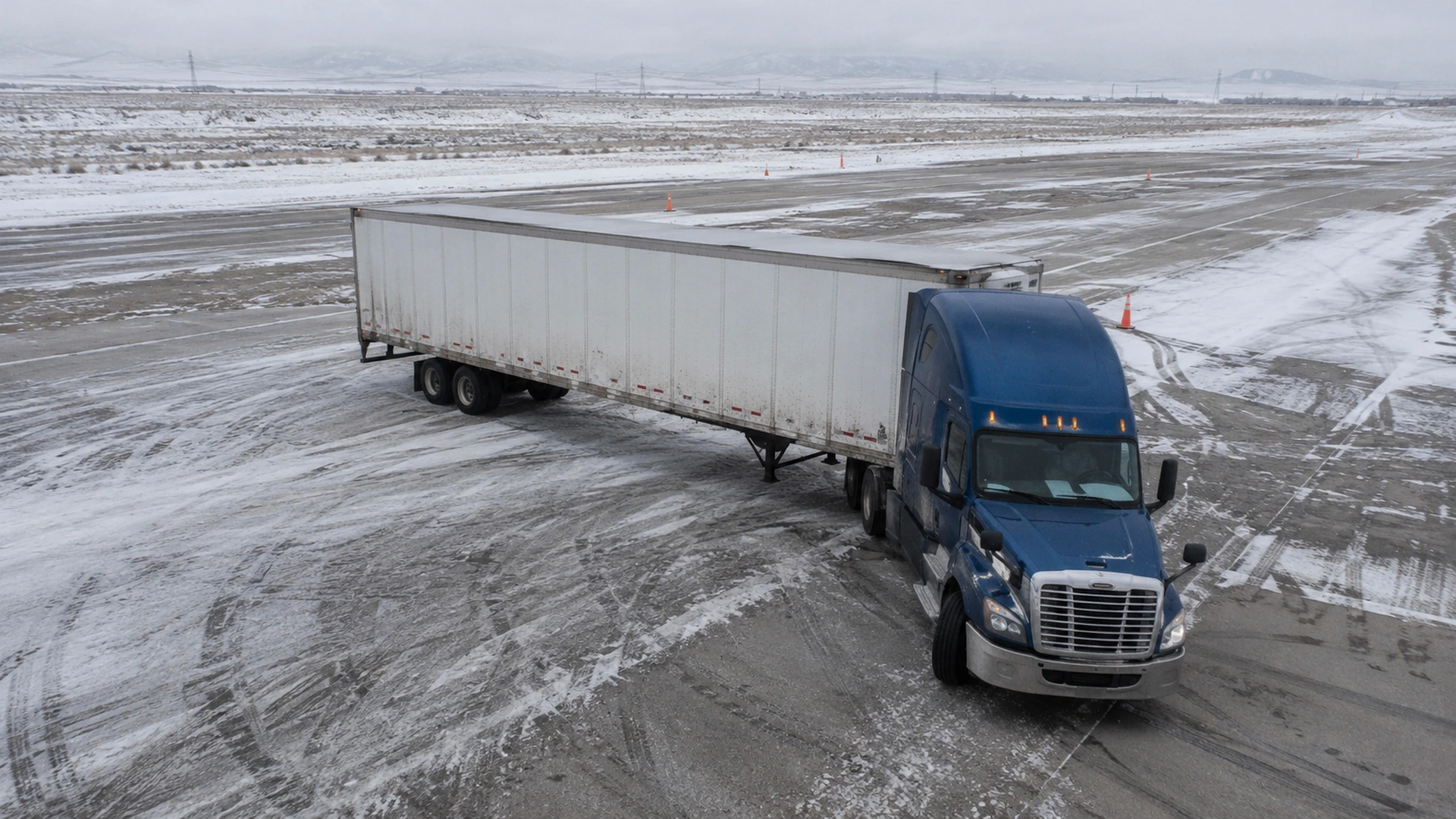
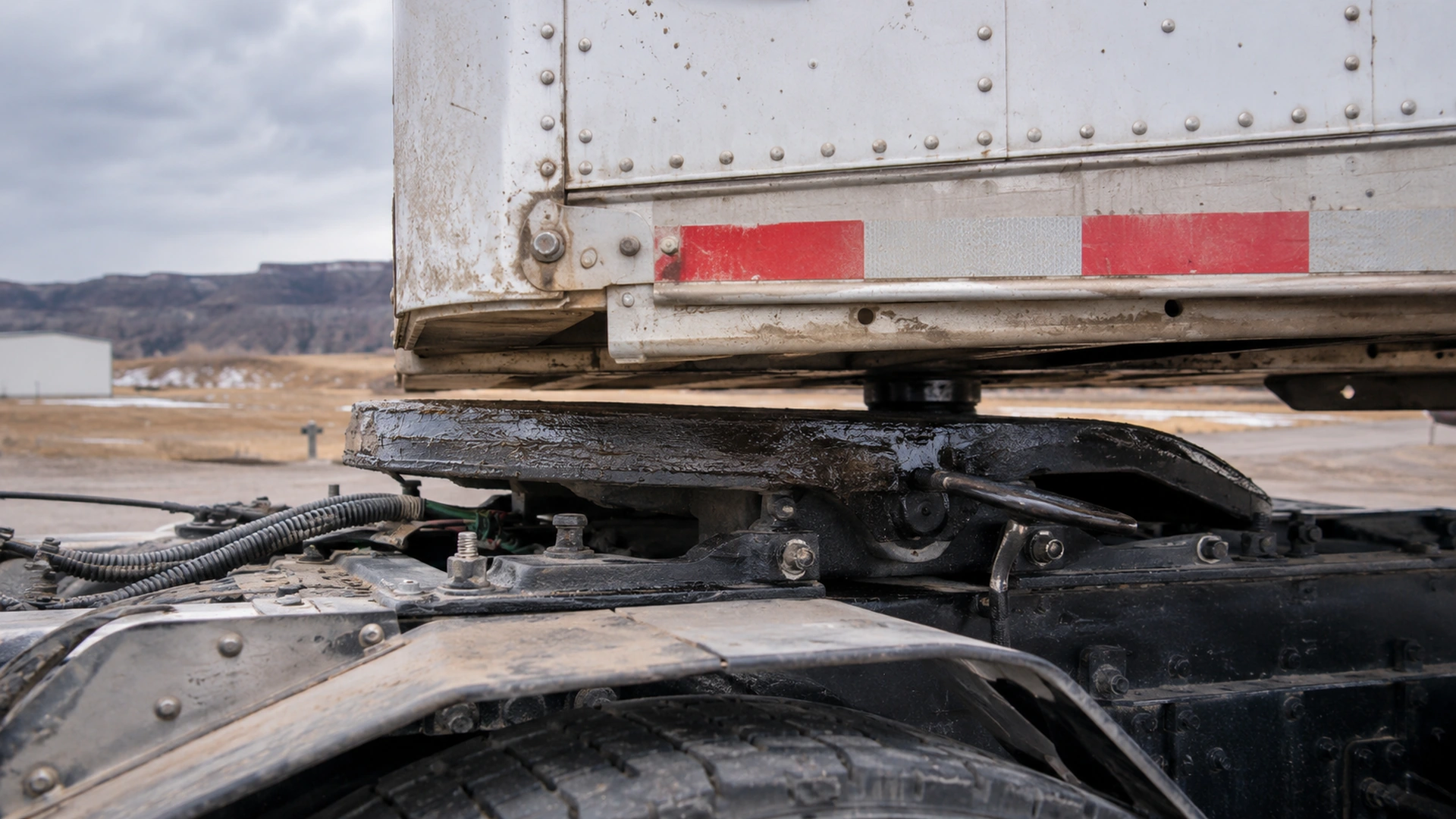
A jackknife happens when a tractor and trailer fold toward each other at the fifth-wheel coupling. If the trailer's wheels lock on ice, the trailer can swing across every lane in its direction, and drivers behind it have to stop on the same slick pavement.
I-80 and I-25 meet in Cheyenne, and our post on the I-25/I-80 Cheyenne interchange covers the hazards at that junction. According to the Wyoming Tribune Eagle, the Wyoming Highway Patrol reported a 19-vehicle pileup on I-80 between Cheyenne and Laramie on Thanksgiving afternoon in 2023. Most of the vehicles were commercial, and conditions were icy and foggy.
Common Causes of a Jackknife on Winter Roads
Speed Too High for Conditions
Wyoming's commercial driver license manual tells drivers to cut speed by about a third on wet pavement and by half or more on packed snow, and to slow to a crawl on ice and stop driving as soon as they safely can. We compare the truck's recorded speed with what that training calls for.
Hard Braking on a Curve
The same manual warns that braking in a curve makes it easier to lock the wheels and start a skid.
A Light or Empty Trailer
The WYDOT manual says empty trucks need more distance to stop because they have less traction. A trailer jackknife is more likely when the trailer is empty or lightly loaded, according to the combination-vehicles section of the standard CDL manual.
Driver Fatigue
The fatigue rule, 49 CFR 392.3, prohibits driving while fatigue or illness has impaired, or is likely to impair, a driver's ability or alertness enough to make driving unsafe. It also bars the carrier from requiring or permitting that driver to operate.
Ice Doesn't Excuse the Trucking Company
A trucking company can still be held responsible for a jackknife on ice when the evidence shows the driver didn't slow down or stop as 392.14 requires, or when the carrier violated its own duties under rules such as 392.3 and 396.3. If other trucks on the same highway section kept control at lower speeds, we use their speeds as evidence of what the conditions required.
When WYDOT puts Level 2 of the state's chain law into effect, commercial vehicles must have chains on at least two drive wheels at opposite ends of the same drive axle. Violating the restriction carries a $250 fine. The agency names the Summit section of I-80 east of Laramie among those where the chain law is most likely to be put into effect.
Brakes, Tires and Maintenance Duties
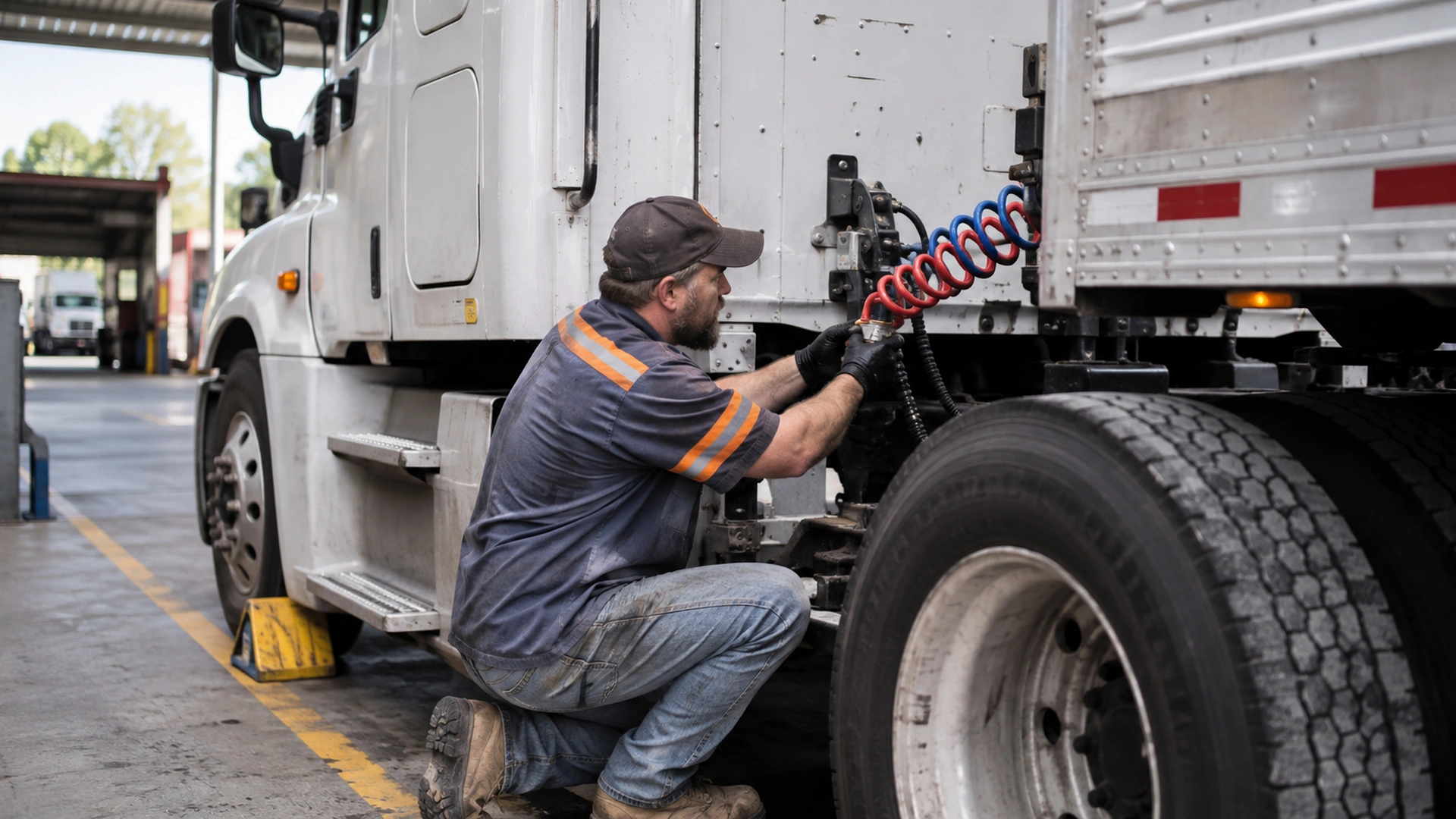
Before driving, a trucker must be satisfied that the service brakes, trailer brake connections, tires and coupling devices are in good working order (49 CFR 392.7). The carrier has a separate duty under 49 CFR 396.3 to systematically inspect, repair and maintain every vehicle under its control. The brake standards are in Part 393, Subpart C, sections 393.40 through 393.55, which cover brake systems, slack adjusters, brake performance and antilock systems.
If you or a loved one was injured in a crash with a commercial truck, call us at 866-377-3800 or schedule a free consultation at www.metierlaw.com.
A Wyoming Example: The 2025 Green River Tunnel Crash
On Feb. 14, 2025, a chain of crashes in the westbound I-80 tunnel near Green River killed three people and injured 20 others, according to the NTSB's preliminary report. The NTSB says a pickup spun and struck a guardrail at the tunnel exit, and a tractor-trailer braked, jackknifed and blocked both lanes before other vehicles struck it and a fire broke out. The report notes possible ice or slush near the exit. Because the NTSB hasn't determined a probable cause as of November 2026, we aren't drawing conclusions about fault.
Who Is Liable for a Jackknife Accident?
Depending on what caused the jackknife, responsible parties can include:
- The truck driver, for driving too fast for the conditions or braking hard on ice
- The motor carrier, for its own violations, such as permitting a fatigued driver to operate or failing to perform required maintenance
- A shipper or loader that distributed the cargo improperly
- A repair shop that performed faulty brake or tire work
- The maker of a defective brake, tire or antilock part
How Wyoming Splits Fault in a Pileup
Under W.S. 1-1-109, each defendant pays only its own percentage of the total fault, and fault assigned to someone outside the lawsuit, such as another driver in the pileup, isn't paid by the named defendants. You can still recover if your own fault is not more than 50 percent of the total, with your damages reduced by your percentage. In an I-80 truck pileup in Wyoming, like the crash near Evanston, we investigate every driver and company whose conduct contributed.
Wyoming Filing Deadlines
Wyoming gives an injured person four years to file a personal injury lawsuit (W.S. 1-3-105(a)(iv)(C)) and two years after a death to file a wrongful death action (W.S. 1-38-102(d)).
What to Do After a Winter Truck Crash in Cheyenne
After a Cheyenne jackknife truck accident, get medical care, keep copies of your medical and repair records and photograph the scene if it's safe. Don't give a recorded statement to the trucking company's insurer until you've spoken with a lawyer. Our guide to jackknife accidents lists the steps to take after a crash.
Frequently Asked Questions
Can a trucking company use icy roads as a defense after a jackknife?
Icy roads don't relieve a driver of 49 CFR 392.14, which requires reduced speed in snow and ice and a stop when conditions become dangerous enough. A jackknife truck accident in Wyoming caused by a driver going too fast for the ice can support a claim against the driver and the carrier.
Who pays when several vehicles are in a pileup?
W.S. 1-1-109 limits each defendant to its own share of the total fault, and fault assigned to anyone who wasn't sued isn't collected from the defendants.
Can I make a claim if the jackknifed truck never hit my car?
Yes. Under Wyoming law, a negligence claim requires a duty, a breach of that duty, an injury and proof that the breach caused the injury (Sorensen v. State Farm, 2010 WY 101), and physical contact isn't one of those elements. If the jackknife blocked the road and caused the crash that injured you, the truck's driver and carrier can be responsible.
Talk to a Cheyenne Truck Accident Lawyer Who Holds a CDL
A Cheyenne jackknife truck accident case turns on whether the driver and carrier followed 49 CFR 392.14, 392.3, 392.7 and 396.3. Mike Chaloupka holds a Class A CDL, and our Cheyenne truck accident lawyer team checks the driver's logs and the truck's maintenance file against each of those rules. We also handle cases statewide through our Wyoming truck accident lawyers.
Call Metier Law Firm at 866-377-3800 or schedule your free consultation today at www.metierlaw.com.
Disclaimer: Past results discussed should not be considered a guarantee of your results as the factors of every case are individually unique. This content is for informational purposes only and does not constitute legal advice. Consult a qualified attorney from Metier Law Firm regarding your individual situation for legal advice.
Tell Us About Your Case – Free Case Review with a Personal Injury Lawyer
(866) 377-3800Our Locations

Do I have a Case?
How Much Should I Be Offered?
Do I Need an Attorney?
If these questions have crossed your mind, let us help. You may need a little direction or may not need an attorney at all, but you deserve to be confident knowing your options. We can provide you with information about our Attorneys of the West® accident investigations and legal services. Your confidential consultation with us is totally free.
Keep up with us!
