.svg)


TL;DR - Key Takeaways
- Harvest puts more grain trucks, farm rigs, and slow equipment on Larimer County roads like US-287 and the arterials feeding I-25.
- A farm-operated truck and a for-hire grain hauler can look identical but follow different federal rules, which shapes who is liable.
- Overloaded grain trucks, unsecured loads, and slow farm equipment cause many of these crashes.
- Liability can reach the driver, the farm, a hired carrier, the loading crew, or a maintenance provider.
- Colorado bars recovery if you are 50% or more at fault, so how blame gets split affects what you recover.
- You generally have three years to file, but the evidence that wins these cases disappears fast.
With harvest season fast approaching in the Fall, the roads around Fort Collins will soon fill up with grain trucks running from fields north and east of town down US-287, the county's two-lane roads, and the ramps onto I-25. When a loaded grain hauler hits a passenger car on a rural Larimer County road, the people in the smaller car are usually the ones that get hurt. Over the years, we’ve seen these harvest-season truck crashes follow a familiar pattern. The truck wins the physics, and the fight over who pays gets messy fast.
I'm Phil Chupik, a partner at Metier Law Firm. I've spent over twenty years handling truck crash cases across Colorado. Agricultural crashes play by their own rules, and most drivers don't learn that until they're hurt and asking who was at fault.
Call Metier Law Firm at 866-377-3800 or schedule your free consultation today at www.metierlaw.com
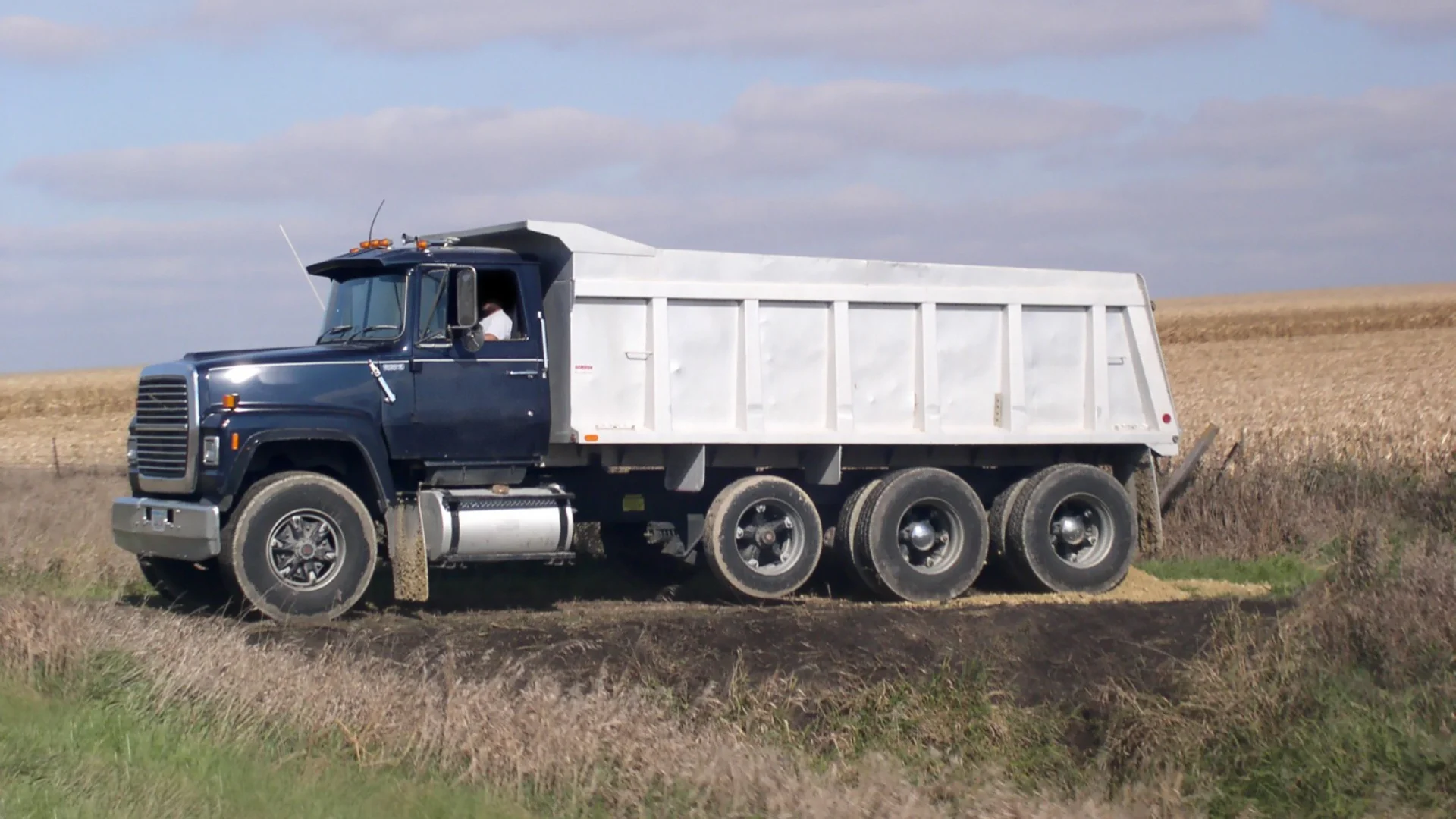
Why agricultural truck crashes in Larimer County are their own animal
Once you leave the Fort Collins city limits, you're in farm country. Grain, sugar beets, and hay all move by truck, and during harvest that traffic jumps on US-287, the county roads toward Wellington, Ault, the ramps onto I-25, as well as the roads going to and from Greeley in Weld County. Those roads weren’t designed for a steady stream of heavy agricultural rigs alongside regular traffic, and US-287 north of town is already one of the most dangerous stretches in the state, as we cover in Colorado's most dangerous roads.
Farm trucks and commercial semis don't play by the same rules
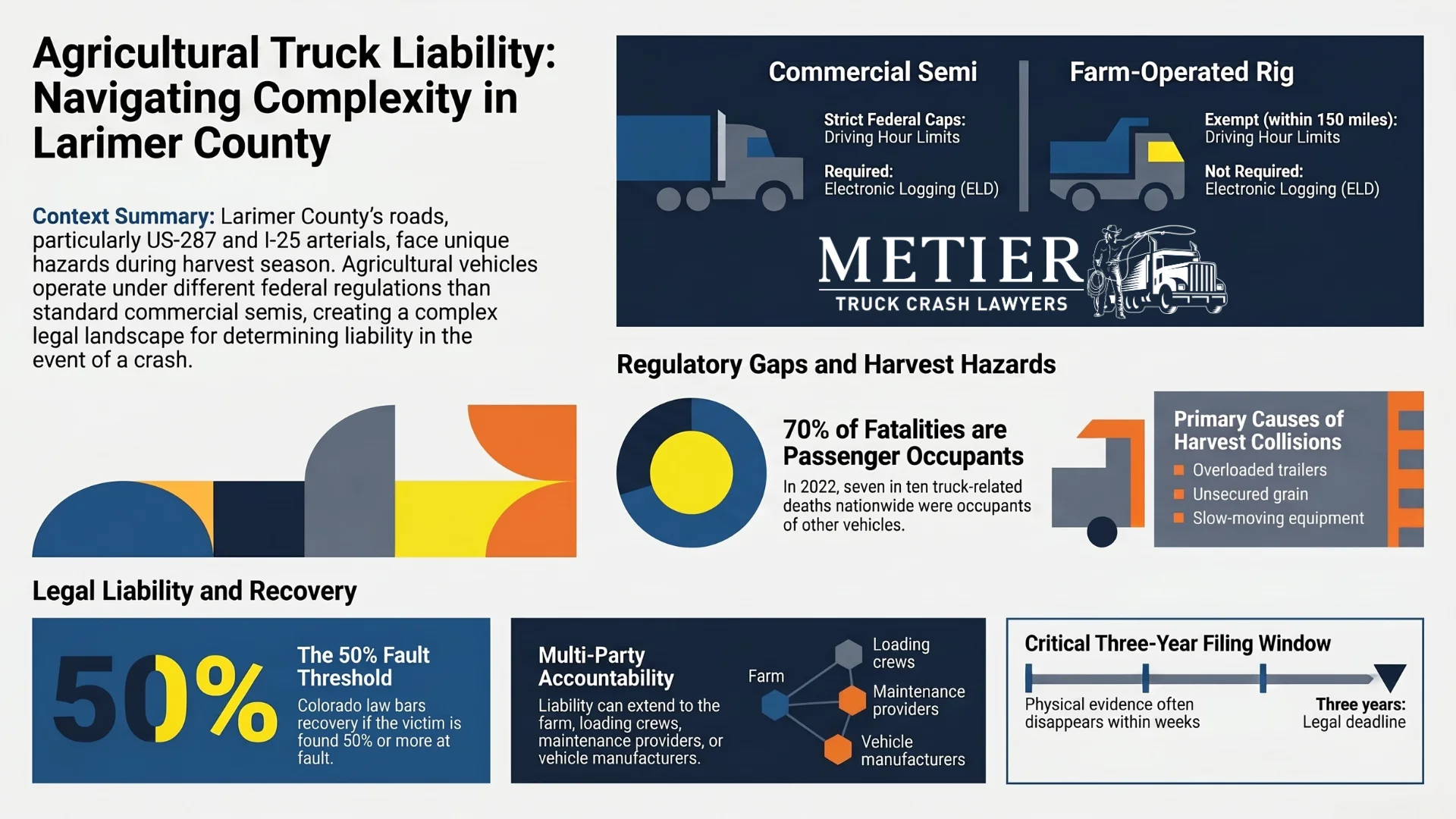
Here's where an agricultural truck accident Larimer County case, or any grain hauler truck crash Colorado claim, gets tricky. The federal government gives farms breaks that ordinary carriers never get. Federal rules normally cap how long a trucker can drive, but during planting and harvest, drivers hauling crops within 150 air-miles of the farm are exempt from those limits (FMCSA, 49 CFR 395.1(k)). Vehicles operated by the farm itself get an even wider exemption and need no electronic logging device.
That gap drives the whole semi truck accident vs farm truck accident question. A farm rig may have been on the road legally far longer than any normal carrier could, and a driver hauling grain since before dawn is a tired driver. Our guide to Fort Collins truck crashes and heavy vehicles covers how size and weight raise the danger.
Call Metier Law Firm at 866-377-3800 or schedule your free consultation today at www.metierlaw.com
The causes we see most during harvest
Overloaded Trucks
Grain pays by weight, so the rush to beat the weather pushes loads past what the equipment can safely handle. An overloaded truck accident Colorado victim is often hit by a rig that couldn't stop or steer in time. The extra weight stretches stopping distances and makes a truck roll over easier in a turn.
Unsecured and Spilling Loads
Federal rules require cargo to be secured so it can't leak, spill, blow, or fall off the vehicle (49 CFR 393.100, eCFR). Grain that spills at a turn on US-287 puts everyone behind the truck at risk, and a load that shifts can flip a trailer onto its side.
Slow-Moving Equipment
A slow-moving farm vehicle accident happens when a tractor or combine traveling 15 miles per hour shares a 55 mile per hour road. A farm equipment road collision often comes down to a driver who failed to register how slowly the rig was moving, or to equipment missing proper lighting or the orange slow-moving-vehicle emblem.
Large trucks killed 5,936 people in crashes nationwide in 2022. Seven in ten of those who died were in other vehicles, not the trucks (NHTSA).
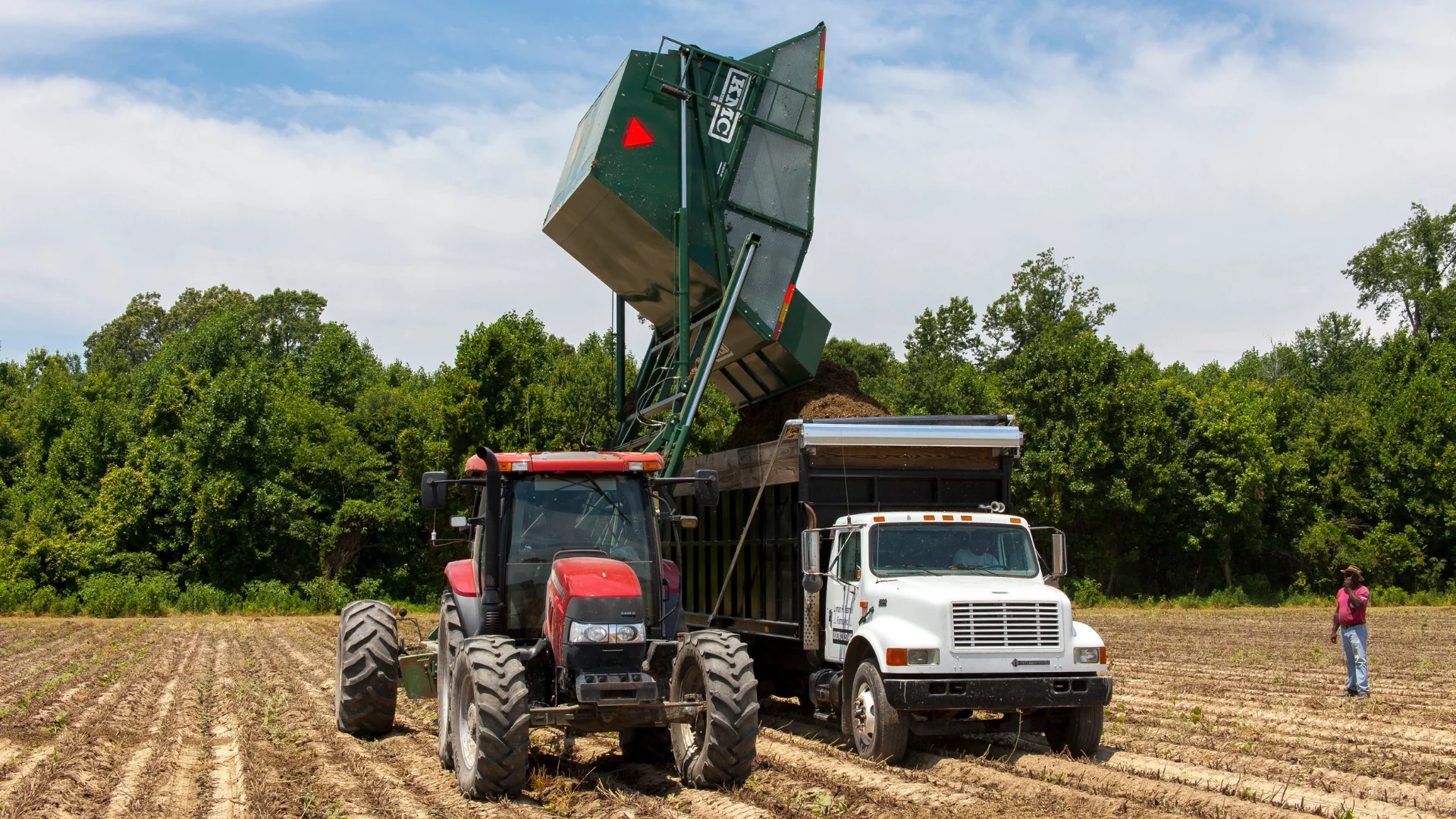
If you or a loved one was injured in a crash with a commercial truck, call us at 866-377-3800 or schedule a free consultation at www.metierlaw.com.
Who can be held liable after a farm truck crash
Fault doesn’t always stop with the driver. Responsibility can reach the farm that put the driver on the road, a hired carrier, or the crew that loaded the trailer. It can reach the shop that signed off on bad brakes, or a manufacturer if a part failed. A good Larimer County truck accident attorney chases down each one, because each may carry separate insurance. Proving it takes the work we lay out in how a Colorado truck accident lawyer proves negligence.
How Colorado law shapes what you can recover
Colorado follows a modified comparative negligence rule. If a jury finds you 50 percent or more at fault, you recover nothing (C.R.S. 13-21-111). Below that line, your compensation drops by your share of the blame. That's why the insurer will try to pin part of the crash on you, often arguing you should have seen the slow truck. Don't accept that framing without talking to a lawyer first.
You also have a deadline. In Colorado, you usually have three years from the crash to file a vehicle injury claim (C.R.S. 13-80-101), but load records, driver logs, and proof at the scene can be gone much faster than that. For more information on how fast evidence can disappear, check out our blog on how long Fort Collins truck accident lawsuits take.
Frequently Asked Questions
Do farm trucks have to follow the same rules as regular semis?
Not always. During harvest, drivers hauling crops within 150 air-miles of the farm can be exempt from the federal driving-hour limits, and trucks operated by the farm itself get an even wider exemption. A Fort Collins truck accident lawyer can determine which rules applied to the truck that hit you.
Who is liable if spilled grain or a shifting load caused my crash?
It can fall on whoever loaded and secured the cargo, whether that's the driver, the farm, or a separate loading crew. Federal law requires loads to be secured so they can't spill or shift, and a failure there can open a claim against more than one party.
What if the insurer says I was partly at fault?
In Colorado you can still recover as long as you're found less than 50 percent at fault. Your payout just drops by your share of the blame. A Larimer County truck accident attorney can push back on the insurer's early fault number. It's not the final word.
How long do I have to file after a Larimer County truck crash?
Generally three years from the crash date, though waiting is risky because key evidence often disappears within weeks.
Why the right lawyer matters in a farm truck case
Farm vehicle crashes can hide their answers behind overlapping rules, insurance, and evidence that doesn't stick around. A harvest driver may have been legally worn out, and the loading crew may share the blame. Knowing that is the gap between a low compensation offer and real accountability. That's what our Fort Collins truck accident lawyer team brings to every case. If a grain truck, farm rig, or other large agricultural vehicle upended your life, let's talk about what comes next.
Our truck accident lawyers see these same overlapping liability issues on farm roads throughout the region. A truck accident lawyer in Denver applies that same scrutiny to agricultural crashes closer to the metro, and a truck accident lawyer in Colorado Springs brings it to families further south. When a farm vehicle crash proves fatal, a Denver wrongful death lawyer stands with the family through the process that follows, a Colorado Springs wrongful death lawyer offers that same support further south, and a wrongful death lawyer in Fort Collins carries it forward for families closer to the harvest routes north of Denver.
Call Metier Law Firm at 866-377-3800 or schedule your free consultation today at www.metierlaw.com.
Disclaimer: Past results discussed should not be considered a guarantee of your results as the factors of every case are individually unique. This content is for informational purposes only and does not constitute legal advice. Consult a qualified attorney from Metier Law Firm regarding your individual situation for legal advice.
Tell Us About Your Case – Free Case Review with a Truck Accident Lawyer
Tell Us About Your Case – Free Case Review with a Personal Injury Lawyer
(866) 377-3800Our Locations
.webp)
Do I have a Case?
How Much Should I Be Offered?
Do I Need an Attorney?
If these questions have crossed your mind, let us help. You may need a little direction or may not need an attorney at all, but you deserve to be confident knowing your options. We can provide you with information about our Attorneys of the West® accident investigations and legal services. Your confidential consultation with us is totally free.
Keep up with us!
