.svg)


TL;DR - Key Takeaways
- Most truck crashes trace back to a handful of preventable failures: fatigue, speed, distraction, impairment, bad cargo loading, and skipped maintenance.
- In 2022, 5,837 large trucks were involved in fatal crashes nationwide, a 2% jump over the prior year, according to the FMCSA.
- The common causes of truck accidents look different behind the wheel of an 80,000-pound rig than they do in a passenger car, and that changes how fault gets proven.
- Colorado, Wyoming, Washington, and Oregon each bring their own hazards, from I-80 crosswinds to I-70 mountain grades to I-5 congestion.
- Trucking companies, not just drivers, are often on the hook when hours-of-service rules, hiring standards, or maintenance schedules get ignored.
- Evidence disappears fast after a wreck, so the black box data, logs, and inspection records need to be locked down early.
- Our managing partner holds a commercial driver's license, which shapes how we investigate every trucking file.
A fully loaded semi can weigh up to 80,000 pounds, more than 20 times a typical passenger car, and it needs far more room to stop. When something fails at that size, the people in the smaller vehicle absorb the damage. That's the reality behind every case we handle at Metier Law Firm across Colorado, Wyoming, Washington, and Oregon. Our managing partner, Mike Chaloupka, holds a commercial driver's license and has spent years representing people hurt in these crashes. "Most truck wrecks are preventable," he says. "When you know where to look, you can usually trace the crash back to a rule somebody ignored." We've stood with families in Fort Collins, Cheyenne, Seattle, and Portland who were doing everything right and still got hit by a truck that shouldn't have been on the road.
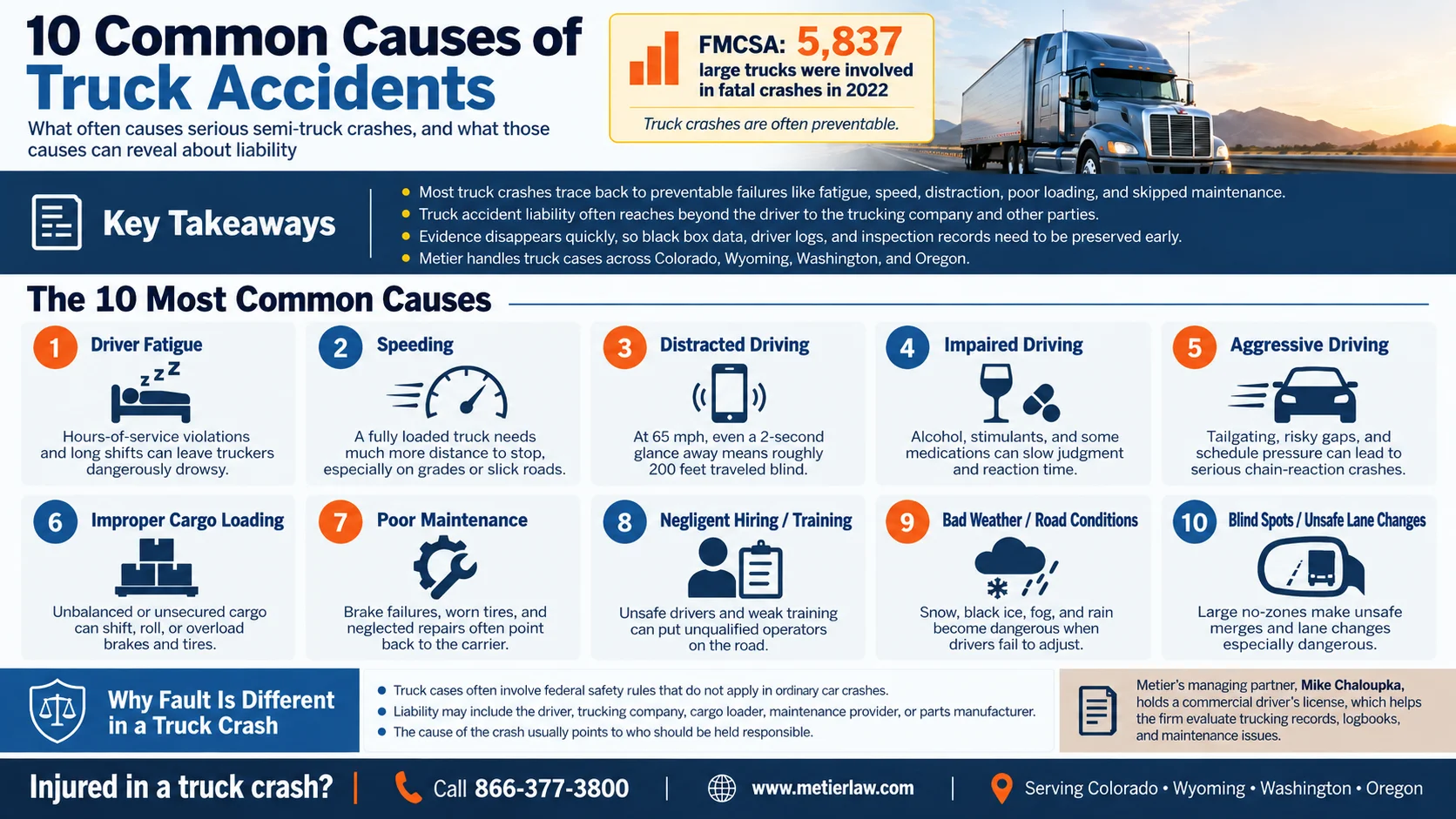
Understanding the common causes of truck accidents matters because it points straight at who's responsible. A crash is rarely bad luck. It usually comes from a decision someone made, or failed to make, long before impact. These are the ten we see most often, along with what each tends to reveal about liability.
1. Driver Fatigue and Hours-of-Service Violations
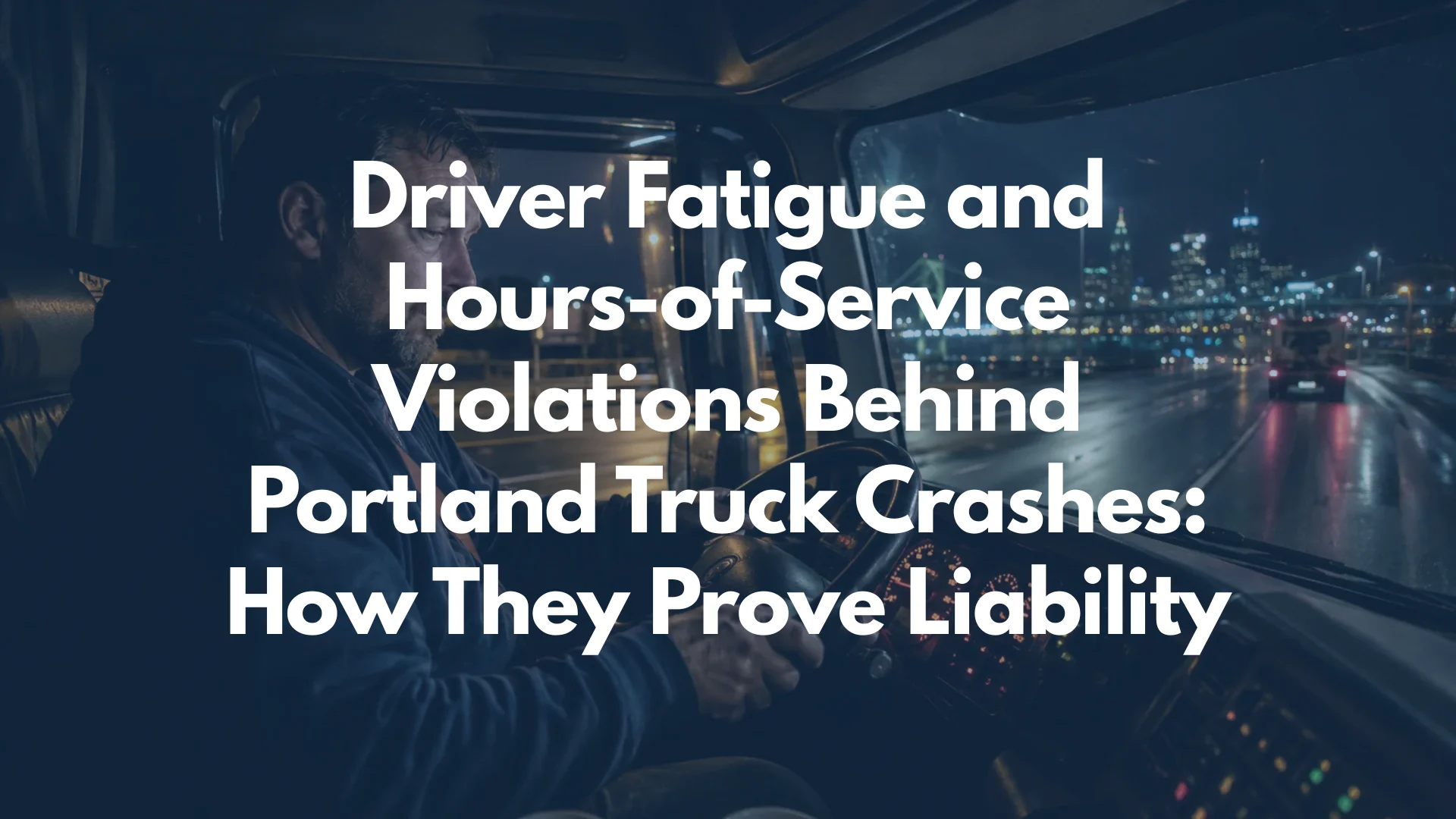
Tired driving is one of the most frequent causes of truck accidents, and it's inclusive of a job that rewards long hours. Federal hours-of-service rules cap property-carrying drivers at 11 hours of driving after 10 hours off, with a hard 14-hour on-duty window and a required 30-minute break once they've driven 8 cumulative hours. Drivers also can't exceed 60 hours in 7 days or 70 in 8.
Those limits exist because a drowsy driver reacts like an impaired one. When a carrier pushes a delivery schedule that only works if the driver cheats the logbook, that's evidence of negligence. We pull the electronic logging device data and match it against fuel receipts and GPS pings to show when someone drove past the line.
2. Speeding and Driving Too Fast for Conditions
Speed shows up in roughly a third of all traffic deaths, and NHTSA tied 11,288 fatalities to speeding in 2024. A truck carries far more momentum than a car, so a few miles per hour over the limit turns into a much longer stopping distance and a much harder hit.
Mountain grades make this worse. On I-70 west of Denver and I-90 over Snoqualmie Pass, a driver riding the brakes downhill can overheat them until they fade. "Too fast for conditions" also covers rain, ice, and fog, which is why posted limits aren't a safe speed when the road turns bad.
3. Distracted Driving
A driver who looks down at a phone, a GPS, or a dispatch tablet stops watching the road. At 65 mph a truck covers about 100 feet every second, so even a two-second glance means it travels roughly 200 feet blind. That can be the difference between stopping in time and hitting traffic that has slowed ahead. Commercial drivers are held to a stricter standard than other motorists, and federal rules ban handheld phone use for CMV drivers outright. We break down the specifics in our guide to the causes of distracted driving.
Phone records and in-cab camera footage usually tell the real story, even when a driver insists they were paying attention.

4. Impaired Driving
Alcohol and drugs sit behind some of the worst wrecks we see. For commercial drivers the legal blood alcohol limit is 0.04%, half the standard for regular drivers. Impairment isn't limited to alcohol either. Stimulants that drivers use to stay awake, and prescription medications that carry drowsiness warnings, both dull judgment and reaction time.
Carriers are required to run drug and alcohol testing programs. When they skip pre-employment screening or ignore a failed test, that failure can extend liability past the driver to the company that put them behind the wheel.
5. Aggressive Driving and Following Too Closely
Tailgating is dangerous no matter who does it, but a truck doing the tailgating is far worse, because a fully loaded semi can't stop anywhere near as fast as the car ahead of it. A driver who weaves through traffic or follows too closely erases the space needed to react in time.
We see aggressive driving pile up in stop-and-go corridors like I-5 through Seattle and Portland, where congestion tempts drivers into risky gaps. These crashes often get filed under "driver error," but the pressure to make up lost time usually starts with the dispatcher.
6. Improper or Unbalanced Cargo Loading
How a trailer gets loaded changes how the whole truck behaves. Cargo stacked too high raises the center of gravity and invites a rollover on a curve. Loads that shift because they weren't secured can throw the trailer sideways or spill across the highway. Overloading strains brakes and tires past what they were built for.
Wyoming's I-80 is a textbook example. The wind out there regularly flips high-profile trucks that are loaded light or unevenly, and the state closes the interstate to light, high-profile vehicles when gusts climb. Responsibility for a bad load can fall on the driver, the loading crew, a third-party logistics company, or all three.
7. Brake Failures and Poor Maintenance
Trucks live on the road, and the wear shows. Brakes, tires, steering, and lights all need constant attention. The FMCSA requires carriers to systematically inspect, repair, and maintain every vehicle under Part 396 of the federal regulations. A worn brake line or a bald tire that a pre-trip inspection should have caught is negligence you can document.
Maintenance records, repair invoices, and roadside inspection reports build this kind of case. When a carrier defers repairs to keep a truck earning, the paper trail tends to say so.
If you or a loved one was injured in a crash with a commercial truck, call us at 866-377-3800 or schedule a free consultation at www.metierlaw.com.
8. Inadequate Training and Negligent Hiring
Driving a commercial truck is a skill, and not everyone handed the keys has it. A carrier that rushes a new driver through training, hires someone with a history of violations, or ignores red flags in a driving record puts an unqualified operator on the highway. That's on the company, not just the person driving.
Colorado and Wyoming have stepped up enforcement here. A joint patrol operation on Highway 287 pulled dozens of unsafe trucks and drivers out of service, which we wrote about in our look at how Colorado and Wyoming crack down on trucking violations. Hiring records and training files show whether a carrier cut corners before the crash ever happened.
9. Poor Weather and Road Conditions
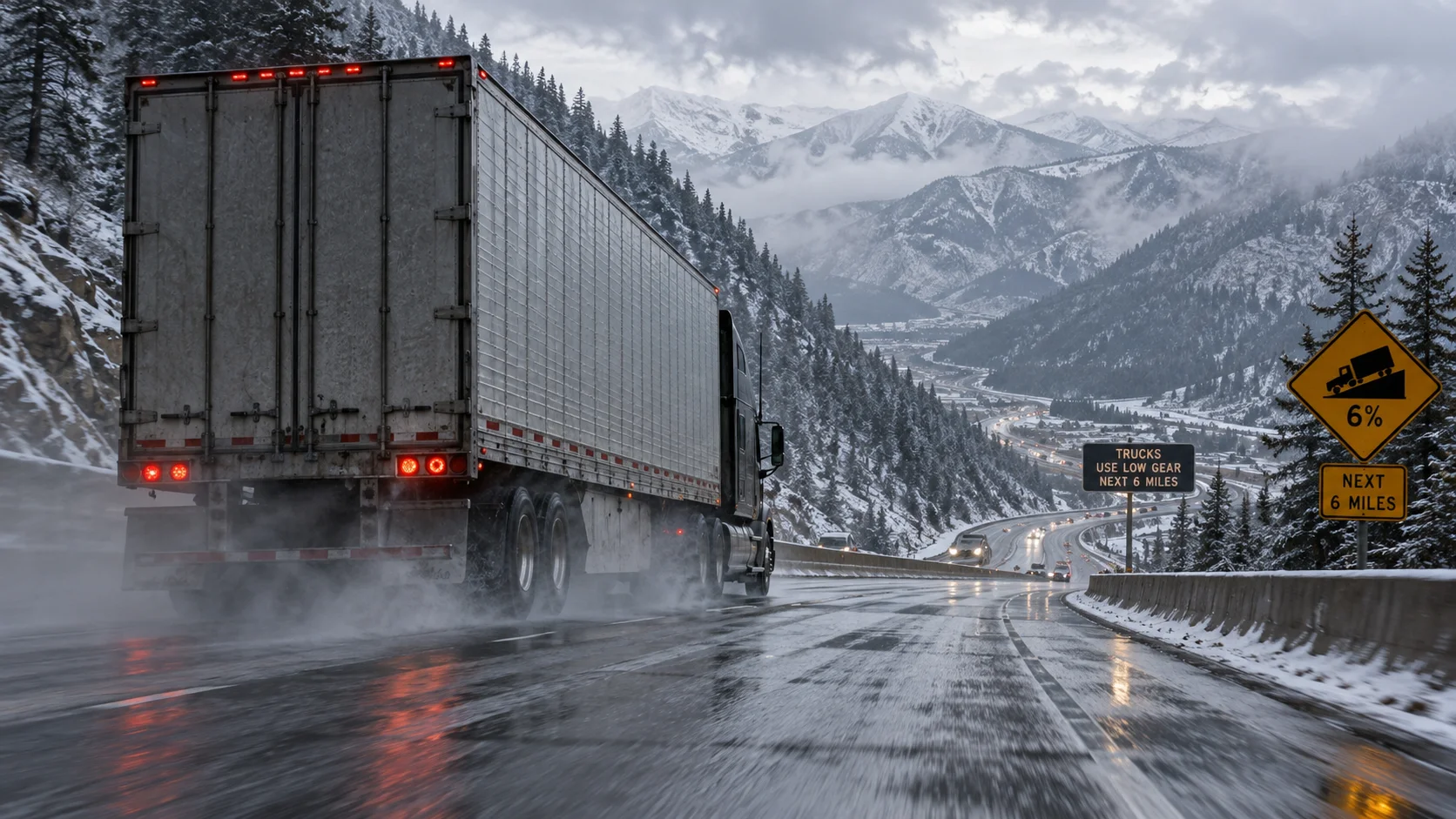
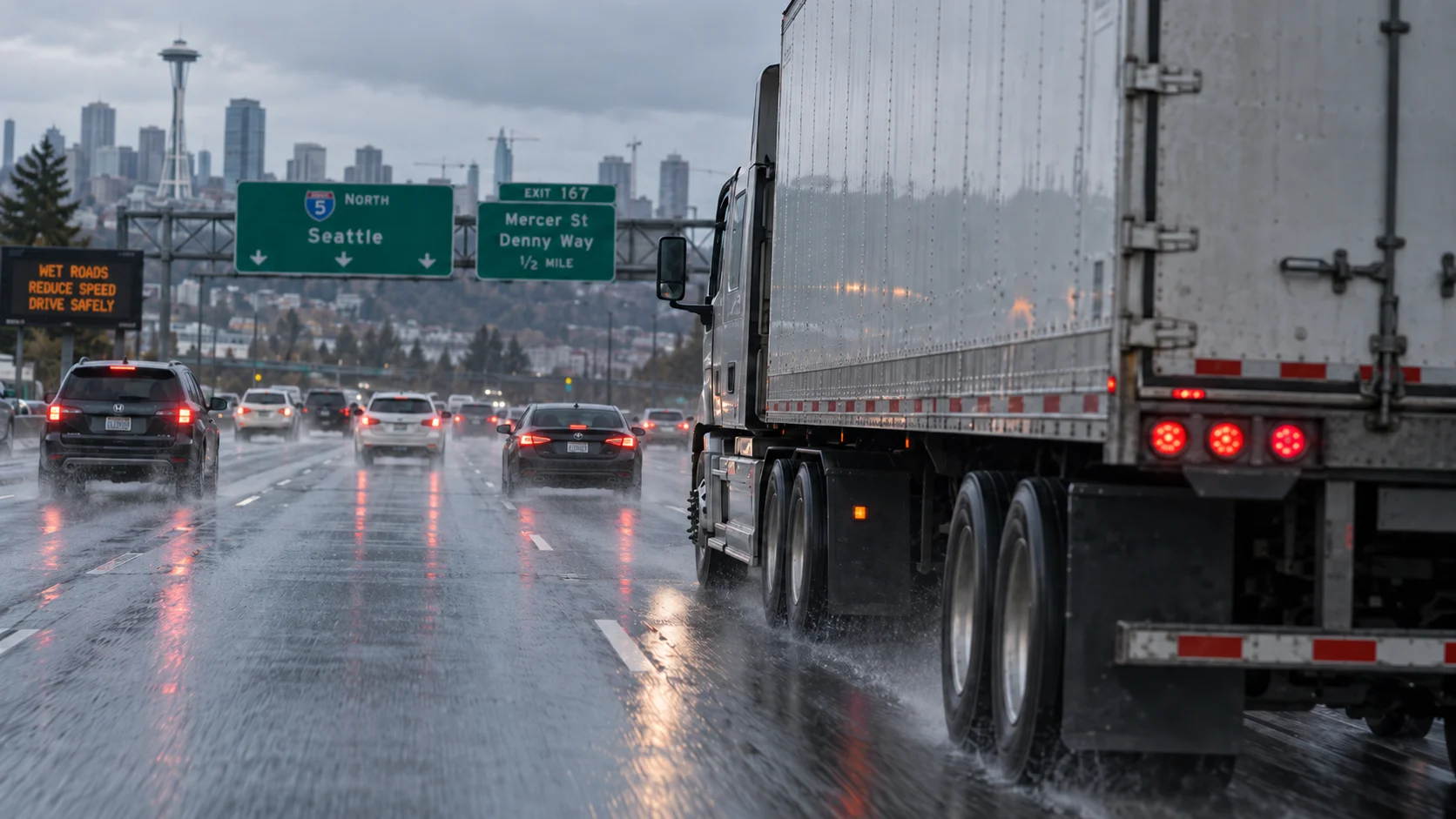
Weather doesn't cause a crash by itself. A driver who doesn't adjust to it does. Snow through the Colorado high country, black ice on Wyoming's plains, fog in the Columbia River Gorge along I-84, and rain slicking I-5 in the Pacific Northwest all demand slower speeds and longer following distances.
Professional drivers are trained to read conditions and pull off when the road turns unsafe. State agencies like the Colorado Department of Transportation post closures and chain laws for exactly these situations. A driver who pushes through a storm to stay on schedule made a choice, and that choice is fair game in a claim.
10. Blind Spots and Unsafe Lane Changes
Every truck has large no-zones on all four sides where the driver can't see a car. A lane change made without a real check, or a wide right turn that swings across traffic, can crush a vehicle the driver never registered. These wrecks are common at highway merges and busy interchanges in every one of our states.
The duty sits with the driver to clear those blind spots before moving. Mirror positioning, camera systems, and simple habit all factor in, and dashcam or traffic-cam footage often shows whether the driver looked at all.
How These Causes Overlap in Real Crashes
Truck wrecks rarely come down to a single cause. A fatigued driver who's also speeding through rain on worn tires is stacking risks, and each one adds a potential defendant. Sorting out how the common causes of truck accidents combine is a big part of building a claim that holds up. It's also why these cases don't play out like a fender bender between two cars. For a fuller picture of how crashes unfold, see our guides on the different types of truck accidents and the emerging trends in truck accident causes we're watching now.
Frequently Asked Questions
What is the single most common cause of truck accidents?
There's no one answer that fits every crash, but driver fatigue and speed show up more than anything else. Both connect back to the pressure of a schedule, so the trucking company's records often matter as much as the driver's.
Who can be held liable for a truck accident?
More people than you'd expect. Depending on the cause, liability can reach the driver, the trucking company, a cargo loading contractor, a maintenance provider, or a parts manufacturer. Nailing down the cause is what points to the responsible party.
How is fault different in a truck crash versus a car crash?
Trucks operate under federal safety regulations that ordinary drivers don't. Violations of the hours-of-service rules, maintenance requirements, or hiring standards create clear evidence of negligence. That layer doesn't exist in a typical two-car collision, and it's why experience with the regulations matters.
What should I do after a truck accident?
Get medical care first, then protect the evidence. Truck logs, electronic data, and inspection records can be overwritten or lost within weeks. The sooner a lawyer can send a preservation notice to the carrier, the better your chances of holding onto the proof.
Does it matter if the lawyer understands trucking?
It does. Our managing partner, Mike Chaloupka, holds a commercial driver's license, so we read the logbooks, the regulations, and the maintenance files the same way the industry does. That fluency helps us spot the violations that a general practitioner might miss.
Why a Truck-Focused Legal Team Makes the Difference
Knowing the common causes of truck accidents is only the start. Proving one of them put you in the hospital takes fast work. The black box has to be preserved, the driver's logs pulled, and the carrier's records read before any of it gets cleaned up. We've done that across Colorado, Wyoming, Washington, and Oregon, and because our managing partner holds a commercial driver's license, we know what a clean logbook and a properly maintained rig are supposed to look like. Whether your crash happened near Fort Collins, outside Cheyenne, on I-5 near Seattle, or on the highways around Portland, we know what to look for. That lets you focus on recovering while we handle the legal work.
Call Metier Law Firm at 866-377-3800 or schedule your free consultation today at www.metierlaw.com.
Disclaimer: Past results discussed should not be considered a guarantee of your results as the factors of every case are individually unique. This content is for informational purposes only and does not constitute legal advice. Consult a qualified attorney from Metier Law Firm regarding your individual situation for legal advice.
Tell Us About Your Case – Free Case Review with a Truck Accident Lawyer
Tell Us About Your Case – Free Case Review with a Personal Injury Lawyer
(866) 377-3800Our Locations
.webp)
Do I have a Case?
How Much Should I Be Offered?
Do I Need an Attorney?
If these questions have crossed your mind, let us help. You may need a little direction or may not need an attorney at all, but you deserve to be confident knowing your options. We can provide you with information about our Attorneys of the West® accident investigations and legal services. Your confidential consultation with us is totally free.
Keep up with us!
